Executive Overview
In a milestone that reshapes the horizon of modern medicine, a patient has successfully lived with a genetically edited pig kidney for more than nine months, operating completely free from the grueling demands of dialysis. This achievement shatters the previous global record, setting a new benchmark in the nascent and rapidly evolving field of xenotransplantation—the cross-species transplantation of organs.
The breakthrough procedure, performed at Massachusetts General Hospital, represents a monumental leap forward for millions of individuals suffering from end-stage renal disease. As the global healthcare system continues to grapple with a profound shortage of human donor organs, genetically engineered animal organs—specifically from swine—are stepping into the scientific spotlight as a viable, potentially life-saving alternative.
The organ responsible for this milestone was meticulously crafted by eGenesis, a Cambridge, Massachusetts-based biotechnology pioneer. Leveraging the revolutionary power of CRISPR gene-editing technology, scientists altered the genetic makeup of the donor organ to prevent immediate, hyperacute rejection by the human immune system and to mitigate the risk of transmitting porcine endogenous retroviruses.
With this latest breakthrough, the medical community is moving past theoretical biology and stepping firmly into clinical reality. As regulatory bodies clear the path for larger, more formalized human trials, xenotransplantation is transitioning from a high-stakes scientific experiment into a tangible solution for the escalating global organ shortage crisis.
Detailed Chronology of the Milestone
The Procedure and the Record-Breaking Timeline
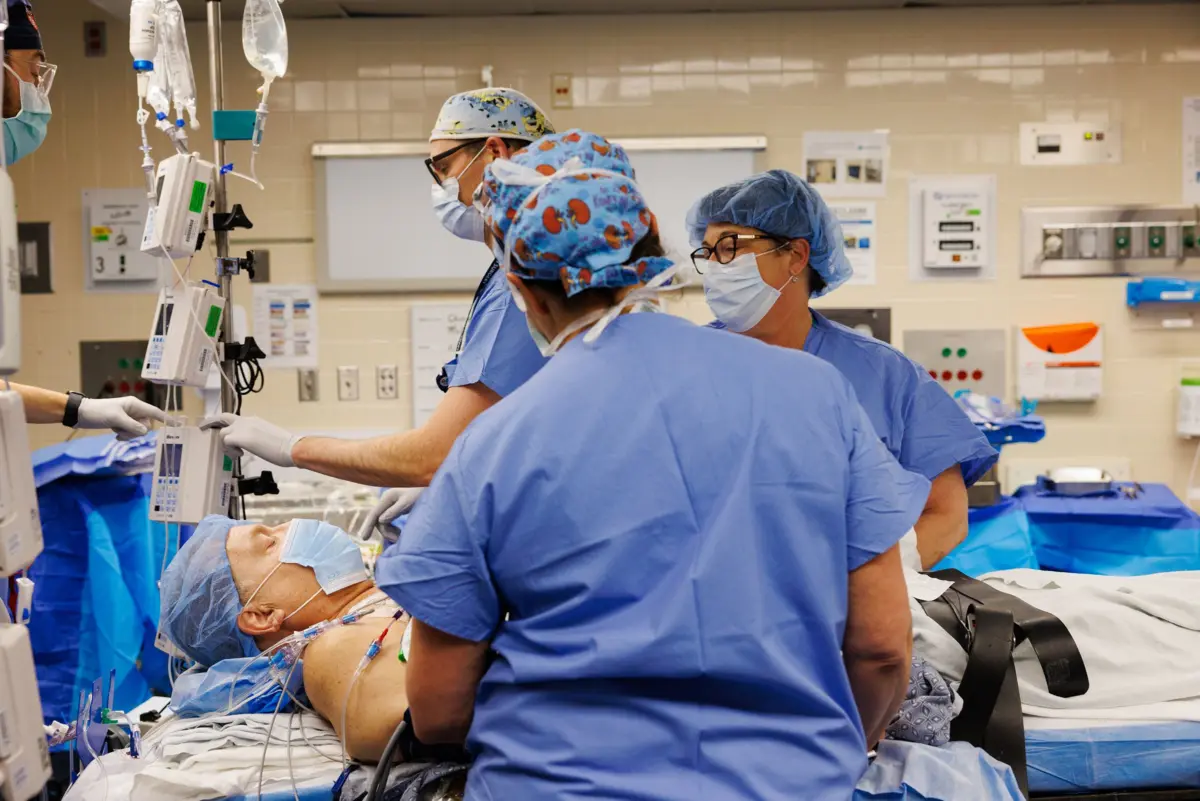
The milestone surgery took place on November 22 of last year at Massachusetts General Hospital. For the patient involved, the operation meant an immediate reprieve from the physical degradation associated with chronic kidney failure.
According to data released by eGenesis, the genetically engineered porcine kidney has maintained active function for 285 days and counting. This achievement officially eclipses the previous historic record of 271 days, which was set by a prior patient, Tim Andrews.
The woman who crossed the nine-month threshold is the fifth individual to receive an eGenesis engineered kidney through a specialized regulatory framework known as "expanded access." Authorized by the US Food and Drug Administration (FDA), this pathway grants patients suffering from serious or immediately life-threatening conditions access to experimental therapies when no standard medical alternatives remain.
The Trajectory of Prior Recipients: Lessons from Tim Andrews
To fully appreciate the significance of the 285-day milestone, medical researchers emphasize the necessity of examining past cases. Tim Andrews received his pig kidney in January of the preceding year and lived with it for just over nine months before experiencing a gradual decline in organ function.
In October of that same year, surgeons removed the porcine organ, and Andrews temporarily returned to dialysis. However, his robust clinical recovery during the months he carried the pig kidney paved the way for a successful human kidney transplant in January of this year. According to eGenesis reports, a second expanded-access recipient has similarly transitioned from an eight-month-long successful pig kidney deployment to a successful human organ transplant.
These sequential outcomes provide invaluable data to surgical and biotech teams. Rather than viewing graft failure as a dead end, researchers are treating every data point as a roadmap for optimization. A comprehensive study detailing Andrews’ clinical journey, published in the esteemed medical journal The Lancet, shed light on the exact biological mechanisms behind the organ’s eventual failure. The medical team determined that Andrews’ pig kidney succumbed to thrombotic microangiopathy—a condition characterized by the formation of microscopic blood clots within the transplanted organ’s delicate microvasculature.
Armed with this granular physiological intelligence, clinical teams are now actively recalibrating immunosuppressive drug regimens, fine-tuning both the dosage levels and the administration frequencies to prevent similar microvascular complications in future recipients.
Supporting Context & Metrics: The Crisis of Renal Failure and Dialysis
The Grim Realities of the Waiting List
To understand why xenotransplantation has become an urgent clinical imperative, one must examine the staggering mathematics of organ donation. Kidneys remain by far the most widely needed organs in global healthcare.
In the United States alone, more than 95,000 people are currently listed on national registries waiting for a life-saving kidney transplant. Yet, due to a severe and persistent shortage of human donors, the actual supply falls devastatingly short of demand. In 2025, fewer than 28,000 kidney transplants were performed nationwide.
For the tens of thousands of patients languishing on waitlists, the average wait spans three to five years, though this timeframe can stretch significantly longer depending on a patient’s blood type, genetic sensitization, and geographic location.
The Toll of Chronic Dialysis
While waiting for the elusive call from a donor hospital, patients must rely on dialysis to artificially filter waste and excess fluids from their bloodstreams. While dialysis is a life-sustaining medical intervention, it is punishing on the human body.
A standard dialysis regimen typically requires patients to undergo grueling four-hour sessions three times a week. Over extended periods, the constant connection of blood vessels to external machinery degrades vascular integrity, leading to severe cardiovascular strain, chronic fatigue, and progressive physical deterioration.
As Mike Curtis, CEO of eGenesis, points out, the clinical calculus for end-stage renal patients is unforgiving: "Patients’ health gets worse the longer they’re on dialysis, and their odds of getting a human transplant aren’t rising fast enough to meet their declining health."
This widening gap between patient degradation and donor availability creates a fatal bottleneck. Pig kidneys are emerging as the ultimate bridge therapy—designed to sustain patients through the critical waiting period until a human organ becomes available, or potentially serving as a permanent solution in their own right.
Why Pigs? The Biological Rationale
Pigs have long been identified as the premier candidates for xenotransplantation for several distinct reasons:
- Anatomical Compatibility: Porcine internal organs match the size, scale, and physiological capacity of human organs remarkably well.
- Scalability: Unlike non-human primates, which present severe ethical concerns, slow reproduction rates, and high pathogen transmission risks, pigs can be bred rapidly and efficiently in controlled, pathogen-free agricultural and laboratory environments.
- Metabolic Alignment: Porcine kidneys are capable of filtering human blood, producing urine, and maintaining electrolyte balance in a manner that closely mimics native human renal function.
However, cross-species transplantation historically faced an insurmountable barrier: hyperacute immune rejection. When a foreign animal organ is placed into a human body, pre-existing human antibodies attack the foreign tissue within minutes, triggering massive inflammation, clotting, and tissue necrosis. Furthermore, endogenous viruses embedded within the pig genome pose a theoretical risk of cross-species infection.
This is where advanced genetic engineering has fundamentally rewritten the rules of biology.
Official Statements and Scientific Insights
The CRISPR Revolution: Engineering the Porcine Genome
The breakthroughs achieved by eGenesis are anchored in the precise molecular manipulation afforded by CRISPR-Cas9 gene-editing technology. Modifying a pig’s genome requires an astonishing degree of biological surgery to render the organ safe and compatible with human physiology.
According to eGenesis leadership, the company’s proprietary genetic platform addresses two primary hurdles: immunological rejection and microbial safety.
- Knocking Out Problematic Genes: Scientists utilized CRISPR to remove specific pig genes responsible for expressing surface carbohydrates and proteins that trigger aggressive human immune responses. By silencing these genes, the biotech team drastically blunts the initial inflammatory and antibody-mediated attacks.
- Adding Human Genes: To promote immune tolerance and systemic harmony, researchers inserted a select handful of human genes into the porcine genome. These genes help regulate coagulation and complement pathways, minimizing the risk of the microscopic blood clots that compromised earlier experimental grafts.
- Eradicating Porcine Viruses: One of the greatest historical fears in xenotransplantation has been the potential transmission of Porcine Endogenous Retroviruses (PERVs) to human hosts. eGenesis engineered the donor animals to inactivate all copies of PERVs residing within the pig genome, effectively eliminating the risk of viral spillover.
Expert Perspectives on Patient Outcomes
Reflecting on the psychological and physical transformation observed in clinical trials, Mike Curtis highlights the stark contrast between traditional supportive care and xenotransplantation:
"What we saw with Mr. Andrews was a radical improvement in his overall health while he was on the pig kidney versus if he had stayed on chronic dialysis."
The transition from a compromised, machine-dependent existence to the restored metabolic stability provided by a functioning porcine organ offers patients a profound recovery of baseline physical strength. This renewed vitality not only enhances immediate quality of life but also leaves patients in a far better physiological condition should they eventually transition to a human donor organ.
Medical ethicists, transplant surgeons, and regulatory specialists have monitored these developments with a mixture of cautious optimism and rigorous scrutiny. The transparency demonstrated by Massachusetts General Hospital and eGenesis in publishing detailed failure analyses—such as the findings on thrombotic microangiopathy published in The Lancet—underscores a commitment to patient safety and empirical progress. By dissecting every complication, the scientific community is systematically dismantling the biological barriers that have blocked xenotransplantation for decades.
Future Outlook: The Road to 2027 and Beyond
Moving Toward Formal Clinical Trials
Having achieved milestone after milestone under the FDA’s expanded-access regulatory framework, the field of xenotransplantation is now preparing for its next great leap: formal, large-scale clinical trials.
The FDA has granted eGenesis the regulatory green light to initiate a formal, multicenter clinical trial designed to evaluate genetically edited pig kidneys in up to 33 patients. To maintain rigorous scientific parameters, trial participants will be carefully selected:
- Target Demographic: Individuals between the ages of 50 and 70 years old.
- Clinical Status: Confirmed diagnosis of end-stage kidney failure and active placement on the national waiting list for a human kidney transplant.
While this formal trial is slated to commence in 2027, eGenesis does not intend to pause its clinical momentum in the interim. The company plans to perform additional exploratory transplants under the expanded-access pathway to gather continuous, real-world safety and efficacy data.
The One-Year Horizon and the Ultimate Vision
As researchers digest the lessons learned from the 285-day record and previous human trials, the immediate operational goal for eGenesis and its clinical partners is clear: achieving a full year of continuous, stable porcine kidney function in a human recipient.
Reaching the 365-day mark will represent a psychological and medical Rubicon, proving that animal organs can provide long-term, reliable support to human recipients rather than serving merely as short-term biological bridges.
Looking further ahead, the successful commercialization and widespread adoption of xenotransplantation promise to rewrite the economics and ethics of modern organ failure treatment. If genetically edited animal organs can be manufactured reliably at scale, the concept of the waiting list—along with the agonizing mortality rates associated with organ shortages—could eventually become a relic of medical history.
For now, the unnamed female patient resting comfortably in Massachusetts, her body sustained by a marvel of CRISPR biotechnology that has functioned flawlessly for over nine months, stands at the vanguard of a new medical era. The boundary lines between species are blurring, and for tens of thousands of patients tethered to dialysis machines worldwide, a new dawn of biological possibility has finally broken.