Executive Overview
In the hyper-accelerated ecosystem of modern internet culture, the lifespan of a viral meme is often measured in weeks—if not days. Yet, occasionally, a piece of vernacular emerges that transcends its ephemeral origins to become a foundational building block of digital communication. The catchphrase and copypasta "Got No Change Sorry Brotha" is one such phenomenon.
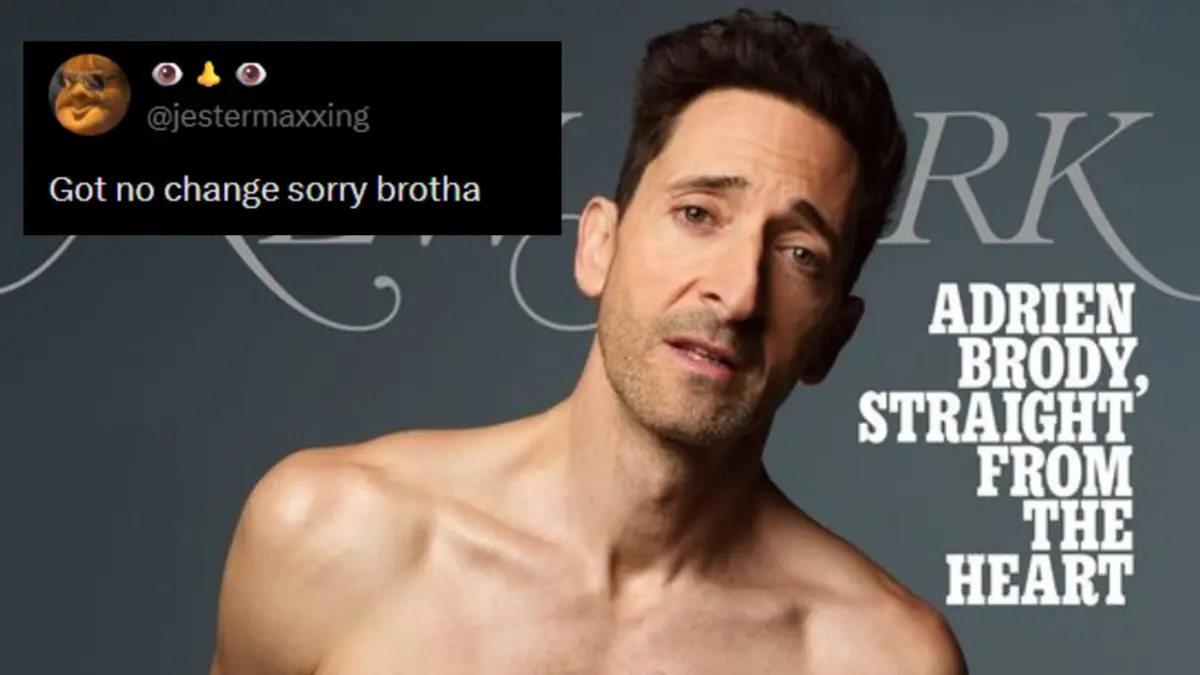
Born on the social media platform X (formerly Twitter) in December 2024, the phrase originated as a sardonic caption directed at a seemingly indifferent, world-weary photograph of Academy Award-winning actor Adrien Brody on the cover of New York Magazine. What began as a singular, throwaway joke rapidly metastasized into a versatile structural template. Today, internet users deploy the phrase to mock celebrities, public figures, and everyday individuals who project an aura of total detachment, aloofness, or unintentional comedic misery.
This comprehensive report explores the trajectory of the "Got No Change Sorry Brotha" meme. We will examine its precise origin story, trace its chronological spread across digital platforms, analyze its psychological appeal within meme culture, and evaluate its status as a newly minted "generational tweet." Through meticulous documentation of its evolution, this article provides an authoritative look at how digital communities collectively assign new meanings to imagery through minimalist humor.
Detailed Chronology: From Adrien Brody to a Viral Phenomenon
The Catalyst: December 23, 2024
The genesis of the phenomenon occurred on December 23rd, 2024. Film and pop-culture accounts across X were sharing promotional material for the latest issue of New York Magazine, which featured a high-profile cover story on actor Adrien Brody. The profile, accompanied by striking photography, highlighted Brody’s historic career trajectory—noting his legacy as the youngest Best Actor Academy Award winner in history for The Pianist, alongside the two-decade gap it took for him to find a subsequent defining cinematic role.
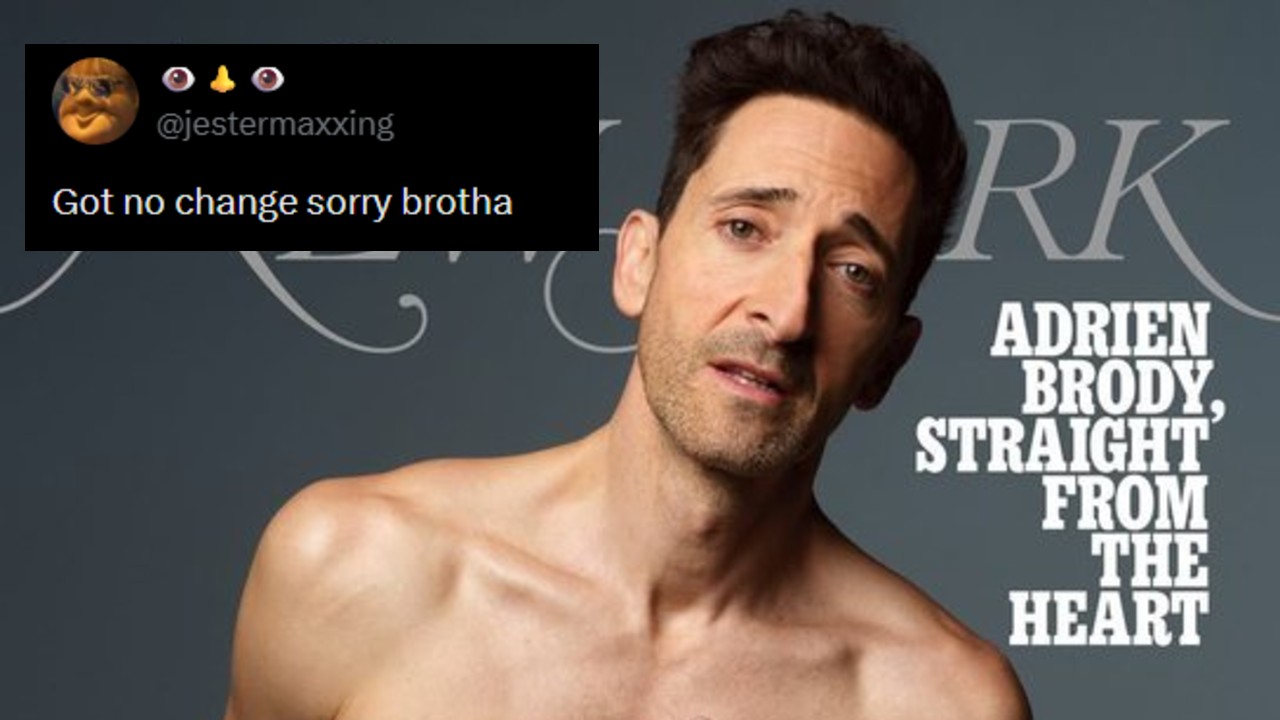
However, internet culture often subverts earnest editorial framing. X user @jestermaxxing looked past the prestige of the profile and locked onto Brody’s expression in the promotional photo. Projecting the body language of a man entirely unbothered by—or detached from—the surrounding fanfare, @jestermaxxing quoted the image with a deadpan vernacularism:
"Got no change sorry brotha"
The juxtaposition was instantly magnetic. The phrase evoked the classic urban archetype of a passerby brushing off a panhandler with feigned or genuine unavailability, yet applied it to a high-fashion magazine cover shoot of a decorated Hollywood star. The post struck an immediate chord, accumulating over 111,000 likes and crossing 4.4 million views. It laid the groundwork for a new comedic format: pairing unflattering, dazed, or deeply apathetic celebrity imagery with the dismissive street-corner rejection.
The Spread: Codification into a Copypasta
As the months passed, early adopters recognized the modular nature of the phrase. Much like classic copypastas that rely on a specific cadence to convey a joke across different contexts, "Got No Change Sorry Brotha" proved endlessly adaptable.
Spring 2026: Expansion to New Subjects
By mid-2026, the phrase had broken containment from its original cinematic niche, finding new life when applied to musicians, actors, and public figures caught in unflattering or excessively nonchalant poses.
- May 12, 2026: X user @dyinlevi applied the caption to a photo of actor Sebastian Stan, capitalizing on a candid or uniquely styled appearance that invited comedic comparisons to someone loitering on a street corner. The post secured over 12,000 likes in four months, demonstrating the phrase’s steady retention.
- June 5, 2026: Musician Malcolm Todd became the next target of the meme following an appearance on The Tonight Show Starring Jimmy Fallon. X user @davidefinitely captioned a promotional broadcast still of Todd with the phrase, driving over 85,000 likes in under three months and exposing the joke to a wider music-fandom demographic.
September 2026: Institutional Recognition as a "Generational Tweet"
By late summer 2026, the meme had achieved self-awareness. Users no longer just applied the phrase to new images; they began reflecting on its cultural footprint. On September 3rd, 2026, X user @H11mGuy posted a retrospective assessment that resonated widely across the platform:
"The original ‘got no change sorry brotha’ is truly a generational tweet."
The post pulled in over 41,000 likes in a single day, cementing the original December 2024 post’s status as internet lore. This meta-commentary signaled that the community viewed the phrase not merely as a passing trend, but as an enduring piece of digital slang.
Supporting Context & Metrics
To understand the staying power of "Got No Change Sorry Brotha," one must examine the broader mechanics of how textual-visual pairings function in contemporary meme spaces.
The Anatomy of a Nonchalance Meme
Internet humor in the mid-2020s heavily favors expressions of irony, fatigue, and radical apathy. Memes that highlight individuals looking profoundly uninterested—ranging from exhausted politicians to bewildered musicians—consistently outperform standard punchline jokes.
The phrase "Got No Change Sorry Brotha" functions as a verbal shorthand for this exact mood. By framing the subject as someone asking for spare change—only for the narrator to instantly dismiss them while keeping on walking—the meme inverts power dynamics. It reduces A-list celebrities and public figures to the status of anonymous strangers on the sidewalk, visually communicating the sentiment: “I see you, but I simply do not care.”
Quantitative Reach
While exact algorithmic impressions fluctuate as new variants are posted daily, individual marquee instances of the meme consistently cross critical engagement thresholds:
- Original Post (@jestermaxxing): 4.4M+ views, 111k+ likes.
- Malcolm Todd Variant (@davidefinitely): 2M+ views, 85k+ likes.
- Political & Public Figure Variants: Average 200k to 500k impressions per high-performing iteration.
These metrics illustrate a healthy, decentralized distribution pattern where multiple accounts successfully spin the format to fit breaking pop-culture moments.
Various Examples & Cultural Manifestations
The true test of a copypasta’s longevity is its cross-genre flexibility. Over time, users adapted the phrase to fit political discourse, independent music subcultures, and historical internet relics:
- Political Figures: Users applied the caption to screenshots of high-profile political figures—such as Representative Hakeem Jeffries or archival footage of former Vice President Joe Biden—juxtaposing high-stakes political messaging with the colloquial indifference of the phrase.
- Indie and Alternative Artists: Emerging musicians and internet-native artists (such as Jane Remover) frequently found themselves captioned with variants like "got no change sorry brotha" by fans embracing the ironic detachment characteristic of modern alternative music fandoms.
- Actor Transformations: Characters and actors undergoing drastic physical transformations—such as Jeremy Allen White sporting a rugged beard—were similarly subjected to the copypasta, turning red-carpet glamour into sidewalk realism.
Official Statements and Community Reception
While corporate brands have been slow to co-opt "Got No Change Sorry Brotha"—largely due to its colloquial, slightly rough-around-the-edges tone—the grassroots community reaction has been overwhelmingly celebratory.
Digital culture analysts note that phrases like this succeed because they require zero setup. They rely entirely on visual juxtaposition. As internet historian circles began cataloging the phrase in late 2026, consensus emerged that the joke represents a pinnacle of low-effort, high-impact comedic timing on social media.
Future Outlook
As we look toward the future of digital vernacular, "Got No Change Sorry Brotha" has successfully transitioned from an accidental viral hit into a permanent fixture of the X lexicon.
The phrase demonstrates how modern slang is forged: through the spontaneous, collective recognition of a hyper-specific vibe. Whether applied to the next bewildered celebrity caught on a red carpet or resurrected years from now as a nostalgic internet relic, the copypasta has secured its place in the digital history books. For those scrolling through feeds filled with endless manufactured outrage and corporate gloss, the universal response to anything too serious remains delightfully simple:
Got no change sorry brotha.