Executive Overview
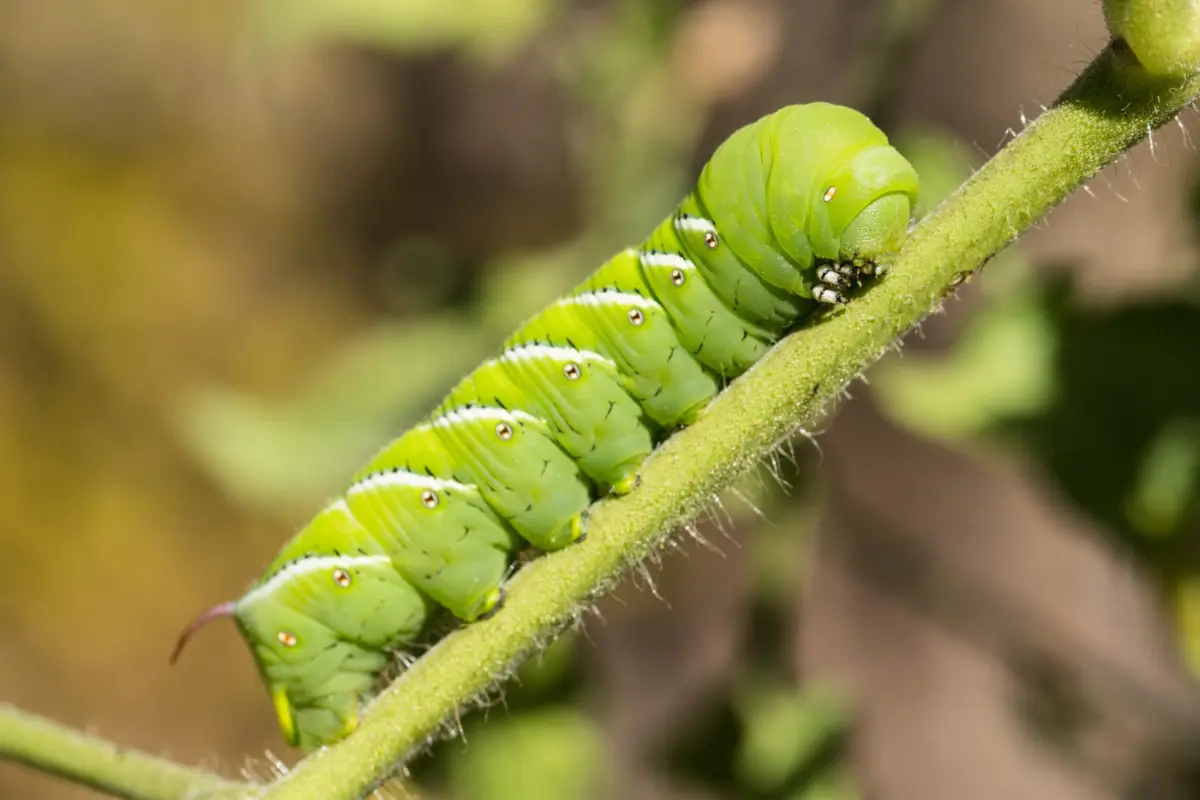
In the serene theater of a summer garden, a tobacco hornworm (Manduca sexta) rests comfortably on a broad green leaf, its rhythmic chewing a picture of tranquility. Suddenly, the creature freezes. It is an instantaneous, life-or-saving motion executed precisely on cue. Gliding through the heavy afternoon air just out of sight, an aggressive parasitic wasp closes in, sizing up its unsuspecting host.
To the casual observer, the encounter seems impossible to navigate. Tobacco hornworms possess no external ears, no tympanal membranes, and none of the traditional auditory apparatuses associated with the animal kingdom. Yet, the caterpillar knows danger is near. It reacts, twists, and evades a grim fate.
For years, the mechanism behind this uncanny sensory awareness has eluded science. However, a multidisciplinary team of biologists and engineers is finally pulling back the curtain on this biological marvel. Their ongoing, meticulously controlled research reveals that tobacco hornworms perceive their acoustic environment using a dense array of tiny, supersensitive hairs scattered across their soft bodies.
Beyond solving a long-standing evolutionary mystery, this investigation extends far past the boundaries of pure biology. By decoding how these hornworms detect sound without traditional organs, researchers are laying the foundational blueprint for a revolution in acoustic engineering. The insights gleaned from these garden pests could soon give rise to a new generation of ultra-sensitive, miniaturized directional microphones—transforming everything from commercial audio recording to the capabilities of modern hearing aids.
Detailed Chronology: Inside the Anechoic Chamber
To study biological sensitivity of such a minute scale, researchers had to eliminate all confounding variables. Because the hornworms’ sensory hairs are exquisitely tuned to the subtlest environmental cues, even the hum of a distant refrigerator or the thrum of urban traffic could skew experimental data. The team needed absolute, profound silence.
Engineering the Void
The experiments were relocated to an anechoic chamber—one of the quietest man-made environments on Earth. Constructed with total sensory isolation in mind, the chamber is a marvel of acoustic engineering. Heavy-duty steel springs support a massive "floating" interior room, ensuring the space never makes direct contact with the building’s outer foundation. This meticulous decoupling prevents structural vibrations and ambient noise from bleeding into the testing arena. Inside this silent womb, researchers established a controlled micro-laboratory to monitor the hornworms.
[Ambient Noise Blocked] ➔ [Steel Spring Isolation] ➔ [Floating Anechoic Chamber] ➔ [Absolute Silence for Testing]Phase One: Mapping Vibration Thresholds
For an entire year, the research routine remained unbroken. A single caterpillar was placed upon a precision testing platform. Researchers delivered calibrated mechanical vibrations directly to the platform, systematically varying the intensity.
Using an accelerometer—a high-precision sensor designed to measure physical movement and vibration frequency—the team tracked the exact physical forces transmitted through the platform. In response, the caterpillars exhibited diverse physical reactions: some leaped upward, others twitched violently, and many shuddered from the sheer mechanical force.
By plotting these reactions against the intensity of the physical stimulus, the researchers mapped out a precise behavioral threshold. Any vibration falling below this specific magnitude failed to provoke a visible reaction from the test subjects.
Phase Two: Separating Sound from Motion
With the baseline physical vibration threshold established, the team introduced a critical pivot to their methodology. They began testing the caterpillars using airborne sound waves rather than direct mechanical contact.
Sound, fundamentally, is a form of mechanical energy and vibration that travels through a medium like air. However, sound waves striking a solid object also induce microscopic vibrations in that object. To prove the caterpillars were responding to the airborne sound waves themselves—rather than just feeling the sympathetic vibrations of the platform—the team deployed the accelerometer once again.
They compared platform vibrations produced under two distinct scenarios:
- Direct mechanical vibrations sent through the platform.
- Airborne sound waves directed at the chamber while monitoring resulting platform tremors.
The results were telling. The caterpillars continued to react defensively to airborne sound even when the induced platform vibrations fell well beneath the previously established mechanical threshold. This proved conclusively that the insects were perceiving airborne sound independently of direct touch or ground vibrations.
Supporting Context & Metrics: The Physics of Insect Hearing
To understand the magnitude of the researchers’ discovery, one must look at how the animal kingdom processes acoustic information. For centuries, biological science has categorized vertebrate and invertebrate hearing into two primary paradigms based on how sound waves interact with physical structures.
Pressure vs. Particle Velocity
Acoustic energy travels through the air in two distinct ways that matter to biological receivers:

- Sound Pressure: The localized deviation from ambient atmospheric pressure caused by a sound wave. Most familiar animals—including humans, mammals, and many insects—use pressure-sensitive membranes (such as human eardrums or insect tympanal organs) that flex back and forth when compressed by sound waves.
- Particle Velocity: The actual physical speed at which microscopic air molecules oscillate back and forth as a sound wave passes through them.
Acoustic Wave Propagation
       │
       ├──► Sound Pressure (Measured by traditional eardrums/tympanal membranes)
       └──► Particle Velocity (Measured by microscopic body hairs in hornworms)
While mammals and grasshoppers rely heavily on pressure-sensing tympanal organs (air-filled sacs or stretched membranes attached to internal nervous systems), caterpillars lack these internal chambers entirely. They present an evolutionary anomaly: animals that clearly react to acoustic threats without possessing any of the standard biological hardware for doing so.
Microscopic Excavation
Faced with this physiological puzzle, the research team turned to high-powered microscopy. Examining the epidermal layers of Manduca sexta up close revealed a uniform, velvety carpet of specialized microscopic hairs covering the caterpillar’s body.
Hypothesizing that these integumentary structures functioned as acoustic receptors, the team designed a targeted surgical intervention. Working under a microscope with specialized micro-tweezers, researchers selectively removed the hairs—some specimens were completely denuded, while others had strategic patches removed from specific body segments.
The resulting behavioral shift was immediate and dramatic. When exposed to specific sound frequencies, the hairless caterpillars showed a steep decline in defensive twitching and evasion behaviors. By correlating which specific hairs were plucked with the loss of sensitivity to particular sound frequencies, the researchers began mapping out an entirely novel biological auditory system.
Official Statements & Research Implications
While the team’s formal findings are still undergoing peer review and preparation for publication in a major scientific journal, the implications of their ongoing work are already drawing intense interest across both entomological and engineering communities.
"Understanding the intricate biological mechanisms that allow this organism to perceive and interact with its environment does more than solve a lingering mystery of the natural world," lead project stakeholders note in their experimental overview. "It provides a masterclass in bio-inspired design, showing us how evolution has solved engineering challenges we are only beginning to tackle ourselves."
The transition from biological discovery to technological application hinges on how we capture sound. Traditional microphones—from the dynamic mic in a broadcast studio to the tiny capacitive microphone inside a smartphone—rely on a thin, flexible internal diaphragm. When sound pressure waves hit this membrane, it flexes, altering electrical capacitance and converting acoustic energy into an electrical signal.
However, standard pressure-based microphones possess inherent limitations: they are omnidirectional unless heavily filtered, and they struggle to parse the directional origin of a sound wave without complex multi-mic arrays.
By imitating the hair-based particle-velocity sensing mechanisms discovered in tobacco hornworms, engineers envision an entirely new class of acoustic sensors.
[Traditional Diaphragm Microphone]
  ➔ Measures Sound Pressure Level (SPL) only
  ➔ Requires complex arrays for directionality

[Bio-Inspired Hair Sensor (Hornworm Model)]
  ➔ Measures Air Particle Velocity & Direction
  ➔ Inherently directional, compact, and highly sensitive
Future Outlook: The Next Generation of Acoustic Tools
The leap from garden pest to cutting-edge technology may seem vast, but biomimicry has a long history of transforming natural adaptations into industrial revolutions. The insights gained from the tobacco hornworm’s silent chamber are poised to ripple across multiple technological sectors.
Revolutionizing Hearing Aids
For individuals with hearing impairments, parsing speech in a noisy, crowded environment remains a significant challenge. Modern hearing aids use directional microphones to help isolate sounds coming from in front of the user, but these systems are often bulky, power-hungry, and limited by traditional pressure-diaphragm designs.
If engineers can manufacture synthetic acoustic hairs modeled after Manduca sexta, the resulting sensors could measure air particle velocity directly at a microscopic scale. A hearing aid equipped with particle-velocity hair sensors would be capable of instantly calculating both the volume and the precise directional origin of a sound wave with pinpoint accuracy. This would allow wearers to automatically home in on a conversation partner in a chaotic room while dampening background chatter.
Expanding Beyond Audio
Beyond medical devices, bio-inspired acoustic hairs could find applications in:
- Robotics: Equipping autonomous drones and service robots with spatial awareness derived from airflow and particle velocity rather than heavy camera rigs or radar.
- Environmental Monitoring: Deploying ultra-lightweight, low-power acoustic sensors in remote ecosystems to track wildlife vocalizations or atmospheric disturbances without disturbing local fauna.
- Defense & Security: Developing micro-surveillance arrays that detect airborne acoustic signatures with unprecedented directional fidelity.
As researchers continue to decode the precise tuning of the caterpillar’s sensory coat within their ultra-quiet anechoic sanctuary, one thing is clear. The humble tobacco hornworm—long dismissed as a simple leaf-munching pest—is quietly teaching humanity how to listen to the world in an entirely new way.