Executive Overview
For years, the standard interaction model with artificial intelligence has remained stubbornly consistent: open a chat window, type a prompt, parse the output, type a follow-up prompt, and repeat. In this paradigm, the human operator acts as the central processor, steering every granular step of a workflow. While generative AI tools have undoubtedly accelerated drafting, brainstorming, and coding tasks, they have traditionally suffered from a fundamental bottleneck—they lack agency, cross-session continuity, and native integration with complex business systems.
Enter Claude Cowork, a human-friendly agentic AI platform developed by Anthropic. Evolving directly from Claude Code—an internal developer tool that caught the broader market’s attention for its advanced coding capabilities—Cowork strips away the intimidating command-line interface in favor of a polished desktop environment. Designed specifically for non-technical users, it translates raw developer-grade power into a visible, manageable workspace. Here, folders are securely linked, active task execution plans update in real-time with cross-off checkmarks, and enterprise workflows unfold autonomously.
Co-created and discussed extensively by industry experts Isar Meitis and Michael Stelzner, Claude Cowork represents a seismic shift from passive assistance to active automation. By combining autonomous planning, persistent memory, and intelligent tool utilization, Cowork acts as a true digital employee capable of navigating disparate software ecosystems, synthesizing multi-source data, and executing complex, multi-step business processes under human supervision.
Detailed Chronology: From Terminal Tool to Desktop Agent
The journey of Claude Cowork traces back to Anthropic’s internal engineering needs. Initially deployed as Claude Code, the tool was engineered to assist developers by writing, debugging, and deploying code directly from terminal environments. However, as external users gained access, it quickly became apparent that the underlying agentic engine possessed capabilities far beyond traditional software engineering.
The primary barrier to adoption, however, was the interface. Command-line terminals alienate the vast majority of business professionals, marketers, and entrepreneurs. Anthropic’s response was to wrap this powerful agentic core inside an intuitive desktop application—creating Claude Cowork.
The Three Pillars of Agentic Execution
What separates an agentic platform like Cowork from a standard conversational chatbot? According to Isar Meitis, three distinct architectural capabilities set it apart:
- Autonomous Planning and Execution: In traditional chat interfaces, users must micro-manage every stage of a task. In Cowork, the user defines the overarching goals, constraints, and data inputs. The AI then constructs its own comprehensive execution plan, displays it visually, and systematically works through each step without requiring constant human intervention.
- Persistent Cross-Session Memory: Standard chat sessions wipe their short-term context clean upon reset. Cowork, by contrast, leverages local markdown files to read and write information across sessions. Brand guidelines, client history, proposal templates, and standard operating procedures (SOPs) are stored natively, ensuring the AI retains institutional knowledge indefinitely without requiring repeated manual uploads.
- Contextual Tool Utilization: Cowork doesn’t simply hold access keys to external applications; it understands when and how to deploy them. It can autonomously determine when to pull a meeting transcript from Fathom, when to update a CRM record, and when to draft a follow-up email.
Real-World Operational Transformations
To understand the practical impact of these capabilities, one need only look at daily enterprise use cases:
- Automated Content Operations: Content creation often stalls due to the friction of gathering insights. Using Cowork, operators can task the AI to research top-performing posts across industry niches, cross-reference those trends with historical podcast transcripts, YouTube videos, and internal community calls, and extract authentic quotes. The system then drafts multi-platform copy, suggests imagery, and bundles assets for human review prior to publication.
- Streamlined Sales Workflows: Following a discovery call, a prospect may request a custom proposal. Traditionally, this requires hours of transcript review, web research, and document formatting. With Cowork, the AI ingests the call transcript, researches the prospect’s company and industry landscape via web searches, drafts a comprehensive proposal, updates the CRM, saves the file to Google Drive, and drafts an outbound email with the PDF attached—slashing a two-hour administrative burden down to a ten-minute verification check.
Supporting Context & Metrics: The State of AI Adoption
As enterprises race to integrate artificial intelligence into their daily operations, a profound disconnect has emerged between self-directed experimentation and structured corporate enablement.
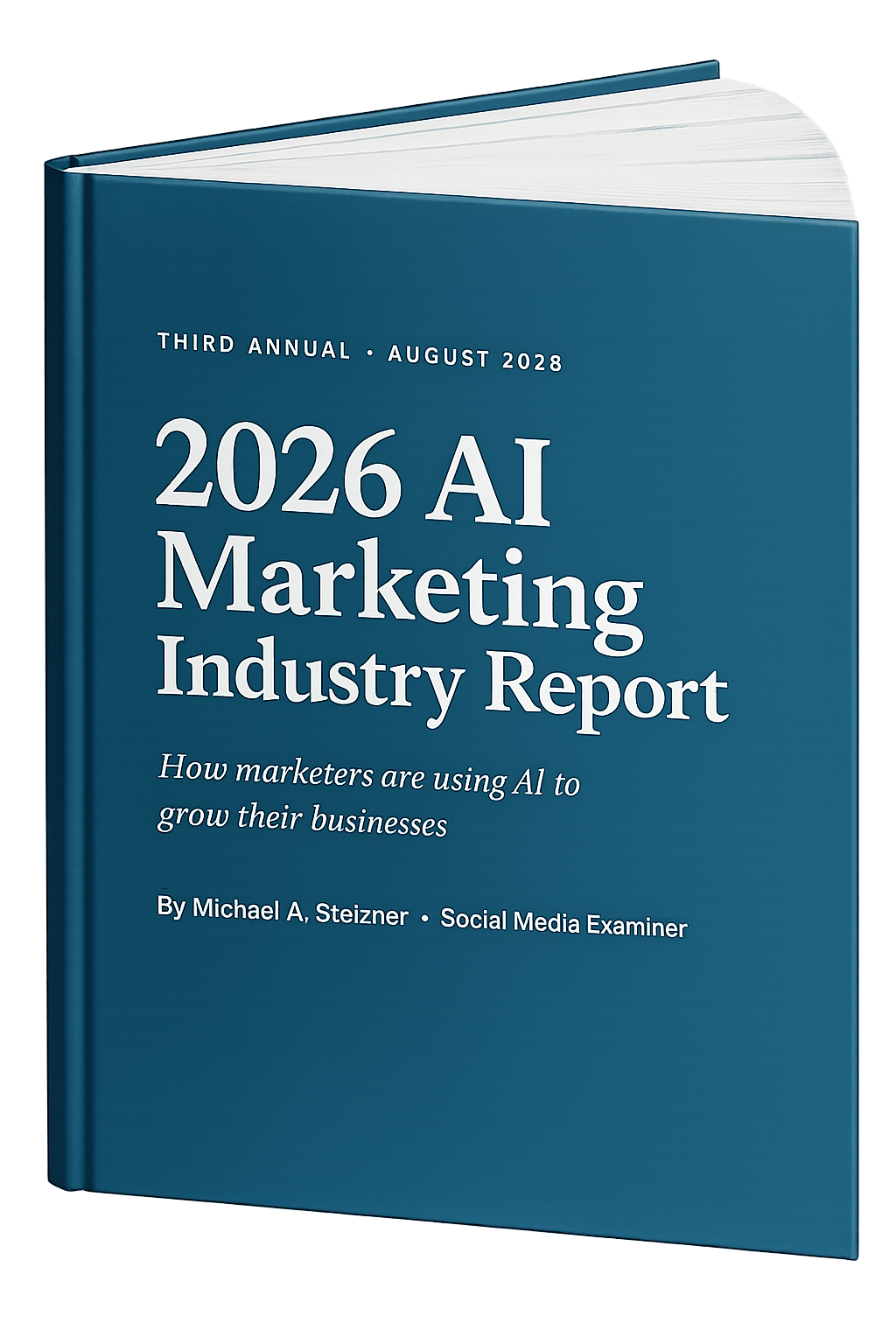
According to data highlighted in the AI Marketing Industry Report—which surveyed 681 marketing professionals—the landscape of AI adoption remains largely decentralized and solitary:
- 85% of marketers learn how to leverage artificial intelligence entirely through independent experimentation.
- Only 7% receive formal, structured training from their employers.
- More than 50% of professionals utilize their own personal funds to purchase and test AI software tools.
This DIY approach underscores why platforms like Claude Cowork are gaining rapid traction. Business leaders are actively searching for tools that bridge the gap between basic prompting and functional, end-to-end automation without requiring a background in software engineering or complex workflow builders like Zapier.
Step-by-Step Implementation Guide
Deploying AI automations successfully requires a structured methodology. Industry experts recommend a disciplined approach divided into requirement drafting, MVP prioritization, and secure system integration.
Phase 1: Identifying the Optimal Task for Automation
The golden rule of enterprise automation is to target processes that are frequent, time-consuming, or fundamentally unengaging. Once a target task is selected, it must be articulated in plain, consultative language. Briefing the AI should mirror how one would instruct an expert human consultant: outlining the assigned role, company context, task frequency, data sources, and desired output formats.
Phase 2: Crafting Product Requirements Documents (PRDs)
AI excels at tactical execution, but its success is entirely dependent on the quality of its instructions. Vague parameters yield wasted computational tokens and suboptimal output.
- The Interview Method: To build a robust PRD, operators can task Claude with conducting an interactive interview. By providing a high-level concept, Claude will ask roughly 40 targeted questions over a 30-to-60-minute session.
- Synthesizing the Document: From these interview answers, the AI generates a comprehensive 25-to-40-page PRD. Because the content is derived directly from the user’s answers, the substance is inherently validated. Operators can simply review the executive summary rather than parsing every page.
Phase 3: Prioritizing via Minimum Viable Products (MVPs)
Rather than attempting to automate an entire department overnight, development should follow an MVP framework. Users should prompt Claude to identify which single component of the PRD will deliver a rapid "quick win" without unnecessary complexity. For instance, in a sales proposal workflow, the initial MVP should focus solely on converting a transcript into a written document, leaving secondary integrations—such as automated CRM syncing and cloud storage—for subsequent iterations.
Phase 4: Establishing System Connections and Guardrails
To function across a digital tech stack, Claude Cowork requires access to local files and external software. This integration follows a carefully structured security hierarchy:
- Local File Management: Cowork utilizes a folder icon with a plus sign to connect directly to local directories. Experts recommend creating a dedicated master folder named
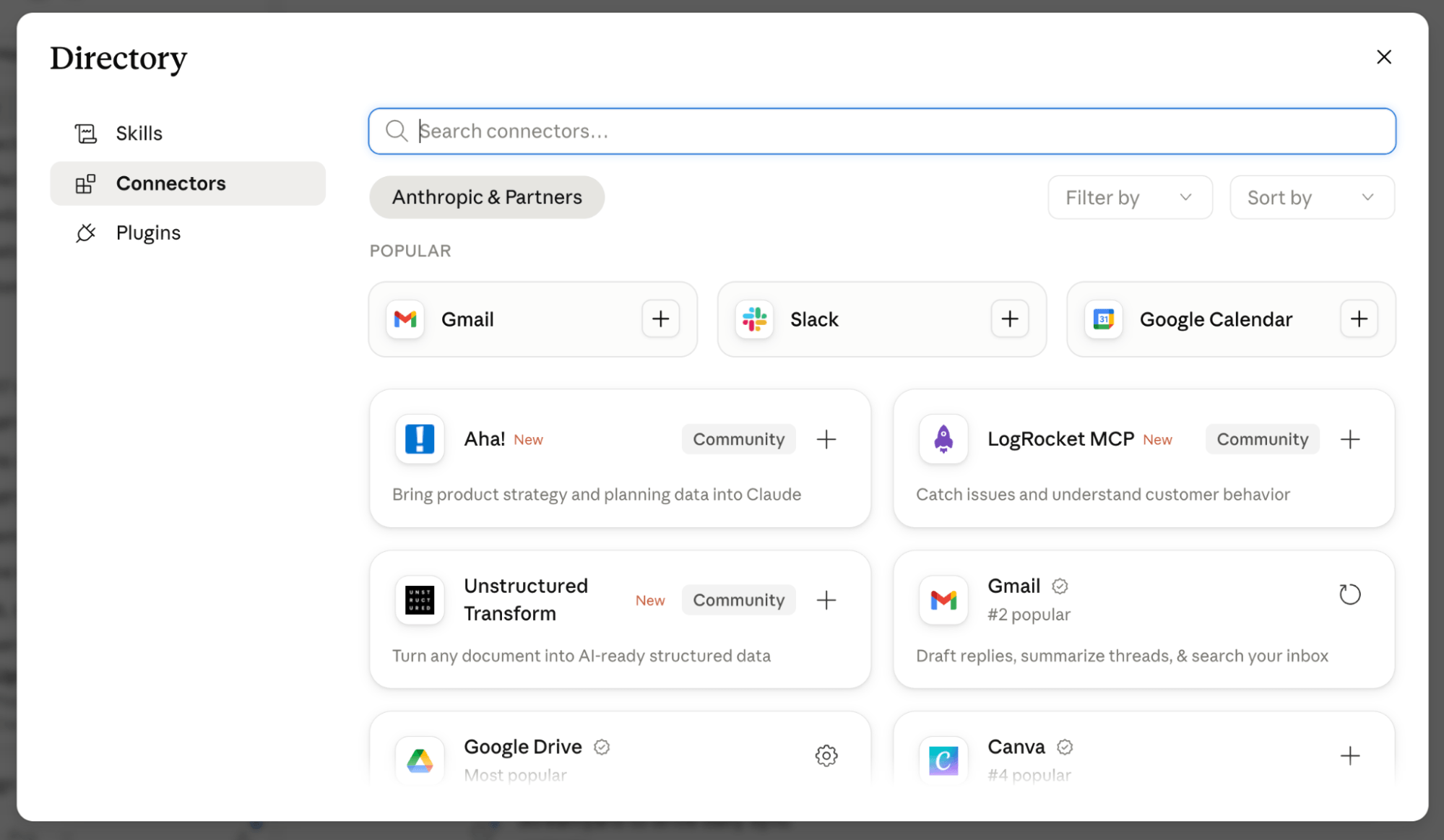
ClaudeCoworkfeaturing isolated subprojects. Connecting at the top-level directory provides a natural containment boundary, granting the AI access exclusively to designated project files. - Native Connectors: Anthropic provides pre-built, heavily tested native connectors for major enterprise ecosystems, including Google Drive, SharePoint, Notion, ClickUp, Asana, monday.com, and prominent marketing platforms. These should always serve as the primary integration method.
- Vendor-Published MCPs (Model Context Protocol): Developed by Anthropic, Model Context Protocol functions similarly to a universal USB standard. If a software vendor has published an official MCP, it offers a secure and standardized bridge for data exchange.
- Custom MCPs: If no native or vendor-supported integration exists, users can provide API documentation to Claude, which will write a custom MCP and generate clear operational markdown files. Sensitive API credentials can be stored securely in operating system keychains (such as macOS Keychain), ensuring the AI executes calls without directly exposing raw secret keys.
- Chrome Browser Extension: For legacy or closed platforms lacking APIs, Claude can operate a direct Chrome browser extension to click buttons, navigate menus, and perform human-like interactions. When encountering authentication screens, the AI safely pauses execution to prompt human sign-in before resuming its automated sequence.
Official Statements and Strategic Outlook
The paradigm shift toward agentic platforms signals a mature evolution in the generative AI market. Industry analysts and practitioners emphasize that the future of business productivity lies not in writing better single-shot prompts, but in designing self-correcting autonomous workflows.
By shifting the human role from operator to supervisor, tools like Claude Cowork eliminate the cognitive fatigue associated with prompt-and-response loops. As Isar Meitis notes during expert discussions on the AI Explored podcast, development sessions naturally build upon one another through iterative check-ins: asking the AI "Where are we in the development, what do you suggest would be the next step, and why?" allows human judgment to seamlessly guide machine efficiency.
Future Outlook: The Autonomous Enterprise Horizon
As platforms like Claude Cowork continue to mature over the coming years, the boundary between human-executed tasks and automated workflows will continue to blur. Several key trends are projected to shape the future of agentic AI:
- Democratization of Software Engineering: With AI systems capable of writing their own custom MCPs, orchestrating multi-app pipelines (via tools like n8n), and deploying local file management trees, the technical barrier to building bespoke enterprise automation tools will approach zero.
- Enhanced Multi-Agent Collaboration: Future iterations of agentic platforms will likely feature specialized sub-agents communicating securely with one another—where a research agent, a legal compliance agent, and a copywriting agent collaborate asynchronously inside a unified workspace.
- Strict Security and Compliance Frameworks: As autonomous execution scales across enterprise tech stacks, demand will surge for granular audit logs, localized execution environments, and zero-trust credential handling to protect sensitive corporate data.
Ultimately, Claude Cowork serves as a clear indicator of where modern knowledge work is heading. By combining the rigorous planning of enterprise software development with the conversational accessibility of modern AI, agentic platforms are turning the promise of business automation into an accessible, everyday reality.