Executive Overview
In a decisive move addressing growing cybersecurity and consumer privacy concerns, home appliance and electronics giant LG Electronics USA has announced plans to suspend and remove any applications from its smart TV webOS store that transform consumer televisions into always-on residential proxy nodes.
This policy shift comes in the wake of an alarming industry investigation published in early July 2026 by threat intelligence firm Spur. The research revealed that an astonishing 42 percent of applications available on LG’s webOS content store—alongside more than a quarter of apps on Samsung’s Tizen operating system—harbored Software Development Kits (SDKs) designed to reroute external internet traffic through unsuspecting users’ home internet connections.
The integration of residential proxy software into everyday consumer appliances represents a murky intersection of monetization, user consent, and network security. While app developers and proxy network operators defend the practice as an alternative monetization model backed by explicit opt-in agreements, security researchers argue that smart TVs are fundamentally unsuited for this type of duty. By taking swift enforcement action, LG aims to reassert platform integrity, protect consumer bandwidth, and mitigate the secondary security risks associated with unvetted third-party traffic flowing through residential gateways.
Detailed Chronology of Events
The Discovery: Uncovering the Scale of Smart TV Proxies
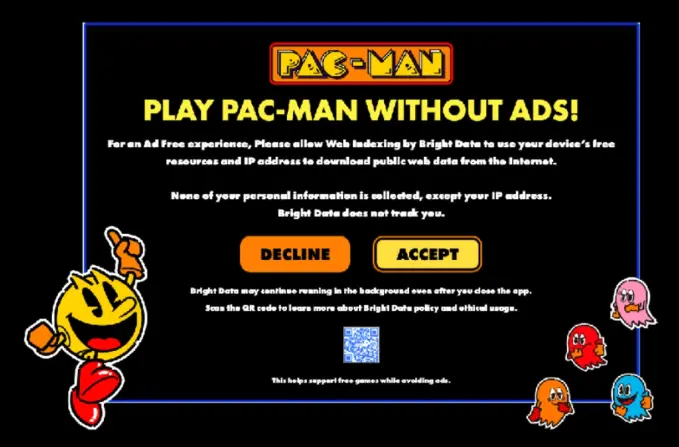
The controversy erupted publicly on July 2, 2026, when security firm Spur released a groundbreaking investigative report detailing the widespread embedment of residential proxy SDKs within smart TV applications. The study exposed a digital ecosystem where casual leisure applications—ranging from classic arcade games like Pac-Man to custom screensavers and file-utility tools—were secretly doubling as commercial proxy nodes.
According to Spur’s telemetry, developers were increasingly turning to proxy networks as a lucrative alternative to traditional ad-based revenue models. When installed, these SDKs would silently enlist the host smart TV into a global network, allowing paying corporate or individual clients to route their web traffic through the user’s residential IP address.
Industry Scrutiny and Media Exposure
Following the publication of the Spur report, security journalism outlets, notably KrebsOnSecurity, began probing major smart TV manufacturers regarding their platform vetting processes and app store compliance. The investigation highlighted that major platforms like LG’s webOS and Samsung’s Tizen OS had inadvertently permitted a massive volume of proxy-enabled applications to slip past automated security checks and manual reviews.
As public awareness grew, scrutiny intensified over how these apps obtained user authorization. In many cases, consent was buried deep within complex terms of service agreements or presented as a binary choice during initial application setup—a workflow easily misunderstood or bypassed by casual users, including minors within the household.
LG’s Policy Pivot and Enforcement Action
Faced with mounting pressure and empirical evidence from Spur, LG Electronics USA officials moved quickly to address the vulnerability. John Taylor, Senior Vice President at LG Electronics USA, issued a definitive statement clarifying that residential proxy utilization violates the intended design philosophy and operational scope of LG smart televisions.
Taylor confirmed that LG was actively collaborating with app developers to purge residential proxy options from all webOS-compatible applications. Developers who resisted or failed to remove the offending code faced a strict ultimatum: immediate suspension and removal from the LG app store. Concurrently, LG announced a comprehensive overhaul of its developer submission and evaluation pipelines to proactively intercept proxy SDKs before they reach end-users.
Supporting Context & Metrics: The Mechanics of Residential Proxies
How Residential Proxies Function
To understand the gravity of the smart TV proxy phenomenon, one must examine the mechanics of the residential proxy industry. Traditionally, web scraping, market research, ad verification, and geo-restricted content testing required data centers to acquire IP addresses. However, web servers frequently block data center IP ranges to mitigate automated bot activity and scraping.
To bypass these blocks, proxy networks buy or rent residential IP addresses from everyday internet service subscribers. By routing traffic through a residential IP address, a client’s requests appear to originate from a legitimate home user in a specific geographic region. While some users consciously rent out their bandwidth for financial compensation or ad-free experiences, the embedding of these SDKs inside consumer devices alters the value proposition—often turning a passive appliance into an unwitting relay point for global web traffic.
Metrics and Prevalence
Spur’s quantitative analysis painted a startling picture of ecosystem infiltration:
- LG webOS Store: More than 42 percent of evaluated games and applications contained residential proxy components capable of turning the television into an indefinite proxy node.
- Samsung Tizen OS Store: More than 25 percent of apps analyzed featured equivalent proxy-enabling SDK frameworks.
- Dominant Players: The investigation identified the residential proxy network Bright Data as the primary driver behind the majority of proxy SDK integrations discovered across both television ecosystems.
Official Statements and Industry Perspectives
LG Electronics USA
In his official correspondence with security researchers, Senior Vice President John Taylor emphasized the company’s zero-tolerance stance toward unauthorized network sharing on its hardware:

"A residential proxy network is not an intended use for LG smart TVs, and LG Electronics is working with developers to remove the residential proxy option from their apps on the webOS platform. If this option is not removed, these apps will be suspended."
Taylor added that LG’s internal audit of webOS applications is currently underway, noting that future platform updates will integrate heightened code-review protocols to permanently bar proxy SDK integration.
Bright Data
In response to the findings, Bright Data defended its operational framework, emphasizing strict adherence to transparency, user consent, and regulatory compliance:
"Every peer opts in through a dedicated screen and receives value in return; every customer is vetted, and our practices have now undergone a second independent audit by PwC. We remain committed to an open, transparent internet where legitimate businesses, researchers, and institutions can responsibly access data that lives in the public domain."
Bright Data and competing proxy providers maintain that they execute rigorous "Know Your Customer" (KYC) onboarding protocols and deploy technological countermeasures designed to prevent proxy users from probing or interacting with other devices residing on the local home network.
The Security Researcher Counter-Perspective
Despite assurances from proxy network operators regarding consent and security isolation, researchers remain deeply skeptical. Trevor Sutter of Spur challenged the efficacy of standard consent models in shared household environments:
"A one-time consent prompt buried in a TV app is not a substitute for meaningful transparency, ongoing control, and platform oversight. The risk is amplified when consent comes from individuals within the household who use the device but shouldn’t give consent, such as minors."
Security analysts point out that even if local network isolation is implemented, routing unvetted, anonymous third-party traffic through a residential IP address exposes the household to potential legal and reputational liabilities if the proxy node is abused for malicious activities, cyberattacks, or illicit data transfers.
Future Outlook and Broader Ecosystem Concerns
Raising the Bar for IoT and Smart Appliance Security
LG’s decisive crackdown on residential proxy SDKs marks a crucial turning point for the Internet of Things (IoT) and smart home device security. For years, smart televisions, refrigerators, and connected thermostats have operated in a regulatory grey zone—possessing computational power and internet connectivity comparable to desktop computers, yet lacking the robust endpoint security, monitoring tools, and user awareness associated with traditional PCs.
As manufacturers like LG tighten their app store compliance frameworks, developers will be forced to seek alternative monetization strategies that do not compromise core network integrity. Industry observers anticipate that other major ecosystem vendors, including Samsung, Roku, and Amazon (Fire TV), will face mounting pressure to audit their own application marketplaces and implement similar bans on residential proxy software.
Parallel Controversies: The Monitor Software Debacle
Even as LG earns praise for cleaning up its webOS application ecosystem, the company faces simultaneous scrutiny on other software fronts. Parallel investigations—such as a prominent report by hardware review channel Gamers Nexus—revealed that certain high-end LG LCD monitors automatically install third-party promotional software (specifically, McAfee antivirus subscription marketing apps) via Windows Update without explicit user approval prompts.
This convergence of incidents underscores a broader industry challenge: balancing commercial partnerships, software monetization, and user experience without sacrificing consumer trust, system transparency, or digital sovereignty. Moving forward, consumer advocacy groups and security professionals will undoubtedly maintain heightened vigilance over how major electronics manufacturers manage software supply chains across all connected hardware classes.