Executive Overview: As massive RPGs like Baldur’s Gate 3 and the upcoming The Blood of Dawnwalker dominate industry discourse with promises of sprawling storylines and countless endings, a quiet revolution is happening in the narrative design space. Developers are moving away from traditional, predictable binary choices and rigid conclusion metrics, choosing instead to experiment with character psychology, psychological tension, and radical structural subversion. This analysis explores three distinct titles—Zero Parades: For Dead Spies, Slay the Princess, and The Hundred Line: Last Defense Academy—that challenge what it truly means for player choices to matter in interactive media.
Executive Overview
The video game industry has long operated under a shared delusion regarding player agency. For decades, the gold standard of choice-driven narrative design has been measured in scale: the breadth of a dialogue tree, the dramatic, world-altering consequences of a final mission, or the sheer volume of disparate endings tucked away behind an elaborate spreadsheet of flag variables. Titles like Baldur’s Gate 3 and the Mass Effect trilogy cemented this paradigm, training players to obsess over macro-level outcomes—who lives, who dies, and which civilization gets saved or annihilated.
However, as Rebel Wolves ramps up marketing for The Blood of Dawnwalker and its myriad branching pathways, a fatigue has quietly settled over the genre. The traditional illusion of choice has become increasingly predictable. Players pull the lever, watch the cutscene, and wait for the numerical validation that their decision "mattered."
To find genuine innovation in interactive storytelling, one must look away from the industry’s blockbuster giants and toward titles that weaponize narrative architecture in unexpected ways. By redefining agency not as a God-like power to steer geopolitical events, but as a mechanism for exploring psychological degradation, philosophical ambiguity, and chaotic structural subversion, certain developers are charting a bold new course for narrative-driven games.
Detailed Chronology: The Evolution and Subversion of Choice
To understand where narrative design is heading, it is helpful to trace how player agency has been perceived and implemented over the last two decades.
The Illusion of Macro-Consequences
In the early days of modern choice-driven role-playing games, the focus was firmly on the destination. Developers invested heavily in building expansive narrative forks. Players were presented with monumental ethical dilemmas—genocide versus preservation, loyalty versus betrayal—with the implicit promise that their moral compass would permanently reshape the game’s universe.
Yet, this approach frequently hit a wall. The sheer logistical nightmare of creating exponentially expanding content led to the "funnel" effect, where vastly different playthroughs would inevitably collapse into a handful of standardized cinematic conclusions (as infamously observed in the discourse surrounding Mass Effect 3). Even when studios successfully avoided this bottleneck, the macro-consequence model conditioned players to treat choices as mathematical puzzles rather than emotional investments.
The Shift Toward Internal Psychology
Recognizing the limitations of external world-state changes, indie and mid-tier developers began shifting the aperture inward. Instead of asking how a choice alters the world, they began asking how a choice alters the protagonist. This evolution birthed the spiritual lineage of games like Disco Elysium, where skill checks and dialogue selections are not merely tools for problem-solving, but manifestations of internal psychological friction.
This chronological shift brings us to the contemporary landscape, highlighted by three distinct releases that dismantle traditional narrative expectations: Zero Parades: For Dead Spies, Slay the Princess, and The Hundred Line: Last Defense Academy.
Supporting Context & Metrics: Three Radical Approaches to Agency
1. Zero Parades: For Dead Spies — Embodied Uncertainty and Psychological Statistics
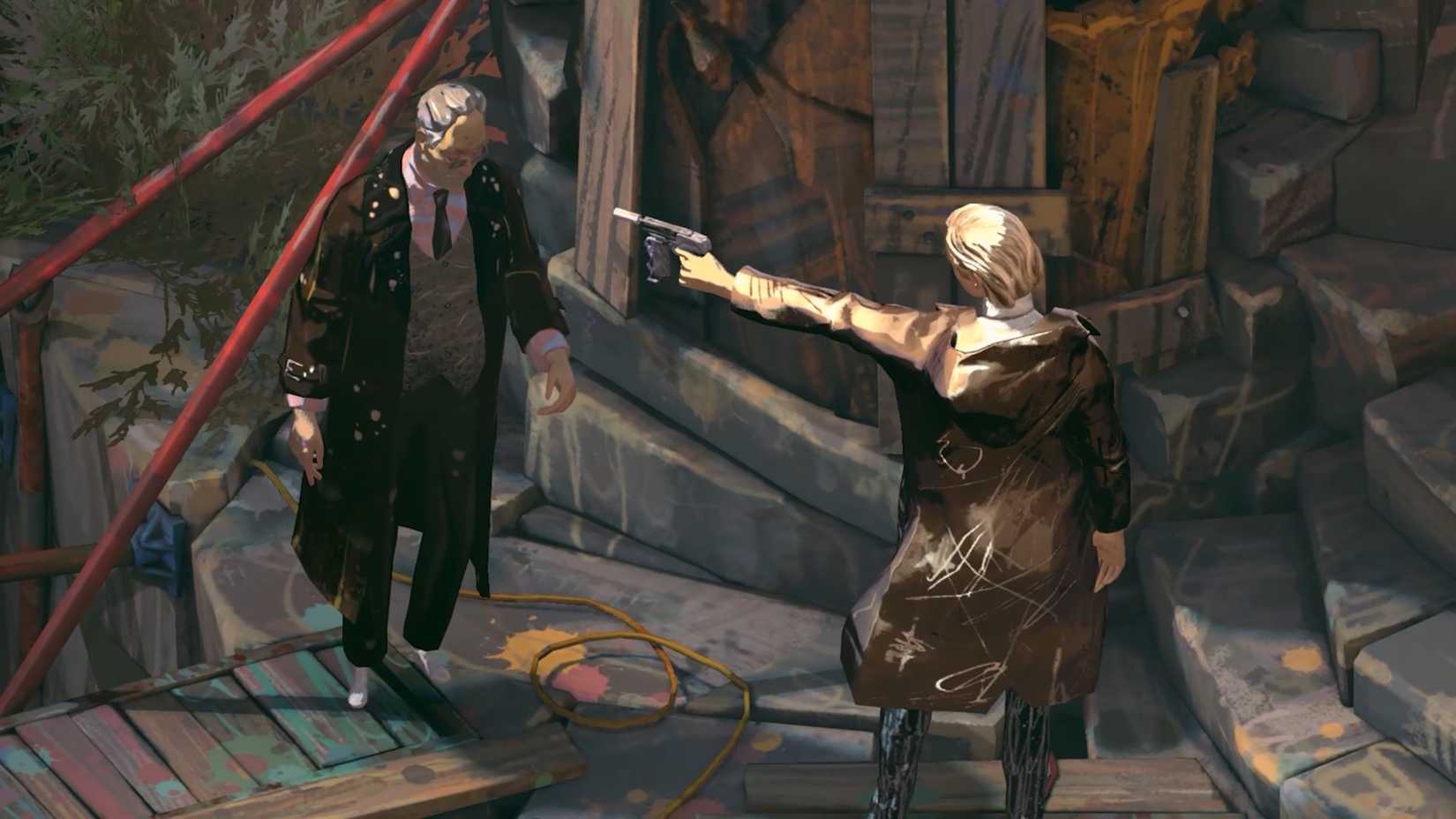
Zero Parades: For Dead Spies takes the foundational CRPG mechanics popularized by Disco Elysium and repurposes them into an instrument of profound psychological exposure. The protagonist, Hershel—a decommissioned spy waking up in a strange room with a comatose body and zero memory of how she arrived—serves as a vessel for the player’s anxieties.
In Zero Parades, choices do not merely unlock new dialogue lines or pass skill checks to bypass locked doors. Instead, they shape the player’s behavioral patterns and internal stability. Pumping points into specialized social or mental attributes yields fresh perspectives on the volatile fictional city of Portofiro, transforming what would traditionally be throwaway "lore drops" into core emotional rewards.
However, the game’s mechanics are ruthlessly unforgiving. Succumbing to paranoia, fatigue, or extreme ideological delusions can push your stats to catastrophic maximums, resulting in sudden, unceremonious death. Crucially, the game adopts a "yes, and" narrative philosophy. Even when a decision leads to a disastrous or seemingly fatal outcome, the story refuses to slam the door; it simply forces the player down a wildly divergent, harrowing path.
This design philosophy creates a perpetual state of existential dread. Players cannot min-max their way to a "correct" moral alignment because there is no safety net. You are forced to wing it, reacting to crises precisely as a traumatized, exhausted spy would. It is a masterclass in using game mechanics to foster genuine empathy and character embodiment.
2. Slay the Princess — Micro-Choices, Perspective, and Iterative Horror
Developed by Black Tabby Games—a studio renowned for aggressively pushing the boundaries of narrative mechanics in titles like Scarlet Hollow—Slay the Princess strips away the sprawling, continent-spanning scope of traditional RPGs and traps the player in a hyper-focused, recursive nightmare.
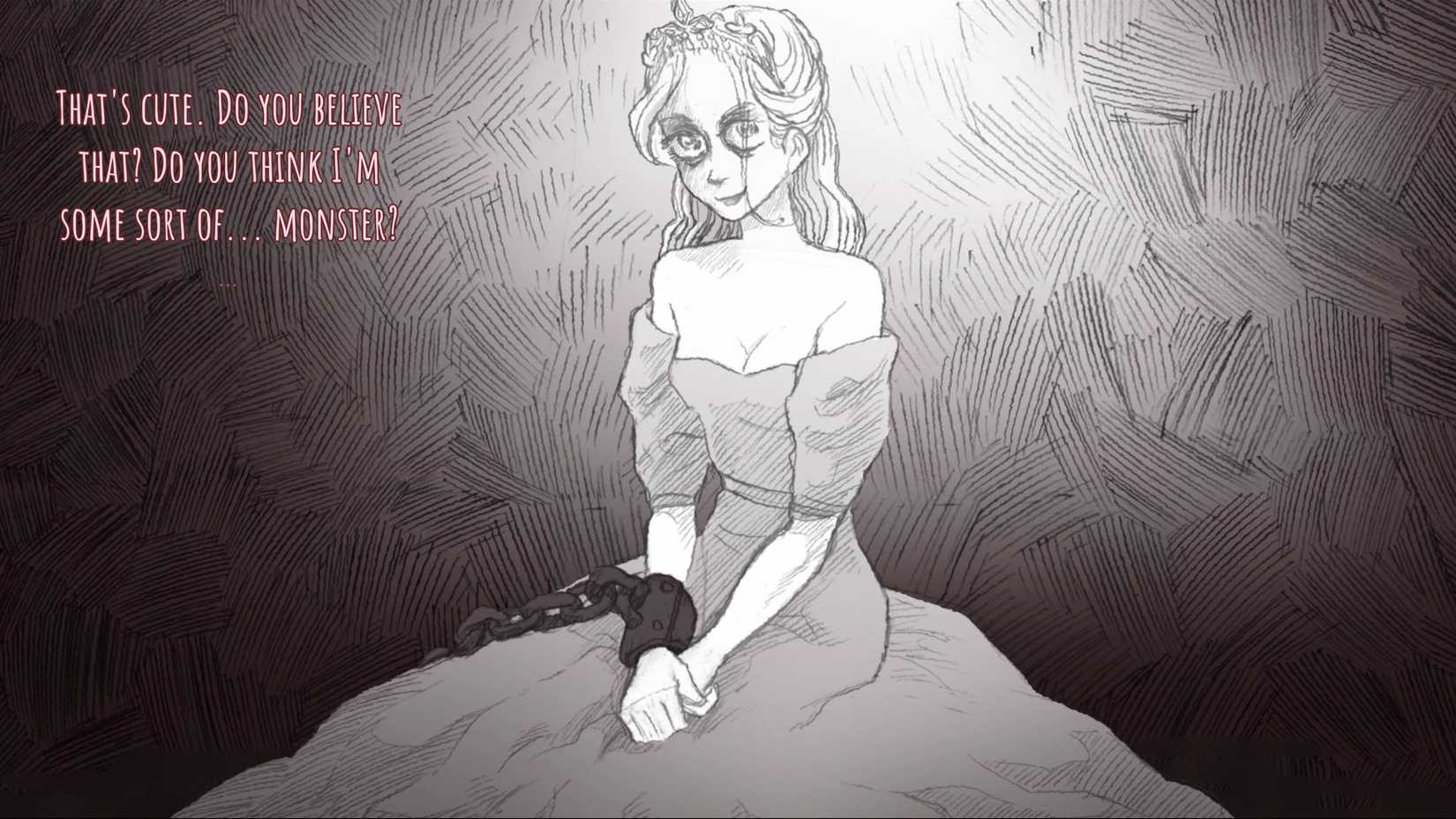
The premise is deceptively simple: you are a warrior tasked with walking into a cabin, descending into a basement, and slaying a princess who the narrator insists is a world-destroying monster in disguise. How you respond to this directive—whether you pick up the blade, try to reason with her, or refuse to enter the cabin entirely—fractures the narrative into an astonishing array of thematic branches.
What makes Slay the Princess brilliant is how it handles the convergence of choice and consequence. While the myriad branches ultimately funnel into a structured set of final resolutions, the destination is largely irrelevant to the power of the experience. Every single path unpacks a completely new facet of the protagonist, the narrator, and the princess herself.
Furthermore, the game leverages player memory as a mechanical constraint. If the princess brutally murders you in your first loop, your psychological baseline shifts. You are far less likely to trust her innocent protests in subsequent runs. This feedback loop imbues every micro-choice with an intense, personal gravity that macro-scale endings simply cannot replicate.
3. The Hundred Line: Last Defense Academy — Radical Subversion and the Loss of Control
Perhaps the most audacious experiment in recent gaming history is The Hundred Line: Last Defense Academy, developed by Too Kyo Games. Breaking conventional wisdom regarding player agency, the game forces players down a rigidly linear, unbroken path for the first 30 hours. You follow a group of students whisked away to a bizarre academy following an invasion of Tokyo by cuddly yet lethal murder monsters, trading mundane school life for blood magic and supernatural warfare.
Then, the game ostensibly ends. When you restart, the structural floodgates fly open.
A single decision can completely obliterate the established storyline, transforming the lives, relationships, and trajectories of every student in the school—often with tragic or monstrous results. The Hundred Line features an staggering 100 distinct endings, deliberately refusing to designate any single path as "canon." The game treats absurd, comedic joke endings with the exact same narrative weight and validity as its most harrowing, traumatic conclusions.
By imbuing a single player input with cataclysmic, unpredictable power while simultaneously stripping away granular control over the ultimate outcome, Too Kyo Games subverts the fundamental dynamic between player and software. You pull the trigger, but you have zero control over the cosmic explosion that follows. Though such an ambitious structural scale nearly drove the studio to financial ruin, it stands as a monumental achievement in defying player expectation.
Official Statements & Industry Perspectives
The cultural shift away from traditional branching paths has not gone unnoticed by developers and narrative designers across the industry. As interactive storytelling matures, creators are increasingly vocal about the artistic limitations of chasing endless permutations.
Speaking on the challenges of choice-driven design, narrative leads across the independent and AAA sectors have frequently noted that the obsession with "number of endings" often detracts from the emotional resonance of individual moments.
"When a game focuses entirely on how many flags you tripped to determine the color of the final explosion, it treats the player like a data processor rather than an emotional participant," notes a sentiment increasingly echoed among narrative designers experimenting with surrealist and psychological frameworks.
Creators like those at Black Tabby Games and Too Kyo Games have argued that true immersion stems from uncertainty—from forcing players to sit with the discomfort of their choices rather than providing them with a predictable matrix of utopian or dystopian outcomes. By prioritizing the texture of the journey over the logistics of the destination, these studios are actively reshaping the vocabulary of interactive fiction.
Future Outlook
As we look toward the horizon of video game development in the latter half of the 2026 gaming landscape and beyond, the lessons taught by titles like Zero Parades, Slay the Princess, and The Hundred Line offer a clear roadmap for the future.
The era of the checklist RPG—where players methodically farm approval ratings and scour dialogue trees for optimal outcomes—is reaching a creative plateau. While massive, cinematic epics will always hold a cherished place in the medium, the true frontier of innovation belongs to games that dare to make players uncomfortable.
Future narrative designers are likely to lean further into:
Psychological Integrity: Designing choices that reflect internal states, mental degradation, and emotional trauma rather than purely external political alignments.
Recursive Storytelling: Utilizing loops, memory retention, and shifting perspectives to make identical physical spaces feel entirely new based on past choices.
Controlled Chaos: Abandoning the comforting illusion of total control, allowing single decisions to radically and unpredictably fracture narratives without offering a neat, sanitized resolution.
Ultimately, video games possess a unique superpower: the ability to make us complicit in the stories we consume. By moving beyond the binary constraints of good versus evil and big versus small, developers are proving that the most impactful choices are not the ones that change the world, but the ones that fundamentally change us.