Executive Overview
In the high-stakes world of modern video game development, the "leak" is often viewed as an industry curse. Publishers spend millions of dollars meticulously orchestrating marketing campaigns, only for confidential build files, unannounced trailers, and major narrative twists to be dumped onto anonymous forums by rogue insiders, data miners, or external hackers. For developers like Rockstar Games, whose Grand Theft Auto VI assets were famously spilled across the internet, or Ubisoft, facing premature storefront publications, leaks represent logistical nightmares and uncontrolled PR crises.
Yet, long before contemporary data breaches and midnight forum drops altered the promotional landscape, industry pioneers were already subverting the very concept of the leak.
Former Valve writer and industry veteran Chet Faliszek has recently pulled back the curtain on one of the developer’s most audacious marketing maneuvers. In a revealing new video uploaded to his personal YouTube channel, Faliszek confessed that Valve intentionally orchestrated a "leak" of the cinematic trailer for Left 4 Dead 2 back in 2009. Far from being the result of a disgruntled employee or a sophisticated cyberattack, the premature release of the promotional footage was a calculated, guerrilla tactic designed to circumvent strict roadblocks imposed by the Entertainment Software Rating Board (ESRB).
Confronted with regulatory delays and creative constraints that threatened to stifle their promotional timeline, Valve did what Valve historically does best: they broke the rules. By taking matters into their own hands and feeding the footage directly to the public under the guise of an accidental leak, the studio managed to dodge bureaucratic red tape, generate explosive viral hype, and ultimately secure one of the most successful cooperative shooter launches in gaming history. Now, nearly two decades later, as statutes of limitations on industry secrets expire, Faliszek’s confession offers a fascinating window into the unconventional, anti-establishment ethos that defined Valve during its golden era of game development.
Detailed Chronology: The Anatomy of a Calculated "Leak"
To fully understand the weight of Faliszek’s confession, one must rewind to the turbulent development cycle of Left 4 Dead 2 in 2009. The original Left 4 Dead had launched in late 2008 to widespread critical acclaim, establishing a new gold standard for cooperative, director-driven multiplayer experiences. Eager to capitalize on the momentum, Valve moved at a breakneck speed that shocked industry observers, announcing a sequel just one year later.
However, this rapid turnaround brought administrative friction, particularly with regulatory bodies tasked with content oversight.
The Regulatory Roadblock
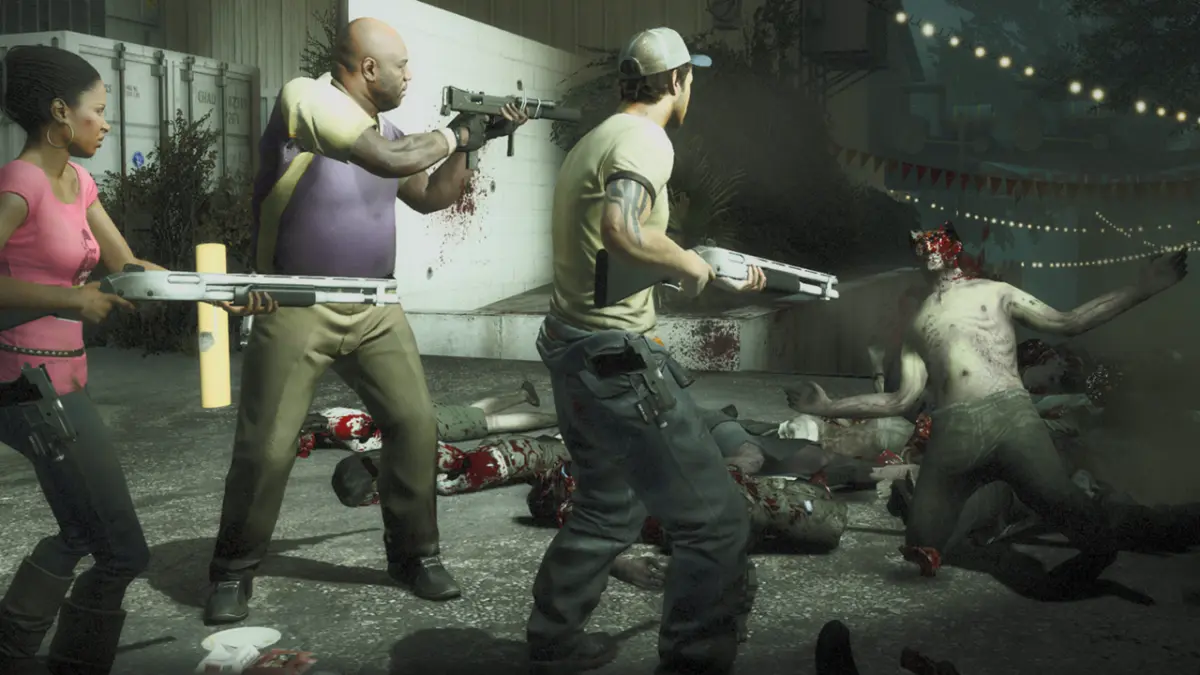
As the autumn of 2009 approached, Valve was preparing its global marketing blitz for the November launch of Left 4 Dead 2. Central to this campaign was a cinematic promotional piece that would eventually be known as the "Zombie Survival Guide" trailer. Stretching over three minutes, the cinematic introduced players intimately to the sequel’s fresh cast of survivors—Coach, Ellis, Nick, and Rochelle—as they brutally carved their way through overwhelming waves of the infected using an escalating arsenal of firearms, melee weapons, and chainsaws.
The footage was visceral, graphic, and dripping with the over-the-top, B-movie gore that defined the franchise. Unfortunately, it was too visceral for the tastes of the ESRB at that specific juncture.
According to Faliszek, the regulatory board raised significant objections to the trailer’s contents, refusing to grant approval for its official release in its current, unedited state. While Faliszek did not explicitly detail the exact frames or content that triggered the ESRB’s ire, the board’s hesitation likely centered on the hyper-realistic depictions of human-on-human violence and extreme gore rendered against defenseless or overwhelmed populations.
Facing a rigid bureaucratic wall that demanded extensive edits, tone-downs, and linguistic sanitization, Valve faced a classic creative dilemma. They could either bow to the board’s demands, severely delaying their marketing rollout and diluting the hard-hitting artistic vision of the trailer, or they could find a workaround. Opting for the latter, Valve executives and creative leads engineered a covert operation.
The October 2009 Drop
In October 2009, roughly one month before Left 4 Dead 2 was scheduled to hit store shelves and digital storefronts via Steam, the "Zombie Survival Guide" cinematic mysteriously surfaced online. To the eyes of consumers and media outlets, it appeared to be a classic premature internet leak—an early-access video slipped out by an anonymous source or an overzealous media tester.
The community ate it up. The video spread like wildfire across gaming forums, early social media channels, and enthusiast sites, generating intense discourse and mounting pre-order hype. Fans dissected every frame, analyzed the new special infected, and celebrated the introduction of the iconic melee weapons.
What the public did not know—and what remained a closely guarded corporate secret for nearly twenty years—was that the "leak" originated from inside Valve headquarters.
"I think we can’t get in trouble for that now. It was like 20 years ago," Faliszek remarked in his retrospective video. "It’s funny seeing leaked stuff now because, yeah, I don’t think you can look for ‘leaked Left 4 Dead 2 trailer’ because it’s just going to be lost."
By weaponizing the internet’s insatiable appetite for leaks, Valve effectively bypassed the ESRB’s promotional embargo. The trailer reached its intended audience in its raw, unfiltered glory, cementing the game’s cultural footprint months before regulatory compliance could catch up.
Supporting Context & Metrics: The Cultural and Commercial Impact
The gamble paid off exponentially. While unauthorized leaks today often disrupt a game’s narrative integrity or expose unfinished builds that draw unwarranted negative press, Valve’s controlled leak acted as a masterclass in organic consumer engagement.
Critical and Commercial Reception
When Left 4 Dead 2 officially launched on November 17, 2009, it defied any lingering controversy, earning rapturous praise from critics and players alike. Outlets such as IGN awarded the game a stellar 9/10 review, cementing its status as a monumental achievement in multiplayer design. Reviewers highlighted the game’s refined Director AI, varied campaign structures, and the brilliant integration of melee combat—elements prominently showcased in the illicitly released cinematic.
| Metric / Detail | Left 4 Dead 2 (2009) Launch Data |
|---|---|
| Release Date | November 17, 2009 |
| Platforms | Microsoft Windows, Xbox 360 |
| IGN Review Score | 9/10 ("Amazing") |
| Core Innovations | Advanced Director 2.0 AI, Melee Weapons, Dismemberment Engine, New Survivors |
| Marketing Milestone | Guerrilla cinematic "leak" to bypass ESRB promotional delays |
The title was lauded as "one of the most distinctive co-operative titles out there," establishing a benchmark for team-based survival shooters that developers are still attempting to replicate over a decade later.
The Valve Corporate Ethos of the Era
To understand why Valve would risk regulatory pushback via a covert leak, one must examine the corporate culture of the studio during the late 2000s. Operating as a private entity flush with the astronomical, recurring revenue of Steam and enduring hits like Counter-Strike, Half-Life, and Team Fortress 2, Valve operated with a distinct anti-corporate irreverence.
Under co-founder Gabe Newell, the studio prided itself on agility, direct communication with its player base, and a flat management structure where traditional corporate hierarchies were largely absent. If a bureaucratic hurdle stood in the way of artistic expression or efficient business operations, Valve’s leadership was frequently willing to explore unorthodox—and occasionally clandestine—solutions.
The Left 4 Dead 2 trailer leak was an early manifestation of this disruptive DNA. Long before modern independent developers began embracing viral social media marketing stunts, Valve recognized that traditional PR pipelines were secondary to the raw, unfiltered power of grassroots internet culture.
Official Statements & Industry Reactions
Chet Faliszek’s casual disclosure on his YouTube channel has sent ripples through the modern gaming community, prompting widespread discussion across platforms like Reddit, ResetEra, and X (formerly Twitter).
Faliszek, who spent over a decade at Valve contributing to legendary franchises like Half-Life, Portal, and Left 4 Dead before eventually departing to co-found independent studio Stray Bombay, offered his confession with a distinct sense of nostalgic amusement. Speaking on the modern ecosystem of data security and pervasive leaks, he noted the stark contrast between the calculated maneuver of 2009 and today’s landscape of devastating corporate hacks.
"Yeah, it originally got leaked because we had this with the ESRB, so that’s why a lot of the language had to get toned down," Faliszek explained, noting that the official, compliant release eventually required adjustments to satisfy regulatory sensitivities, while the leaked version preserved their initial creative intent.
Industry analysts and legal experts have since weighed in on the revelation, pointing out that while intentional leaking of promotional material to bypass ratings boards sits in a fascinating ethical gray area, it rarely crosses into actionable illegality—hence Faliszek’s confidence in discussing the matter two decades later. The ESRB, for its part, has not issued an official statement regarding the nearly twenty-year-old marketing maneuver, likely viewing the incident as a relic of a bygone era of digital distribution.
Future Outlook: The Evolution of Leaks and Marketing
Faliszek’s revelation arrives at a fascinating crossroads for the video game industry. Today, the dynamic surrounding leaks has fundamentally shifted. Valve itself has recently found its internal security tested, notably via a massive data leak exposing nearly twelve terabytes of historical Steam files, source codes, and unreleased project data spanning over a decade.
Unlike the targeted, humorous cinematic leak of 2009, modern leaks are catastrophic data breaches that expose developers to intense crunch, security vulnerabilities, and psychological strain. When threat actors infiltrate studio servers, dump early alpha builds, or expose confidential character concepts, the consequences are immediate and damaging.
Consequently, modern publishers have locked down their internal pipelines to an unprecedented degree. The days of a major developer casually orchestrating an underground trailer leak to sidestep a ratings board are effectively gone. Regulatory compliance has grown tighter, distribution channels are centralized, and the sheer velocity of modern social media ensures that any unofficial drop is instantly scrutinized by corporate legal teams.
Yet, the legacy of Valve’s 2009 gambit remains an enduring legend of industry folklore. It stands as a testament to a time when game development was wilder, when studios could outmaneuver bureaucratic gatekeepers with a clever wink and a digital upload, and when the line between consumer and creator was bridged by shared mischief.
As fans continue to comb through decades of archival Valve data and mourn the absence of an elusive Left 4 Dead 3, Faliszek’s confession serves as a poignant reminder of why the studio captured the imaginations of millions in the first place: they were always willing to play by their own rules.