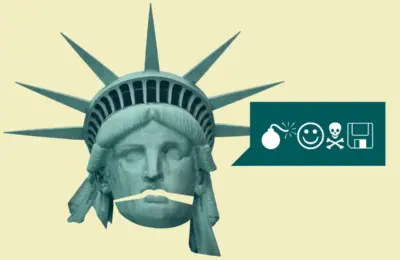
The landscape of modern geopolitical conflict has shifted away from traditional battlefields and into the vast, decentralized architecture of the internet. While public discourse has heavily focused on state-sponsored hacking and overt social media interference aimed at altering electoral outcomes—such as the 2016 U.S. presidential election—a far more insidious and subtle threat has emerged. Russian state actors, specifically through military intelligence operations and state-funded troll farms, have systematically injected manufactured personas into domestic political ecosystems.
Recent investigative reports reveal that this strategy extends far beyond simple meme-sharing or divisive comment sections. Foreign intelligence operatives have successfully created entirely fabricated journalists, complete with extensive digital footprints, serial plagiarism, and bylines in legitimate, independent media outlets.
The case of "Alice Donovan," a purported freelance writer who managed to publish pieces across various progressive and alternative websites, serves as a stark warning. Far from promoting a specific conservative candidate or ideal, this operation illustrates a broader, more disruptive Kremlin doctrine: to deepen societal fractures, sow deep distrust among racial, ethnic, and political factions, and compromise the integrity of independent journalism. As national security experts warn that these asymmetric information warfare campaigns will only grow more sophisticated, media organizations, tech platforms, and democratic institutions face an unprecedented challenge in defending the public square without sacrificing foundational principles of free expression.
Detailed Chronology: The Anatomy of a Digital Fabrication
The mechanics of Russian state-sponsored information warfare rely on long-term infiltration, identity creation, and the exploitation of open-source publishing platforms. Tracing these campaigns reveals a calculated progression from foreign testing grounds to targeted domestic operations within Western democracies.
1. The Blueprint: Ukraine and the 2014 GRU Playbook
The foundational architecture of contemporary Russian disinformation was laid out well before the 2016 American elections. Internal documents compiled in 2014 by Russia’s GRU military intelligence agency—subsequently intercepted and analyzed by Western intelligence services—shed light on early operations targeting Ukraine.
During the annexation of Crimea and the destabilization of the Donbas region, GRU-directed operatives deployed artificial social media networks to flood the internet with pro-Kremlin narratives. These accounts were engineered to rapidly generate high volumes of engagement, achieving visibility metrics exceeding 200,000 views per day within a mere five-day window. The success of this operational model proved to Russian military planners that decentralized networks of fake accounts could successfully manipulate regional narratives, prompting them to scale the tactic globally.
2. The Birth of "Alice Donovan" (February 2016)
Building upon the Ukrainian blueprint, Russian intelligence contractors began constructing sophisticated journalist personas designed to infiltrate foreign media outlets. One such creation was "Alice Donovan," a fictitious freelance writer targeted specifically at left-wing, anti-establishment, and progressive publications.
According to investigative findings by editors at the left-leaning outlet CounterPunch, Donovan’s digital trail began abruptly on February 25, 2016, with an article published on the conspiracy-leaning website Veterans Today. Prior to this date, Donovan possessed zero verifiable internet presence—no university records, no historical social media engagement, and no professional portfolio.
Over the subsequent months, whoever controlled the persona managed to place at least six articles on CounterPunch and roughly ten more across other alternative platforms. An analysis of these submissions revealed systemic plagiarism, lifting paragraphs from various established outlets. When CounterPunch editors Jeffrey St. Clair and Frank Joshua received a private tip from The Washington Post regarding the FBI’s conclusion that Donovan was a Russian fabrication, they attempted to contact her. Predictably, the email address tied to the persona yielded no response, failing to provide basic verification such as a driver’s license or utility bill. Despite this exposure, Donovan’s Twitter account remained active, posting a peculiar ideological hybrid of hard-left and conservative media commentary designed to muddy ideological waters.
3. Radicalizing Domestic Movements: The BlackMattersUS Campaign
Simultaneously, Russian operatives were executing parallel campaigns targeting racial tensions in the United States. Investigations into the St. Petersburg-based Internet Research Agency (IRA)—notably via disclosures from the independent Russian media outlet RBC—revealed that a significant portion of the troll factory’s budget was dedicated to aggravating racial divides.
The IRA established BlackMattersUS, a sprawling website masquerading as a more radical iteration of the Black Lives Matter movement. Operating primarily through coordinated Facebook networks, the fake organization transcended the digital realm. It successfully organized real-world street protests, driving between 5,000 and 1,000 demonstrators into the streets of New York City following the 2016 election, alongside coordinated rallies in Charlotte, North Carolina.
As external pressure mounted and investigative journalists began exposing the infrastructure behind these groups, the operators behind BlackMattersUS engaged in brazen psychological warfare. In a bizarre public twist, the site briefly rebranded itself as "Russian trolls," inviting internet users to submit questions for a Reddit "Ask Me Anything" session that ultimately never materialized before the page was scrubbed.
This multi-pronged strategy also encompassed portals such as BlackFist—an online initiative encouraging Black Americans to undertake tactical and combat training—and Blacktivist, a prominent social media page utilized to amplify racial grievances and depress voter turnout among targeted demographic groups.
Supporting Context & Metrics: The Mechanics of Societal Division
To fully comprehend the threat posed by these operations, one must analyze the strategic intent and quantitative impact of the disinformation apparatus.
The Core Objective: Friction Over Faction
A common misconception during the immediate aftermath of the 2016 U.S. presidential election was that Russian intelligence operations were exclusively designed to secure a Donald Trump victory. While ideological and rhetorical alignments existed between certain political figures and the Kremlin—such as a mutual disdain for institutional norms and "political correctness"—the fundamental mandate of Russian information warfare is decidedly non-partisan.
Declassified intelligence assessments and analytical reviews of IRA internal documents indicate that the primary objective is the systemic destabilization of democratic societies. By eroding trust in democratic institutions, the electoral process, the judiciary, and the free press, foreign adversaries seek to paralyze Western policymaking. Whether boosting Donald Trump, promoting Bernie Sanders to undermine Hillary Clinton within the Democratic primary, or inciting racial friction via BlackMattersUS, the underlying metric of success is social polarization, not ideological victory.
Quantitative Scope of the Troll Factory
- The Internet Research Agency (IRA) dedicated roughly 50% of its operational budget within specific departments to targeted social media manipulation focusing on racial and ethnic divisions.
- Real-World Mobilization: Russian-backed Facebook pages and groups successfully coordinated physical protests attended by thousands of American citizens in major metropolitan areas, proving that digital operations could seamlessly translate into real-world civil unrest.
- Digital Footprint: Fabricated accounts like Alice Donovan’s leveraged cross-platform posting strategies, interspersing syndicated and plagiarized articles across dozens of fringe and mainstream alternative websites to bypass editorial filters.
Official Statements and Expert Analysis
As governments and independent watchdogs grapple with the reality of weaponized information, security experts have emphasized that the events of 2016 and 2017 were merely a proof-of-concept for future operations.
Douglas Lute, the former U.S. Ambassador to NATO, offered a sobering assessment in interviews with The Washington Post:
"We should have every expectation that what we witnessed last year is not a one-shot deal. The Russians are onto something. They found a weakness, and they will be back… with a more sophisticated and targeted approach."
The challenge of defending against this hybrid warfare creates a profound policy dilemma. In attempting to purge malicious actors, foreign bots, and state-sponsored propagandists, regulatory bodies and technology platforms risk overcorrecting, thereby infringing upon legitimate free speech and stifling unpopular or anti-establishment viewpoints.
Reflecting on their vulnerability to the Alice Donovan infiltration, CounterPunch editors Jeffrey St. Clair and Joshua Frank articulated the delicate balancing act facing independent journalism:
"Our challenge going forward will be to keep CounterPunch as open as possible to a global network of writers from a wide range of political viewpoints without leaving the site vulnerable to trolls, pranksters, propagandists or government operatives, no matter what country they may be tied to."
Future Outlook: The Next Wave of Information Warfare
As the geopolitical landscape enters subsequent election cycles, the methodologies deployed by state-backed threat actors continue to evolve. The reliance on simple text-based fake profiles and rudimentary troll farms is rapidly giving way to advanced artificial intelligence, deepfake media, and automated bot networks capable of mimicking nuanced human discourse with terrifying precision.
Key Challenges Ahead:
- Attribution and Verification: As intelligence services expose fake journalist personas like Alice Donovan, foreign actors are adapting by utilizing compromised accounts belonging to real, living individuals, or by leveraging generative AI to build entirely synthetic digital identities with complete educational and professional histories.
- The Censorship Dilemma: Democracies must navigate the fine line between mitigating state-sponsored propaganda and enforcing authoritarian content moderation that silences legitimate dissent. Over-reliance on corporate tech censorship risks delegitimizing independent media ecosystems.
- Cross-Border Collaboration: Information warfare is no longer the exclusive domain of Moscow. Intelligence analysts warn that state actors in Beijing and other regional power centers are studying and refining these methodologies, ensuring that information warfare will remain a permanent fixture of international relations.
Ultimately, the revelation that a fictitious freelance writer could successfully penetrate progressive publications underscores a hard truth: the most effective weapon in modern information warfare is not the lie itself, but the willingness of an already polarized society to believe it. Safeguarding democratic institutions will require a synchronized defense encompassing rigorous editorial verification, enhanced digital literacy, and resilience against manufactured outrage.