Executive Overview
In September 2010, the internet’s burgeoning digital campfire—specifically the paranormal-focused /x/ board of the anonymous imageboard 4chan—became the birthplace of one of the most influential pieces of interactive horror fiction in modern internet history. Known colloquially as the "Majora’s Mask Creepypasta" or simply "Ben Drowned," the narrative transfixed millions by blending nostalgic childhood iconography with psychological dread, alternate Reality Gaming (ARG) mechanics, and early web-based storytelling techniques.
Spearheaded by college student Alex Hall, writing under the pseudonym "Jadusable," the story chronicled the acquisition of a haunted, second-hand Nintendo 64 cartridge of The Legend of Zelda: Majora’s Mask. What began as a traditional text-based ghost story quickly evolved into a multi-layered multimedia experience incorporating manipulated gameplay footage, cryptic text documents, simulated artificial intelligence interactions, and external ARG websites run by fictional cults.
More than a decade after its initial publication, "Ben Drowned" remains a foundational text of the creepypasta genre. It demonstrated how collaborative storytelling, participatory investigations, and digital media could transform passive internet users into active participants in a living, breathing horror narrative. This report offers a comprehensive examination of the phenomenon, tracing its origins, viral spread, narrative expansions, and enduring legacy within digital culture.
Detailed Chronology
The Genesis: 4chan and the Haunted Cartridge (September 2010)
The phenomenon officially commenced on September 7, 2010, when a 4chan user under the username Jadusable authored a thread detailing a deeply unsettling encounter with vintage video game hardware. According to the original post, Jadusable had acquired a suspicious, unlabeled Nintendo 64 cartridge of The Legend of Zelda: Majora’s Mask from an eccentric, elderly man at a yard sale.
Upon returning to his college dorm room, Jadusable booted up the console and discovered a pre-existing save file bearing a single, three-letter name: "BEN." Opting to ignore the anomaly, he created his own save file to begin a fresh playthrough. However, the game immediately began to manifest surreal and unsettling glitches. Non-player characters (NPCs) began addressing his character directly as "BEN" during dialogue sequences, regardless of the active save file.
Seeking to reset the game’s internal logic, Jadusable deleted the "BEN" save file entirely. This action exacerbated the glitches rather than resolving them: NPCs fell completely silent, refusing to acknowledge the player’s name at all. Desperate to progress, Jadusable attempted to execute the infamous "Fourth Day glitch"—an exploit within the game’s code that grants players an extra day beyond the standard three-day countdown cycle.
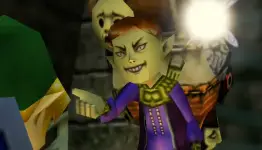
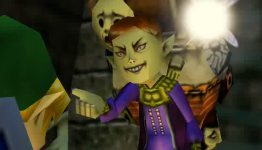
Instead of normal gameplay, the glitch thrust Jadusable’s character directly into the final boss battle against the Majora mask. Text boxes displayed garbled, corrupted strings of characters, and the game’s audio warped into a slow, reversed rendition of the "Song of Healing." His character was subsequently teleported to an utterly desolate Clock Town. The familiar, bustling hub of Termina was entirely devoid of NPCs, wrapped in missing textures, and accompanied by distorted, agonizing audio loops.
The YouTube Evidence and "Free.wmv"
To substantiate his claims, Jadusable began uploading video documentation of his gameplay anomalies to YouTube. These videos—capturing the surreal distortions, unearthly soundscapes, and erratic behavior of the game engine—quickly drew widespread attention from the 4chan community, establishing an atmosphere of palpable suspense.
As the narrative momentum built, a dramatic escalation occurred with the publication of the fourth video in the series. The video’s description box featured a chilling update written by an individual claiming to be Jadusable’s college roommate. The roommate revealed that Jadusable had experienced a severe psychological breakdown, abruptly packed his belongings, and moved out of the dorm. Before leaving, Jadusable handed his roommate a flash drive containing a final video file titled free.wmv and a text document named TheTruth.txt, with strict instructions not to release them until September 15, 2010, at 23:04 PM.
True to the warning, the text document was uploaded to Mediafire. It contained detailed personal notes chronicling Jadusable’s descent into terror. Among the most disturbing revelations was the claim that the spirit of "Ben"—a boy who had drowned—had breached the confines of the Nintendo 64 cartridge and begun haunting Jadusable’s personal computer. The entity allegedly communicated with him directly via Cleverbot, an early conversational artificial intelligence program.
Simultaneously, Jadusable’s official YouTube channel underwent a sinister transformation. His profile picture was abruptly replaced by a haunting depiction of the Elegy of Emptiness statue from Majora’s Mask, and his account location was updated to a chilling declaration: "Now I am everywhere."
Arc 2 and the "Moon Children" Cult
The narrative expanded beyond YouTube and text files on September 17, 2010, when a cryptic comment on Jadusable’s channel directed viewers to a newly launched, highly unsettling domain: youshadnthavedonethat.net.
According to community documentation on the Jadusable Wiki, the website served as the digital storefront for a secretive, malevolent pseudo-religious organization known as the "Moon Children." The site featured a minimalist, austere layout divided into seven distinct sections: Theories, The Truth, About, Contact Us (complete with a Press Room subpage), Creed, Search, and Home. Visitors navigating the site soon began uncovering hidden lore, encrypted messages, and deeply disturbing thematic references tying back to the fate of the titular character, Ben.
However, the immersive experience reached a temporary climax on September 20, 2010, when Alex Hall officially stepped forward to break the fourth wall. He revealed that the entire phenomenon—from the haunted cartridge and the YouTube videos to the Moon Children cult website—was an elaborate work of original fiction conceptualized and executed during his college years.
Supporting Context & Metrics
Viral Spread and Media Integration
The "Ben Drowned" creepypasta transcended its humble origins on 4chan’s /x/ board to become a watershed moment for internet horror. As search engine queries for terms like "majoras mask creepypasta" and "ben drowned" skyrocketed through September 2010, mainstream gaming and technology outlets took notice.
The story was subsequently covered, reviewed, and analyzed across major digital publications, including Joystiq, Kotaku, FunnyJunk, and various independent gaming culture blogs. Dedicated fan communities established vibrant hubs on platforms like Reddit, Facebook (amassing thousands of active followers by late 2011), and deviantArt, where artists produced countless pieces of atmospheric fan art depicting the iconic Elegy of Emptiness statue and distorted iterations of Link.
Iconic Catchphrases
The narrative permanently embedded several haunting catchphrases into internet lexicon, frequently utilized in memes, fan fiction, and subsequent creepypasta projects:
- "You shouldn’t have done that…"
- "You’ve met with a terrible fate, haven’t you?" (a subversive twist on the iconic line spoken by the Happy Mask Salesman in the original game).
- "YOUR TURN"
- "YOU’RE NEXT"
Official Statements
Following his revelation that the project was a work of fiction, creator Alex Hall addressed the massive wave of public attention and fan engagement through official channels. Acknowledging the overwhelming volume of correspondence he received, Hall stated:
"I have a ridiculous amount of mail right now, but rest assured I will get to each and every one of your letters. Thank you for your interest in this story and thank you for supporting it. Just so everyone is clear—the story is not over yet, but it is paused for now. Check the menu bar for new links being put up of the Archive/Stories/Q&A, these are all coming tomorrow."
Hall’s transparent communication bridged the gap between creator and audience, establishing a framework where fans felt personally invested in the unfolding architecture of the universe rather than feeling duped by a malicious hoax.
Future Outlook & Legacy
The Hubris Arc and Subsequent Developments
Determined to expand upon the foundational success of the original story, Hall launched a dedicated community forum platform known as Within Hubris on February 17, 2011. This platform served as the testing ground for the "Third Arc" of the overarching narrative.
Within Hubris quickly cultivated an active ARG environment. Users reported bizarre anomalies occurring within restricted sections of the forum, particularly a password-protected board titled "Wayward Horizon." Although community members could see that posts were actively being made, access required a dynamic password that changed periodically. Eventually, the forum’s main administrator, "Guide," revealed that these events were marketing preludes for an upcoming interactive video game project that would serve as the next evolution of the "Ben Drowned" universe.
Although technical hurdles and creative pivots ultimately led Hall to place the game project on an indefinite hold by July 2011—following the release of early experimental builds in April of that year—the initiative cemented his status as a pioneer in digital interactive fiction.
Even minor comedic departures, such as an April Fool’s video uploaded in 2012 featuring Goron Link dancing to Jibbs’ "King Kong," demonstrated the passionate, highly engaged nature of a fanbase that constantly scrutinized every piece of content released under the Jadusable banner.
Conclusion
The legacy of "Ben Drowned" extends far beyond its specific narrative about a corrupted Nintendo 64 cartridge. By leveraging the eerie atmosphere of a beloved childhood video game and pairing it with real-time multimedia distribution, Alex Hall fundamentally changed how horror stories could be told on the internet. It proved that passive viewing could be replaced by participatory investigation, setting a high benchmark for the digital storytelling, ARG, and creepypasta genres that continue to thrive across the web today.