Executive Overview
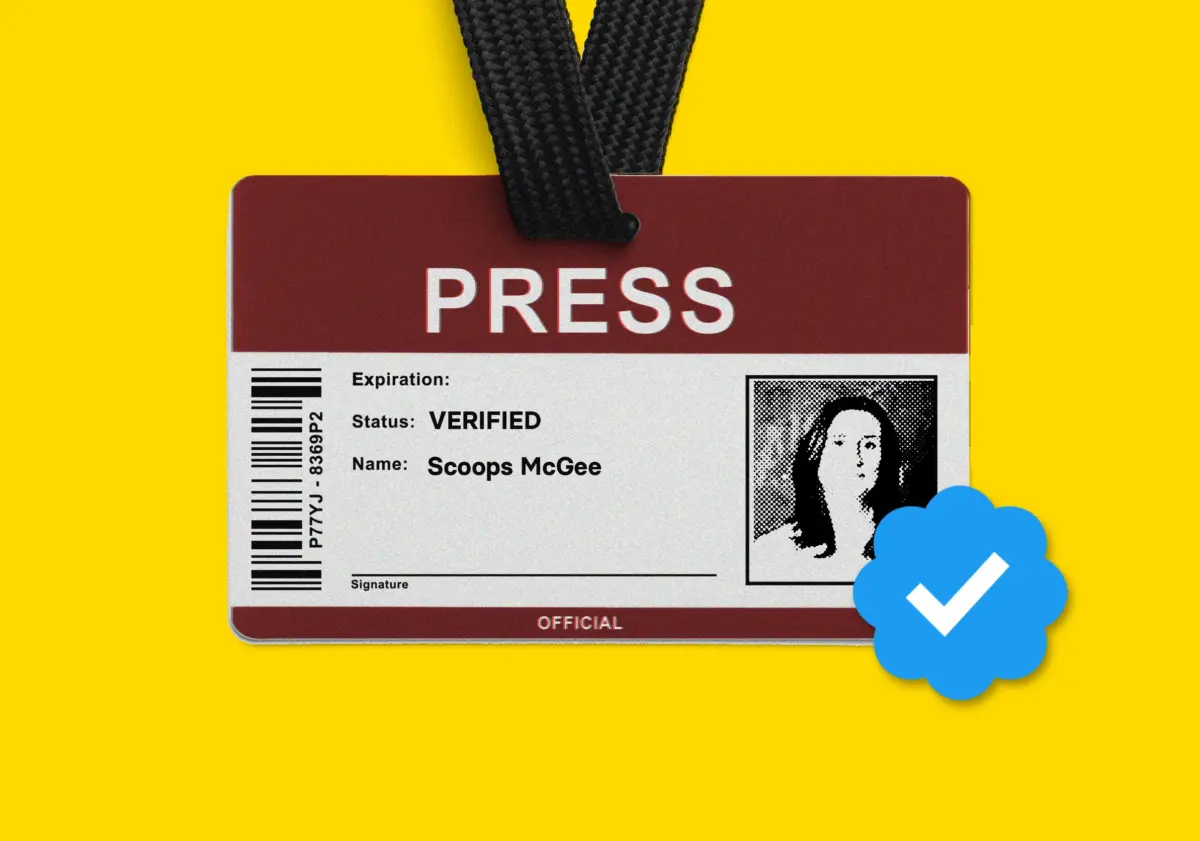
As the tech industry watches closely, a historic fault line is developing between Silicon Valley and the global press corps. With Twitter’s self-imposed April 1 deadline fast approaching to phase out legacy verification systems, media organizations worldwide are forced to make a high-stakes calculus. Under the leadership of Elon Musk, the social media platform is dismantling its traditional blue checkmarks—long held as the gold standard for journalistic authenticity, institutional accountability, and identity verification—in favor of a monetization model anchored by the $8-per-month Twitter Blue subscription and the $1,000-per-month "Verified Organizations" enterprise tier.
The sweeping policy shift has left newsroom executives, investigative reporters, and media publishers scrambling to adapt. Rather than welcoming the new tiered structure, an overwhelming majority of major news publications—including The New York Times, The Washington Post, The Los Angeles Times, Politico, Insider, and BuzzFeed News—have formally announced they will neither pay for institutional verification nor subsidize individual subscriptions for their reporting staff.
For these legacy institutions, the calculus is straightforward: the blue checkmark has fundamentally changed its meaning. Once a symbol of rigorous editorial standards, independent fact-checking, and institutional authority, it now merely signifies that a user is willing to pay a monthly fee.
Conversely, independent journalists, smaller digital-first publishers, and niche outlets are viewing the shift through a purely pragmatic lens. Driven by algorithm changes that favor paid accounts in the coveted "For You" discovery feed, some digital entrepreneurs and smaller newsletters are reluctantly opening their wallets. They argue that algorithmic distribution advantages outweigh ideological objections to Musk’s monetization strategy.
This deep-seated ideological and operational split marks a critical turning point for the digital public square. As trust in media faces unprecedented scrutiny, the mass removal of legacy checkmarks threatens to plunge online news distribution into a chaotic landscape defined by rampant impersonation, polarized information ecosystems, and deep questions regarding the future of public-interest journalism on social media.
Detailed Chronology: From Trusted Status Symbol to Monetized Commodity
To understand the current impasse between major newsrooms and Twitter, it is necessary to examine how the verification ecosystem evolved. Originally introduced in 2009 following a high-profile trademark lawsuit filed against Twitter by baseball legend Tony La Russa, the blue checkmark was conceived strictly as a security tool. Its sole purpose was to authenticate high-profile accounts—politicians, athletes, celebrities, and journalists—to assure the public that the person posting was genuinely who they claimed to be.
For journalists, this verification badge became an essential digital press pass. It allowed reporters working in dangerous conflict zones, covering fast-moving breaking news, or managing public accountability to establish immediate credibility. It signaled to readers that the news being shared had cleared professional editorial hurdles.
The landscape shifted permanently in late 2022 when Elon Musk acquired Twitter for $44 billion. Promptly implementing a sweeping corporate restructuring, Musk targeted the platform’s verification system as a prime vector for democratization and monetization. Musk argued that the legacy verification system was inherently corrupt, describing it as a "lords and peasants" structure that favored traditional media elites over everyday users.
In response, Twitter launched Twitter Blue, allowing any user willing to pay a recurring monthly fee to acquire a blue checkmark. Following initial rollouts marked by widespread impersonation sprees—where users successfully impersonated pharmaceutical giants, defense contractors, and political figures—Twitter temporarily paused the feature to refine its verification mechanisms.
By early 2023, the platform finalized its definitive policy: all legacy checkmarks would be systematically stripped starting April 1, unless accounts transitioned to paid models. For media institutions, Twitter introduced the "Verified Organizations" package, priced at an eye-watering $1,000 per month (plus $50 per month for each additional affiliated account). This enterprise package grants organizations a primary checkmark, a gold corporate badge, and five subordinate verified accounts.
As the April 1 deadline approached, newsroom leaders across the globe found themselves convening emergency meetings to evaluate whether these corporate expenditures could be justified during an already difficult economic climate for the media industry.
Supporting Context & Metrics: The Economics of Social Distribution
The decision facing media executives is not merely symbolic; it is deeply rooted in the cold economics of digital distribution. For over a decade, social media platforms—and Twitter in particular—served as primary conduits for driving web traffic, breaking investigative stories, and engaging directly with readers.
However, recent shifts in platform algorithms have dramatically altered this relationship. Under Musk’s leadership, Twitter has steadily implemented changes designed to prioritize paid subscribers. Most notably, platform adjustments dictate that only paid Twitter Blue subscribers—alongside accounts a user explicitly follows—will reliably appear in the algorithmically curated "For You" discovery feed.
For news organizations and independent journalists who rely on viral distribution to reach new audiences, this algorithmic gatekeeping creates a severe operational dilemma.
- The Enterprise Cost: For a mid-to-large-scale newsroom housing dozens or hundreds of reporters, the math quickly becomes prohibitive. Under the enterprise model, covering a newsroom of just 50 journalists via the $1,000 baseline plus additional affiliate slots would cost tens of thousands of dollars annually—an unsustainable expense for newsrooms currently weathering steep declines in digital advertising revenue and executing widespread corporate layoffs.
- The Per-User Alternative: Alternatively, expecting individual journalists to absorb the $8 monthly fee ($96 annually) out of pocket is viewed by major publishers as an unfair financial burden, especially when the resulting badge no longer confers professional editorial legitimacy.
- The Independent Advantage: Conversely, independent journalists and niche digital publishers operating lean teams view the $8 monthly fee as a manageable customer-acquisition cost. For writers operating independent newsletters or niche publications, the expanded distribution within the "For You" tab directly translates to subscriber growth and revenue generation.
Official Statements: Industry Leaders Draw a Hard Line
As news organizations finalized their policies ahead of the April deadline, representatives from major publications issued definitive statements outlining their refusal to participate in Twitter’s paid verification scheme.
The New York Times
Charlie Stadtlander, director of external communications for The New York Times, articulated the publication’s firm stance in a statement to the press:
"We aren’t planning to pay the monthly fee for check mark status of our institutional Twitter accounts. We also will not reimburse reporters for Twitter Blue except in rare instances where this status would be essential for reporting purposes."
The Washington Post
Echoing this sentiment, a spokesperson for The Washington Post confirmed that the publication would maintain a strict zero-tolerance policy regarding paid verification:
"The Washington Post will not pay for Twitter Blue service as an institution or on behalf of our journalists. It’s evident that verified checkmarks no longer represent authority and expertise."
The Los Angeles Times
In an internal memo to the newsroom obtained by reporters, Los Angeles Times Managing Editor Sara Yasin laid out a comprehensive rationale for the paper’s refusal to pay:
"Some of you may be wondering whether or not the L.A. Times will pay for Twitter Blue subscriptions, and the answer right now is no, for several reasons: First of all, verification no longer establishes authority or credibility, instead it will only mean that someone has paid for a Twitter Blue subscription. Secondly, while Twitter remains an important tool for newsgathering, it is not as reliable as it once was."
Politico & Insider
Anita Kumar, senior editor of standards and ethics at Politico, addressed her newsroom with similar clarity:
"In the future, a checkmark will no longer mean you are a verified journalist. Instead, it will simply mean you are paying for benefits such as longer tweets and fewer ads. Politico will not pay for you to subscribe to Twitter Blue. You may, of course, enroll at your own expense."
Nicholas Carlson, editor-in-chief of Insider, reinforced this perspective:
"The value of a blue checkmark was that it said the person was who they said they are. Now a blue checkmark just says they are a Twitter Blue subscriber. That doesn’t help Twitter users or our readers."
BuzzFeed News
Karolina Waclawiak, editor-in-chief of BuzzFeed News, summarized the collective industry frustration regarding the erosion of institutional distinction:
"As a company, we do not think it’s a wise use of resources to pay for individuals to retain a blue checkmark that is no different from anyone else’s—an amateur medical expert, Elon stan, or otherwise—who is simply willing to pay the fee for a blue check."
The Dissenting View: Pragmatism Among Independents
Not all media voices have rejected the platform’s new direction. Ben Smith, co-founder of digital media startup Semafor, indicated that his publication would take a flexible, pragmatic approach, allowing reporters to expense Twitter Blue if it yields measurable distribution advantages.
Alex Kantrowitz, a prominent tech journalist and author of the Big Technology newsletter, offered a starkly transactional perspective:
"I’m definitely paying for Twitter Blue. In fact, I signed up this week. I don’t care about the blue checkmark, which might be a liability at this point. But getting added distribution in the For You tab is worth it for me at $8/month, given that distribution is the lifeblood of smaller media brands like Big Technology."
Similarly, Geoffrey Ingersoll, editor-in-chief of the Daily Caller, noted that his organization would likely test the enterprise package despite his personal disdain for the badge:
"I had planned to let mine lapse because I have no interest in being nerd famous among journalists on Twitter. Ever since verification became a pay-for, it’s lost its utility for me."
Future Outlook: The Fragmented Digital Public Square
As the dust settles on the removal of legacy checkmarks, the long-term implications for Twitter, the media industry, and the digital consuming public remain profoundly uncertain.
For Twitter, the aggressive monetization strategy is a high-stakes gamble. By stripping legacy verification from the world’s most prominent journalists, scientists, public officials, and institutions, the platform risks accelerating an ongoing degradation of content quality and user trust. Without clear, un-purchased indicators of authentic expertise, users navigating breaking news events may find it increasingly difficult to distinguish between verified reporting, automated bot networks, and coordinated misinformation campaigns.
For the news industry, the mass abandonment of platform-backed verification forces a strategic pivot toward decentralized audience engagement. Publishers are increasingly looking to cultivate direct relationships with readers through owned channels—such as email newsletters, proprietary applications, and alternative social networks—rather than relying on a single platform whose algorithmic rules and leadership whims can change overnight.
Ultimately, the great verification divide highlights a broader crisis in the modern information ecosystem. As social media platforms transition from community-utility models to aggressive subscription businesses, the traditional mechanisms designed to protect public-interest journalism are being dismantled. Whether readers can successfully navigate this new, unverified digital frontier will shape the future of public discourse for years to come.