Executive Overview
For decades, the standard playbook of corporate governance has prescribed a solitary figure at the helm. The conventional wisdom of Silicon Valley and global enterprise is deeply rooted in the singular monarch model: one Chief Executive Officer to cast the vision, take the blame, make the ultimate decisions, and serve as the undisputed face of the organization. To deviate from this singular model has historically been viewed by venture capitalists, institutional investors, and seasoned board members as a red flag—a symptom of founder indecision, ego preservation, or an inability to prioritize the company’s health over personal ambition.
Yet, as the modern business landscape grows increasingly complex, multidisciplinary, and fast-paced, cracks are beginning to show in the monolithic leadership model. Enter the co-CEO structure. Long dismissed as an organizational anomaly destined for internal friction and corporate paralysis, the dual-pilot approach is undergoing a quiet, nuanced re-evaluation. Prominent tech giants like Atlassian and Monday.com have proven that two leaders, operating in genuine synergy, can scale multi-billion-dollar empires over decades without imploding. Salesforce and Oracle have similarly experimented with shared leadership models to varying degrees of success.
In this comprehensive analysis, we examine the shifting perspectives on the co-CEO model, drawing insights from foundational leadership discussions within the global SaaS community, such as SaaStr. We will dissect the psychological prerequisites, structural pitfalls, operational "superpowers," and strict boundary conditions required to make a dual-leadership model succeed. Ultimately, the data and historical precedent reveal a stark truth: while the co-CEO structure is almost universally disastrous when adopted for the wrong reasons—such as ego protection or conflict avoidance—it can unlock unprecedented organizational velocity when built upon a foundation of absolute trust, complementary skill sets, and lifelong professional partnership.
Detailed Chronology: The Evolution of Shared Leadership in Software
To understand how the tech industry views the co-CEO model today, it is essential to trace how leadership philosophy has evolved from rigid dogma to pragmatic flexibility.
Phase I: The Era of the Solitary Founder (Late 20th Century)
During the dot-com boom and the foundational years of enterprise software, the narrative of the singular visionary dominated. Figures like Steve Jobs, Bill Gates (for the majority of Microsoft’s formative hyper-growth years), and later Mark Zuckerberg cemented the archetype of the lone genius. Venture capital firms actively discouraged co-founding teams from splitting the top title, insisting that investors needed a single throat to choke and a clear chain of command. If two technical or business co-founders emerged, the standard protocol was to designate one as CEO and the other as President or Chief Technology Officer (CTO), regardless of how intertwined their contributions actually were.
Phase II: The Institutional Skepticism of the 2010s
As startups matured during the SaaS explosion of the 2010s, instances of co-CEOs were treated by institutional boards as temporary transitional phases rather than permanent structural strategies. When companies attempted to maintain dual leadership past early-stage funding rounds, boards frequently intervened. Anecdotal evidence from accelerators and venture funds consistently warned founders that shared power would inevitably trickle down into the organization, creating middle-management confusion, conflicting directives, and fractured company cultures. The conventional wisdom hardened: two captains sink the ship.
Phase III: The Empirical Counter-Evidence (Late 2010s to Present)
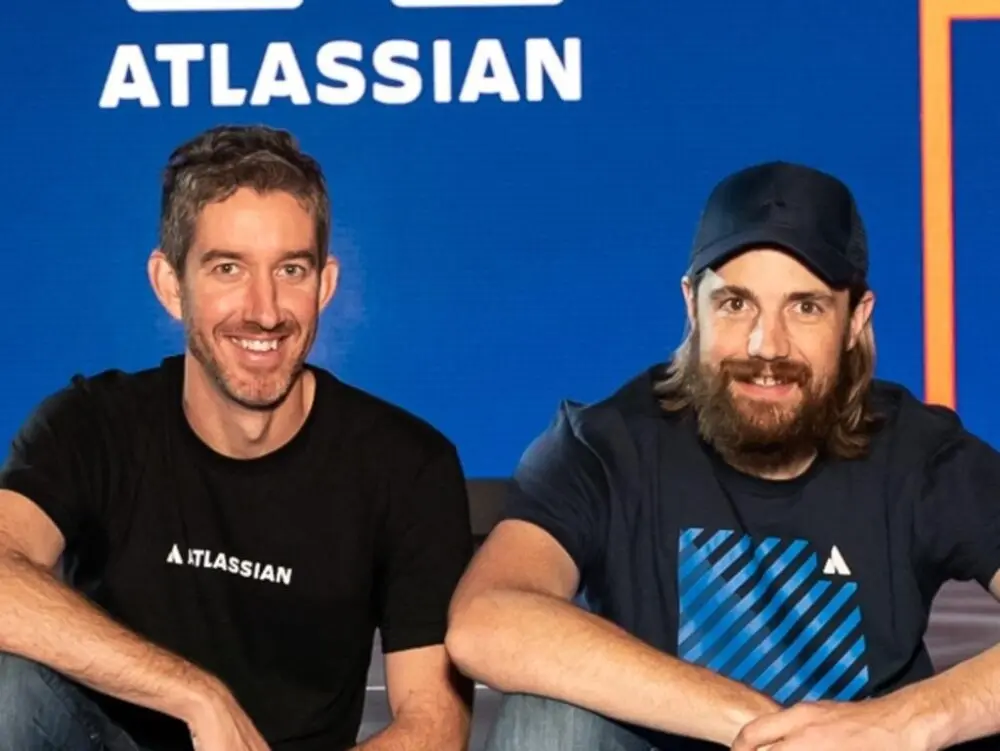
Despite institutional resistance, a stubborn cohort of companies defied the odds. Atlassian, co-founded by Mike Cannon-Brookes and Scott Farquhar in 2002, systematically dismantled the argument that co-CEOs cannot endure long-term. Operating under a dual-leadership model for over twenty years, the Australian collaboration software giant scaled to a massive public valuation without a single structural mutiny at the top. Similarly, Monday.com scaled rapidly under co-CEOs Roy Man and Eran Zinman. These empirical outliers forced industry thinkers and community platforms like SaaStr to re-examine their dogmatic opposition, shifting from a blanket rejection of co-CEOs to a more nuanced, conditional acceptance.
Supporting Context & Metrics: The Anatomy of Dual Leadership
Evaluating the viability of a co-CEO structure requires an unvarnished look at the systemic risks balanced against the potential operational multipliers.
The Deep Drawbacks: Why the Model Usually Fails
The arguments against having co-CEOs are not theoretical; they are rooted in organizational psychology and operational friction. When a company splits the highest office, several predictable pathologies emerge:
- Organizational Confusion (The "Who is My Boss?" Dilemma): In a traditional hierarchy, employees navigate a clear vertical chain of command. In a dysfunctional co-CEO environment, employees frequently find themselves caught in the crossfire of conflicting directives. If Co-CEO A prioritizes aggressive enterprise expansion and Co-CEO B prioritizes product stabilization, middle managers experience whiplash. This ambiguity breeds political maneuvering, as ambitious employees learn to play one leader against the other to secure resources or approval.
- The Illusion of Consensus: Decision-making velocity is the lifeblood of an early-to-mid-stage company. When two individuals must agree on every major strategic pivot, hiring decision, or crisis response, institutional inertia sets in. What should take hours can stretch into weeks of debate.
- External Market Perception: Public markets and risk-averse institutional investors remain inherently skeptical of shared power. Wall Street analysts thrive on predictability and single points of accountability. A co-CEO structure can introduce an unnecessary discount on a company’s valuation simply due to perceived governance risk.
The Operational Superpowers: When the Math Works
Despite these formidable hurdles, when a dual-CEO dynamic functions correctly, it generates asymmetric advantages that a single executive—no matter how talented—simply cannot replicate.
+--------------------------------------------------------------------------+
                      THE CO-CEO "SUPERPOWER" MATRIX
+--------------------------------------------------------------------------+

      [ Co-CEO A: External Focus ]       [ Co-CEO B: Internal Focus ]
      • Vision & Evangelism              • Operational Execution
      • Enterprise Sales & Partnerships  • Engineering & Product Culture
      • Board & Investor Relations       • Talent Retention & Morale

                                              /
                                             /
                         v                   v
                    +-----------------------------+
                    |   SCALED ENTERPRISE VALUE   |
                    |   (Unprecedented Velocity)  |
+-----------------------------+- Cognitive and Emotional Bandwidth Multiplication: The modern CEO role is profoundly lonely and psychologically taxing. The burden of ultimate accountability frequently leads to burnout. By splitting the office, two partners share the emotional weight of downturns, missed forecasts, and existential threats. A burden shared is literally halved; resilience is doubled.
- Asymmetric Skill Set Coverage: It is extraordinarily rare for a single human being to possess world-class capabilities across enterprise sales, capital allocation, deep product architecture, and cultural stewardship. A successful co-CEO partnership pairs two individuals with non-overlapping, deeply complementary genius zones. One can act as the outward-facing evangelist and closer of massive deals, while the other serves as the inward-facing anchor of engineering excellence and operational rigor.
- Lifelong Partnership Resilience: Much like a marriage, a co-CEO dynamic that survives decades is built on a rare bedrock of absolute trust, ego suppression, and shared values. When two founders operate with complete transparency, internal politics are neutralized before they can infect the broader organization.
Official Insights & Community Discourse
The dialogue surrounding shared executive power continues to generate intense debate across executive forums, investor networks, and platforms like SaaStr. The evolving consensus among veteran founders and venture capitalists can be summarized through several core realizations.
The Evolution of Thought
Reflecting on long-held dogmas, industry thought leaders note that their perspective on co-CEOs has undergone a fundamental transformation. The initial stance—that co-CEOs are invariably a catastrophic mistake—has given way to a conditional appreciation: having co-CEOs is only a bad idea when it is done for the wrong reasons.
In many early-stage startups, co-founders opt for dual titles simply out of emotional fragility. Neither founder wants to concede status to the other, or they use the shared title to avoid an uncomfortable negotiation or argument during the incorporation phase. When co-CEO status is awarded as a consolation prize or an ego soothing mechanism, the structure is doomed from inception.
Conversely, when two co-founders are true peers, possess profound mutual respect, and enter into the arrangement with eyes wide open to the immense administrative and psychological stresses involved, the model transitions from a liability to an asset.
Lessons from Global Tech Giants
The longevity of Atlassian’s Mike Cannon-Brookes and Scott Farquhar provides the ultimate masterclass in how to execute the model. Over a twenty-year span, they divided responsibilities organically, maintained open communication channels that bypassed bureaucratic friction, and consistently subordinated their individual egos to the health of the enterprise. Similarly, Monday.com’s executive structure demonstrates that distributed leadership can successfully navigate hyper-growth and public market scrutiny when underpinned by absolute alignment on core values and strategic vision.
Future Outlook: Will Shared Leadership Become More Mainstream?
As we look toward the future of corporate governance in the tech sector and beyond, several trends suggest that the strict dogma of the solitary CEO will face increasing pressure to evolve.
1. The Increasing Complexity of Enterprise Operations
Modern software companies are no longer simple product-and-sales engines. They must navigate complex regulatory landscapes, data privacy laws, sophisticated artificial intelligence integration, global remote workforces, and hyper-competitive talent markets. Expecting one individual to maintain deep, authoritative expertise across all these vectors is becoming increasingly unrealistic. As organizations grow more multifaceted, boards may become more receptive to formalized executive pairings that divide external market strategy from internal operational execution.
2. The Rise of Conscious Leadership and Burnout Mitigation
The epidemic of executive burnout is reshaping how young founders view work-life integration and mental health. The traditional solitary CEO role demands an unsustainable level of sacrifice. As the tech industry places greater emphasis on sustainable high performance, the co-CEO model will increasingly be viewed not merely as a corporate structure, but as a mechanism for executive longevity—provided the underlying partnership is bulletproof.
3. Strict Verification by Investors
Moving forward, institutional investors and venture capitalists will likely abandon their blanket prohibition against co-CEOs, replacing it with rigorous behavioral and structural vetting. Rather than asking if a company has co-CEOs, sophisticated investors will ask why. They will test the psychological resilience of the partnership, examine historical dispute-resolution mechanisms, and verify that the division of labor is crystal clear to the entire organization.
Conclusion
The co-CEO structure remains a high-variance, high-reward organizational strategy. It is not a panacea for founder discord, nor is it a clever shortcut to bypass difficult governance decisions. When adopted for the wrong reasons—ego preservation, conflict avoidance, or indecisiveness—it acts as an accelerant to corporate dysfunction.
However, when established by true partners who share a decades-long vision, complement each other’s superpowers, and possess the emotional maturity to check their egos at the door, the dual-pilot model can unlock extraordinary heights. As proven by enduring tech giants, two leaders can successfully steer the ship—provided they are pulling on the exact same oars, in the exact same direction.