Executive Overview
It was one of those chronically sluggish, post-weekend mornings—the kind where reality is viewed primarily through the blue light of a smartphone screen. Scrolling through Hinge on a couch littered with take-out cartons, my companion offered a sudden, resolute lamentation: every single one of her matches would instantly become ten times more attractive if they simply sported a bleached buzzcut.
The admission struck a chord. I found myself nodding in rigorous agreement, despite lacking any cohesive rationale for why the look held such magnetic sway. It is a specific aesthetic phenomenon that currently occupies prime real estate in the modern dating consciousness. Yet, this is not merely a fleeting digital micro-trend born of algorithm-driven feeds. It is a potent cultural artifact sitting precisely at the intersection of modern masculinity, vulnerability, aesthetic performance, and historical subversion.
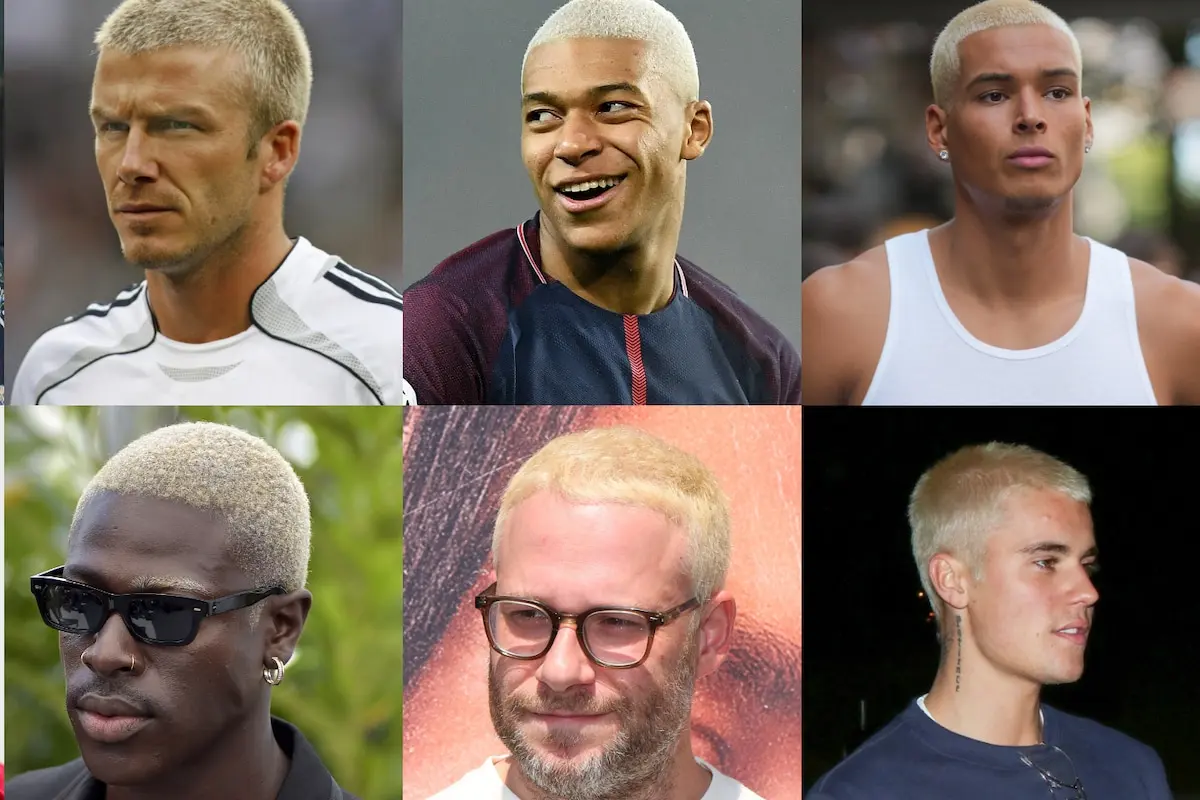
From TikTok hashtags racking up billions of views to high-fashion portfolios in Vanity Fair, the bleached buzzcut has cemented its status as a modern rite of passage. But what is it about a sheared, peroxide-drenched scalp that sends a shockwave through contemporary dating culture? Why do young men feel compelled to undergo this chemical and physical transformation, and why do modern daters read it as an undeniable green flag?
To unpack the allure of the bleached buzzcut is to examine how contemporary men curate their identities, how dating markets interpret vulnerability, and how an aggressive military haircut mutated into a symbol of artistic sensitivity and countercultural cool.
Detailed Chronology: From Ancient Warriors to TikTok Feeds
To understand how the bleached buzzcut arrived on our dating apps, we must trace its fascinating, contradictory lineage across centuries.
Antiquity and the Regulated Renders
Historically, the buzzcut was invented for utility, conformity, and intimidation. According to Rachael Gibson, widely known as "The Hair Historian," the ultra-short crop was traditionally utilized as a functional, homogenising instrument within the military and other heavily regulated institutions. It stripped away individuality, replacing personal identity with unit cohesion.
However, the deliberate act of lightening that hair for psychological warfare has an even older pedigree. Ancient historians noted that Gallic warriors bleached their hair using lime water to create a striking, terrifying appearance on the battlefield. The goal was simple: to stand out, to project ferocity, and to disorient the enemy.
The Countercultural Wave of the 70s and 90s
Fast forward to the 1970s, and the close crop found a new home within skinhead and punk countercultures. For punks especially, the shaved or severely cropped head was intentionally threatening, abrasive, and resolutely non-conformist. It was a rejection of middle-class respectability.
By the early 1990s, however, the look began its awkward adolescence into mainstream fashion. NBA superstar Dennis Rodman is frequently credited with pushing the bleached buzzcut firmly into the public eye. Gibson notes that Rodman’s striking aesthetic may have been inspired by Wesley Snipes’ futuristic hair in the 1993 sci-fi film Demolition Man. While Rodman has occasionally disputed the origin story, insisting the resemblance was coincidental, he successfully weaponized the look. He retained its rebellious undertones while making it distinctly his own—a defiant expression of gender fluidity and boundary-pushing that became inseparable from his larger-than-life public persona.
Soon, the style bled from skate-punk subcultures into the broader cultural consciousness, championed by icons like Eminem and David Beckham.
The Digital Era and Modern Resurgence
In the 21st century, the look transitioned from a niche stylistic statement to a ubiquitous digital phenomenon. Over the years, a revolving door of celebrities and athletes—including Zayn Malik, Justin Bieber, Seth Rogen, Carlos Alcaraz, Colin Farrell, Kylian Mbappé, and Odell Beckham Jr.—have taken the plunge.
By 2022, the digital footprint of the look was undeniable, with the hashtag #bleachbuzzcut pulling in an astonishing 15.6 billion views on TikTok. More recently, the aesthetic has experienced a vigorous second wind. It has surfaced via Connor Storrie’s newly minted buzzcut while filming season two of Heated Rivalry, fresh stylistic chops from Erling Haaland and Nettspend, and Vanity Fair selecting model and streamer Marlon Lundgren Garcia as "The Face" of its September 2026 "State of American Style" portfolio.
Supporting Context & Metrics: The Psychology of the Peroxide Crop
What drives this persistent cultural obsession? According to hair colourist David Stanko, who famously spoke to GQ in 2017: "For women it’s a trend, but for guys it’s a bucket list or rite of passage look."
It seems that nearly every modern man arrives at a crossroads: he either fantasizes about buzzing and bleaching his hair, or he actually yields to the temptation. But where does the psychological draw originate?
The Courage of the Blank Canvas
For many young men, the primary hurdle is a deep-seated attachment to their hair. "A lot of guys, whether they want to admit it or not, love their hair," explains 23-year-old Oscar. "They think the buzzcut is some scary thing—and it can be if you’ve maybe not got the best hairline, or if you’re a bit insecure."
Consequently, a significant portion of the look’s attraction lies in the innate bravery required to execute it. Meecham Whitson Meriweather, author of the Substack newsletter Now That I Mention It, argues that the style is "less about the hair" and much more about how it "strips everything away."
"It’s pure confidence and beauty; it’s vulnerability: what you see is what you get," Meriweather notes. Sporting a bleached buzzcut signals—even if deceptively—a profound pride in one’s facial structure. For daters like 22-year-old Ammara, this display is magnetic: "The pop of blonde suggests [they’re] unafraid of being perceived or seen. That’s hot."
Androgyny and the Softboi Revolution
For young women navigating the modern dating pool, the appeal of the bleached buzzcut often centers on its inherent androgyny. It communicates a psychological safety net, signaling a man’s willingness to step outside rigid, archaic expressions of masculinity.
"I think a willingness to bleach your hair signals a certain level of comfortability with femininity which is attractive," says 23-year-old Joana. Echoing this sentiment, university student Kaya suggests the look redefines modern manhood: "It’s like the new masculinity is being masculine enough to be like, ‘fuck it, I’ll engage with feminine behaviour’."
In this light, bleaching a buzzcut reads as a micro-rebellion against traditional gender codes. Alex Brownsell, founder of Bleach London, captures this spatial philosophy perfectly: "Bleach is to colour what buzzcuts are to length—a void defined by what isn’t rather than what is." By erasing the traditional markers of male hair styling, the wearer creates a literal blank canvas, inviting projection while maintaining absolute stylistic autonomy.
Official Statements & Cultural Analysis
To fully grasp the cultural weight of the bleached buzzcut, we must examine how it intersects with contemporary frameworks of identity, performance, and self-curation.
The Alter Ego and Safe Experimentation
For many men, adopting the look is an exercise in controlled rebellion. It offers a low-risk avenue for radical self-reinvention. As 24-year-old graduate Alex explains, the style is "by no means boring or traditional," yet it safely occupies a "Goldilocks zone." It pushes against social convention without straying so far from a man’s core identity that it alienates his peers.
More than that, the bleached buzzcut functions as an instant alter ego. It provides a temporary escape hatch from one’s mundane daily reality into an idealized persona. "People think you’re cool without even speaking to you," notes 22-year-old Tom. "It gives you license to be a bit crazier because people probably think you are."
Self-Curation and the "Performative Male"
In his analysis of modern internet culture, author Kian Bakhtiari defines the "performative male" as a systemic shift "from self-expression to self-curation." The bleached buzzcut sits comfortably at the epicentre of this cultural pivot.
While it certainly conveys rugged individuality, it simultaneously signals an acute awareness of the "arty, intellectual" persona the wearer wishes to project, as graduate student Ella points out. Whether the man in question fully embodies that artistic temperament becomes secondary; the performance itself broadcasts an explicit message: I want to be read as interesting, expressive, and decidedly not like every other man.
Rachael Gibson notes that the style has historically been tethered to "bad boys who are in total control of their image, DGAF about expectations, and are totally happy to do something different." Yet, its current iteration in dating culture is paradoxically linked to a cluster of reassuring green flags: artistry, empathy, and originality. It is the signature haircut of the man who is simultaneously outgoing enough to experiment with his appearance and in touch with his sensitive side—the quintessential "softboi" who might just treat you right.
Future Outlook: Where Does the Trend Go From Here?
As we look toward the remainder of the decade, the bleached buzzcut shows no signs of losing its cultural currency. It has successfully transitioned from the battlefields of antiquity, through the gritty punk clubs of the 1970s, across the basketball courts of the 1990s, and straight into the algorithmically curated feeds of Gen Z and Millennial daters.
The primary reason for its longevity is its inherent paradox. It is simultaneously an expression of raw, unapologetic hyper-masculinity and a gentle subversion of it. It requires vulnerability, yet projects unbreakable confidence. It strips away excess, yet demands absolute attention.
Until a new hairstyle emerges that can single-handedly communicate a man’s willingness to embrace artistic experimentation, emotional availability, and countercultural edge all at once, the bleached buzzcut will remain undefeated. And on those hungover Saturday mornings spent swiping through dating apps, the peroxide crop will likely continue to reign supreme—serving as an undeniable beacon for those seeking a little bit of structural excitement in an otherwise predictable world.