Executive Overview
In what can only be described as one of the most unexpected and thrilling developments in modern PC gaming history, Blizzard Entertainment has officially announced and released Warcraft 3: Forsaken Kingdom, a massive new single-player story campaign for the venerated real-time strategy classic. Marking the first official single-player content for the franchise since the seminal expansion The Frozen Throne launched all the way back in July 2003, this release shatters a 23-year silence that has left fans of traditional, single-player RTS titles starved for innovation.
For nearly a decade, the single-player real-time strategy genre has been relegated to the annals of nostalgia, with major publishers largely pivoting toward live-service multiplayer arenas, hero shooters, or massive open-world RPGs. The last true morsel of single-player content offered to StarCraft and Warcraft veterans was StarCraft II: Nova Covert Ops, which wrapped up nearly a decade ago in 2016. The arrival of Forsaken Kingdom not only challenges this industry-wide neglect of offline strategy experiences, but it does so with surprising ambition, boasting an estimated 30-hour runtime, a structural pivot toward deep role-playing mechanics, an innovative new "Definitive Edition" graphics engine, and the franchise’s first new Tavern hero in over two decades.
Early hands-on impressions suggest that Forsaken Kingdom successfully threads the needle between honoring the rigid, beloved tactical framework of classic Warcraft 3 and introducing modern mechanical paradigms. By bridging legendary lore gaps—specifically focusing on the immediate aftermath of Arthas’s return to Lordaeron and the subsequent birth of Sylvanas Windrunner’s Forsaken faction—Blizzard is attempting to rewrite the historical narrative of RTS expansions. Yet, the release also carries the baggage of its predecessors, most notably the technical controversies of 2020’s Warcraft III: Reforged. As players dive headfirst into Lordaeron’s ruins, Forsaken Kingdom stands as a monumental test: can a resurrected classic find a sustainable footing in a modern gaming ecosystem, or is it merely a breathtaking, high-effort nostalgia trip for the faithful?
Detailed Chronology: A Journey Through Lordaeron’s Darkest Hours
To understand the narrative weight of Forsaken Kingdom, one must appreciate the sheer audacity of its timeline. The campaign kicks off precisely on the fateful day that Prince Arthas Menethil returned from the frozen wastes of Northrend, marching into the capital of Lordaeron to commit patricide against his father, King Terenas II. This moment remains the single most seismic narrative pivot in the entire Warcraft universe, effectively fracturing the Eastern Kingdoms and setting the stage for the rise of the Scourge.
The Prologue: Last Days of Lordaeron
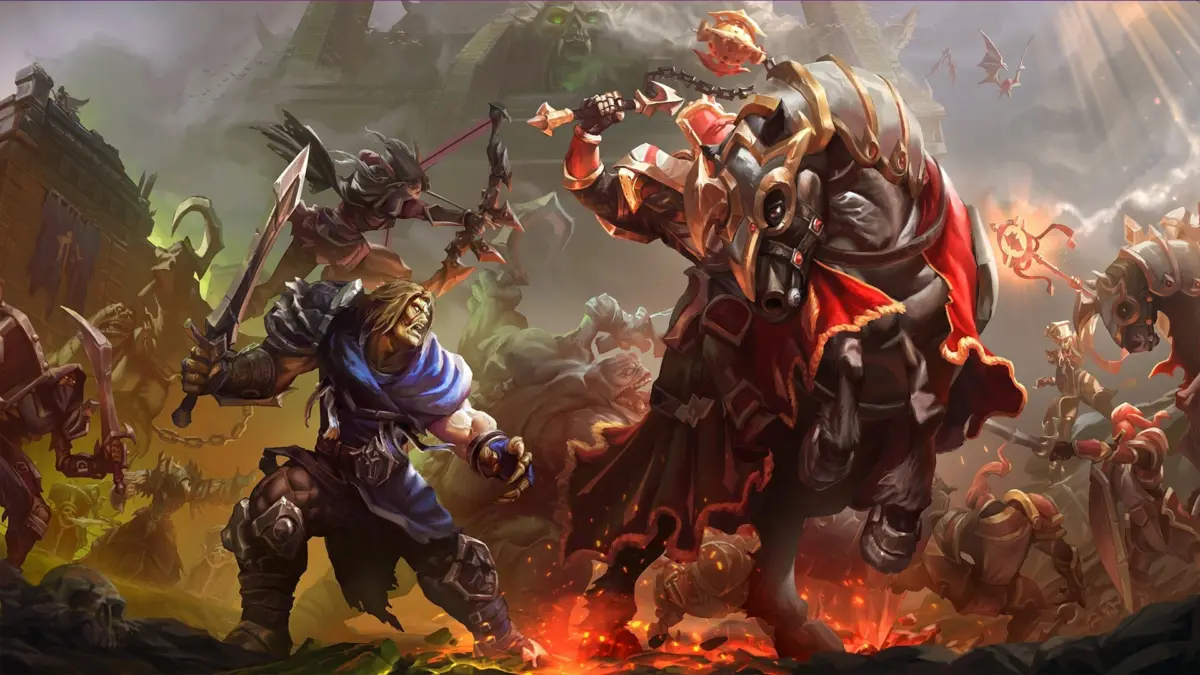
The campaign introduces an entirely new protagonist: Garek Bandarion, a loyal guard lieutenant tasked with an impossible, doomed defense of his homeland. Over the course of a four-mission prologue titled Last Days of Lordaeron, players guide Garek through the besieged streets of Andorhal and the blood-soaked avenues of Stratholme.
The mission design in this prologue steps boldly outside traditional Warcraft 3 parameters. The Siege of Andorhal, for instance, injects a subtle MOBA-inspired gameplay loop into the RTS engine. Rather than simply managing a rigid resource-gathering base, players must capture specific tactical towers scattered across the map. These structures continuously spawn AI-controlled friendly soldiers at regular intervals, creating a dynamic frontline that forces players to coordinate aggressive pushes against encroaching Scourge forces. Furthermore, segmenting unit recruitment behind held objectives rather than base structures forces a frantic, territory-control style of play rarely seen in classic custom maps.
The subsequent mission set within a post-purge Stratholme plays out like a labyrinthine dungeon crawl. Players must simultaneously coordinate two distinct tactical groups:
- Group A: Commanded by Lieutenant Garek Bandarion.
- Group B: Commanded by Ilastar Songbreeze, an elven priest whose deep-lore inclusion has sent even the most hardcore Warcraft historians scrambling to their digital archives.
For the first half of the mission, these units operate in complete isolation. Success requires utilizing one group to manipulate environmental hazards or disable fortifications that directly clear the path for the other. When the two forces finally converge for the campaign’s dramatic climax, the resulting cooperative choreography feels fresh yet distinctly Warcraft.
The Fall and Rise: Entering the Forsaken Kingdom
In a narrative twist that is heavily telegraphed yet emotionally resonant, Garek’s desperate stand against Baron Rivendare ends in predictable tragedy. Rather than receiving a hero’s burial, Garek is resurrected as a free-willed undead entity—one of the foundational members of what will become Sylvanas Windrunner’s Forsaken faction.
Transitioning from the prologue into the core campaign, the gameplay shifts dramatically. Clocking in at an estimated 30 hours of total playtime, the main campaign adopts a free-roaming, quest-driven RPG structure. Operating under the direct orders of the Dark Lady herself, and aided by her lieutenant, the Dark Ranger Anya, players are tasked with establishing the foundational infrastructure of the Undercity beneath the sprawling, ruined capital of Lordaeron. Lore enthusiasts will note that Garek is canonically destined to become the very first Forsaken Paladin—an unorthodox class combination that Blizzard is simultaneously introducing as a playable option in World of Warcraft. How this contradictory existence manifests within the game’s rigid theological lore remains one of the campaign’s most tantalizing mysteries.
Supporting Context & Metrics: Engine Upgrades and Mechanical Shifts
Beyond the narrative achievements, Forsaken Kingdom introduces massive under-the-hood changes that impact both single-player immersion and high-level multiplayer strategy.
The "Definitive Edition" Graphics Engine
Blizzard has wisely recognized the deep-seated community animosity directed at 2020’s divisive Warcraft III: Reforged. To rectify past missteps without erasing them entirely, Forsaken Kingdom debuts an entirely new graphical option dubbed the "Definitive Edition" mode.
When inspected up close during cinematic cutscenes, the engine shows noticeable strain: textures can appear flat, matte, and unfinished, with visible pixelation marking the transition zones between faction-colored armor and metallic borders, while overall lighting technology remains decidedly dated. However, load into a fast-paced skirmish match against an AI opponent at a standard, zoomed-out camera perspective, and the graphical philosophy clicks into place with the precision of a magic trick.
All units and buildings retain the instantly recognizable silhouettes of the 2003 original, rendered through a lens of higher fidelity. It is a visual sweet spot that sidesteps the uncanny, overly busy aesthetic of Reforged while leaving the low-polygon look of the classic era behind.
Unfortunately, this new graphical fidelity is distributed unevenly:
- Forsaken Kingdom Campaign: Exclusively playable with the Definitive Edition graphics.
- Multiplayer and Skirmish Modes: Fully flexible, allowing players to toggle freely between Classic, Reforged, and Definitive Edition assets.
- Legacy Campaigns (Reign of Chaos and Frozen Throne): Strangely restricted to Classic and Reforged visuals, leaving the historical campaigns out in the cold regarding the new engine optimizations.
Mechanical Overhauls: Heroes, Units, and Control Groups
For the multiplayer and competitive communities, Forsaken Kingdom represents the first major meta-shakeup in decades. Most notably, the expansion introduces the first new Tavern hero to Warcraft 3 since the Alchemist and Firelord debuted in 2004: The Forsaken Paladin.
The inclusion of an undead paladin creates an intriguing design paradox within the game’s faction balance:
- Faction Alignment: An undead neutral hero who is uniquely coded to heal only the living, rendering him ironically counter-intuitive for core Undead faction players.
- Mobility (Q Ability): A high-velocity dash that scales in damage based on the number of enemy units passed through during transit.
- Area Denial and Support (W Ability): Reminiscent of the World of Warcraft Paladin ability Consecration, this skill drops a searing circle of holy-shadow energy at the hero’s feet that damages undead enemies while healing friendly living units.
- Passive Aura: A damage-reduction matrix that mitigates incoming magical damage and amplifies incoming healing for nearby allies.
- Ultimate Ability: An Area-of-Effect (AoE) purge and stun combo that simultaneously heals nearby friendly units, granting bonus healing metrics and a temporary damage buff if the initial purge successfully strips a debuff from a target.
Alongside the new hero, Blizzard has enacted a sweeping quality-of-life and tactical change: the maximum unit capacity within a single control group has been doubled across all game modes. While this adjustment modernizes the macro-management of armies, it has predictably sent tremors of anxiety through the "old guard" of competitive RTS veterans who prize the micro-intensive limitations of the legacy control scheme.
Official Statements and Industry Reception
While Blizzard Entertainment has kept promotional rollout materials surprisingly sparse given the magnitude of the shadow-drop, early statements from the development team emphasize a desire to make amends with the RTS community.
"We wanted to give real-time strategy fans something substantial to sink their teeth into—a return to the rich, narrative-driven roots that made Azeroth a household name, balanced with modern quality-of-life improvements that respect both our legacy and our players’ time," shared an internal project lead during the surprise launch event.
Industry analysts have noted that the release of Forsaken Kingdom represents a calculated, low-risk gamble for Activision-Blizzard. By leveraging existing intellectual property and the modular framework of the Warcraft 3 client, the studio can test the economic viability of single-player RTS expansions in an era dominated by live-service economies. Early player reception on community hubs such as Reddit and specialized strategy forums has been overwhelmingly positive, though punctuated by persistent community frustration over the fragmented implementation of the "Definitive Edition" graphics across older legacy campaigns.
Future Outlook: The Road Ahead for RTS
The launch of Warcraft 3: Forsaken Kingdom is far more than a mere nostalgia trip or a belated content patch; it is a vital litmus test for the entire real-time strategy genre. For over two decades, developers have largely abandoned the single-player RTS campaign model, writing it off as too costly, too niche, and insufficiently monetizable compared to free-to-play battle royale or hero shooter formats.
If Forsaken Kingdom achieves commercial success and sustained engagement over its projected 30-hour runtime, it could signal a structural renaissance for classic strategy franchises languishing in corporate vaults. For now, however, players are advised to temper their macro-strategies, manage their control groups wisely, and prepare for a grueling, deeply atmospheric journey into the origins of the Undercity.
Keep a close eye on tactical feeds over the coming weeks as the community dissects the meta-implications of the Forsaken Paladin, and look forward to our exhaustive, full-campaign review once the gates of Stratholme are finally conquered.