Executive Overview
For two decades, World of Warcraft has defined the MMORPG landscape, mapping a trajectory of expansion, lore evolution, and mechanical refinement. Yet, as the industry has matured, a powerful nostalgia has gripped the player base—a deep-seated yearning to recapture the raw, unpredictable magic of the game’s 2004 launch. While World of Warcraft Classic successfully answered that call by rolling the clock back to vanilla Azeroth, it ultimately became a victim of its own historical transparency. Over twenty years, players had dissected every zone, min-maxed every talent tree, and solved every raid encounter. The mystery was gone.
Enter World of Warcraft Forever, Blizzard Entertainment’s most daring experiment in alternative-timeline game design yet. Revealed during a landmark presentation at BlizzCon, WoW Forever is locked in the foundational first year of the MMO’s life cycle, intentionally avoiding the heavy expansion sprawl of The Burning Crusade or Wrath of the Lich King. However, unlike the rigid historical recreation of Classic, Forever borrows liberally from two decades of subsequent design philosophy.
By injecting revised class design, modernized talent trees, inventive open-world collaborative mechanics, and an entirely new "Legacy" progression framework into the vanilla sandbox, Blizzard is attempting a paradoxical feat: preserving the epochal atmosphere of 2004 while fundamentally "unsolving" the game. With a closed beta kicking off on September 17 for early purchasers and a full global launch scheduled for November 4—all under the umbrella of a standard World of Warcraft subscription—WoW Forever promises to rewrite the rules of engagement for veterans and newcomers alike.
Detailed Chronology: From Rumor to Reality
Rumors surrounding a radically altered vanilla experience had circulated within the MMO community for months, often dismissed by skeptics as wishful thinking or misinterpretations of hardcode server data. However, the BlizzCon panel shattered speculation, laying out a concrete, fast-tracked timeline for development, testing, and release.
The Genesis of "Forever"
The conceptual roots of WoW Forever trace back to the unexpected success of WoW Classic and subsequent seasonal experiments like Season of Discovery. Blizzard developers noticed a fascinating dichotomy among players: while millions flocked to relive the original leveling journey, the meta-game had become rigid. Encounters were no longer trials of discovery; they were execution drills dictated by decades-old guides and optimization spreadsheets.
To combat this, the Forever team began prototyping a parallel timeline. Instead of merely duplicating old code, they asked a radical question: What if vanilla World of Warcraft had continued to evolve mechanically without ever increasing the level cap or pushing into Outland?
The Roadmap Ahead
The rollout for World of Warcraft Forever is remarkably aggressive, designed to capitalize on immediate community momentum:
- September 17: The closed beta goes live. Access is granted immediately to players who pre-purchase the upcoming experience or secure early-access bundles. This testing phase is intended to stress-test the heavily modified server architectures required to support modern netcode alongside legacy geometry.
- November 4: Official global launch. WoW Forever becomes fully playable for anyone with an active, standard World of Warcraft subscription, lowering the barrier to entry and inviting the entire active player base to dive back into a reimagined Eastern Kingdoms and Kalimdor.
Supporting Context & Metrics: Reimagining the Vanilla Sandbox
To understand why WoW Forever is generating such intense industry scrutiny, one must examine the specific systemic pillars Blizzard is employing to reshape the foundational World of Warcraft experience.
Alleviating the Grind Through Modernized Systems
The original 2004 release of World of Warcraft was notoriously punishing. Leveling required immense time investments, specific class roles were functionally dead in endgame content (such as Balance Druids or Retribution Paladins), and pacing could grind to a grinding halt in the mid-30s and 50s.
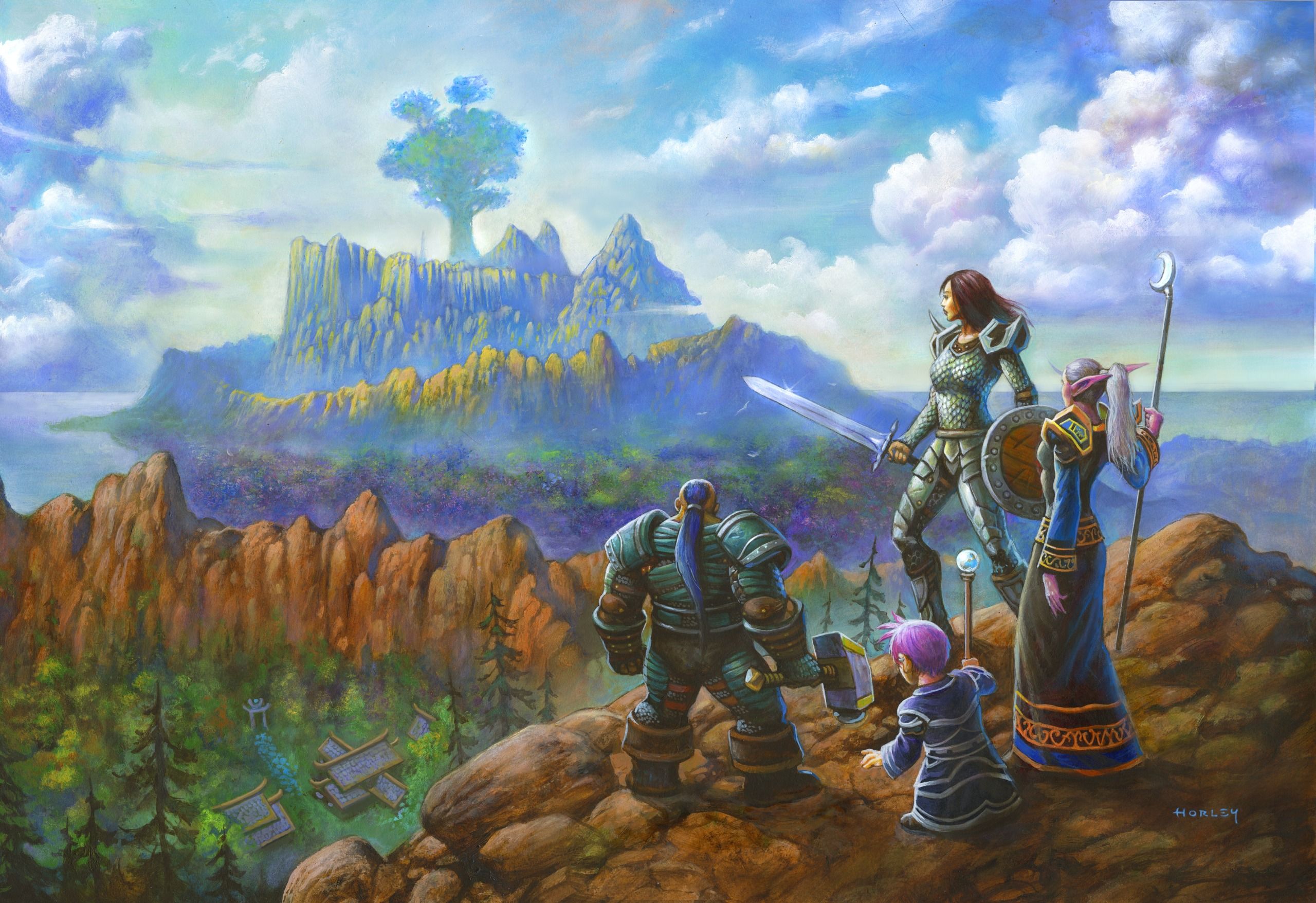
WoW Forever retains the geographic scope, narrative tone, and social friction of early Azeroth, but strips away the friction that modern gamers simply no longer have the patience for. Developers confirmed that classes have undergone massive passes. Talent trees have been restructured to hybridize the depth of classic builds with the functional utility of later iterations. This means every spec—tank, healer, or DPS—will be viable from the moment players step foot outside of Northshire Abbey or Valley of Trials.
Fostering Open-World Synergy
One of the core design goals highlighted during the BlizzCon panel was the revival of emergent, open-world social dynamics. Modern MMO design often funnels players into instanced queues and solitary progression loops. WoW Forever introduces brand-new open-world mechanics explicitly engineered to pull strangers together.
- Dynamic World Encounters: Randomly generated, server-wide cooperative events will occasionally trigger in classic zones, requiring localized groups of players to band together to repel invasions or secure tactical nodes.
- The "Legacy" Progression System: Distinct from standard experience points, the new Legacy system tracks long-term accomplishments, exploration milestones, and cooperative feats across the altered timeline, rewarding players with horizontal progression vectors that don’t shatter the game’s initial level cap restrictions.
- Itemization Overhauls: By blending classic items with modern stat-budgeting philosophies, Blizzard is eliminating dead drops. Classic gear will feature more dynamic affixes, encouraging experimentation rather than forcing players down a single BiS (Best-in-Slot) path.
Official Statements: Unsolving the Game
During the deep-dive panel, members of the development team articulated a philosophy centered around unpredictability. For a game that has been data-mined, simulated, and solved down to the individual damage coefficient, the biggest enemy of fun is certainty.
"Our primary directive with World of Warcraft Forever isn’t just to take you back in time—it’s to make you feel lost in Azeroth all over again," a lead systems designer told the BlizzCon audience. "For twenty years, players have known precisely where every herb spawns, how every boss phases, and what every talent build looks like on paper. We want to unsolve the game. We are giving you the familiar bones of 2004, but we are rewriting the muscle and sinew so that when you turn a corner in Duskwood or Stranglethorn Vale, you actually have to stop, think, and figure it out with the people standing next to you."
This sentiment resonates deeply with a community that has increasingly viewed modern MMOs as theme parks rather than living, breathing worlds. By restricting the scope to the first year of the game’s life while dynamically altering how players interact with it, Blizzard is betting that the thrill of the unknown is more powerful than pure historical accuracy.
Future Outlook: A New Paradigm for MMORPG Preservation?
As the gaming industry grapples with how to handle live-service longevity, server preservation, and the insatiable demand for retro experiences, World of Warcraft Forever could serve as a watershed moment.
If successful, this alternative-timeline approach proves that publishers do not have to choose between strict preservation (which risks stagnation and hyper-optimization) and aggressive expansion (which alienates players who miss simpler eras). Instead, WoW Forever charts a middle path: a recursive loop where a game’s foundation is endlessly re-contextualized through modern design sensibilities.
The true test will begin on September 17 during the closed beta. When thousands of veterans flood the altered low-level zones, testing the restructured talent trees and engaging with the new open-world mechanics, we will find out if Blizzard has truly captured lightning in a bottle a second time. Until the November 4 launch, Azeroth remains on the precipice of a radical new history—one where the past is fixed, but the future is entirely unwritten.