Executive Overview
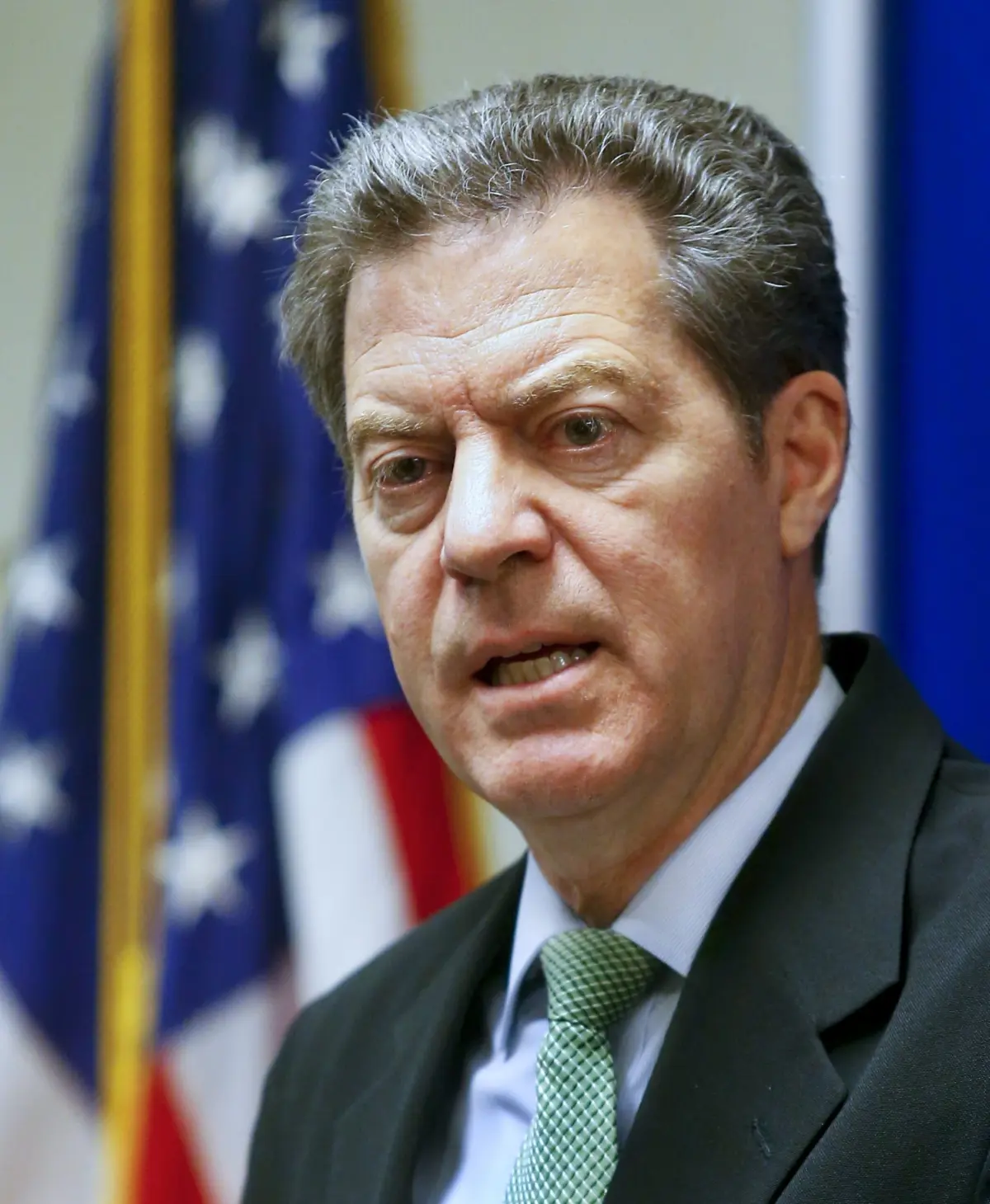
For years, the political landscape of Kansas has served as a glaring real-world laboratory for radical fiscal experimentation. Under the leadership of Governor Sam Brownback, the state embarked on a reckless crusade toward zero income taxes—a supply-side economic policy that drastically depleted state revenues, created severe budgetary shortfalls, and triggered a downward spiral across vital public institutions.
Amidst this manufactured financial crisis, a parallel strategy has taken root: the systematic dismantling of public services and the erosion of local governance. Nowhere has this agenda been pursued more aggressively than within the state’s public education system. Far from being a series of isolated policy adjustments, the legislative changes sweeping through Topeka are part of a coordinated, national blueprint orchestrated by libertarian and ultraconservative networks, most notably the American Legislative Exchange Council (ALEC), Americans for Prosperity (AFP), and local think tanks like the Kansas Policy Institute (KPI).
At the center of this legislative assault is House Bill 2741 (HB 2741)—ironically titled the “School District Finance and Student Success Act.” Marketed by its proponents as a step toward fiscal efficiency and educational choice, the bill represents a fundamental restructuring of public schooling. By narrowing the legal definition of “instruction,” stripping state funding from vital non-classroom operations like food services, extracurriculars, and facility maintenance, and carving out tax-funded private school savings accounts, HB 2741 threatens to fracture the public education system while further exacerbating the state’s severe equity gaps.
This report examines how outside model legislation has hijacked the Kansas legislative agenda, the mechanics and devastating consequences of HB 2741, the hollow justifications behind the state’s multi-million-dollar efficiency studies, and the rising tide of grassroots resistance fighting to reclaim the state’s democratic future.
Detailed Chronology: The Road to HB 2741 and the Privatization Push
To understand the current crisis in Kansas public schools, one must trace the timeline of financial starvation and legislative engineering that began long before the introduction of HB 2741.
The Brownback Era and the Starvation of State Revenue
When Sam Brownback assumed the governorship in 2010, he promised an economic miracle. The centerpiece of his agenda was a massive, sweeping reduction in income taxes, paired with exemptions for limited-liability businesses. Economists warned that the cuts would hemorrhage state revenue; proponents insisted economic growth would miraculously offset the losses.
Instead, the state plunged into immediate financial turmoil. Credit ratings were downgraded, essential infrastructure projects were delayed, and public education funding was repeatedly raided to plug holes in the state budget. The systemic underfunding became so severe that it triggered prolonged legal battles. The Kansas Supreme Court repeatedly ruled that the state’s funding mechanisms violated constitutional mandates for equitable and suitable funding for all school districts.
The Block Grant Interregnum
Rather than complying with court orders to properly fund public education, the legislature during the 2014–2015 session took the unprecedented step of repealing the existing school funding formula entirely. In its place, lawmakers implemented a temporary two-year block grant funding mechanism.
While framed as a temporary bridge while a "new formula" could be devised, the block grants effectively severed the link between funding and actual student needs, locking school districts into stagnant, reduced budgets that failed to keep pace with inflation, rising operational costs, and growing student populations.
The Introduction of HB 2741
As the block grant era neared its expiration, the legislative groundwork was laid for a permanent overhaul. Authored primarily by Republican Representative Ron Highland and Senator Steve Abrams, HB 2741 was filed shortly before the legislative break and sent to the House Appropriations Committee.
The bill was framed as the legislative realization of a $2.6 million statewide efficiency study conducted by the consulting firm Alvarez and Marsal. However, a closer examination reveals that the most controversial components of HB 2741—specifically the creation of private school savings accounts and the radical narrowing of instructional funding—bore little resemblance to the study’s actual recommendations. Instead, they mirrored word-for-word the ideological wish lists generated by organizations like ALEC and the Kansas Policy Institute.
Supporting Context & Metrics: The ALEC Playbook and the Anatomy of HB 2741
The influence of external libertarian organizations on statehouse legislation is well-documented, but its application to education policy in Kansas represents a masterclass in legislative transubstantiation.
The National Blueprint: ALEC and the Privatization of Public Goods
According to data compiled by the Center for Media and Democracy, 2015 alone saw the introduction of 172 measures across 42 states directly derived from ALEC model legislation concerning education. The overarching objective of these bills is transparent: to transform public education from a universal, publicly accountable institution into a fragmented marketplace serving private, for-profit interests.
In Kansas, this national agenda manifested in HB 2741 through several critical mechanisms:
- The Kansas Education Freedom Act: The bill establishes a private school savings program, allowing parents to siphon up to 70 percent of their local district’s per-pupil state aid to pay for private (including religious) schools, online academies, homeschooling, or private tutors.
- The Evisceration of Oversight: Eschewing traditional accountability, the bill grants regulatory oversight of both the finances and academics of these private "education freedom accounts" not to the Kansas State Department of Education, but to the Kansas State Treasurer—mirroring ALEC’s Model Education Savings Account Act verbatim. Furthermore, the legislation imposes zero student assessment or academic accountability standards on these private expenditures.
- Redefining "Instruction": HB 2741 artificially divides school district functions into "instruction" and "non-instruction." State general aid is funneled exclusively into a narrow definition of instruction, while funding for central administration, capital improvements, facility maintenance, food services, and extracurricular activities is severely reduced or eliminated entirely.
The Devastating Impact on Operations and Equity
While proponents of HB 2741 can campaign in an election year on having technically increased "instructional funding" by roughly 4 percent initially, this is a calculated shell game. Once transitional "Hold Harmless" funds expire after two years, overall state spending on public education will experience a net decrease. This allows ultraconservative lawmakers to achieve their ultimate policy goal: shrinking the footprint of state government to sustain their ideological march toward zero income taxes.
The consequences of stripping state support from non-instructional services are profound:
- Food Services and Nutrition: By eliminating state general aid for food procurement and preparation, the bill jeopardizes the nutritional safety net upon which thousands of Kansas children rely. Decades of research confirm that hungry children cannot learn effectively. Furthermore, the cut threatens local "farm-to-school" initiatives, injuring both student well-being and local agricultural economies.
- Extracurricular Activities: Athletics, band, choir, debate, and student council—activities proven to boost student retention, academic performance, and social development—will no longer receive state support, forcing districts to rely entirely on local funding or abandon them altogether.
- Facility Maintenance and Capital Improvements: Decades of deferred maintenance have already left Kansas school facilities struggling to meet modern health, safety, and technological standards. By throwing up roadblocks to capital improvement state aid and mandating restrictive bidding processes, HB 2741 exacerbates infrastructural decay, which directly impairs teacher productivity and student health.
- The Death of Equity: By shifting a greater funding burden onto local communities, HB 2741 directly flies in the face of recent Kansas Supreme Court rulings. Wealthier districts can easily raise local property taxes to cover non-instructional gaps, while property-poor rural and urban districts cannot. The bill institutionalizes educational inequality.
Official Statements & Legislative Rhetoric
The debate surrounding HB 2741 has exposed a stark philosophical chasm between statehouse leadership and public education advocates.
Supporters of the legislation maintain that the bill is a necessary course correction to modernize state spending and prioritize the classroom. Representative Ron Highland defended the measure by asserting that it incorporates the structural recommendations of the $2.6 million Alvarez and Marsal efficiency study. Proponents argue that cutting bloated administrative overhead and redirecting every possible dollar to direct instruction is the most efficient way to achieve academic excellence.
Governor Sam Brownback’s administration and allied conservative think tanks, such as the Kansas Policy Institute, have long advanced the narrative that public schools are inefficient bureaucracies resistant to market forces. Their talking points consistently emphasize "shifting dollars to the classroom" as a benevolent reform, masking the underlying reality that these maneuvers are designed to shrink overall state appropriations.
Conversely, public education advocates and legal analysts have condemned the legislation as an act of bad faith. The Kansas Association of School Boards (KASB), in its detailed analytical breakdowns of the bill, exposed the false dichotomy between instructional and non-instructional spending, noting that safe buildings, nutritious meals, and functional administration are inseparable from a student’s ability to learn.
Critics have also pointed out the profound irony of spending $2.6 million of taxpayer money on an outside consulting firm to find "efficiencies," only to ignore the primary driver of the state’s fiscal crisis: the Governor’s income tax cuts. As opponents frequently note, the state’s budgetary woes could be solved overnight simply by repealing the tax cuts that broke the treasury in the first place, rather than balancing the ledger on the backs of school children.
Future Outlook: A Turning Point at the Ballot Box
The policy trajectory in Kansas over the past decade has pushed the state’s public institutions to the brink, but it has also catalyzed a powerful counter-movement. The relentless assault on public education has awakened a dormant civic engagement across the state.
Grassroots organizations—such as Game On for Kansas Schools, Women for Kansas, the Moderate Party of Kansas, and the Mainstream Coalition—have mobilized an effective, statewide information campaign. These groups are successfully cutting through partisan rhetoric, educating voters on the real-world mechanics of bills like HB 2741, and recruiting everyday citizens to run for office.
As primary and general elections approach, the political landscape in Kansas shows signs of a seismic shift. Frustrated parents, educators, business owners, and community leaders are stepping forward to challenge incumbent ultraconservative legislators who have prioritized national ideological playbooks over the needs of local communities.
Whether this grassroots wave can successfully puncture the legislative firewall in Topeka remains to be seen. If successful, the upcoming election cycles could halt the march of privatization, re-establish constitutional equity in school funding, and restore public education as a cornerstone of Kansas democracy.
Until then, the naming conventions of the Kansas legislature will continue to read as grim ironies—monuments to a governing philosophy where committees named "Education" and "Local Government" serve primarily to preside over their displacement.