Executive Overview
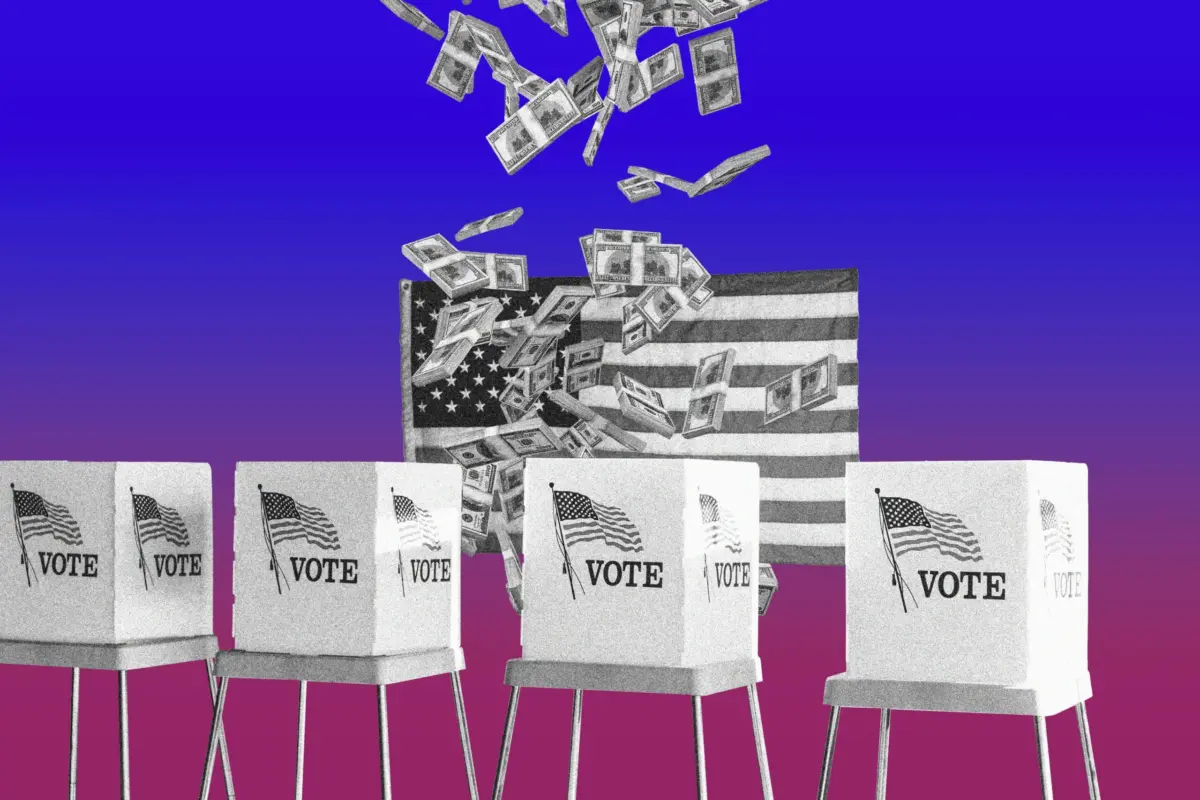
Democracy has always been a high-stakes arena, but in recent election cycles, the boundary between casting a ballot and placing a wager has completely dissolved. Hundreds of millions of dollars now flood into online prediction platforms, transforming democratic exercises into speculative assets. This convergence of high finance, political forecasting, and degenerate gambling has created a volatile new ecosystem characterized by desperation for insider information, raw partisan fury, and fierce accusations of conspiracy when market odds shift unpredictably.
Is this still democratic participation, or is it simply legalized gambling with a political veneer? Through the magic—and madness—of modern prediction markets, it has become undeniably both.
Platforms like Polymarket, Kalshi, and others have seen unprecedented surges in liquidity and mainstream visibility. As traditional media outlets increasingly cite betting odds alongside conventional polling data, prediction markets have transitioned from niche curiosities to major drivers of political discourse. Yet, this evolution brings profound systemic risks. The temptation of quick financial gain, combined with the anonymity of blockchain rails and the sheer speed of algorithmic trading, has turned elections into spectacles where public sentiment can be heavily influenced—or outright manufactured—by deep-pocketed speculators.
This deep dive investigates the rise of political prediction markets, examining how financial speculation alters the democratic process, the mechanics of insider information peddling, and the broader societal implications of turning elections into a literal game of chance.
Detailed Chronology: From Academic Curiosities to Billion-Dollar Betting Pools
The Early Days: The Iowa Electronic Markets and Niche Beginnings
To understand the current explosion of prediction markets, one must look back at their origins. For decades, prediction markets were largely academic experiments. The Iowa Electronic Markets (IEM), established in the late 1980s by the University of Iowa Tippie College of Business, allowed participants to buy and sell small-stakes contracts based on election outcomes. While accurate in forecasting past results, these markets operated under strict regulatory caps and remained minor curiosities outside of political science departments and economics faculties.
The Cryptographic and Regulatory Turning Point
The modern era of prediction markets truly took shape with the advent of cryptocurrency and decentralized finance (DeFi). Platforms built on blockchain architecture bypassed many traditional banking hurdles, allowing for borderless, high-volume transactions with minimal regulatory friction. Concurrently, legal battles paved the way for regulated domestic alternatives. Companies like Kalshi fought protracted legal skirmishes with regulators—most notably the Commodity Futures Trading Commission (CFTC)—to offer event contracts to U.S. retail investors.
The 2024 Watershed Moment
The watershed moment arrived during the subsequent high-profile election cycles, culminating in the 2024 U.S. presidential election. During this period, prediction markets evolved from esoteric financial instruments into mainstream cultural touchstones. Millions of retail investors, crypto whales, and traditional bettors poured hundreds of millions of dollars into platforms like Polymarket. For the first time, political odds displayed on prediction markets frequently overshadowed traditional mainstream polling averages in public discourse, driving news cycles, influencing donor behavior, and dictating campaign narratives in real time.
Supporting Context & Metrics: The Mechanics of the Politicized Ledger
To grasp the magnitude of this phenomenon, one must examine the metrics driving these platforms and the structural vulnerabilities inherent within them.
Liquidity and the "Whale" Problem
Unlike traditional public opinion polling, which relies on stratified random sampling and demographic weighting, prediction markets operate on capital. He who has the gold makes the rules—or, in this case, moves the needle.
A handful of high-net-worth individuals, often referred to in crypto circles as "whales," can inject massive tranches of capital into a single outcome, artificially skewing the odds. Because liquidity in many prediction markets is relatively thin compared to traditional equities, a few million-dollar trades can drastically shift a candidate’s perceived probability of winning from 40% to 60%. This shift then creates a feedback loop: media outlets report on the "momentum," retail bettors follow the trend, and the market price diverges significantly from fundamental polling realities.
The Insatiable Hunger for Insider Information
The financial incentive to predict correctly has spawned an underground economy of information brokerage. In the days leading up to major political announcements, debate performances, or policy shifts, prediction market traders display an unprecedented desperation for insider scoops.
- Campaign Leaks: Staffers, consultants, and insiders are increasingly targeted by market participants seeking non-public data.
- Polling Data Proprietary Access: Private internal polling, focus group results, and strategic campaign memos hold immense monetary value for traders willing to stake six or seven figures on short-term market fluctuations.
- Information Asymmetry: This dynamic creates a dangerous playing field where well-connected elites can monetize private political developments long before the general public—or even ordinary voters—are aware of them.
Conspiracy, Cults, and Cultural Fallout
When millions of dollars are riding on an event, objectivity evaporates. The psychological stakes of financial loss foster intense bitterness, conspiracy theories, and accusations of manipulation. When a market moves against a trader’s heavily invested position, scapegoating follows immediately. Platforms are flooded with unverified claims of bot manipulation, insider corruption, and foreign interference.
This hyper-financialized environment erodes trust not only in the election results themselves but in the very information ecosystem surrounding governance. Every news article, every gaffe, and every minor political development is instantly filtered through the lens of how it impacts share prices.
Expert Insights: Disinformation, Extremism, and the Global Impact
To unpack the societal fallout of these trends, industry experts point to a disturbing convergence between online extremism, disinformation campaigns, and financial speculation.
David Gilbert, a veteran reporter at WIRED who covers disinformation and online extremism, notes that the integration of prediction markets into everyday political life alters human behavior in profound and often detrimental ways. According to reporting and analysis from security and tech journalists, the gamification of democracy strips away the civic solemnity of elections, replacing it with the adrenaline-fueled toxicity of day-trading culture.
"When you turn a democratic election into a casino, you invite all the worst pathologies of high-frequency trading and internet subcultures into the public square," industry analysts observe. Disinformation is no longer just a tool for ideological persuasion; it is a financial instrument. Bad actors can weaponize fake news, deepfakes, or manufactured scandals specifically to crash or spike prediction market shares, profiting directly from the confusion they sow.
Furthermore, this trend extends far beyond American borders. Global prediction markets now feature contracts on geopolitical conflicts, foreign leadership transitions, civil unrest, and diplomatic crises. In these contexts, the stakes are not merely financial or political—they are life and death. The prospect of financial entities profiting off instability or war introduces grotesque moral hazards into global affairs.
Official Statements and Industry Perspectives
As prediction markets continue to capture headlines and draw regulatory scrutiny, stakeholders on all sides have defended or critiqued their expanding influence.
Proponents of prediction markets argue that they offer a superior alternative to traditional polling. The libertarian ethos underpinning many of these platforms posits that "skin in the game" forces participants to be more honest and accurate than survey respondents who face no consequences for expressing a preferred opinion.
"Markets aggregate wisdom more efficiently than polls," crypto advocates and platform executives frequently maintain. "When people put their own money on the line, they do their research. They cut through the bias."
Conversely, critics, election integrity advocates, and regulatory watchdogs view the trend with alarm. Legal experts emphasize that allowing unregulated or lightly regulated offshore platforms to accept massive wagers on U.S. elections opens the door to foreign manipulation, money laundering, and the erosion of electoral integrity.
"We are witnessing the financialization of civic duty," note legal scholars specializing in election law. "When elections are priced like commodities, the fundamental premise of one person, one vote is subtly corrupted by a system where capital volume dictates perceived momentum."
Regulators face a monumental challenge: how to balance financial innovation and free-expression rights with the urgent need to protect democratic institutions from predatory speculation and market manipulation.
Future Outlook: Navigating the Politicized Financial Frontier
As we look toward future election cycles, the genie cannot be put back into the bottle. Prediction markets are here to stay, and their integration into mainstream political coverage is accelerating.
Several critical trajectories will define this space in the coming years:
- Regulatory Crackdown vs. Legitimation: Governments worldwide will grapple with how to classify and oversee political event contracts. Whether regulatory bodies like the CFTC can effectively police domestic markets—while combating decentralized, blockchain-based offshore competitors—remains an open question.
- The Evolution of Market Manipulation: As bad actors become more sophisticated, we can expect to see advanced AI-driven bot swarms, coordinated deepfake disinformation campaigns, and targeted insider operations specifically engineered to manipulate political betting odds for profit.
- Media Integration and Public Trust: Mainstream media outlets will have to establish rigorous ethical guidelines regarding the citation of prediction markets. Treating betting odds as objective barometers of public will risks amplifying the financial interests of a tiny minority of hyper-wealthy speculators over the actual preferences of voters.
- The Psychological Toll on Democracy: Ultimately, the greatest long-term challenge is cultural. If citizens begin to view elections not as a fundamental expression of civic responsibility, but as a rigged casino where "whales" pull the strings, public faith in democratic governance will continue to erode.
In conclusion, prediction markets have exposed a raw nerve in modern democracy. They offer a fascinating, data-driven window into collective sentiment, yet they simultaneously import the darkest instincts of speculation, insider trading, and algorithmic manipulation into our civic life. Balancing the freedom of financial innovation with the preservation of democratic integrity will be one of the defining governance challenges of the twenty-first century. As long as democracy remains a game with massive payouts, players will continue trying to rig the wheel.