Executive Overview
At the intersection of modern American satire, faith-based desperation, and high-stakes genre filmmaking lies Your Mother Your Mother Your Mother, an arresting, visually multifaceted crime drama slated for a theatrical release on September 25, following its critically buzzed-about premiere at the 2026 Toronto International Film Festival (TIFF). Directed by Bassam Tariq (Mogul Mowgli, Bait) and starring two-time Academy Award winner Mahershala Ali, the project carries a fascinating Hollywood pedigree: it serves as the spiritual successor to the pair’s originally intended, ultimately unrealized collaboration on Marvel Studios’ Blade.
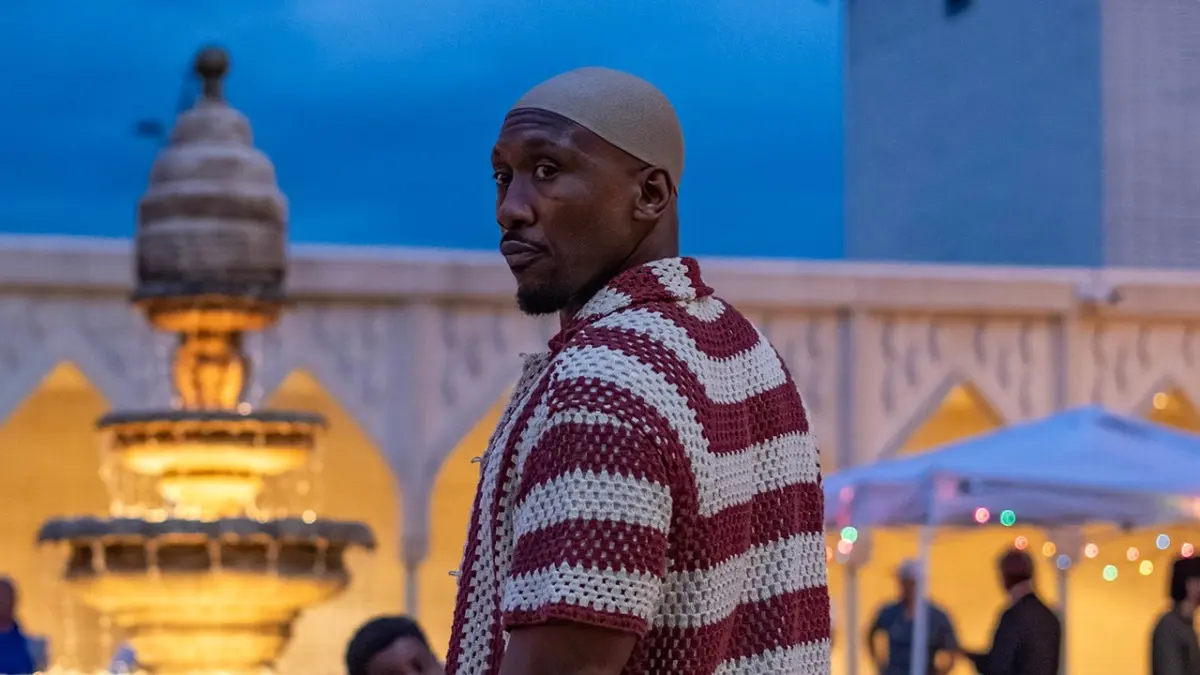
Instead of stepping into the polished leather boots of a slick vampire hunter, Ali inhabits the sweat-soaked, morally conflicted frame of Latif—a devout, sword-wielding contract killer and former Quran teacher operating in the sweltering, hyper-politicized underbelly of rural Virginia. The narrative catalyst is as jarringly grounded as it is darkly absurd: following the sudden death of his wife, Khadija (Shakirah DeMesier), Latif is left to care for a rebellious teenage daughter, a brash adolescent son, and a newborn baby girl who aggressively rejects formula. The film’s inciting incident—and the grueling, cross-state odyssey that follows—spurs from a singular, desperate parental mission: finding breast milk by any means necessary, a premise ripped directly from director Bassam Tariq’s own harrowing personal experiences trying to feed his newborn while his wife was incapacitated in the ICU.
Spanning mosques, strip clubs, trailer parks, and evangelical compounds, Your Mother Your Mother Your Mother weaves a tapestry of modern American tribalism. It explores the friction between Islam, Evangelical Christianity, and Mormonism, contrasting the rigid piety of its protagonist with a gallery of eccentric, dangerous figures. Though the feature occasionally stumbles in fully contextualizing the weight of its protagonist’s moral code due to a scant amount of traditional action sequences, it compensates with blistering emotional depth, razor-sharp dark comedy, and a palpable stylistic atmosphere.
Detailed Chronology
Genesis of a Collaboration: From Marvel’s Shelved Blade to Rural Virginia
The journey toward Your Mother Your Mother Your Mother began in the development offices of Marvel Studios, where director Bassam Tariq and star Mahershala Ali were initially paired to revitalize the Daywalker franchise. When creative differences and structural delays ultimately dissolved that iteration of Blade, the actor and filmmaker found themselves bonded by a mutual desire to tell a story driven less by corporate IP and more by intimate, culturally specific human stakes.
The thematic breakthrough arrived from Tariq’s life. During the frantic, terrifying weeks when his wife was confined to an Intensive Care Unit following childbirth, Tariq experienced firsthand the helpless panic of a father struggling to secure nourishment for a newborn infant. Channeling this raw, sleepless trauma into a cinematic framework, Tariq and Ali pivoted away from standard superhero fare to craft a character study wrapped in the skin of a regional crime thriller. They envisioned a world where geopolitical and spiritual extremism takes a backseat to the universal, primal mandate of feeding a child.
The Inciting Incident and Latif’s New Reality
The film opens in media res, establishing Latif’s double life with chilling nonchalance. In a darkly comedic sequence, Latif successfully executes a high-value target in a secluded rural patch of Virginia before fumbling through the messy logistics of corpse disposal. The mundane interruptions of life immediately pierce the tension: his phone rings, delivering the devastating news that his beloved wife, Khadija, has died.
This sudden loss alters the gravitational center of the household. Latif, whose days were once cleanly divided between silent meditation, Quranic study, and lethal contract work, is forced to assume total domestic responsibility. He is immediately confronted by the multi-generational friction of his surviving family:
- Fatiha (Adia): His rebellious, sharp-tongued teenage daughter who actively rejects her father’s conservative Islamic values and traditionalism.
- Qadir (Jahleel Kamara): His delightfully brash, fast-talking adolescent son who serves as a crucial source of levity in the household.
- The Infant Daughter: A newborn who violently refuses standard milk formula, leaving Latif with a ticking clock and an urgent crisis.
The Quest for Nourishment and the Web of Complications
Compounding Latif’s domestic chaos is his own deeply ingrained, paradoxical moral code. As a contract killer, Latif operates under strict religious and personal rules: he exclusively uses blades rather than firearms, a stylistic choice that renders his hits just as vicious while preserving a medieval, intimate brutality. Furthermore, his targets are curated according to his own uncompromising standard of vigilantism—he eliminates Christian white supremacists, corrupt actors, and extremists who pose a clear and present danger to innocent communities.
However, his traditionalist approach to women and his rigid demeanor severely complicate his search for a wet nurse or safe distribution channels for breast milk. Seeking aid, Latif turns to his former associate, Mike (Laith Nakli), an Arab American security specialist with deep local connections. Mike is willing to help, but transactional realities dictate the terms.
Mike’s unruly nephew—an unctuous scummy content creator and former student of Latif’s named Abubakr Ali—has fallen out of favor with the local community over salacious online material. Worse, the nephew has a massive target on his back, hunted by federal authorities and a rogue actor alike over unproven allegations of human trafficking and digital vice. That hunter is Pastor Hwan Yoon (played with maniacal, charismatic glee by John Cho), a respected former military veteran turned gun-toting evangelical leader.
The Climax and Confontations
Mike presents Latif with a cold calculation: if the pious assassin executes the heavily guarded and fiercely fortified Pastor Hwan, his family’s needs—including an endless, secure supply of nourishment for his infant—will be taken care of indefinitely.
For a man desperately wanting out of the criminal underworld, the bargain forces a profound existential crisis. The narrative builds toward explosive, albeit infrequent, action sequences where Latif must navigate fortified compound defenses using only his trusted blades. Along the way, he is forced to reckon not only with Hwan’s terrifyingly pure, Confederate-flag-waving zealotry, but also with institutional opposition closer to home. He faces intense interrogations from Khadija’s Christianized brother (Tramell Tillman) and stern reprimands from his community’s domineering Imam (Giancarlo Esposito), both of whom walk a careful line of knowing complicity regarding Latif’s nocturnal trade.
Supporting Context & Metrics
Thematic Analysis: A Kaleidoscope of American Faith
Your Mother Your Mother Your Mother operates as a microscopic examination of modern American sectarianism. Tariq uses the rural Virginia landscape as a canvas to map out the fractures and strange alliances formed by communities seeking spiritual refuge:
- Islam: Represented by Latif’s internal struggle, his community’s rigid orthodoxy, and the film’s titular framing device—an Islamic hadith emphasizing that mothers occupy the top three tiers of honor in a believer’s life.
- Evangelicalism: Personified by John Cho’s Pastor Hwan, whose weaponized patriotism and charismatic dogmatism brilliantly blur the line between sincere spiritual conviction and terrifying extremism.
- Mormonism: Represented gently through neighborly interactions that underscore how disparate American subcultures attempt to build localized safety nets amid rising societal isolation.
Production and Aesthetic Metrics
The film’s unique visual and auditory identity relies heavily on a distinct technical collaboration:
- Cinematography: Katelin Arizmendi employs sweltering color grading, heavy contrast, and high saturation. The lighting continuously captures the oppressive humidity of rural Virginia, with light bouncing off Latif’s sweat-drenched brow to amplify the character’s psychological distress.
- Musical Score: Penned by the experimental band Son Lux, the soundtrack delivers bouncy, anxiety-inducing rhythmic pulses that contrast sharply with the brooding silence of Latif’s home life and the visceral horror of his brief kinetic outbursts.
- Festival Launch: Screened as a major marquee title at the 2026 Toronto International Film Festival, capturing critical attention for its genre-bending audacity before securing its wider theatrical release via Amazon MGM Studios on September 25.
Official Statements
While traditional promotional junkets for the film’s theatrical rollout are currently ramping up, early press notes and festival disclosures from director Bassam Tariq and lead actor Mahershala Ali shed light on the artistic philosophy driving the film.
"We didn’t set out to make a standard action movie, nor did we want a conventional domestic drama," director Bassam Tariq noted in production statements shared following the TIFF premiere. "This story grew out of a very specific, terrifying moment of personal helplessness—the realization that when life strips away your foundations, you are left running on instinct, faith, and the desperate love for a child who doesn’t care about your past, your code, or your politics."
Mahershala Ali has similarly emphasized the internal dichotomies of playing Latif, pointing to the character’s attempts to reconcile the violence of his professional life with the tender, nurturing demands of single fatherhood:
"Latif is a man imprisoned by his own definitions of honor," Ali reflected during festival panel discussions. "He uses a blade because it forces him to look his opponent in the eye, to take responsibility for the termination of a life. But when he has to hold a baby girl who won’t take formula, his swords are completely useless. That juxtaposition—between the master assassin and the helpless, grieving father—is where the real performance lives."
Future Outlook
As Your Mother Your Mother Your Mother prepares for its wide theatrical release on September 25, industry analysts and film critics are closely watching how mainstream audiences will respond to its idiosyncratic blend of dark comedy, social satire, and sparse, brutal action.
While certain critics have noted narrative turbulence—specifically pointing out that the film occasionally suffers from a lack of establishing scenes demonstrating Latif’s standard operational methods, thereby muting the dramatic weight of his moral compromises—the overall consensus points to a triumph of atmosphere and performance. Mahershala Ali’s devastating portrayal, paired with John Cho’s scene-stealing villainy and Bassam Tariq’s uncompromising directorial vision, ensures that the film will leave a lasting footprint on the 2026 cinematic landscape.
Looking ahead, the project marks a significant pivot for both men. By stepping away from mega-budget studio machinery like the canceled Blade initiative, Tariq and Ali have proven that independent and mid-budget auteur-driven cinema can successfully cross-pollinate genre thrills with profound, culturally grounded character studies. Whether Your Mother Your Mother Your Mother sparks an awards-season conversation or merely establishes a new benchmark for indie crime dramas, it firmly underscores that the most compelling stories often emerge when filmmakers turn their most personal, harrowing life experiences into high art.