Executive Overview
In an era defined by hardware bloat, sky-high electricity bills, and graphics cards that demand dedicated power cables thicker than garden hoses, the retro-gaming and DIY hardware communities continue to unearth stunning examples of minimalist engineering. Modern high-end PC gaming is undeniably magnificent, capable of pushing millions of pixels at breakneck refresh rates, but it is rarely kind to utility budgets. Enter Alejandro Villegas Alonso, a hardware creator who has redefined what is possible with ultra-low-power silicon.
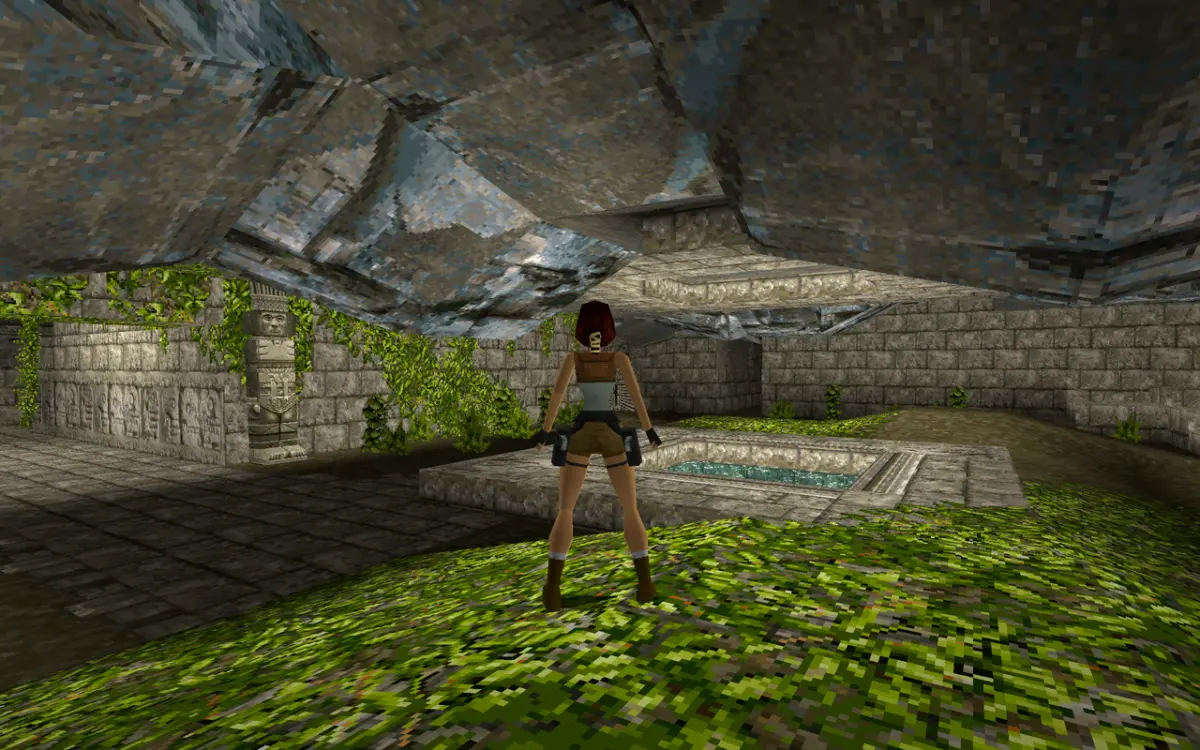
Alonso recently shared a demonstration showcasing the original, iconic 1996 action-adventure title Tomb Raider running smoothly on a humble, ultra-low-power chip: the ESP32-P4 microcontroller. Operating on a dual-core 400 MHz RISC-V architecture, the System-on-Chip (SoC) sips a meager 1 watt of electricity under standard conditions.
Far from a traditional gaming rig, the ESP32-P4 is typically earmarked for low-power embedded applications, industrial interfaces, and camera systems. Yet, through clever software optimization and the utilization of open-source engines, Alonso has proven that Lara Croft’s inaugural global expedition can be rendered, heard, and played on a development board costing less than $25. This achievement not only highlights the staggering leaps made in open-source game preservation and hardware porting, but it also signals a thrilling, energy-conscious frontier for retro-gaming enthusiasts worldwide.
Detailed Chronology: From Browser Ports to RISC-V Silicon
To understand the magnitude of Alonso’s achievement, one must trace the technological lineage that allowed a 1996 Sega Saturn and PlayStation classic to end up on a chip designed for industrial internet-of-things (IoT) devices.
The Foundation of OpenLara
The journey of Tomb Raider onto micro-controllers did not begin with raw hardware hacking; it started in the browser. Tomb Raider has long benefited from a vibrant, dedicated modding and programming community. Among its greatest triumphs is OpenLara, an open-source engine recreation developed by XProger. OpenLara completely reverse-engineered the classic game logic, allowing enthusiasts to play the original Tomb Raider natively in web browsers with unlocked frame rates, enhanced camera controls, and smooth fluidity that surpassed the original hardware limitations.
Because OpenLara re-implements the game using modern, lightweight code rather than relying on heavy, resource-intensive hardware emulation (such as trying to run a full PlayStation 1 emulator layer), it strips away massive computational overhead.
Transitioning to Espressif’s RISC-V Architecture
Recently, silicon manufacturer Espressif introduced the ESP32-P4, a high-performance, low-power microcontroller featuring dual 32-bit RISC-V cores running at 400 MHz. While designed for embedded systems requiring advanced multimedia capabilities—such as secure boot, native MIPI-CSI/DSI interfaces, and hardware-accelerated pixel processing—gaming was certainly not at the top of the engineering checklist.
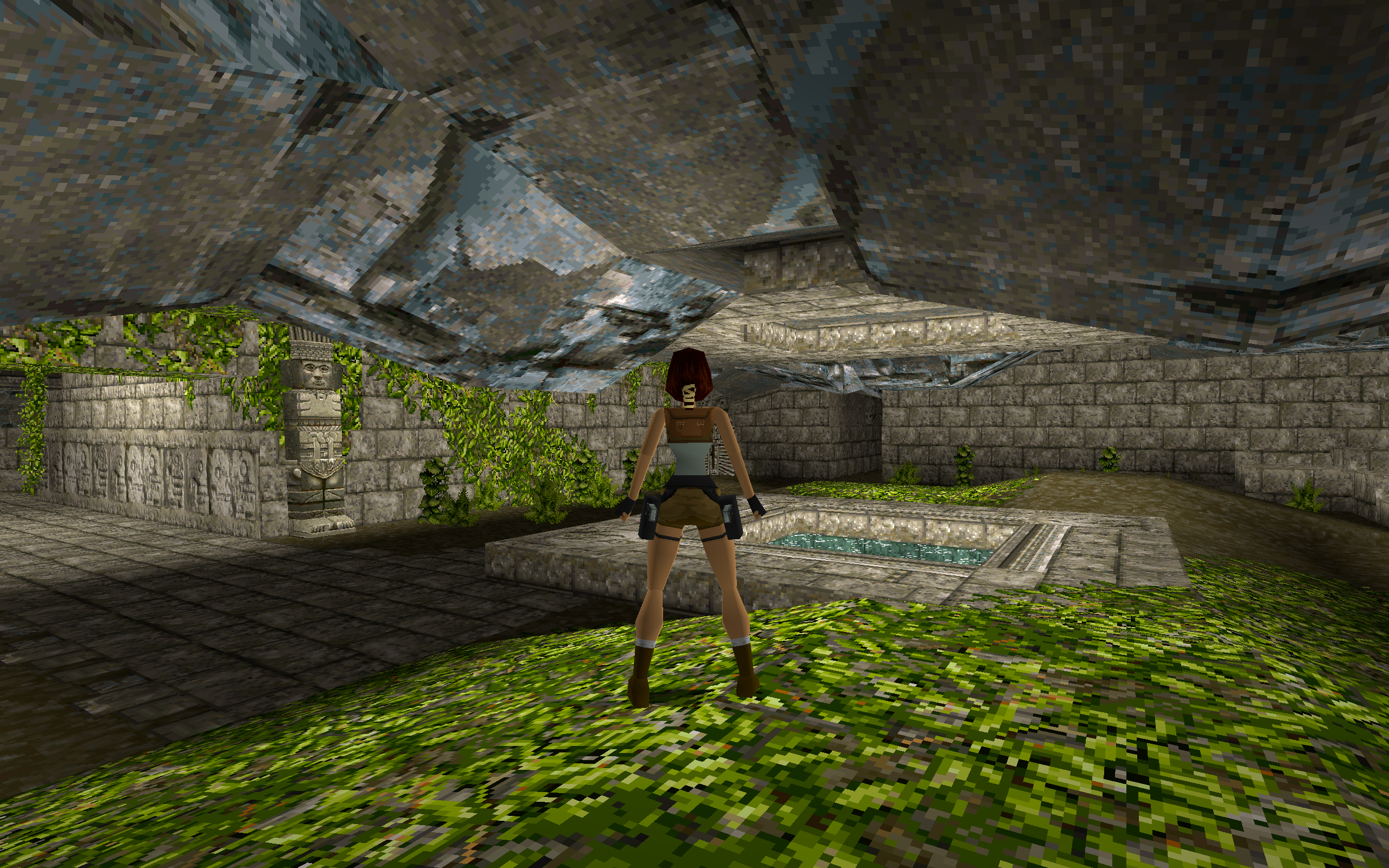
Recognizing the potential of the underlying hardware, Alejandro Villegas Alonso set out to bridge the gap between OpenLara and Espressif’s latest RISC-V SoC. According to the project’s documentation hosted on GitHub (alexkid77/openlara_esp32p4), Alonso successfully ported the classic Tomb Raider 1 engine to run natively with software rendering, stereo audio output, and USB HID keyboard input directly on the microcontroller.
Instead of routing the game through layers of abstraction, the software directly targets the bare-metal capabilities of the chip, executing a masterclass in cross-platform adaptation.
Supporting Context & Metrics: Breaking Down the Hardware
Achieving playable performance for a 3D polygonal game from the late ’90s on a chip drawing roughly 1 watt of power requires an intricate balance of hardware acceleration and software rendering wizardry.
The Development Board and Power Budget
Alonso’s project utilizes the ESP32-P4-Function-EV-Board, a specialized evaluation kit designed to test the limits of the microcontroller. This board includes several built-in peripherals, most notably a 7-inch capacitive touch screen and an integrated camera module.
While the ESP32-P4 chip itself draws around 1 watt, running the entire evaluation assembly pushes the power budget higher. The 1024 x 600 LCD screen and associated peripherals naturally consume more power than the bare SoC, yet the core processor remains remarkably efficient compared to traditional computing hardware.
Rendering Pipeline and Performance Metrics
According to technical breakdowns shared by Alonso, the port manages its graphical output through a specific pipeline:
- Internal Resolution: The game executes using a software RGB565 renderer at a native resolution of 320 x 240 pixels. This matches the spirit of the original hardware constraints while keeping processing overhead minimal.
- Hardware Scaling: Rather than letting the CPU stretch those pixels, the board utilizes its built-in Pixel Processing Accelerator (PPA) to hardware-scale the image up to 1024 x 600 to fit the 7-inch display seamlessly.
- Audio and Input: Players can hear the iconic ambient tracks and sound effects via an ES8311 audio codec delivering stereo sound. Meanwhile, inputs are managed through a standard USB keyboard connected to the development kit.
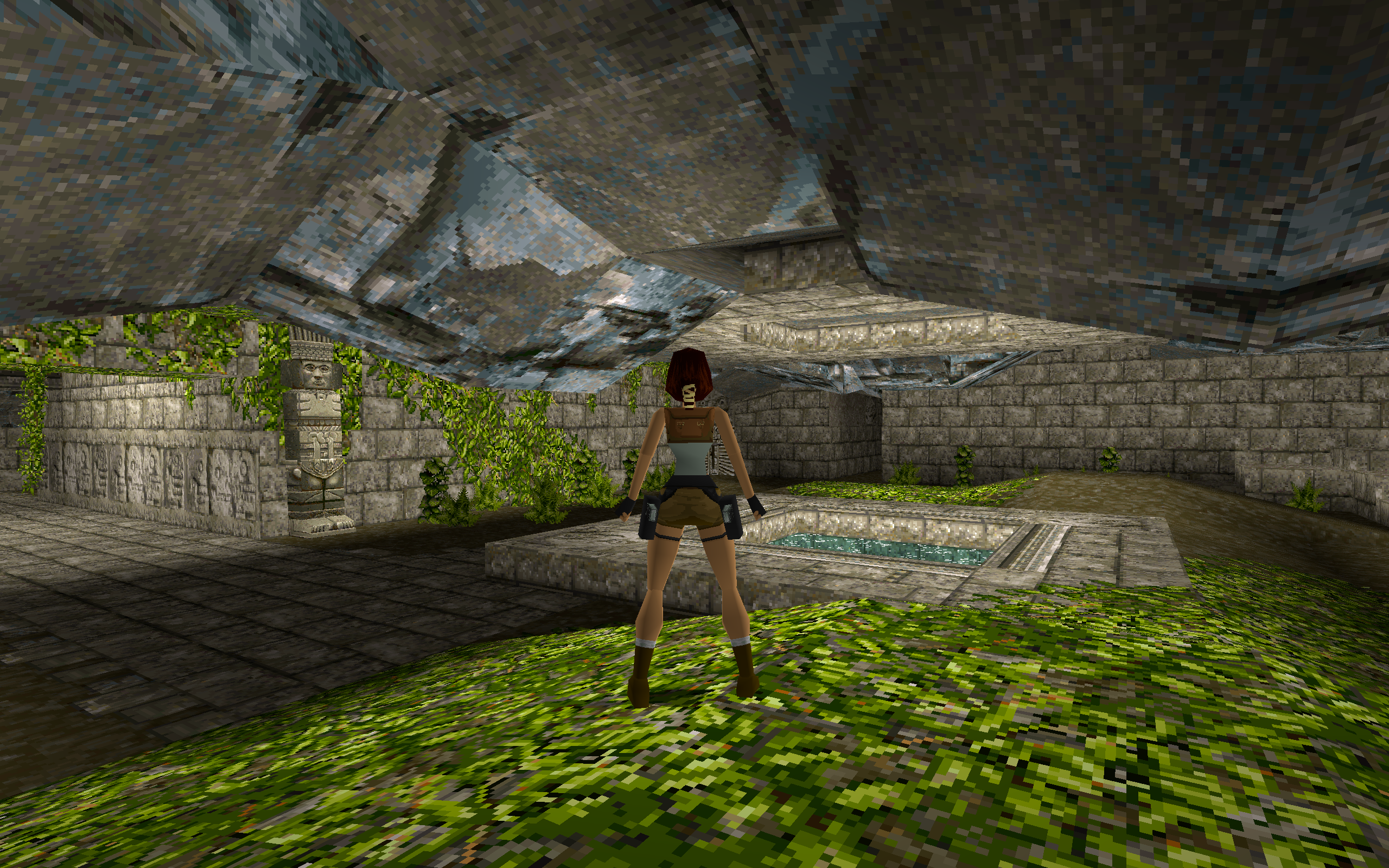
Watching the YouTube demonstration of Lara Croft trekking across snowy terrain on a screen driven by a 400 MHz chip offers a surreal juxtaposition. There are no cooling fans whining at maximum RPM, no liquid-cooling loops, and no massive thermal design power (TDP) spikes—just silent, cool, highly efficient silicon doing heavy lifting.
The Rise of DIY Micro-Computing and Ultra-Low-Power Innovation
Alonso’s Tomb Raider port is not an isolated anomaly; it arrives during a golden age of DIY hardware engineering driven by ultra-affordable, highly capable microcontrollers. With evaluation boards and modules frequently retailing for under $30, makers around the globe are pushing the boundaries of what low-power chips can achieve.
In recent months, the hardware modification and maker community has produced several astonishing feats utilizing similar low-power SoCs and microcontrollers:
- Credit-Card-Sized Computers: Engineers have successfully crafted fully functional, ultra-thin computers scaled down to the exact dimensions of a standard credit card, proving that modern processing power can be housed in practically invisible form factors.
- The "World’s Worst" USB Drive: Creative makers have built specialized storage devices that double as computing platforms, redefining utility and novelty in external hardware peripherals.
- E-Reader Game Boy Emulators: YouTubers have successfully transformed low-refresh-rate e-reader hardware into pocket-sized retro gaming consoles capable of running titles like Pokémon Blue at surprisingly viable, playable refresh rates.
These projects share a common philosophy: doing more with less. As commercial hardware trends increasingly lean toward massive power draws and exorbitant pricing, the DIY community is charting an alternative path focused on efficiency, clever optimization, and creative resourcefulness.
Future Outlook: What Next for Micro-Gaming?
As open-source engines like OpenLara continue to mature and silicon manufacturers pour R&D into highly efficient RISC-V architectures, the barrier to entry for custom hardware development drops lower every day.
Could we soon see dedicated, pocket-sized retro handheld consoles powered entirely by 1-watt microcontrollers? The technical hurdles are shrinking rapidly. While playing Tomb Raider with a USB keyboard on an evaluation board might feel slightly unconventional to console purists, the underlying achievement opens up endless possibilities for custom-built, battery-sipping portable gaming devices.
Alonso’s work with the ESP32-P4 demonstrates that the future of gaming innovation doesn’t always lie in raw, unrestrained power. Sometimes, true engineering brilliance is found in the quiet efficiency of a chip that costs less than a fast-food meal, consumes less energy than a nightlight, and still manages to let you guide Lara Croft safely past rolling boulders and snarling wolves.