Executive Overview
The cloud computing landscape is undergoing a structural shift toward extreme cost-efficiency and performance democratization, highlighted by Amazon Web Services (AWS) announcing massive price reductions for OpenAI’s premier artificial intelligence models. In a move that signals intensified competition and maturation in the generative AI sector, AWS has slashed on-demand inference prices for OpenAI’s GPT-5.6 model family on Amazon Bedrock by up to 80%.
This headline development—affecting the high-performance GPT-5.6 Luna and Terra variants—arrives amidst a broader ecosystem update that encompasses advancements in cloud observability, multicloud networking architectures, and high-throughput data management. Beyond product releases, the past week at Amazon underscored the cultural and human dimensions of technology. From corporate initiatives like "Bring Your Kids to Work Day"—which saw children experiencing cutting-edge robotics and machine learning logistics in New York City—to the rigorous demands of enterprise engineering, AWS continues to bridge the gap between complex technological breakthroughs and accessible, real-world utility.
This comprehensive report examines the structural implications of the GPT-5.6 price cuts on Amazon Bedrock, explores the operational trajectory of AWS across multiple technical domains, and analyzes what these shifts mean for enterprise architects, chief technology officers, and the broader artificial intelligence economy.
Detailed Chronology & Technical Breakdown
The Human Element: Inspiring the Next Generation of Builders
The week’s technical updates were preceded by a powerful reminder of technology’s foundational purpose. During Amazon’s annual "Bring Your Kids to Work Day," young participants navigated bustling transit systems into the heart of New York City to experience the inner workings of global logistics. For many, including seven-year-old visitors taking their first rush-hour train rides, the highlight was witnessing automated fulfillment centers in action.
Observing autonomous mobile robots navigate complex warehouse floors to route packages to customers worldwide illustrates the tangible culmination of decades of machine learning research, distributed systems design, and mechanical engineering. This synthesis of software and physical infrastructure serves as the philosophical backdrop for AWS’s mission: abstracting complexity so builders can focus on creation.
Breaking Down the Amazon Bedrock & OpenAI GPT-5.6 Price Reductions
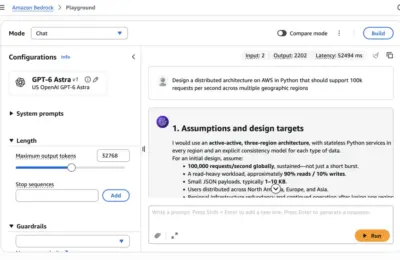
The core engineering and financial announcement of the week centers on Amazon Bedrock, AWS’s fully managed service that offers high-performing foundation models via a single API. Effective July 30, AWS implemented sweeping, automatic price reductions for the OpenAI GPT-5.6 family, dramatically lowering the barrier to entry for enterprise-grade generative AI deployment.
1. OpenAI GPT-5.6 Luna: The 80% Cost Drop
The most aggressive restructuring applies to the GPT-5.6 Luna model. Known for its balance of deep reasoning, speed, and cost-effectiveness, Luna’s on-demand inference pricing has been slashed by 80%.
- New Pricing Structure: Luna now commands an exceptionally competitive rate of $0.20 per million input tokens and $1.20 per million output tokens.
- Enterprise Impact: This pricing tier positions Luna as one of the most economically viable frontier-class models available on the global market. Organizations running high-volume conversational agents, real-time code generation tools, and large-scale document summarization pipelines can now scale operations without incurring prohibitive compute overhead.
2. OpenAI GPT-5.6 Terra: A 20% Reduction
For workloads demanding advanced domain expertise, intricate logic processing, and multi-step synthesis, the GPT-5.6 Terra model remains the gold standard.
- New Pricing Structure: Terra receives a robust 20% reduction in on-demand inference costs.
- Frictionless Implementation: AWS has executed these price cuts as an automated, systemic update. Enterprise customers utilizing Bedrock do not need to rewrite API integrations, adjust resource allocations, or modify underlying application code to benefit from the new rates. The savings apply transparently at the billing layer.
Supporting Context & Market Metrics
To fully understand the weight of AWS’s latest adjustments, one must analyze the macroeconomic and technical vectors shaping the generative AI landscape. The democratization of frontier models is no longer a futuristic goal; it is an urgent market requirement driven by intensifying competition among hyperscalers and model providers.
The Economics of Frontier Inference
Historically, deploying frontier-class language models required prohibitive capital expenditure, forcing organizations to balance output quality against operating expenses (OpEx). By driving down the cost of GPT-5.6 Luna to $0.20 per million input tokens, AWS and OpenAI are fundamentally altering the unit economics of AI.
| Model Variant | Previous Pricing Model | New On-Demand Pricing (Effective July 30) | Percentage Reduction |
|---|---|---|---|
| OpenAI GPT-5.6 Luna | Standard Tier (High baseline) | $0.20 / M input tokens $1.20 / M output tokens |
80% |
| OpenAI GPT-5.6 Terra | Standard Tier (High baseline) | Reduced by 20% | 20% |
This structural drop in token costs enables a new class of applications that were previously economically unfeasible. Autonomous agent swarms that require millions of internal reasoning tokens, continuous background code-refactoring engines, and real-time multilingual translation services can now run continuously within standard enterprise software budgets.
The Role of Amazon Bedrock in Multimodel Strategies
Amazon Bedrock continues to differentiate itself through its serverless architecture, enterprise-grade security, and commitment to model choice. Unlike tightly coupled ecosystems that lock developers into a single proprietary model family, Bedrock allows engineering teams to seamlessly switch between—or combine—models from OpenAI, Anthropic, Meta, Mistral, and Amazon’s own Titan family.
The automatic application of the GPT-5.6 price cuts underscores Bedrock’s value proposition: providing enterprise customers with immediate access to cutting-edge model optimizations without administrative friction. Furthermore, Bedrock’s integration with AWS security primitives—such as AWS Identity and Access Management (IAM), AWS Key Management Service (KMS), and Virtual Private Cloud (VPC) endpoints—ensures that cost reduction does not come at the expense of data privacy or compliance (such as HIPAA, GDPR, and SOC compliance).
Official Statements & Industry Implications
While formal press releases detail the technical specifications of the price drops, industry analysts and AWS leadership emphasize the strategic imperatives behind the changes.
The rationale is clear: accelerating enterprise AI adoption by removing financial friction.
As enterprises move past the proof-of-concept phase and into production-grade, enterprise-wide deployments, return on investment (ROI) has become the primary metric evaluated by executive boards. When AI inference costs constitute a major portion of cloud budgets, price optimization directly translates to accelerated project approvals.

An anonymous AWS enterprise architect noted during a recent builder community briefing:
"We are witnessing the inflection point where AI transforms from a high-cost experimental line item into a foundational utility, much like compute and storage were decades ago. By bringing Luna down to twenty cents per million input tokens, we are empowering developers to build ambitious systems that think deeply and act autonomously without triggering budgetary alarms."
Furthermore, industry observers point out that this move places intense pressure on alternative cloud providers and independent model hosting platforms to match these aggressive price points, ultimately benefiting the global developer community through hyper-competitive market dynamics.
Future Outlook & Next Steps for Builders
As AWS continues its cadence of weekly updates—spanning AI pricing, advanced observability, multicloud networking, and data management—builders and technology leaders must position their organizations to capitalize on these shifts.
Strategic Recommendations for Enterprise Teams
- Audit Current Token Consumption: Engineering teams should immediately review their Amazon Bedrock cost-allocation tags and utilization metrics to quantify savings realized from the GPT-5.6 Luna and Terra price drops.
- Re-Evaluate Model Routing Architectures: With Luna’s costs reduced by 80%, developers should re-architect dynamic model routing pipelines. Simple classification and extraction tasks can be shifted down to Luna to maximize cost savings, while reserving Terra for high-complexity reasoning tasks.
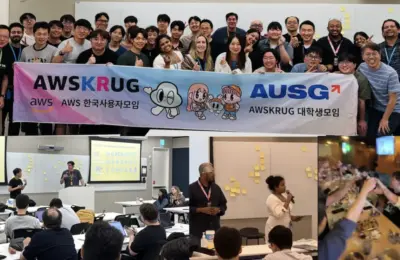
- Engage with the Community: Builders looking to deepen their technical acumen should connect with peers through the AWS Builder Center, a centralized hub for sharing architectural solutions, troubleshooting complex deployments, and accessing developer-first content.
- Stay Informed: Keep calendars updated with upcoming AWS-led virtual and in-person events, developer workshops, and deep-dive technical sessions by visiting the official AWS events portal.
Conclusion
The convergence of human inspiration—seen in the wonder of children exploring automated logistics—and uncompromising enterprise economics highlights the enduring vitality of the cloud ecosystem. With up to 80% lower prices for OpenAI GPT-5.6 models on Amazon Bedrock, AWS has once again lowered the barrier to innovation, inviting builders worldwide to architect the next generation of intelligent applications.
Check back next Monday for the next comprehensive AWS Weekly Roundup.