Executive Overview
The fast-paced evolution of cloud computing demands continuous alignment between platform providers and the developers who build upon them. In this week’s dispatch from the Amazon Web Services (AWS) ecosystem, the intersection of community outreach, generative artificial intelligence (AI), and enterprise reliability takes center stage.
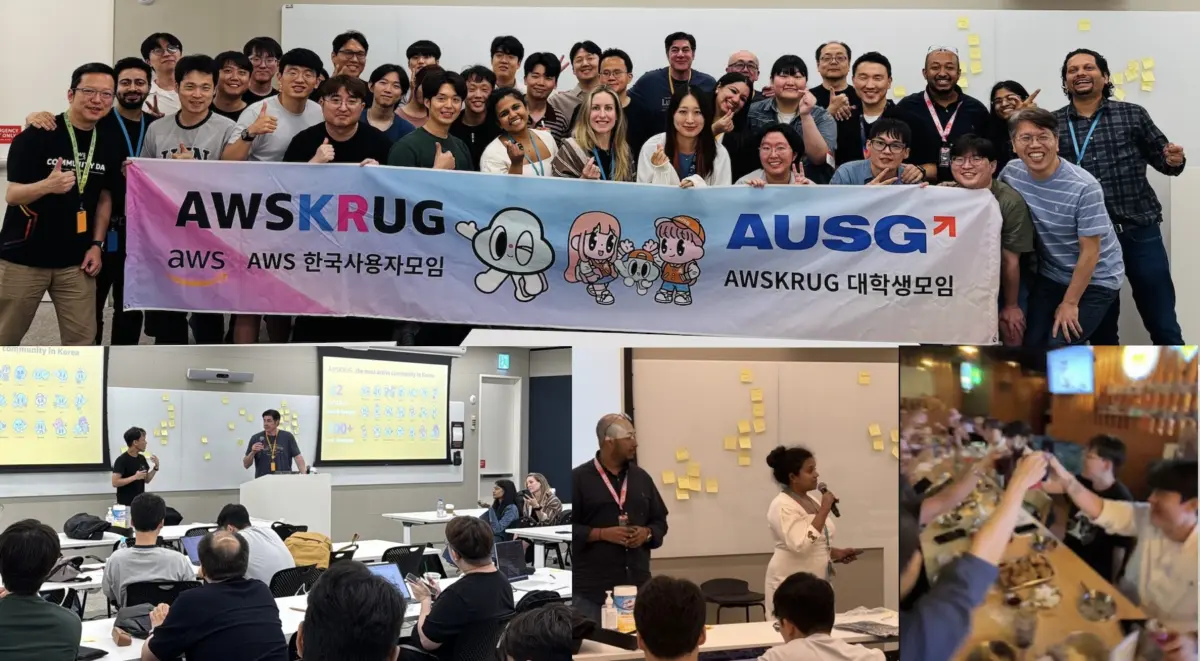
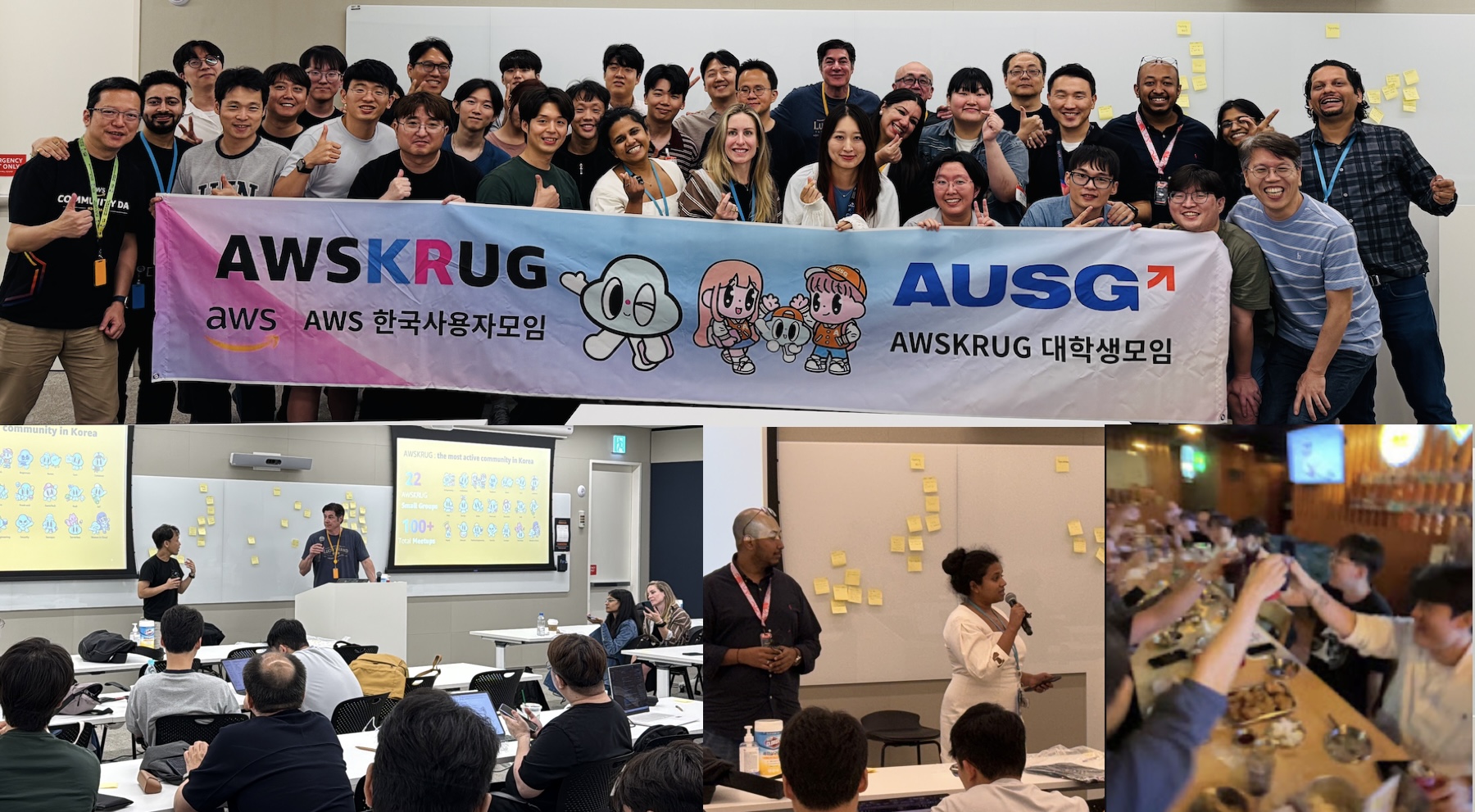
Last week, the AWS Developer Experience team embarked on a strategic tour across the Asia-Pacific region, beginning with a high-impact visit to Seoul. There, they met with the leadership of the AWS Korea User Group (AWSKRUG)—recognized as the largest cloud developer community in the nation. These vital feedback loops provide invaluable insights into how regional developers utilize cloud infrastructure, highlighting both triumphs from the first half of the year and critical areas where AWS can streamline developer workflows.
Simultaneously, AWS introduced a transformative capability for modern AI-assisted engineering: a one-click AWS Lambda setup prompt for coding agents. Designed to bridge the gap between advanced large language models (LLMs) and serverless architectures, this innovation equips automated coding agents with native AWS Serverless skills and the Serverless Model Context Protocol (MCP) server. By baking serverless best practices directly into the initialization phase, AWS is fundamentally shifting how developers collaborate with AI coding assistants.
However, the week was not without operational challenges. Over the weekend, a subset of AWS customers encountered inaccurate estimated billing data via AWS Cost Explorer, triggering erroneous budget and cost anomaly detection alerts. AWS has since resolved the root cause, restored normal operations, and committed to a comprehensive retrospective to bolster its billing telemetry and customer communication pipelines.
This comprehensive report details the community engagements, technical breakthroughs, and operational updates shaping the AWS landscape this week.
Detailed Chronology: Community Engagement and Technical Milestones
Deepening Roots: The AWSKRUG Seoul Delegation
The foundation of any robust cloud ecosystem lies in its user base. Recognizing this, the AWS Developer Experience team maintains a rigorous schedule of international visits designed to listen to regional community leaders, assess localized pain points, and co-create support mechanisms.
Last week’s itinerary brought the team to Seoul for an intensive collaborative session with AWSKRUG leaders. Boasting an impressive organizational structure of 20 distinct meetup groups divided by specific technological topics and geographic areas, AWSKRUG hosts upwards of 100 events annually. Most of these gatherings take place in the bustling tech hubs of Seoul, fostering a vibrant culture of continuous learning and peer-to-peer mentorship.
[AWS Developer Experience Team]
       │
       ▼
[Regional Tour: Asia-Pacific] ──► [Seoul, South Korea]
                                        │
         ┌──────────────────────────────┴──────────────────────────────┐
         ▼                                                             ▼
[AWSKRUG Leadership Session]                         [Community Bonding]
 • H1 Performance Reviews                              • Open Feedback Forums
 • Friction Point Identification                       • Traditional "Chimaek"
 • Developer Tooling Requests                          • Cross-Group Networking
During the closed-door strategic review, community leaders offered candid feedback regarding their experiences during the first half of the year. Discussions spanned the scalability of meetup logistics, the need for localized technical documentation, and specific feature requests directed squarely at the AWS Developer Experience engineering squads.
True to tech community traditions, the formal strategy sessions transitioned into an evening of relationship-building over Chimaek—a beloved Korean cultural pairing of fried chicken and beer. These informal interactions allow engineering leaders and grassroots advocates to forge durable bonds, ensuring that the voice of the developer remains central to product roadmaps in Seattle and beyond.
Supporting Context & Metrics: Revolutionizing AI Workflows with One-Click Lambda Setups
As artificial intelligence transitions from a novelty to an indispensable software engineering co-pilot, the challenge has shifted from generating code to contextualizing it within complex cloud environments. Developers utilizing AI coding agents often struggle with hallucinations regarding cloud-native best practices, proprietary SDK syntax, and infrastructure-as-code (IaC) configurations.
Addressing this architectural friction, AWS launched a definitive solution last week: the one-click Lambda setup prompt for coding agents.
+-------------------------------------------------------------------------+
|                        AWS Lambda Console                               |
|  [ Click: Copy Agent Prompt ]                                           |
+-------------------------------------------------------------------------+
                                     │
                                     ▼
+-------------------------------------------------------------------------+
|                        AI Coding Agent Workspace                        |
|  (Claude Code / Cursor / GitHub Copilot / Devin / OpenCode)             |
|  • Installs AWS Serverless Skills                                       |
|  • Configures Serverless MCP (Model Context Protocol) Server            |
|  • Embeds Production-Ready Best Practices                               |
+-------------------------------------------------------------------------+
Mechanics of the One-Click Setup Prompt
The core philosophy behind this launch is zero-friction onboarding. Historically, configuring an AI coding assistant to understand serverless paradigms required manual prompt engineering, custom system instructions, and manual installation of local MCP servers.
The new setup prompt completely automates this provisioning sequence. By executing a single instruction, developers infuse their AI agent with specialized AWS Serverless knowledge and hook it directly into the Serverless Model Context Protocol (MCP) server.
Supported Developer Environments
The underlying setup guide—accessible via https://docs.aws.amazon.com/lambda/latest/dg/samples/aws-lambda-agent-setup.md—features tailored installation commands for an expansive suite of modern AI coding environments:
- Claude Code: Anthropic’s terminal-native coding assistant.
- Kiro: Specialized development environments optimized for cloud workflows.
- Cursor: The AI-first code editor capturing significant market share among professional teams.
- GitHub Copilot: The ubiquitous enterprise pairing agent.
- Codex: Advanced programmatic code generation models.
- Devin Desktop: Autonomous software engineering agents designed for end-to-end task execution.
- OpenCode: Open-source extensible coding interfaces.
Step-by-Step Implementation Guide
To integrate this capability into your daily engineering routine, follow this streamlined workflow:
- Access the Console: Navigate to the AWS Lambda console dashboard. Locate and select the Copy agent prompt action button prominently displayed in the management interface.
- Alternative Terminal Fetch: Alternatively, you can fetch the setup instructions directly via your command line or paste the direct reference URL into your agent:
fetch https://docs.aws.amazon.com/lambda/latest/dg/samples/aws-lambda-agent-setup.md - Agent Initialization: Paste the retrieved setup markdown into your preferred AI agent’s configuration or initial chat prompt. The agent will parse the embedded system directives, establish the local MCP bridge, and verify its ability to synthesize AWS Lambda functions that adhere to modern security, performance, and cost-optimization standards.
Expanding Reach with the Agent Toolkit for AWS
Complementing the Lambda-specific prompt, developers can further empower their AI assistants using the Agent Toolkit for AWS. This toolkit serves as a comprehensive foundational layer that grants coding agents real-time access to current AWS documentation, architecture patterns, and safe resource access guidelines.

To install the underlying AWS MCP Server through the toolkit, developers utilize the official repository setup script:
fetch https://raw.githubusercontent.com/aws/agent-toolkit-for-aws/refs/heads/main/setup-instructions/setup.mdThis dual-pronged approach—combining specific service prompts with generalized architectural toolkits—represents a massive leap forward in ensuring that AI-generated cloud infrastructure is secure, performant, and production-ready from the very first commit.
Official Statements & Incident Post-Mortem: Navigating the Cost Explorer Reporting Glitch
Operational transparency is the bedrock of enterprise cloud computing. When incidents occur, swift remediation paired with open communication is paramount to maintaining customer trust.
Over the weekend, a localized operational disruption impacted financial reporting tools across the AWS global footprint. Customers interacting with AWS Cost Explorer reported anomalies regarding inaccurate estimated billing data.
Nature of the Incident
- Symptoms: Cost Explorer displayed inflated estimated cost and usage metrics.
- Downstream Effects: Because the dashboards showed elevated cost projections, automated monitoring systems triggered false-positive budget notifications and spurious cost anomaly detection alerts.
- Scope: The anomaly was strictly confined to estimated billing telemetry and monitoring notification layers; core compute, storage, and networking data-plane operations remained completely unaffected.
Resolution and Corrective Actions
AWS engineering teams mobilized immediately upon detection, isolating the root cause within the billing telemetry aggregation pipeline. The issue has been fully resolved, and all AWS services—including Cost Explorer, Budgets, and Cost Anomaly Detection—have returned to normal operating parameters.
In an official statement released via the AWS Health Dashboard, platform representatives addressed the community directly:
"The issue has been resolved, and all AWS services are operating normally. We apologize for the concern this incident caused our customers and are conducting a thorough retrospective to prevent events like this from reoccurring, as well as improving our response when billing incidents occur."
AWS has initiated an exhaustive internal retrospective. The goals of this review are twofold:
- Root-Cause Hardening: Upgrading validation checks within billing data ingestion pipelines to catch anomalous fluctuations before they reach customer-facing dashboards.
- Alert Refinement: Decoupling auxiliary notification systems from transient telemetry spikes to minimize false-positive panic among financial operations (FinOps) teams.
Affected users can review the complete incident history and ongoing diagnostic reports by referencing event arn:aws:health:global::event/BILLING/AWS_BILLING_OPERATIONAL_ISSUE/AWS_BILLING_OPERATIONAL_ISSUE_47B68_BACBD91434F on the official AWS Health Dashboard.
Future Outlook: Engaging with the Community and What Lies Ahead
As the cloud computing landscape accelerates into the second half of the year, the convergence of generative AI tooling and disciplined operational infrastructure will define industry leaders.
Upcoming Community Engagements
Developers looking to deepen their technical expertise and network with peers have a packed calendar of hybrid events ahead:
- AWS Summits: Regional flagship conferences offering deep-dive technical sessions, architectural chalk talks, and keynotes on emerging technologies.
- In-Person and Virtual Workshops: Led by AWS technical evangelists, these sessions provide hands-on experience with emerging tools, including serverless architecture and AI integrations.
- Startup Events: Tailored networking and technical advisory sessions designed to help early-stage founders scale efficiently on AWS infrastructure.
- AWS Builder Center: Builders are encouraged to join the official Builder Center community hub to share architectural solutions, publish code samples, and access continuous learning paths.
Looking Forward
Next week promises a new wave of feature releases, architectural blueprints, and platform updates. As organizations adopt one-click AI coding agents to accelerate their serverless transformations, the feedback loop between grassroots user groups—like AWSKRUG—and core product engineering teams will remain the primary engine of innovation.
Be sure to monitor the official What’s New with AWS feed and explore the AWS Blogs portal for rolling announcements. Join us next Monday for another comprehensive Weekly Roundup!
— Reported by Channy