Executive Overview
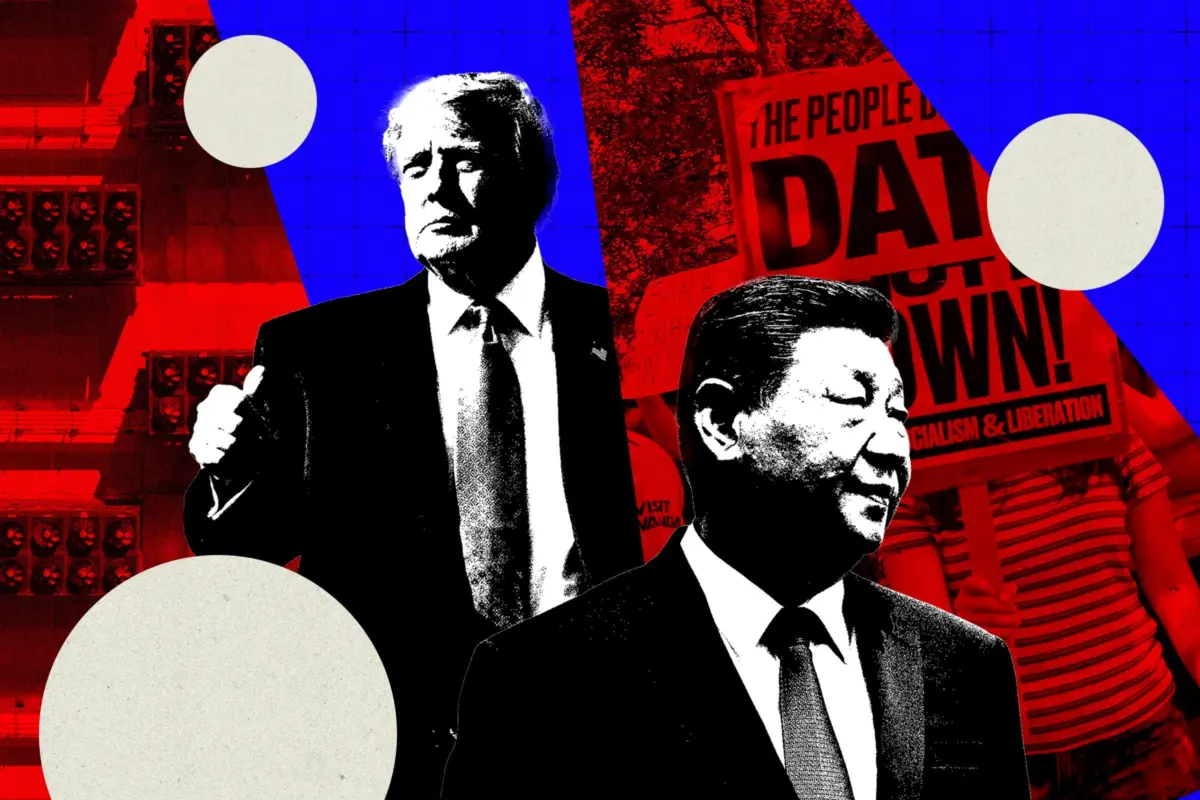
As the political landscape heats up ahead of the midterm elections, artificial intelligence and the massive physical infrastructure powering it have emerged as the defining domestic flashpoints of the season. At the heart of this friction is the rapid, resource-intensive expansion of data centers. Far from being embraced as engines of the future, these sprawling facilities have triggered an unprecedented wave of public hostility. Recent polling reveals a stunning shift: as many as 75 percent of Americans now oppose the construction of a data center in their local communities, a dramatic leap from the 42 percent opposition recorded just a year prior.
This massive surge in grassroots resistance has sent shockwaves through political establishments nationwide. Bipartisan figures who previously championed tech development—such as Texas Governor Greg Abbott and Pennsylvania Governor Josh Shapiro—have abruptly pivoted, scrambling to adopt hardline stances against the infrastructure to appease anxious voters. Yet, even as public skepticism grows and politicians backpedal, a fierce counter-narrative has taken root among technology executives and conservative lawmakers. Rather than confronting valid domestic concerns regarding soaring energy bills, water consumption, noise pollution, and environmental degradation, powerful backers of the industry are pointing an accusing finger outward, blaming a familiar geopolitical scapegoat: China.
This investigative report unpacks how a fundamentally homegrown American backlash against Big Tech morphed into a narrative of foreign interference, evaluating the thin evidence behind these claims, the political utility of the China card, and the deeper anxieties driving the great data center backlash.
Detailed Chronology: The Escalation of Public Backlash and the Pivot to Beijing
To understand how the data center debate transformed from a local zoning dispute into an international conspiracy, one must trace the timeline of events that defined the summer political cycle.
Spring to Early Summer: The Rise of the Right-Wing Policy Papers
The groundwork for the foreign-interference narrative was laid in the spring, when a series of reports published by right-wing policy shops began circulating in Washington, D.C. These documents alleged that the Chinese Communist Party (CCP) was actively seeding anti-data center sentiment among the American public.
While initially treated with skepticism by national security analysts, these reports provided a convenient talking point for lawmakers and pundits seeking to discredit local environmental and community opposition. By framing grassroots protests as foreign-inspired subversion, tech advocates hoped to delegitimize the growing wave of municipal pushback.
June: OpenAI’s Findings and Social Media Purges
The narrative gained official technological backing in June, when AI pioneer OpenAI published a report detailing its discovery of a cluster of user accounts linked to the Chinese government. According to OpenAI, these accounts were "testing narratives against AI infrastructure."
However, a close reading of OpenAI’s own findings revealed a more nuanced reality: the network of accounts was not manufacturing discontent from whole cloth; rather, it was opportunistically exploiting existing, deep-seated public frustrations regarding AI infrastructure.
Concurrently, independent social media analytics firms like Graphika began tracking sentiment online. Graphika’s research consistently pointed to a stark conclusion: the vast majority of anti-data center rhetoric was entirely homegrown, rooted in real-world anxieties rather than foreign bot farms.
Late August: X Identifies Bot Activity, and the Narrative Explodes
The friction reached a fever pitch in late August, when social media platform X announced it had identified 200 accounts linked to China that were allegedly helping spread anti-data center talking points.
The announcement triggered an immediate avalanche of alarmist headlines. Outlets like Axios trumpeted the news with headlines declaring that "China is secretly fueling America’s data center rage." Data center-friendly politicians and right-wing commentators weaponized the report on X to amplify the narrative.
The rhetoric quickly reached the highest levels of government. Just days after the X report, President Donald Trump took to Truth Social to defend the industry, writing: "China could not be happier with this anti-Data Center movement—let Data Reign!"
September: The Launch of "Power Play!" and Industry Reckoning
As September arrived, the debate cemented itself as the premier political issue heading into the midterms. Industry observers, independent researchers, and journalists began pushing back against the oversimplification of public sentiment. Analysts noted that while X ultimately flagged 200,000 accounts in a broader bot farm sweep, the 200 accounts specifically focused on data centers were merely a drop in the bucket—amplifying noise rather than driving the fundamental movement.
Supporting Context & Metrics: The Anatomy of a Homegrown Crisis
To properly evaluate the claim that foreign actors are orchestrating American opposition to data centers, one must examine the hard metrics defining the current climate of public opinion.
Polling Collapse: From 42% to 75% Opposition
The transformation in public sentiment over a twelve-month period is nothing short of historic. Polling data underscores a collapse in local support:
- Previous Year: Roughly 42 percent of surveyed Americans expressed opposition to local data center developments.
- Current Cycle: Up to 75 percent of Americans now state they would actively oppose a data center being built in their area.
This dramatic escalation cannot be waved away as the result of a few hundred social media posts. It reflects a visceral, everyday reality for communities across the United States.
The Real-World Grievances
What is driving this massive resistance? Unlike ideological debates that map neatly onto partisan divides, the backlash against data centers is fundamentally local and material. Key grievances include:
- Energy Strain: Modern AI data centers consume staggering amounts of electricity, frequently rivaling the power consumption of entire mid-sized cities. Residents living near proposed sites fear rolling blackouts and surging electricity bills.
- Grid Capacity and Fossil Fuel Reliance: Rather than accelerating the green transition, the immediate power needs of new facilities have forced utility companies to keep aging coal and gas plants online or build new fossil-fuel infrastructure.
- Water Depletion: Liquid-cooling systems require millions of gallons of water daily, raising acute concerns in drought-prone regions across the American West and Southwest.
- Noise Pollution: The constant, low-frequency hum of industrial-grade cooling fans has turned suburban tranquility into a persistent auditory nightmare for adjacent homeowners.
- Aesthetic and Economic Disruption: Massive, windowless warehouses destroy rural and suburban horizons while offering relatively few permanent local jobs once construction is complete.
The Bot Farm Reality Check
When social media platforms and tech firms point to foreign accounts engaging in these debates, experts urge caution. Tyler Williams, Vice President of Intelligence at Graphika, reaffirmed that empirical tracking shows negligible evidence of significant foreign intervention driving public opinion.
Independent analysts, such as blogger Andy Masley—whose work is widely read by tech boosters—have openly questioned the intellectual honesty of the China narrative. Masley noted that when he presses pro-tech figures for concrete proof of Chinese orchestration of local zoning board protests, "they get quiet." He characterizes the narrative as a convenient meme adopted by right-wing tech circles who assume that blaming Beijing is an automatic applause line for their base.
Official Statements and Expert Perspectives
To cut through the political theater, industry experts and geopolitical scholars offer vital perspective on why the China scapegoat has proven so resilient.
Louise Matsakis on the Psychology of Scapegoating
Louise Matsakis, WIRED’s senior business editor and resident China expert, argues that attributing domestic unrest to Beijing reveals a profound misunderstanding of both foreign influence operations and American political psychology.
"It is endlessly fascinating to me how China becomes a scapegoat," Matsakis observes. "Americans often find it easier to put the blame on a nebulous other, rather than to actually look at themselves."
According to Matsakis, panics over foreign interference serve as a psychological defense mechanism for powerful domestic industries. When multi-trillion-dollar tech conglomerates face fierce, legitimate blowback from ordinary citizens over resource consumption and environmental degradation, invoking a geopolitical adversary neatly reframes the conflict. It transforms a domestic democratic dispute—citizens petitioning their local governments—into a patriotic struggle against foreign subversion.
The Paradox of the Beijing AI Narrative
Adding to the absurdity of the current political discourse is a glaring contradiction within Washington’s own policy circles. Even as right-wing figures and administration officials accuse Beijing of stoking anti-data center sentiment to handicap American technological dominance, other members of the same administration are simultaneously warning that Chinese firms are aggressively stealing and replicating American AI advancements.
Observers are left to grapple with a logical paradox: If China is supposedly desperate to outpace the United States in the global artificial intelligence race, why would Beijing actively sabotage the very physical infrastructure—data centers—that its own AI models rely upon? The narrative collapses under basic scrutiny, functioning less as a coherent intelligence assessment and more as a politically expedient talking point.
Future Outlook: Automation, Labor, and the Midterm Horizon
As the political season hurtles toward the midterms, the data center debate is poised to evolve beyond environmental concerns into deeper anxieties surrounding labor and automation.
The Economic Promise vs. The Automation Reality
Tech companies have long defended the massive footprint of data centers by promising economic revitalization and high-tech job creation. However, investigative reporting reveals that the future of data center operations may look radically different from what local communities expect.
Writing for WIRED, senior writer Paresh Dave recently exposed Meta’s ongoing experiments to deploy a workforce of robots inside its data centers to handle maintenance and logistical tasks.
"I was surprised to learn that some data centers have cafeterias, with full-on kitchen staff," Dave noted, discussing his reporting. "It’s important to realize that as data centers automate some of the more technical work and reduce on-site jobs, operators could also save money on items such as food and janitorial services—and all those people would also be losing work."
This intersection of AI infrastructure and robotics highlights a sobering truth for local municipalities: the economic payoff promised by tech developers—permanent, well-paying blue-collar and service jobs—may be rapidly automated away by the very companies building the facilities.
What Lies Ahead
As local zoning boards become battlegrounds, and politicians from both parties continue to weaponize or pander to anti-infrastructure sentiment, the chasm between Silicon Valley and Main Street will only widen.
The strategy of blaming foreign adversaries for domestic discontent may offer temporary political cover for beleaguered politicians and tech executives, but it fails to address the underlying structural crises. Until the technology sector addresses the very real physical, environmental, and economic burdens placed upon host communities, no amount of geopolitical finger-pointing will quell the great data center backlash.