Executive Overview
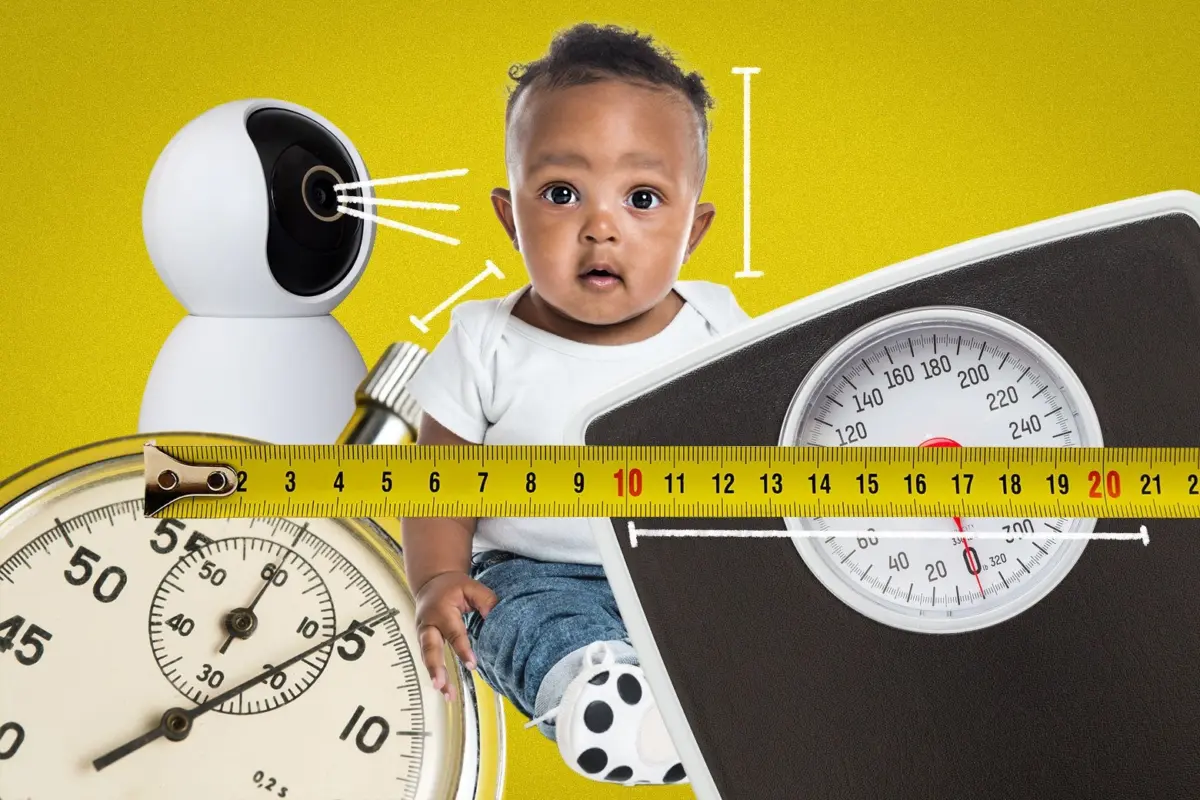
Modern parenting has evolved into a hyper-monitored, data-driven discipline. Today’s caregivers possess unprecedented access to real-time metrics, expert advice, and algorithmic feedback loops that stretch down to an infant’s vital signs and sleep scores. Wearable technology once reserved for elite marathoners and professional cyclists—such as continuous oxygen monitors, smart bassinets, and pediatric fitness trackers—has firmly entrenched itself in the nursery.
Yet, this surge in quantitative data has arrived alongside a historic mental health crisis among caregivers. In a landmark 2024 advisory, U.S. Surgeon General Vivek Murthy reported that nearly half of all parents experience overwhelming daily stress—double the rate of non-parents. Dr. Murthy identified a relentless "culture of comparison" amplified by digital platforms as a principal driver of this exhaustion.
Drawing parallels from high-performance sports physiology, this article examines the psychological hazards of turning child-rearing into a metrics-driven optimization project. By exploring concepts such as Goodhart’s Law, orthosomnia, and the illusion of control, we investigate why treating a child’s development like a stock portfolio ultimately damages both parental well-being and the parent-child relationship.
Detailed Chronology: The Evolution of Quantified Parenting
To understand how the nursery became a high-tech data center, it is necessary to trace the rapid evolution of consumer health technology and its migration from elite athletic training grounds to domestic family life.
- The Early 2000s: The Rise of Consumer Biometrics
Fitness tracking began as a niche market for endurance athletes utilizing early heart rate monitors and rudimentary GPS watches. Over the next decade, these tools evolved into sophisticated consumer wearables capable of tracking deep sleep, heart rate variability (HRV), and minute-by-minute caloric expenditure. - The Mid-2010s: The Quantification of Sleep ("Orthosomnia")
As consumer sleep trackers gained mainstream popularity, researchers began documenting a clinical phenomenon known as orthosomnia—an obsessive quest for perfect sleep scores. Sleep researchers at institutions like Duke University and various medical centers noticed that individuals who received false-negative sleep data consistently reported fatigue and cognitive deficits, regardless of how well they had actually rested. - The Late 2010s to 2020s: The Commercialization of Infant Wearables
Tech startups shifted their focus from adult bio-hacking to the infant market. Companies began marketing smart socks and continuous monitors capable of tracking infant blood oxygen saturation, room temperature, and sleep cycles. Marketing copy leaned heavily on promises of "turning infant health data into peace of mind." - August 2024: The Surgeon General’s Advisory on Parental Stress
U.S. Surgeon General Vivek Murthy issued a formal public advisory addressing parental mental health. The report revealed that 48% of parents report overwhelming stress on most days, explicitly calling out online cultures of comparison and milestone obsession as primary sources of burnout. - Present Day: The Optimization Trap
The market for child-rearing data tools continues to expand, offering parents daily performance digests, percentile milestones, and algorithmic assessments. Rather than alleviating anxiety, these devices have effectively institutionalized a continuous loop of parental self-doubt.
Supporting Context & Metrics: From Elite Athletes to Exhausted Parents
As an exercise physiologist who has spent decades working with elite professional athletes, the parallels between locker-room metrics and nursery monitors are striking. Athletes frequently fall into the trap of letting the algorithm dictate their physical and emotional reality.
Consider a professional distance runner who has trained flawlessly for months, only to wake up on race day to a "red recovery warning" on their wearable device. Despite feeling strong and confident, the algorithmic score can instantly trigger a psychological spiral. The athlete surrenders their internal state to a digital guess.
[ Wearable Data Generated ]
       │
       ▼
[ Algorithmic Score Assigned (e.g., Low Sleep/Recovery) ]
       │
       ▼
[ Emotional Capitulation (User adopts the narrative of failure) ]
       │
       ▼
[ Behavioral Shift (Anxiety, fatigue, performance degradation) ]
When this psychological dynamic is applied to parenting, the emotional stakes are magnified exponentially. Instead of evaluating a 5K race time, the metrics are scoring the human being you love most. If a parent is handed a daily sleep score or developmental index showing a "suboptimal" night, the emotional reaction is rarely neutral; it is interpreted as a failure of caregiving.
Goodhart’s Law in the Nursery
The core issue with the data-optimization mindset is summarized by Goodhart’s Law: "When a measure becomes a target, it ceases to be a good measure."
- The Sleep Score Trap: A sleep score is initially meant to be a rough proxy for rest and recovery. However, when a parent begins actively optimizing for that specific number, the metric disconnects from reality. The parent spends all night worrying about the sleep score rather than resting.
- The Developmental Proxy: Parents naturally care about raising a secure, happy, and developing child. Because emotional security is difficult to quantify, we reach for proxies: hours of sleep, vocabulary counts, and growth chart percentiles. Once we begin "training" for the proxy metric—such as pushing a toddler to memorize more words to hit an arbitrary percentile—we pull away from what genuinely matters: fostering a genuine, joyful love of language.
Furthermore, experimental psychology demonstrates that measurement itself reduces intrinsic enjoyment. Research led by Jordan Etkin at Duke University showed that tracking everyday activities reliably transforms play or relaxation into a sense of labor, pushing individuals to focus exclusively on external outcomes while stripping away the joy of the present experience.
Official Statements and Expert Perspectives
Public health officials, psychologists, and clinical researchers have increasingly spoken out against the cultural pressure to optimize childhood.
- U.S. Surgeon General Dr. Vivek Murthy (August 2024 Advisory):
"A culture of comparison—often perpetuated online—around milestones, parenting, and achievements, has left many families feeling exhausted, burned out, and perpetually behind."
- Historical Psychological Frameworks (D.W. Winnicott & Sandra Scarr):
In the 1950s, psychoanalyst D.W. Winnicott introduced the revolutionary concept of the "good enough mother," arguing that children actually benefit when parents fail in small, manageable ways, as this builds emotional resilience and frustration tolerance. Decades later, developmental psychologist Sandra Scarr supported this view, demonstrating that once basic thresholds of safety, nutrition, love, and stimulation are met, granular parenting styles have a negligible impact on baseline personality or innate intelligence. - Dr. Jordan Etkin, Duke University:
In findings published regarding the psychological toll of step-counting and activity tracking, Etkin noted that "the very people who self-select into measurement are the ones who are hurt by it."
Future Outlook: Knowing When to Throw Away the Watch
The promise of modern technology is seductive. It tells us that no detail is too small to manage, and that continuous tracking will safeguard our children’s futures. Yet, decades of observation in elite athletics—and a growing body of evidence in family psychology—reveal that hyper-optimization leads directly to burnout.
┌────────────────────────────────────────────────────────┐
│              The Antidote to Optimization              │
├──────────────────────────┬─────────────────────────────┤
│ Focus on the Basics      │ Nutrition, safety, warmth,  │
│                          │ and genuine presence.       │
├──────────────────────────┼─────────────────────────────┤
│ Embrace "Good Enough"    │ Reject perfectionism to     │
│                          │ build child resilience.     │
├──────────────────────────┼─────────────────────────────┤
│ Know When to Disconnect  │ Discard algorithmic scores  │
│                          │ that dictate emotions.      │
└──────────────────────────┴─────────────────────────────┘
The secret to sustainable performance in sports—and sustainable mental health in parenting—is identifying what truly moves the needle, nailing the fundamental basics, and recognizing when to settle for "good enough." Perfectionism in child-rearing is not a virtue; it is an anxiety amplifier.
Ultimately, relationships cannot be optimized. They can only be experienced. By learning to step away from the dashboard of metrics, parents can reclaim their peace of mind, silence the digital noise, and rediscover the simple, unquantifiable joy of being truly present with their children.