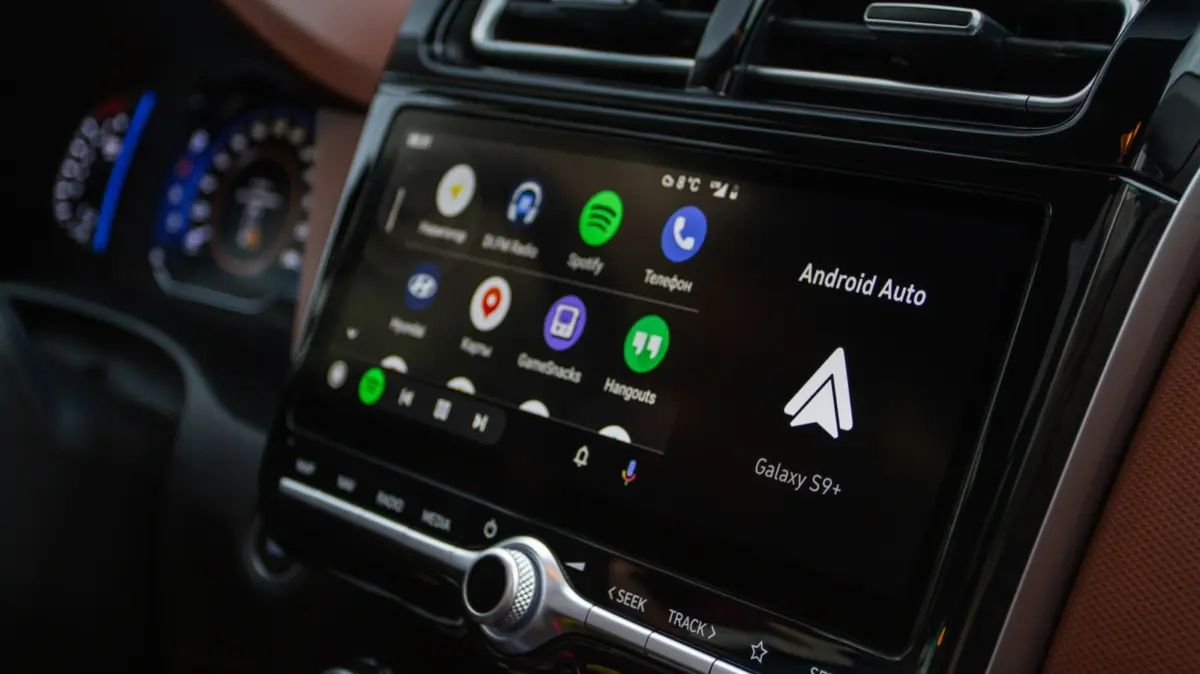
Executive Overview
Long-distance driving has long been associated with a distinct cocktail of sensory overload and physical fatigue. Drivers must simultaneously process shifting traffic patterns, unpredictable road conditions, intricate navigation routes, and the constant digital ping of incoming communications. For years, in-dash infotainment systems like Android Auto have served as a vital bridge between drivers and their digital lives, offering hands-free access to maps, telephony, and messaging. However, these legacy systems have historically relied on rigid, command-line architectures that often required users to memorize exact syntax or tap repeatedly through dense menus—defeating the very purpose of a hands-free safety interface.
The paradigm is shifting dramatically. Google’s systematic rollout of its advanced artificial intelligence assistant, Gemini, across the Android Auto ecosystem represents a fundamental leap forward in automotive UX (User Experience). Moving far beyond the mechanical responses of the legacy Google Assistant, Gemini functions as a true conversational co-pilot. Powered by sophisticated large language models, the AI understands context, processes nuance, synthesizes chaotic data streams, and engages in natural dialogue.
Whether it is distilling an exploding group chat into a single digestible update, acting as a context-aware DJ based on vague emotional cues, or digging deep into a user’s Gmail to retrieve parking instructions for an unfamiliar destination, Gemini is redefining what drivers can expect from their dashboard technology. This comprehensive report explores the technological architecture behind Gemini’s integration into Android Auto, evaluates its practical implications for long-distance drivers, details the seamless transition process for everyday users, and analyzes the broader future outlook of generative AI in modern transportation.
Detailed Chronology: The Evolution of In-Car AI and Gemini’s Ascent
To understand the weight of Gemini’s arrival on Android Auto, it is necessary to examine the trajectory of voice assistants in the automotive space over the past decade.
Phase 1: The Command-and-Control Era (2014–2019)
When Google initially launched Android Auto in 2014, the automotive industry was grappling with a massive distracted driving epidemic driven by smartphone proliferation. The initial objective was simple: mirror essential phone functions onto the dashboard using a streamlined, high-contrast interface. Voice commands were introduced early on, anchored by "OK Google."
However, these early iterations were strictly transactional. If a driver wanted to play a specific song, navigate to a coffee shop, or send a text message, they had to speak in precise, rigid formulas. A slight deviation in phrasing—such as saying "take me to grab a coffee nearby" instead of "navigate to the nearest coffee shop"—frequently resulted in an error message or a misinterpretation, forcing the driver to take their eyes off the road to interact manually with the touchscreen.
Phase 2: The Proactive Assistant Era (2020–2023)
As machine learning matured, Google integrated proactive suggestions, media integration, and improved natural language processing into Android Auto. The interface received significant overhauls—most notably the "Coolwalk" redesign in 2023—which split the dashboard into dynamic cards, allowing users to view maps, media, and messages simultaneously.
Despite these visual and structural improvements, the underlying voice assistant remained fundamentally limited. It could execute individual commands efficiently, but it lacked deep contextual memory. If a driver asked for restaurants along a route and then followed up by asking, "Which one of those has the best parking?", the assistant would typically fail, having already discarded the conversational context of the previous query.
Phase 3: The Generative AI Revolution and Gemini Integration (2024–Present)
Recognizing the limitations of legacy voice architecture, Google initiated a comprehensive overhaul of its entire ecosystem, putting generative AI at the forefront. Gemini—Google’s flagship multimodal AI model—began replacing the legacy Google Assistant across mobile devices, smart home hardware, and eventually, the automotive environment.
The transition has not happened overnight. Gemini was initially introduced as an optional, opt-in feature for tech-savvy Android Auto users, often buried within hidden developer settings or specialized menus. However, Google has steadily accelerated the rollout, making Gemini the default digital assistant for millions of drivers globally. This transition shifts the paradigm from command-based execution to conversational collaboration, fundamentally altering how drivers manage cognitive load behind the wheel.
Supporting Context & Metrics: Reducing Driver Cognitive Load
Driving a motor vehicle is a complex psychomotor task that demands sustained visual, cognitive, and manual attention. According to transportation safety studies, cognitive distraction—the mental effort required to process information while driving—is a primary contributor to highway collisions. When drivers are forced to parse through text messages, navigate unfamiliar interchanges, and search for audio entertainment simultaneously, mental bandwidth shrinks rapidly.
Quantifying the Problem
- Information Overload: Modern commuters receive dozens of notifications during a standard one-hour drive. Manually reading or replying to these messages drastically increases crash risk.
- The Syntax Penalty: Traditional voice assistants required users to expend mental energy translating their natural thoughts into rigid system commands.
- Contextual Amnesia: Legacy systems forced users to repeat geographic anchors and search parameters with every single follow-up question, doubling or tripling the duration of verbal interactions.
How Gemini Restructures the Driving Experience
Gemini addresses these pain points by functioning as an intelligent filter and cognitive buffer. By leveraging deep contextual understanding, the AI reduces the number of interactions a driver must initiate:
- Message Summarization: Rather than reading out a chaotic string of ten text messages from a family group chat, Gemini analyzes the thread and delivers a single, concise summary: "Your family is discussing dinner plans for 7 PM and wondering if you can pick up dessert."
- Drafting and Translation: Drivers no longer need to dictate punctuation or correct voice-to-text errors manually. Gemini can draft contextually appropriate replies, automatically append real-time ETAs, and translate foreign-language messages into over 40 languages on the fly.
- Vague Media Queries: Traditional music systems required exact album or artist names. Gemini processes subjective, atmospheric prompts—such as "play something upbeat to keep me awake" or "mellow indie tracks that feel like a late-night music video"—and seamlessly bridges the request with the user’s default streaming application.
Official Integration Guide: How to Enable Gemini on Android Auto
While Google is aggressively pushing Gemini as the default assistant in newer updates, many existing users may still be running the legacy Google Assistant. Upgrading to Gemini is a straightforward process that takes less than a minute.
Step-by-Step Configuration
If you have not yet made the switch on your mobile device, follow these exact settings pathways to unlock your vehicle’s new AI co-pilot:
- Open the Settings application on your Android smartphone.
- Navigate to Connected devices.
- Select Android Auto from the list of connected protocols.
- Scroll down and tap on Manage your digital assistant.
- Select Digital assistants from Google.
- Switch your preference to Gemini.
Once activated, Gemini takes over all voice interactions within the Android Auto interface, whether you summon it via the steering wheel microphone button, the physical dashboard prompt, or the classic "Hey Google" hotword.
Deep Dive: Practical Capabilities of Gemini on the Road
To fully appreciate the transformation of Android Auto, it is helpful to examine how Gemini handles complex, real-world driving scenarios.
1. Natural, Fluid Conversations
Unlike older assistants that demanded mechanical precision, Gemini understands colloquialisms, slang, and incomplete sentences. If you are debating with a passenger about whether a specific actor starred in a 1990s thriller, you can casually ask Gemini to settle the dispute while keeping your eyes locked on the highway. Because the AI maintains conversational history, you can immediately pivot to logistical questions without resetting the context.
2. Deep Ecosystem Integration (Gmail, Calendar, and Keep)
Gemini’s true superpower lies in its integration with the broader Google Workspace ecosystem. Imagine driving to an unfamiliar rental property or meeting venue. Instead of fumbling through your email inbox at a red light to find the gate code or parking instructions sent by the host last week, you can simply instruct Gemini: "Check my Gmail for instructions on where to park at the venue."
Similarly, Gemini can read back your day’s schedule, cross-reference calendar appointments with your current GPS location, and even help you rehearse for an upcoming interview or brainstorm presentation ideas during a monotonous highway stretch.
3. Open-Ended Companion Functionality
For drivers embarking on grueling cross-country road trips, fighting driver fatigue is a constant battle. While music and audiobooks help, active mental engagement can be even more effective. Gemini’s advanced conversational models allow for open-ended, dynamic dialogue—enabling drivers to stay alert through stimulating intellectual conversations, trivia challenges, or creative brainstorming sessions.
Future Outlook: The Next Frontier of AI in the Cockpit
The integration of Gemini into Android Auto is merely the opening salvo in a much larger technological transformation sweeping the automotive sector. As vehicles become increasingly software-defined, the line between smartphone mirroring systems like Android Auto and native vehicle operating systems (such as Android Automotive OS) is beginning to blur.
What Lies Ahead
- Multimodal Vision Integration: Future iterations of in-car AI will likely leverage external and internal vehicle sensors. Imagine asking Gemini, "Is that warning light on my dashboard serious?" while the AI analyzes live vehicle telemetry data in real time.
- Predictive Route Optimization: By combining traffic analytics, weather patterns, personal calendar entries, and smart home status, future AI assistants will proactively suggest departures, adjust home thermostat settings upon arrival, and reroute trips autonomously.
- Hyper-Personalized Cabin Environments: As AI models learn user preferences over thousands of miles of driving, they will dynamically adjust climate control zones, ambient lighting, and media curation based on the driver’s vocal tone, stress levels, and historical habits.
Conclusion
Long drives will always present physical and mental challenges, from sudden traffic jams to the monotony of endless asphalt. However, by replacing rigid command structures with a fluid, context-aware artificial intelligence, Google has fundamentally redefined the relationship between driver, vehicle, and digital world. With Gemini acting as a truly capable co-pilot, Android Auto is no longer just a passive screen-mirroring tool—it is an active, intelligent partner that makes every journey safer, smarter, and infinitely more manageable.