Executive Overview
As the broader Star Trek television ecosystem undergoes a period of significant transition—marked by the unexpected cancellation of Star Trek: Starfleet Academy and the impending, bittersweet conclusion of Star Trek: Strange New Worlds—the franchise’s literary continuity continues to thrive in bold, experimental directions. Nowhere is this more apparent than in IDW Publishing’s prestige comic book event, Star Trek: The Last Starship. Exploring the grim, fractured aftermath of "The Burn"—the cataclysmic event that rendered dilithium inert across the galaxy—this 12-issue maxi-series has pushed the boundaries of traditional franchise storytelling.
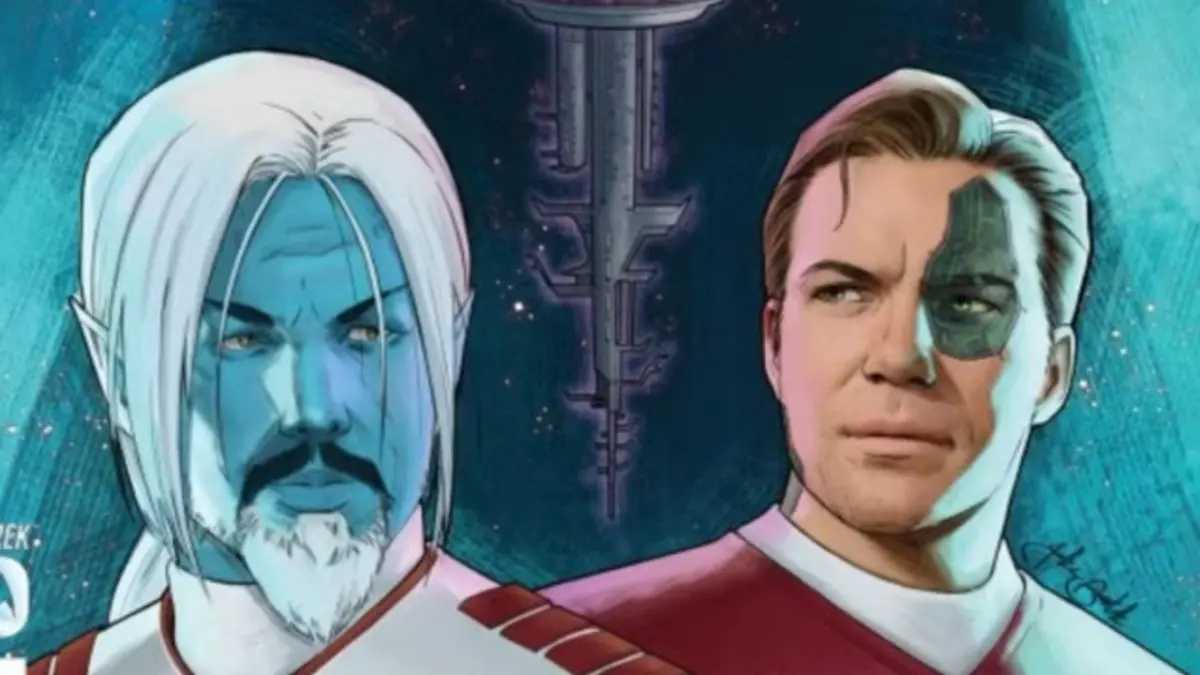
At the center of this narrative experiment is the 31st-century resurrection of Captain James T. Kirk. Thrust centuries past his original era, Kirk has found himself grappling with a shattered Federation, time-dilated space travel, and an ideological clash with Captain Delacourt Sato. As writers Collin Kelly and Jackson Lanzing prepare to draw the curtain on their sweeping, century-spanning epic with The Last Starship #12 in October, the stakes could not be higher.
In this comprehensive feature, we examine the structural anatomy of The Last Starship, explore how its creators tackled the daunting mechanics of relativistic space travel, unpack the philosophical opposition between the United Federation of Planets and the opportunistic Emerald Chain, and look ahead at what the future holds as Kelly and Lanzing officially cede their positions at the helm of IDW’s Star Trek comic book division.
Detailed Chronology of an Epic Saga
Conceived from day one as a tightly managed, prestige-format maxi-series, Star Trek: The Last Starship was never structured to be an open-ended, perpetual ongoing title. For writers Collin Kelly and Jackson Lanzing, the goal was to craft a narrative engine that felt distinct from their previous IDW Star Trek work, Flagship.
Divided meticulously into four distinct three-issue chapters, the series was designed to assay a full century of post-Burn history.
- The Genesis of the Narrative: Before a single page was scripted, Kelly and Lanzing established the structural architecture of the ending. Knowing that the television timeline and properties like Star Trek: Discovery loomed on the horizon dictated the story’s boundaries, but the creative team leaned heavily into the "how" rather than the "what."
- The Time-Dilation Crisis: To realistically portray 100 years of cosmic stagnation and travel without the magical spatial-shortening properties of dilithium, the writers introduced relativistic time dilation. The Omega’s mission was designed to systematically strip its crew of everything they held dear. By the time readers reach Issue #11, the emotional toll is absolute: everyone the crew ever knew, loved, and left behind "back home" has succumbed to the passage of time.
- The Climax and Convergence: As The Last Starship #11 drops on September 16, the narrative bottlenecks into an explosive confrontation. The ideological war between Captain James T. Kirk and Captain Delacourt Sato—who have spent recent issues as fierce, bitter antagonists—reaches its absolute boiling point. To save the dying galaxy, these two titanic leaders must find a way to reconcile their divergent methodologies.
Supporting Context & Metrics: Crafting Post-Burn Realities
To understand the weight of The Last Starship, one must examine the socio-political landscape of the post-Burn galaxy that Kelly and Lanzing inherited and expanded upon.
Unlike omnipotent artificial intelligences or ancient god-like beings of temporal displacement, the primary antagonists of The Last Starship are born of starkly grounded, capitalist cynicism: the Emerald Chain.
The Emerald Chain vs. The Federation Ideal
When asked whether the Emerald Chain represents the direct polar opposite of the Federation, Collin Kelly offers a more nuanced perspective. Rather than serving as an alien antithesis akin to the Klingons of the 23rd century, the Chain functions as a dark, distorted reflection of humanity’s worst impulses.
- Capitalism as a Weapon: The Chain is not driven by cosmic malice or grand ideological conquest; they are mob-like protection racketeers, liars, and usurers.
- The Exploitation Engine: Kelly points out that the Chain understands a fundamental economic truth—wealth is derived from systems of exploitation. To maintain profit, a population must be maintained and subjugated.
- IDIC vs. Selfishness: At its core, the conflict mirrors Gene Roddenberry’s foundational concept of IDIC (Infinite Diversity in Infinite Combinations). The Chain seeks to lock populations down, whereas the Federation strives to lift them up. As Kelly notes, lifting others takes immense effort, but it remains the only path forward to witness the wonders on the horizon.
Official Statements: Inside the Writers’ Room
In an exclusive, wide-ranging interview, IGN sat down with writers Collin Kelly and Jackson Lanzing to discuss the structural challenges, emotional payoffs, and ultimate legacy of The Last Starship.
On the 12-Issue Blueprint
Jackson Lanzing: "Rest assured, it’s always been the plan."
Collin Kelly: "In our minds, 12 issues was always the target. The Last Starship was designed as a prestige maxi-series—four three-issue chapters that cover 100 years of the Burn. This was never meant to go forever… But HOW it ends—that’s where our story lives, and that finale gives the entire story its shape."
The Kirk and Sato Dynamic
The relationship between Captain James T. Kirk and Captain Delacourt Sato has served as the emotional anchor of the entire run.
Collin Kelly: "Two men, so alike but so different, who—in their conflict—bring out the best in one another, but through that conflict, make something incredible? After writing together for almost 20 years, that’s the kind of relationship that Jack and I have some affection for. Kirk and Sato are clashing furiously over the how and why… but when it comes to the what, to their shared drive to save the Federation, and preserve the legacy of all that makes Starfleet great—that’s something that will force the two men into alliance."
Jackson Lanzing: "The conflict between Kirk and Sato is the center of the series, so of course turning that all the way up has been a total delight. They bring out both the best and the worst in each other—up until the very end."
Wrestling with Time Dilation
Introducing relativistic physics into a comic book narrative presented unique structural hurdles, but the creative team viewed it as a vital storytelling tool.
Collin Kelly: "The time-dilation element of the story… made its way into the narrative purely as a thought experiment: how does relativistic space travel function without the dilithium to magically foreshorten every distance? But more importantly—what are the emotional consequences for the crew? We wanted the Omega’s mission to take everything from its crew… It has caused a lot of headaches on the narrative side, absolutely—but the pay off we get from the trauma it puts our characters through is well worth it."
Future Outlook: Passing the Starfleet Torch
After more than seven years of steering IDW’s Star Trek comic book division, Kelly and Lanzing are officially stepping down from their flagships to make room for fresh creative blood.
Handing Over the Captain’s Chairs
The writers are enthusiastic about passing the mantle to incoming creative teams. Authors Christopher Cantwell and Charlie Jane Anders are both slated to helm new flagship Star Trek titles, which Kelly describes as "INCREDIBLE."
As one chapter closes, the creators are pivoting to new artistic frontiers:
- Dark Horse Comics: A brand-new Dungeons & Dragons #1 launching in November.
- IDW Dark: An original, creator-owned horror series titled You’ll Never Leave This Place Alive.
Will They Return to Star Trek?
While their tenure on the main books is concluding, Lanzing teases that their relationship with the franchise is far from over:
Jackson Lanzing: "Now, is that to say that you’ll never see us on a Star Trek comic again? I think we love it too much to stay away forever. There is still space for new stories in the The Last Starship-a-verse, even with the main plot concluded…"
Collin Kelly: "…but truthfully? We hope the next time you see our name attached to Star Trek, it’ll be on TV."
Publication Details
- Star Trek: The Last Starship #11 Preview: Arrives globally on September 16.
- Star Trek: The Last Starship #12 (Final Issue): Hits comic book shelves on October 21.
- Final Order Cutoff (FOC): September 14.
Fans can pre-order physical and digital copies now through local comic book retailers via the League of Comic Geeks store finder.