Executive Overview
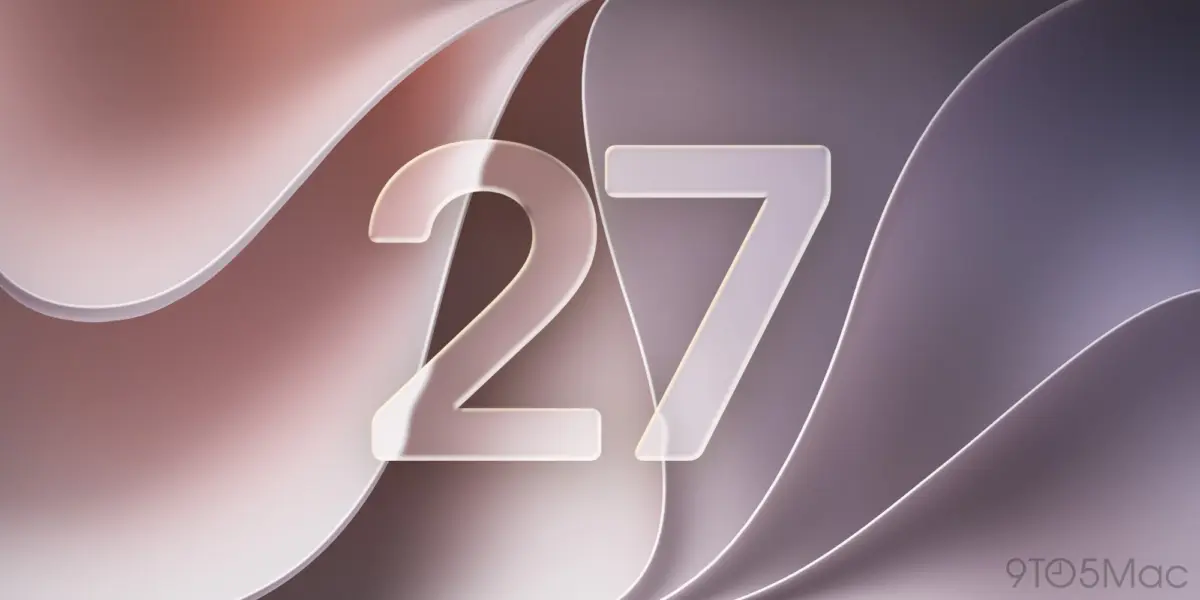
Every autumn, the technology community anticipates the release of new software updates from Apple. Alongside these platform launches arrives a publishing tradition that has defined Apple software critique for well over a decade: Federico Viticci’s annual operating system review on MacStories. This year’s monumental release—covering iOS 27 and iPadOS 27—continues that tradition with a deep, exhaustive examination of Apple’s mobile ecosystem.
While last year’s software cycle brought massive, headline-grabbing overhauls that dominated global discourse, Viticci characterizes iOS 27 as a more grounded release. Rather than chasing radical redesigns, Apple has chosen to refine, mature, and shore up the foundations of its mobile platform. As Viticci notes in his comprehensive text, iOS 27 demonstrates that Apple is “still capable of delivering something new while caring about the old.”
At the center of this year’s software discourse is Apple Intelligence and the iterative evolution of Siri. As generative artificial intelligence reshapes productivity, workflow automation, and human-computer interaction, users and critics alike are holding Apple’s native assistant to an increasingly rigorous standard. Viticci’s firsthand experiences with Siri AI in iOS 27 provide a vital blueprint for understanding what Apple’s assistant can—and cannot—accomplish in a landscape dominated by advanced, multi-step autonomous agents.
This report explores the broader implications of the MacStories iOS 27 review, examining how Apple’s refined approach to artificial intelligence intersects with daily workflows, third-party app integration, and the evolving expectations of power users.
Detailed Chronology: The Road to iOS 27 and the Evolution of Apple Intelligence
To fully grasp the significance of iOS 27, one must examine the incremental journey Apple has taken with its machine learning and generative artificial intelligence frameworks over recent product cycles.
From Reactive Assistants to Generative Models
For years, Siri functioned primarily as a transactional utility—a tool designed to check the weather, set a timer, or send a quick text message via rigid, hardcoded intents. The introduction of Apple Intelligence in prior software generations marked a seismic shift toward deep integration, on-device contextual awareness, and generative text capabilities. However, users quickly realized that bridging the gap between a consumer-friendly assistant and a fully autonomous enterprise-grade workhorse would require years of foundational engineering.
By the time developers and power users began beta testing iOS 27 earlier this year, expectations were high. The industry had grown accustomed to autonomous "agentic" workflows—systems capable of executing sprawling, long-running operational chains across cloud infrastructure, databases, and third-party software suites without human intervention.
When iOS 27 officially rolled out, it did not introduce a hyper-autonomous agent capable of running enterprise environments single-handedly. Instead, Apple focused heavily on strengthening the underlying architecture of its machine learning frameworks, ensuring stability, on-device privacy compliance, and lightning-fast execution for targeted local commands.
The MacStories Take: Pragmatism Over Promises
In his monumental review, Viticci approaches iOS 27 not with blind enthusiasm, but with clear-eyed pragmatism. He evaluates Siri AI based on how it actually functions within the constraints of a high-intensity professional workflow.
Rather than criticizing Apple for failing to match the hyper-specialized autonomous capabilities of cloud-native systems, Viticci pivots toward an appreciation of what Siri AI does exceptionally well: frictionless, low-latency, one-off interactions. This distinction forms the ideological core of the MacStories iOS 27 critique, illustrating a maturing relationship between power users and ambient AI features.
Supporting Context & Metrics: Siri AI in the Professional Workflow
To understand the limitations and strengths of Siri AI in iOS 27, Viticci evaluates the assistant against the backdrop of real-world productivity tools like Notion, Slack, and Superhuman. For knowledge workers whose daily operations rely on deep, multi-app coordination and persistent background processing, native mobile assistants often face severe architectural ceilings.
The Agentic Gap: Siri AI vs. The Industry
In his review, Viticci explicitly outlines the boundary between Apple’s current engineering implementation and true autonomous agency:
"The new Siri is not an agentic product that is able to carry out long-running tasks to completion, and it would be downright absurd to compare Siri AI to the likes of ChatGPT Work, Claude Cowork, Grok Bot, Hermes Agent, or OpenClaw. I would love for Siri AI to become that kind of experience, and Apple seems to think it now has a foundation in place to enable agentic behavior at some point. But as things stand now, given my reliance on Notion, Slack, and Superhuman for work, and given the simpler, less intelligent nature of Siri AI, I can’t imagine using Apple’s assistant for productivity purposes."
This candid assessment cuts through marketing hyperbole. While competing platforms lean heavily into automated loops that can parse thousands of lines of code, write complex software patches, or autonomously coordinate multi-person corporate communications, Siri AI operates within a localized, security-first paradigm. It is designed to preserve user privacy and deliver rapid responses, rather than operate as a persistent cloud-based background worker.

Finding Value in the Micro-Interactions
Despite its limitations in heavy productivity orchestration, Viticci found substantial utility in Siri AI for smaller, localized tasks. By accepting the assistant for what it is rather than what marketers wish it to be, users can extract genuine daily value.
- Native App Integration: Siri AI excels when interacting with core Apple frameworks like Notes, Reminders, and HomeKit. Quick queries, immediate list additions, and localized smart home automations run with remarkable reliability.
- Third-Party App Ecosystem: The integration of Siri with specialized third-party applications—such as AskPlay, Monologue, Alyx, MusicBox, and LookUp—demonstrates the strength of Apple’s developer APIs.
- The Two-Step Threshold: Viticci notes that Siri AI shines brightest in quick, one-off interactions involving perhaps a couple of follow-up queries. Once a task expands into deep research, heavy synthesis, or complex back-and-forth reasoning, users naturally pivot to external cloud models or specialized iOS utilities like Open Minis.
Official Statements and Ecosystem Integration
The release of iOS 27 is part of a synchronized, ecosystem-wide software rollout that redefines the user experience across iPhones, iPads, Macs, and Apple Watches. The MacStories team published a comprehensive suite of reviews covering the entire operating system family.
The Broad Scope of the MacStories Coverage
Alongside Federico Viticci’s definitive analysis of iOS and iPadOS 27, the MacStories network delivered exhaustive companion pieces:
- macOS 27 Golden Gate: Reviewed by John Voorhees, exploring how Apple’s desktop operating system handles advanced window management, performance optimization, and cross-device continuity.
- watchOS 27: Also authored by John Voorhees, detailing the subtle yet impactful refinements to wearable health tracking, interface customization, and notification management.
- Club MacStories: The publication continues to offer extensive subscriber-only extras, custom shortcuts libraries, and behind-the-scenes editorial insights via its dedicated membership program.
Apple’s Architectural Strategy
While Apple executives frequently emphasize the transformative potential of artificial intelligence during keynote presentations, the engineering reality reflected in iOS 27 points toward a deliberate, privacy-centric rollout. By prioritizing on-device processing via specialized Neural Engines, Apple ensures that user data remains secure and latency is kept to an absolute minimum.
Critics and industry analysts note that this architectural constraint inevitably limits the immediate emergence of complex, cloud-bound agentic behaviors. However, it simultaneously establishes a robust, trusted foundation upon which more advanced capabilities can safely be built in future software generations.
Future Outlook: Where Apple Intelligence Goes Next
As the technology sector looks past iOS 27 toward the horizon of future software iterations, several critical questions remain regarding the trajectory of Apple’s operating systems and artificial intelligence strategy.
Building the Foundation for True Agency
Viticci’s review touches upon a crucial observation: Apple appears to believe it now has the architectural foundation in place to enable true agentic behavior at some point in the future. Constructing this foundation required immense engineering investments in silicon performance, memory bandwidth, localized vector databases, and secure execution environments.

In the coming years, the primary challenge for Apple will be scaling these foundational layers without compromising its core commitment to user privacy. If Apple can successfully introduce secure, long-running autonomous workflows that integrate deeply with professional third-party software suites, it could bridge the gap between consumer-friendly convenience and enterprise-grade productivity.
The Maturation of Mobile Operating Systems
Beyond artificial intelligence, iOS 27 signals a broader maturation phase for mobile operating systems as a whole. We have moved past the era of flashy, paradigm-shifting visual redesigns every twelve months. Instead, the industry is entering a sustained period of refinement, where the primary battleground is seamless integration, contextual intelligence, and cross-device harmony.
For power users, developers, and everyday consumers alike, reviews like those published on MacStories serve as an indispensable compass. They strip away promotional gloss to reveal how software actually behaves in the crucible of daily professional life. As Apple continues to iterate on iOS 27 and beyond, the insights provided by independent critics will remain essential for understanding the true trajectory of personal computing.
For complete guides, feature roundups, and step-by-step tutorials on Apple’s latest software releases, continue following our dedicated coverage here at 9to5Mac, and explore the exhaustive analytical deep-dives available directly on the MacStories network.