Executive Overview
In the fast-evolving landscape of consumer electronics, hardware form factors rarely remain static for long. Apple, a company historically deliberate about when and how it enters new product categories, has once again shifted the discourse surrounding mobile computing. Following the introduction of the heavily anticipated iPhone Duo, Apple’s Senior Vice President of Software Engineering, Craig Federighi, sat down for an extensive interview with prominent tech creator Marques Brownlee (MKBHD).
The discussion quickly zeroed in on one of the most pressing questions facing Apple enthusiasts and tech analysts alike: Where does the iPhone Duo fit within Apple’s existing ecosystem, and does it render certain iPad models redundant?
Federighi addressed these concerns head-on, drawing parallels to the historical coexistence of iPads and Macs. While he believes users will naturally carve out distinct use cases for each device, Federighi candidly acknowledged that the iPhone Duo may ultimately absorb the market space currently occupied by the iPad mini. Furthermore, Federighi offered rare insight into Apple’s software engineering philosophy, contrasting their ground-up, holistic interface design for the new form factor against competitors who often resort to stretching or awkwardly adapting existing mobile operating systems to fit novel hardware.
This report examines Federighi’s commentary in depth, evaluating the strategic implications of the iPhone Duo on Apple’s product hierarchy, the engineering triumphs required to bring the software to life, and what this means for the future of mobile computing.
Detailed Chronology: The Road to the iPhone Duo and the MKBHD Interview
To fully understand the significance of Federighi’s recent statements, it is necessary to contextualize the timeline leading up to the release of the iPhone Duo and the mechanics of its rollout.
The Rumor Mill and Form Factor Innovation
For years, supply chain insiders and analysts hinted that Apple was experimenting with alternative mobile geometries. While foldable and dual-screen form factors gained traction across the Android ecosystem, Apple notoriously held back. Industry watchers noted that the Cupertino-based tech giant was unwilling to compromise on build quality, crease mitigation, or software fluidity—pitfalls that plagued early-generation folding and dual-display competitors.
As leaks crystallized in mid-2026, the tech community began referring to Apple’s newest hardware venture as the iPhone Duo. Positioned as a bridge between traditional monolithic smartphones and ultra-portable tablets, the device immediately sparked intense debate regarding device overlap.
The MKBHD Sit-Down
During launch week, Craig Federighi appeared on MKBHD’s channel to pull back the curtain on how Apple approaches software design for paradigm-shifting hardware. Released globally on YouTube, the conversation touched upon user habits observed during internal testing phases over the preceding months.

Federighi noted that during dogfooding (internal company testing)—where Apple employees use unreleased hardware in real-world scenarios—patterns quickly emerged regarding how the iPhone Duo alters daily media consumption and productivity workflows. Rather than treating the device as an isolated experiment, Federighi framed it as the natural progression of Apple’s multi-device philosophy, directly confronting the elephant in the room: its potential cannibalization of the smaller tablet market.
Supporting Context & Metrics: The iPad Mini Dilemma and Ecosystem Overlap
Product cannibalization is a perpetual concern for multi-billion-dollar hardware companies. When Apple introduced the iPad in 2010, critics wondered if it would kill the Mac. When Apple later introduced larger-screen iPhones (the Plus and Pro Max lineups), analysts questioned the future of the 7-to-8-inch tablet segment.
The Mac and iPad Precedent
Federighi was quick to draw a historical parallel, referencing how consumers ultimately resolved the tension between iPads and Macs:
"Federighi likened the situation to the iPad and Mac, where people ultimately fell into ‘very natural patterns’ deciding between when to use their iPad and when to use their Mac. Federighi believes the same pattern will play out between the iPad and iPhone Duo."
In practice, users quickly learned that the Mac excelled at heavy multitasking, precision cursor input, file management, and intensive professional software, while the iPad found its niche in touch-first interactions, digital note-taking, sketching, and media consumption on the go.
The Convergence Point: The iPad Mini
Despite this historical precedent of peaceful coexistence, Federighi highlighted a distinct exception when it comes to the new hardware category:
"He did, however, particularly call out the iPad mini as a potential overlap with the iPhone Duo…"
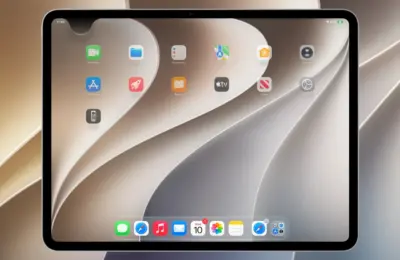
For years, the iPad mini has occupied a beloved, albeit niche, space for readers, aviation pilots, mobile gamers, and minimalists who wanted a screen larger than a standard smartphone but smaller than a traditional 11-inch tablet. However, with the physical real estate offered when opening the iPhone Duo, that precise use case is challenged.

Market metrics and user feedback shared during the interview indicate that when users sit down and wish to dive deeper into content—such as reading long-form articles, reviewing documents, or consuming digital books in portrait orientation—the iPhone Duo effectively eliminates the need to carry a secondary, pocketable tablet. For consumers who previously relied on an iPad mini for lightweight travel, the iPhone Duo acts as an all-in-one consolidation tool.
Official Statements: Engineering Philosophy vs. The Competition
As Apple’s Senior Vice President of Software Engineering, Federighi’s primary responsibility is ensuring that hardware innovations are matched by software that feels native, responsive, and purposeful. During his conversation with Brownlee, Federighi did not miss an opportunity to take a subtle, calculated swipe at how competing manufacturers approach non-standard hardware.
The "Stretched Experience" Pitfall
In the broader mobile market, manufacturers building foldable and dual-screen devices have frequently relied on adaptive software scaling. Apps designed for standard 19:9 phone screens are often stretched, letterboxed, or crudely resized when unfolded, leading to inconsistent user interfaces, layout breakages, and a distinctly sub-par experience.
Federighi contrasted this common industry shortcut with Apple’s rigorous engineering standard:
"As you might expect from a software engineering executive, Federighi also called out the lengths Apple went to adapt the iOS experience to the iPhone Duo—especially compared with the competition."
“I think on a lot of other devices, it’s been, ‘We’re just going to stretch out or cram some other experience into whatever the new form factor is.’ For us, this was like, ‘This whole thing, we’re going to design it right from the start,’” Federighi explained.
Holistic Design Integration
This design philosophy explains why Apple’s hardware and software divisions work in such close lockstep. By refusing to treat the software layer as an afterthought, Apple ensures that iOS on the iPhone Duo dynamically reconfigures control panels, multitasking panes, and content layouts based on the physical hinge angle, orientation, and user proximity.
The engineering feat involves rewriting foundational interface components so that content transitions seamlessly from a closed, single-hand interaction mode to an expansive, immersive canvas the moment the device is opened. This granular attention to detail is what Apple hopes will justify the premium pricing associated with its first-generation entries into new hardware spaces.

Future Outlook: Pre-Orders, Consumer Reception, and Market Impact
As the ink dries on initial reviews and creator deep-dives, all eyes turn toward the immediate commercial horizon.
Consumer Response and the Upcoming Pre-Order Window
Early consumer sentiment, measured through social media channels like Threads, Bluesky, Mastodon, and YouTube engagement, indicates high levels of curiosity mixed with the usual fiscal hesitation regarding Apple’s first-generation pricing structures. However, if Federighi’s internal testing observations hold true, the device may find an enthusiastic audience among power users looking to streamline their daily carry.
Tech enthusiasts and early adopters are already preparing for the upcoming pre-order window next month. The core question remaining for consumers is whether the utility of the expanding display outweighs the financial premium—and whether letting go of dedicated devices like the iPad mini makes practical sense for their daily routines.
The Long-Term Trajectory of iOS
Looking further ahead, the introduction of the iPhone Duo marks a permanent shift in how iOS must scale. Just as iPadOS branched off to accommodate the unique needs of larger tablets with mouse support and Stage Manager, the existence of the iPhone Duo forces Apple’s software engineering team to maintain a flexible, multi-faceted design language that scales smoothly across pocketable slabs, dual-screen foldables, and traditional phones.
As developers begin updating their applications to take full advantage of Apple’s newest form factor, the software ecosystem will undoubtedly mature. Whether the iPhone Duo triggers a massive migration away from traditional small tablets or carves out a completely independent demographic of buyers remains to be seen. What is clear, however, is that Apple has approached this transition with characteristic deliberation—ensuring that the hardware and software are locked in a symbiotic embrace from day one.