Executive Overview
Social media has fundamentally transformed how society perceives, pursues, and performs physical fitness. Platforms such as Instagram and TikTok no longer serve merely as spaces for social connection; they operate as powerful digital marketplaces for body ideals. Algorithms meticulously curate and circulate specific visual standards, rapidly popularizing them into mainstream fitness trends. Among the most prominent archetypes dominating contemporary digital feeds are the "gym body," the "Pilates princess," and the "yoga bod."
While these archetypes ostensibly celebrate physical capability, strength, and mindfulness, recent sociological and psychological research reveals a more complex reality. These trends project narrow, often unattainable standards of thinness, youth, and toned muscularity. Furthermore, they frequently package these ideals alongside specific, consumer-driven lifestyles.
Although modern fitness culture offers women a broader array of training choices than in previous decades—ranging from heavy compound lifting to mindful reformer sessions—experts caution that these digital archetypes risk distorting body image. They obscure the original, holistic philosophies of physical practices in favor of aesthetic perfection. This investigative feature explores the mechanics, implications, and psychological toll of social media’s ruling fitness aesthetics, examining whether these modern standards are empowering or merely old constraints wrapped in new athletic apparel.
Detailed Chronology: The Evolution of Digital Fitness Trends
To understand how contemporary fitness culture operates, one must examine the chronological shift in how bodies have been digitally represented over the past decade. The transition from early, restrictive diet-culture imagery to today’s hyper-specific fitness archetypes reflects both a progression toward physical empowerment and a tightening of aesthetic conformity.
The Rise of the "Strong is the New Sexy" Era (Early–Mid 2010s)
For decades, mainstream media promoted an ultra-thin, frail feminine ideal. However, the mid-2010s marked a significant cultural pivot coinciding with the explosive growth of image-centric platforms and the mainstreaming of disciplines like CrossFit. Research by Bridgette Desjardins notes the emergence over the last decade of "the image of muscular, spandex-covered fitfluencers" across social networks.
This era popularized the "gym body"—a lean, muscular physique sculpted through structured weight training, progressive overload, and disciplined nutrition. The cultural narrative shifted from "skinny" to "strong," encouraging women to pick up barbells, enter powerlifting competitions, and embrace visible muscle definition. Yet, Desjardins’s research highlights a lingering societal contradiction: while muscular feminine bodies gained acceptance inside the gym, many women felt social pressure to revert to conventional, softer definitions of femininity outside of training spaces.
The Pandemic Shift: Home Workouts and the "Yoga Bod" Consolidation (2020–2022)
As global lockdowns forced populations indoors, digital fitness consumption skyrocketed. During this period, researchers increasingly analyzed how long-standing fitness archetypes, such as the "yoga bod," manifested online. Academic inquiries—such as studies conducted by Angela Hinz and colleagues in 2021—revealed that social media representations of yoga remained overwhelmingly dominated by an archetype: white, thin, young, and displaying substantial upper-body skin.
Even initiatives designed to democratize the practice, such as the Instagram hashtag #YogaForEveryone, struggled against aesthetic homogeneity. Alysse Bailey and her co-researchers discovered in 2022 that these inclusive spaces frequently continued to promote programs explicitly designed to produce thin, toned bodies. Furthermore, the digital yoga bod was defined by hyperflexibility. Social media feeds became saturated with advanced balance poses, deep backbends, and flawless splits, creating an illusion that extreme physical flexibility was an accessible, standard benchmark for all practitioners.
The Era of the "Pilates Princess" and Aesthetic Lifestyle Branding (2022–Present)
As pandemic restrictions eased, a starkly different aesthetic emerged on TikTok and Instagram, positioning itself as an alternative to the heavy grit of the traditional gym culture: the "Pilates princess."
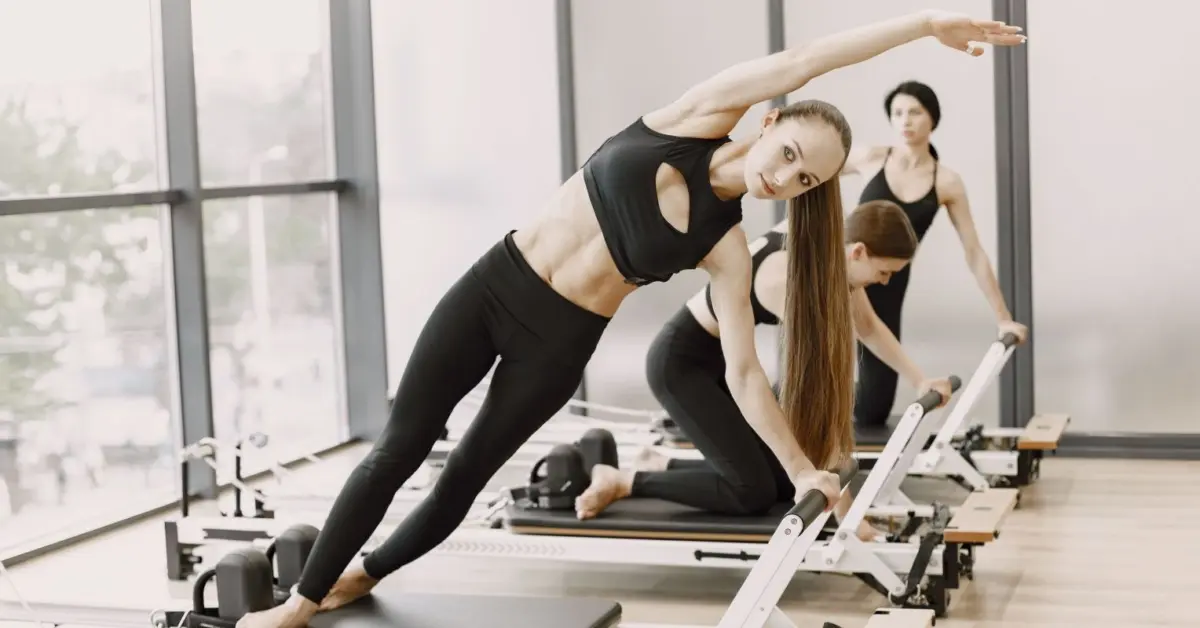
Characterized as a slim, slightly toned, and youthful ideal, the Pilates princess aesthetic is visually anchored to the Pilates reformer machine. While formal sociological research on this exact trend is still catching up to its rapid digital spread, content analysis reveals that the archetype represents an entire lifestyle. Practitioners are frequently depicted in matching, pastel-colored workout sets, projecting an image of effortless grace. Unlike the sweat and strain associated with heavy weightlifting, the Pilates princess trend frames physical conditioning as a "soft," mindful, and luxurious consumer habit.
Supporting Context & Metrics: Decoding the Research
The psychological impact of these digital fitness archetypes is grounded in a growing body of empirical research. Scholars in sociology, psychology, and public health have dissected the content of fitness-related social media to understand the disconnect between digital representation and physical reality.
Aesthetic Homogeneity Amidst Apparent Choice
A central paradox of modern social media is the illusion of infinite choice paired with strict visual conformity. Researchers emphasize that whether a user chooses the heavy iron of the gym, the mindful alignment of yoga, or the controlled resistance of reformer Pilates, the ultimate visual reward presented by algorithms remains remarkably uniform: a lean, youthful, and tightly controlled body.
| Fitness Archetype | Primary Associated Modality | Core Aesthetic Marker | Documented Risk / Illusion |
|---|---|---|---|
| The Gym Body | Weight training, CrossFit, Powerlifting | Lean, visible muscle definition, athletic build | Pressure to balance muscularity with traditional femininity; risk of viewing training solely through aesthetic metrics. |
| The Yoga Bod | Vinyasa, Hatha, or specialized yoga | Thin, white, young, hyperflexible | Creation of unsafe alignment illusions for beginners; narrow representation of who "belongs" in yoga spaces. |
| The Pilates Princess | Reformer Pilates | Slim, youthful, softly toned | High consumer barrier to entry (costly boutique classes/gear); promotion of effortless weight management myths. |
The Myth of Fast Results and High Consumerism
A critical finding in contemporary media studies is the way algorithms monetize fitness aspirations. Social media platforms frequently promote weight training, yoga, and Pilates as rapid weight-loss solutions. However, exercise scientists point out that in the absence of a dedicated cardiovascular component, these modalities function primarily to build strength, functional mobility, and muscular endurance—not necessarily to trigger rapid fat loss.
Furthermore, archetypes like the Pilates princess and the modern yoga bod demand high levels of consumerism. Maintaining these aesthetics requires substantial financial investment: boutique studio memberships, specialized apparel, aesthetic home-workout equipment, and wellness supplements. This underlying consumerism makes these trends inherently exclusive, pricing out vast segments of the population while framing the resulting body type as a simple matter of personal discipline and "wellness."
Expert Perspectives & Critical Analysis
To understand the broader implications of these trends, experts in body image, psychology, and physical culture urge a return to the foundational principles of human movement.
Stripping Away the Commercial Veneer
Original movement traditions were rarely designed with digital metrics in mind. Scholars and cultural historians remind the public that:
- Yoga was originally conceived as a holistic, internal, and mindful practice focused on spiritual and mental well-being, rather than an acrobatic display for digital validation.
- Pilates was developed by Joseph Pilates as a rehabilitation and functional conditioning method to improve everyday human movement and postural alignment.
- Weight Training was designed to increase functional physical strength, bone density, and overall metabolic health.
When these modalities are co-opted by social media algorithms, their primary purpose shifts from internal well-being to external performance. Bridgette Desjardins and other researchers warn that these curated ideals are exceptionally difficult—if not statistically impossible—to achieve and maintain for the average individual without sacrificing mental health, financial stability, or sustainable nutritional habits.
The Psychological Toll on Body Image
The constant exposure to idealized fitness bodies exerts a heavy toll on self-perception. When algorithms feed users an endless stream of flawless gym bodies, seemingly effortless Pilates princesses, and hyperflexible yoga practitioners, viewers internalize these images as normal benchmarks rather than heavily curated exceptions.
This exposure actively prevents the formation and maintenance of a positive body image. Users frequently experience feelings of inadequacy, guilt, and body dissatisfaction when their personal fitness journeys do not yield the rapid, aesthetic transformations promised by digital influencers.
Future Outlook: Navigating Fitness in the Age of Algorithms
As social media continues to evolve, the future of fitness culture depends heavily on media literacy and intentional consumption. Experts project several key shifts in how individuals and professionals will interact with digital body standards in the coming years.
The Push for Radical Inclusivity and Functional Fitness
There is a growing counter-movement among independent fitness professionals, kinesiologists, and body-positive advocates to dismantle algorithm-driven body standards. Future digital spaces must intentionally highlight diverse body shapes, ages, abilities, and racial backgrounds without tokenizing them. The focus is slowly shifting away from how exercise makes a body look toward how movement makes a person feel.
Cultivating Critical Media Literacy
Combatting the psychological toll of digital fitness culture requires active media literacy. Users are increasingly encouraged to:
- Audit Feeds: Unfollow accounts that promote narrow aesthetic ideals, unrealistic physical transformations, or diet-culture mentalities.
- Prioritize Enjoyment Over Aesthetics: Choose physical activities based on personal joy, mental clarity, and functional capability rather than false promises of quick weight loss or digital validation.
- Seek Expert Guidance: Rely on certified professionals—such as physical therapists, exercise physiologists, and licensed mental health practitioners—rather than self-proclaimed "fitfluencers" whose primary qualification is algorithm optimization.
Ultimately, while the gym body, the Pilates princess, and the yoga bod will likely remain fixtures of digital culture for the foreseeable future, recognizing them for what they are—curated commercial fantasies rather than universal human standards—is the first step toward reclaiming a healthy, balanced relationship with physical movement.