Executive Overview
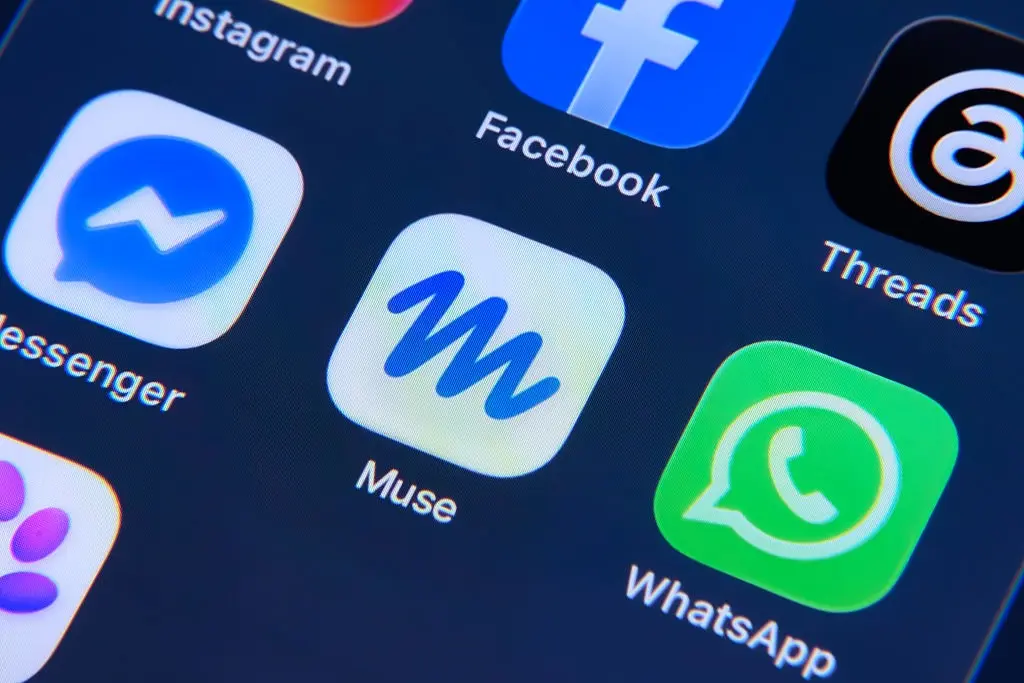
In a move that fundamentally redraws the boundary between consumer social media and premium software-as-a-service (SaaS), Meta has officially launched Meta One. This new, unified subscription ecosystem consolidates premium features and advanced generative AI capabilities across Facebook, Instagram, and WhatsApp. Introduced on Tuesday, the service marks Meta’s most aggressive effort to date to monetize its massive investments in artificial intelligence, specifically its proprietary Muse models.
For over a decade, Meta’s corporate philosophy was anchored in the famous promise that its platforms would remain "free and always will be," relying almost exclusively on a highly targeted, multi-billion-dollar digital advertising engine. However, the debut of Meta One signals a permanent structural shift toward a hybrid monetization model. By introducing a complex matrix of subscription tiers—ranging from consumer-facing AI "power user" plans to high-end enterprise packages costing up to $499 per month—Meta is positioning itself to compete directly with productivity and creative suites from the likes of OpenAI, Google, Adobe, and Microsoft.
This strategic pivot is not occurring in a vacuum. It represents the culmination of years of massive capital expenditure, including a blockbuster $14.3 billion investment in Scale AI in 2025, which brought tech wunderkind Alexandr Wang into Meta’s executive ranks to lead its AI division. Early market data suggests that consumers and businesses are already opening their wallets. Armed with new intelligence indicating that Meta’s initial, low-cost subscription tiers are generating record-breaking daily revenues, Wall Street analysts are forecasting that Meta’s subscription business could yield up to $20 billion annually by the end of the decade.
Detailed Chronology: Meta’s Path to Premium Subscriptions
[2021–2022] Apple's ATT Privacy Changes -> [June 2025] $14.3B Scale AI Deal / Alexandr Wang joins Meta -> [March 2026] 'Plus' Tiers Launch (IG, FB, WA) -> [September 2026] 'Meta One' Unified AI Subscriptions DebutedPhase 1: The Privacy Shock and the Search for Recurring Revenue (2021–2024)
The roots of Meta One can be traced back to the vulnerability of the ad-only business model. Following Apple’s 2021 App Tracking Transparency (ATT) framework, which severely limited Meta’s ability to track user behavior across third-party apps, the social media giant lost billions in advertising revenue. This regulatory and platform-level friction forced Meta’s leadership to explore diversified, predictable, and recurring revenue streams. While early experiments like "Meta Verified" focused on identity verification and basic customer support, they laid the operational groundwork for direct-to-consumer billing at scale.

Phase 2: The Scale AI Acquisition and the Rise of Muse (June 2025)
In June 2025, Meta executed a landmark $14.3 billion investment in Scale AI, the data-labeling and evaluation startup critical to training state-of-the-art machine learning models. As part of this historic deal, Scale AI’s co-founder and CEO, Alexandr Wang, departed his startup to lead Meta’s internal AI development. Under Wang’s stewardship, Meta accelerated the development of its Muse generative AI models, optimizing them for rapid, consumer-grade image and video generation. The primary challenge shifted from technical execution to financial sustainability: Meta needed a mechanism to recoup the immense compute costs associated with running these massive models for billions of users.
Phase 3: The "Plus" Micro-Subscriptions (March 2026)
In March 2026, Meta quietly introduced localized, single-app micro-subscriptions to test consumer appetite for paid social features. These tiers included:
- Instagram Plus ($3.99/month)
- Facebook Plus ($3.99/month)
- WhatsApp Plus ($2.99/month)
These plans offered cosmetic and quality-of-life upgrades, such as exclusive profile customizations, "super reactions," advanced story insights, and ad-light experiences. The rapid, widespread adoption of these micro-tiers proved to Meta’s executive suite that users were willing to pay for premium social features, paving the way for a more comprehensive, AI-centric offering.
Phase 4: The Launch of Meta One (September 2026)
On Tuesday, Meta unified these disparate efforts under the Meta One umbrella. This rollout does not replace the existing "Plus" tiers; instead, it stacks advanced AI capabilities, multi-platform access, and enterprise-grade business tools on top of them, creating a laddered subscription ecosystem designed to capture revenue from casual users, content creators, and global enterprises alike.

Unpacking the Meta One Tier Architecture
The Meta One subscription program is highly segmented, structured to maximize average revenue per user (ARPU) across three distinct target demographics: individual consumers, creative professionals, and businesses.
                      ┌─────────────────────────────────────────┐
                      │                META ONE                 │
                      └────────────────────┬────────────────────┘
                                           │
                  ┌────────────────────────┴────────────────────────┐
                  ▼                                                 ▼
     ┌────────────────────────┐                        ┌────────────────────────┐
     │  Consumer & Power User │                        │  Business & Creator    │
     └────────────┬───────────┘                        └────────────┬───────────┘
                  │                                                 │
        ┌─────────┴─────────┐                   ┌───────────┬───────┴───┬───────────┐
        ▼                   ▼                   ▼           ▼           ▼           ▼
     Core Premium        Premium            Essential   Advanced     Expert        Max
    ($7.99/mo)          ($19.99/mo)        ($14.99+/mo) ($49.99+/mo) ($149+/mo)  ($499+/mo)
Consumer & AI Power User Plans
For general consumers and digital enthusiasts, Meta has introduced two primary tiers that bundle the previously launched Instagram Plus, Facebook Plus, and WhatsApp Plus features with expanded generative AI access.
- Core ($7.99/month): This tier serves as the entry-point bundle. It includes all basic "Plus" features across Meta’s primary applications, alongside a baseline allocation of high-performance AI queries.
- Premium ($19.99/month): Directly competing with premium AI subscriptions like OpenAI’s ChatGPT Plus and Google’s Gemini Advanced, the Premium tier is built for power users. It unlocks high-volume, priority access to Meta’s flagship generative tools, including Muse Image and Muse Video, which allow users to generate high-fidelity, prompt-based graphics and motion clips.
Additionally, Premium subscribers gain frequent, unrestricted access to in-app creative tools, such as Instagram’s AI-powered Restyle (which allows users to completely re-engineer the visual aesthetic of their Stories and Reels using text prompts), advanced voice synthesis effects, and smart editing assistants.
Business & Creator Tiers
For commercial entities and professional creators, Meta has designed a multi-tiered scaling system. These plans focus on discoverability, automation, and customer relationship management (CRM) tools.

- Essential (Starting at $14.99/month): Aimed at micro-influencers and local shops, this tier offers basic page management tools, a verified badge, impersonation monitoring, and expanded access to the Meta Business Agent—an automated, AI-driven chatbot that interacts with customers on behalf of the business. It also introduces an "Enhanced Profile" that showcases websites, physical locations, and user reviews directly within organic search results.
- Advanced (Starting at $49.99/month): Designed for growing brands, this package allows users to schedule Stories and Reels up to 30 days in advance, insert hyper-functional links into organic posts, and export deep, multi-platform analytics. It also supports team-member access, broadens the number of linked devices, and offers higher caps on WhatsApp Business broadcast credits.
- Expert (Starting at $149/month) & Max (Starting at $499/month): Tailored for mid-market companies and enterprise brands, these high-end tiers offer maximum limits on the Meta Business Agent, dedicated enterprise customer support, and advanced marketing automation tools.
Future Pipeline: Edits Plus and Marketing Agents
Meta has also announced that it will soon integrate Edits Plus into the Meta One ecosystem. This upcoming subscription tier will cater specifically to users of Meta’s standalone video and content creation app, Edits, offering expansive cloud storage for cross-device project synchronization and unlimited access to an AI-powered co-editor. Over the coming months, Meta plans to roll out autonomous agent skills capable of handling end-to-end marketing campaigns, inventory optimization, and automated localized ad purchasing directly within the business tiers.
Supporting Context & Financial Metrics
While some industry observers initially doubted whether consumers would pay for services that were historically free, market data indicates that Meta’s monetization strategy is already yielding significant returns.
According to data compiled by mobile market intelligence provider Appfigures, the micro-subscription tiers launched in March 2026 experienced an extraordinary surge in adoption in late summer. For the week of September 9, 2026:
- Instagram’s daily worldwide subscription revenue reached an average of $1.2 million, representing a staggering 475% increase from the previous week.
- Facebook’s daily worldwide subscription revenue climbed to $528,000, marking a 143% increase over the same period.
| Metric | Instagram Subscriptions | Facebook Subscriptions |
|---|---|---|
| Daily Worldwide Revenue (Week of Sept 9, 2026) | $1,200,000 | $528,000 |
| Week-over-Week Revenue Growth | +475% | +143% |
| U.S. Share of Total Subscription Revenue | 32% | 39% |
| Historical U.S. Baseline Deviation | +10% | +10% |
This revenue surge is highly concentrated in mature, high-ARPU markets. The United States accounted for 32% of Instagram’s subscription revenue and 39% of Facebook’s subscription revenue during this peak week, running roughly 10% above each app’s historical U.S. baseline. This geographical concentration highlights the willingness of North American consumers and businesses to adopt paid digital ecosystems when tied to utility and status.

Official Statements and Policy Disclosures
When pressed for specific technical parameters regarding what constitutes "expanded usage" under the Core and Premium plans, Meta chose to remain ambiguous. In an official statement, a company spokesperson declined to provide exact prompt limits, token counts, or video generation caps for the $7.99 and $19.99 tiers:
"The exact boundaries of AI usage limits within the Meta One Core and Premium tiers are dynamic. These thresholds are designed to vary based on country-specific infrastructure, platform surface, and real-time system conditions to ensure an optimal experience for all users."
This policy of non-disclosure has drawn scrutiny from consumer advocacy groups and tech analysts. By tying usage limits to "system conditions," Meta reserves the right to throttle user access during periods of high network congestion or server load—a practice common in the SaaS industry but one that may frustrate power users accustomed to clear, hard limits on competitive platforms.
However, internal sources suggest this flexibility is necessary due to the volatile compute costs associated with running the Muse models. Generative video, in particular, requires significant GPU cycles. By keeping usage limits fluid, Meta’s infrastructure team can dynamically balance server loads across its global network of data centers without violating rigid service-level agreements.

Future Outlook: The $20 Billion Subscription Horizon
The launch of Meta One marks a fundamental turning point in Meta’s corporate history. While advertising will undoubtedly remain the company’s primary engine for the foreseeable future, subscriptions are rapidly transforming from a defensive experiment into a massive, high-margin revenue contributor.
Wall Street has reacted with notable optimism to Meta’s aggressive pricing strategy and the early Appfigures adoption data.
- BNP Paribas issued a revised forecast predicting that Meta’s subscription initiatives will generate $13.5 billion in incremental revenue by 2028.
- Truist published an even more bullish projection, estimating that if Meta successfully transitions just 3% to 5% of its global monthly active user base to a paid tier, the company could add $20 billion to its top-line revenue by 2030.
Projected Subscription Revenue Growth (2028–2030)

2028 (BNP Paribas):  ███████████████ $13.5B
2030 (Truist):       ██████████████████████ $20.0B
Strategic Implications for the AI Industry
By bundling state-of-the-art generative AI tools directly into apps that billions of people already use daily, Meta is bypassing the user-acquisition friction that independent AI startups face. A creator no longer needs to generate an image in Midjourney, download it, and upload it to Instagram; they can do it natively within the feed, supported by a single billing relationship.
This native integration, supercharged by the infrastructure built under Alexandr Wang and the Scale AI partnership, positions Meta to potentially commoditize standalone generative AI applications. If Meta One can successfully deliver high-quality video, images, and automated business agents seamlessly across Facebook, Instagram, and WhatsApp, it may very well redefine what consumers and enterprises expect from a social network—turning the platforms of the "free" internet into the most lucrative paid utilities in the world.