Executive Overview
In the expansive and often surreal landscape of early digital fandoms, few platforms fostered as intense a subcultural ecosystem as Tumblr. During the height of its cultural dominance in the mid-2010s, the microblogging site was a crucible for creative expression, social activism, and hyper-fixated communities. However, this unique blend of earnest advocacy and intense creative output also bred complex, bizarre, and occasionally fraudulent controversies. Among the most infamous of these is the "HIVliving" scandal—a multi-layered deception involving fabricated identities, weaponized social justice rhetoric, financial solicitation, and, bizarrely, Hamilton high school alternate-universe (AU) fanfiction.
What began in 2016 as a seemingly noble blog dedicated to raising awareness about human immunodeficiency virus (HIV) and sharing personal narratives of living with a positive status unraveled into a web of elaborate lies by late 2017. The blog’s operators—purportedly two marginalized individuals living in India—were ultimately exposed as a single white college student residing in the United States.
The fallout from the investigation sent shockwaves through the Hamilton fandom and the broader Tumblr community, sparking heated discourse concerning the appropriation of marginalized identities, the ethical boundaries of online activism, and the psychological underpinnings of digital roleplay and fanfiction. This report provides a comprehensive examination of the HIVliving controversy, detailing its genesis, the investigative breakthrough, its peculiar entanglement with Broadway fandom, and its enduring legacy as a cautionary tale of internet deception.
Detailed Chronology
Phase I: The Inception of ‘HIVliving’ (2016)
In 2016, amidst the unprecedented cultural juggernaut that was Lin-Manuel Miranda’s Broadway musical Hamilton, a new Tumblr blog materialized under the handle "HIVliving." Positioned as an educational and supportive space, the account purported to raise awareness regarding the realities, stigmas, and medical nuances of living with an HIV-positive status.
To lend authenticity to the enterprise, the blog’s creators fabricated two distinct, deeply marginalized personas:
- "Israa": Described as a nonbinary, Chinese-Pakistani human trafficking survivor allegedly residing in India.
- "Naj": Described as a U.S.-born lesbian woman of color, also residing in India, who frequently posted personal reflections on navigating life with HIV. (Naj notably operated through the secondary Tumblr handle
@allolesbean).
Simultaneously, the operators engaged heavily in the thriving Hamilton fandom on Tumblr, publishing popular fanfiction, including a high school AU titled To Scale the Blue Sky. By blending social justice advocacy with popular creative writing, the blog rapidly cultivated a dedicated following. Users across the platform began recommending HIVliving as an authoritative resource for HIV awareness, and the account took firm stances on medical-political issues, such as opposing criminalization laws targeting individuals who failed to disclose their HIV status to sexual partners.
Phase II: Escalation and Financial Solicitation
For more than a year, the personas of "Naj" and "Israa" maintained the facade, cementing their standing within the community. However, the dynamics of the blog shifted when "Naj" published a post linking to a Cash.me fundraiser, soliciting monetary donations from sympathetic followers to assist with mounting medical expenses.
While the request aligned with the blog’s narrative of financial and medical vulnerability, it inadvertently provided the precise thread needed to unravel the entire deception.
Phase III: The Investigation and Unraveling (October 2017)
The turning point arrived in October 2017. A Tumblr user and fellow Hamilton fan operating under the handle digoxin-purpurea took a closer look at the Cash.me donation link provided by Naj. Noticing digital discrepancies—specifically that the financial account appeared to be anchored in the United States rather than India—digoxin-purpurea initiated a private confrontation with Naj.
The ensuing digital dialogue was fraught with defensive maneuvers, shifting explanations, and emotional appeals from Naj. Unconvinced by the evasive responses, digoxin-purpurea systematically compiled their findings into a comprehensive exposé titled "WHAT HAPPENED WITH HIVLIVING," published to Tumblr on October 27th, 2017.
Faced with mounting, irrefutable evidence, the person behind the blog broke character and confessed. The operator admitted that neither "Naj" nor "Israa" existed; she was, in reality, a white U.S. college student who had entirely fabricated her geographical location, her racial and gender identities, and her HIV-positive status.
Phase IV: Fallout, Confession, and Broken Promises
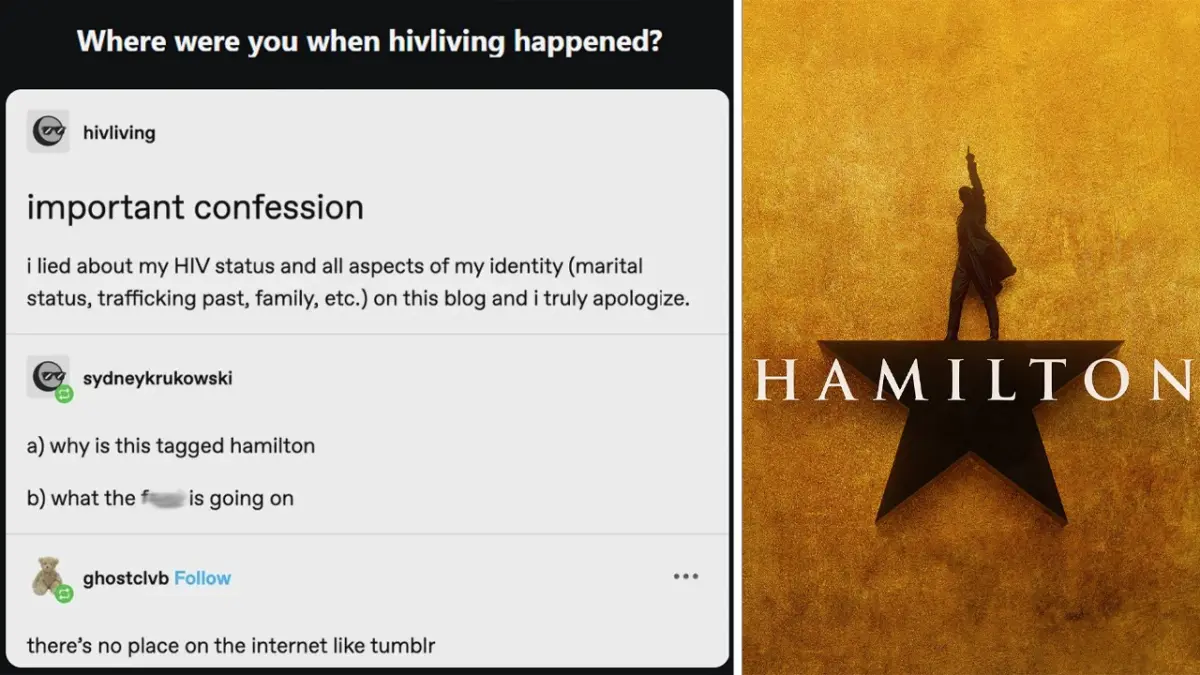
Following the exposure, a formal confession was posted directly to the HIVliving Tumblr blog under the "Hamilton" tag, leaving casual followers and dedicated community members alike in a state of profound confusion and betrayal.
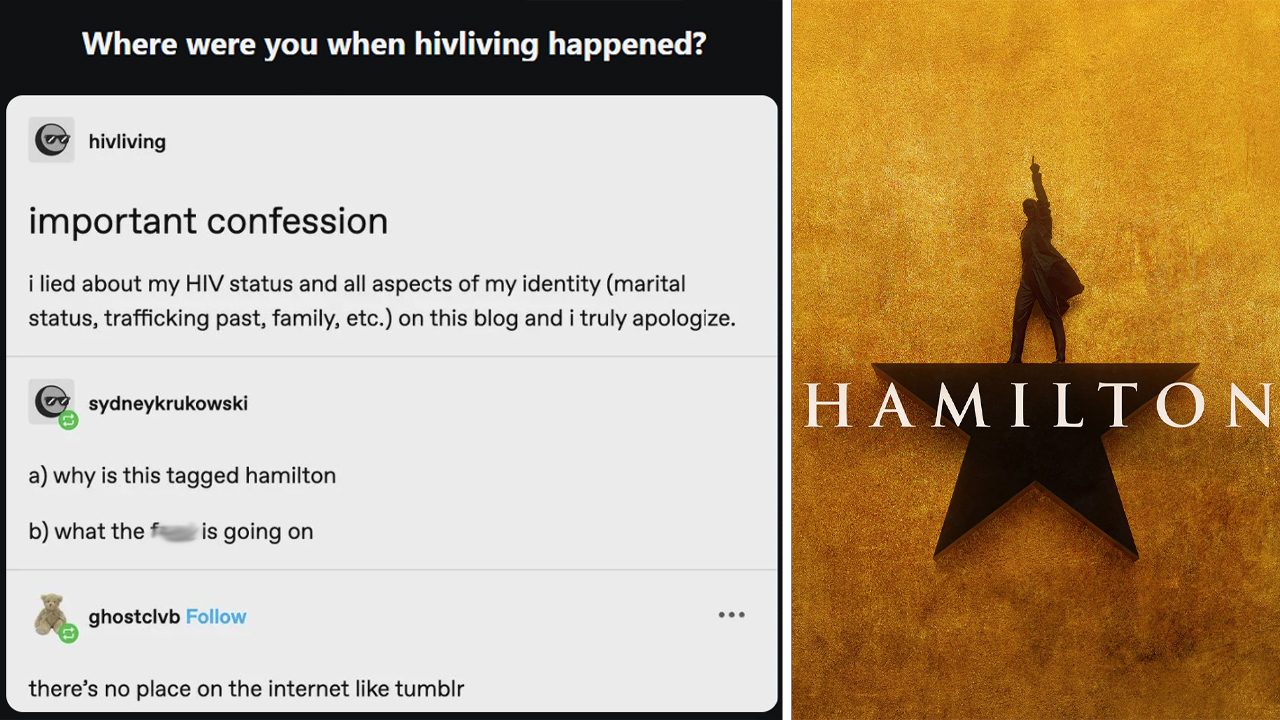
In her confession, the account owner pledged to issue refunds to all individuals who had contributed funds through the Cash.me fundraiser. Despite these assurances, no verifiable proof has ever been provided to confirm that any defrauded donor was successfully reimbursed, leaving the financial aspect of the scam officially unresolved.
Supporting Context & Metrics: The Anatomy of a Fandom Fraud
To understand how HIVliving operated with impunity for over a year, one must analyze the socio-cultural mechanics of Tumblr during the mid-2010s. The platform’s architecture prioritized emotional resonance, identity politics, and parasocial intimacy over verifiable credentials.
The Weaponization of Intersectionality
The creators of HIVliving utilized a textbook parasocial manipulation strategy. By claiming multiple marginalized intersections—nonbinary, a survivor of human trafficking, a person of color, and living with a stigmatized chronic illness—the blog insulated itself from routine scrutiny. In many progressive online spaces of the era, questioning the validity of an individual’s self-reported marginalized identity was frequently met with social ostracization or accusations of bigotry. The persona-builders exploited this cultural sensitivity, effectively weaponizing empathy to shield their operations from critical inquiry.
The Hamilton Fanfiction Nexus
The entanglement of the HIVliving deception with Hamilton fandom subculture remains one of its most bizarre elements. Following the October 2017 confession, investigator digoxin-purpurea argued that the entire HIVliving persona apparatus had been constructed retroactively or maintained concurrently to serve as a moral justification for niche fanfiction—specifically, writing alternate-universe stories in which established historical or musical characters were depicted as HIV-positive.
This revelation ignited a firestorm within the fandom. Critics argued that utilizing a fabricated medical crisis and falsified identity struggles to validate creative writing choices was deeply unethical. The backlash centered on three core grievances:
- Identity Tourism: The appropriation of genuine struggles faced by queer people of color and individuals living with HIV for the sake of online clout and creative validation.
- Medical Misinformation: The dissemination of pseudo-activism and medical commentary by an individual with no personal or professional stake in the issues discussed.
- Financial Fraud: The solicitation and acceptance of real-world monetary funds under false pretenses.
Official Statements and Community Reactions
The fallout from the HIVliving controversy extended far beyond a single blog, drawing in collateral disputes that highlighted the volatile nature of Tumblr subcultures.
The Archival Erasure and Pre-existing Feuds
Investigations into the aftermath revealed a tangled web of prior interpersonal conflicts involving the primary investigator, digoxin-purpurea. Prior to the HIVliving exposé, rumors circulated that digoxin-purpurea had been pressured into deleting their own Hamilton Real Person Fiction (RPF) "Cannibal Mermaid" fanfiction from the Archive of Our Own (AO3) platform due to targeted harassment campaigns allegedly spearheaded by HIVliving and its loyal followers. This underlying hostility was cited by community members as a primary catalyst for digoxin-purpurea‘s deep-dive investigation.
Furthermore, the controversy intersected with an unrelated April 2017 dispute involving digoxin-purpurea and another Tumblr user, beachdeath, regarding reports of human rights abuses in Chechnya. During that argument, beachdeath had exposed digoxin-purpurea’s fanfiction outputs, establishing a pre-existing climate of digital surveillance and mutual hostility within overlapping fandom circles.
Cultural Comparisons: The John Green Text Post Editing Scandal
In the broader historical context of the platform, HIVliving is frequently categorized alongside other monumental Tumblr lore events, such as the infamous "John Green Text Post Editing Scandal" (widely known by its copypasta moniker, "Cock Is One of My Favorite Tastes").
While the John Green incident—originating in the mid-2010s when users exploited Tumblr’s reblog-text-editing feature to attribute bizarre or sexually explicit statements to author John Green—was largely comedic and structural in nature, both scandals highlight the platform’s vulnerability to narrative hijacking. Whether altering text blocks to manufacture fake quotes or engineering entire intersectional personas to legitimize fanfiction, bad actors repeatedly proved capable of manipulating Tumblr’s insular ecosystem before facing community-led reckonings.
Future Outlook: Lessons from the Digital Archives
Years after the HIVliving blog was shuttered and its operator retreated into digital obscurity, the controversy endures as a fascinating case study in digital sociology. As online spaces continue to evolve—transitioning from the blog-centric networks of the 2010s to modern algorithmic feeds—the core vulnerabilities exploited by the HIVliving perpetrator remain dangerously relevant.
- The Verification Deficit: The incident underscores the inherent dangers of unverified digital advocacy. As online communities increasingly prioritize parasocial trust, platforms and users alike must balance empathy with healthy skepticism, particularly when financial transactions or medical claims are involved.
- Fandom Ethics: The intersection of creative writing (fanfiction) and real-world sociopolitical issues remains a minefield. The HIVliving scandal serves as a stark reminder that fictional explorations of heavy real-world topics must be handled with genuine ethical boundaries rather than deceptive justifications.
- Archival Permanence: Incidents like the HIVliving controversy demonstrate that digital actions leave permanent footprints. Through the preservation efforts of platforms like Know Your Meme and community-led documentation archives, these bizarre chapters of internet history continue to educate new generations of digital citizens on the importance of critical thinking and accountability in virtual spaces.