Executive Overview
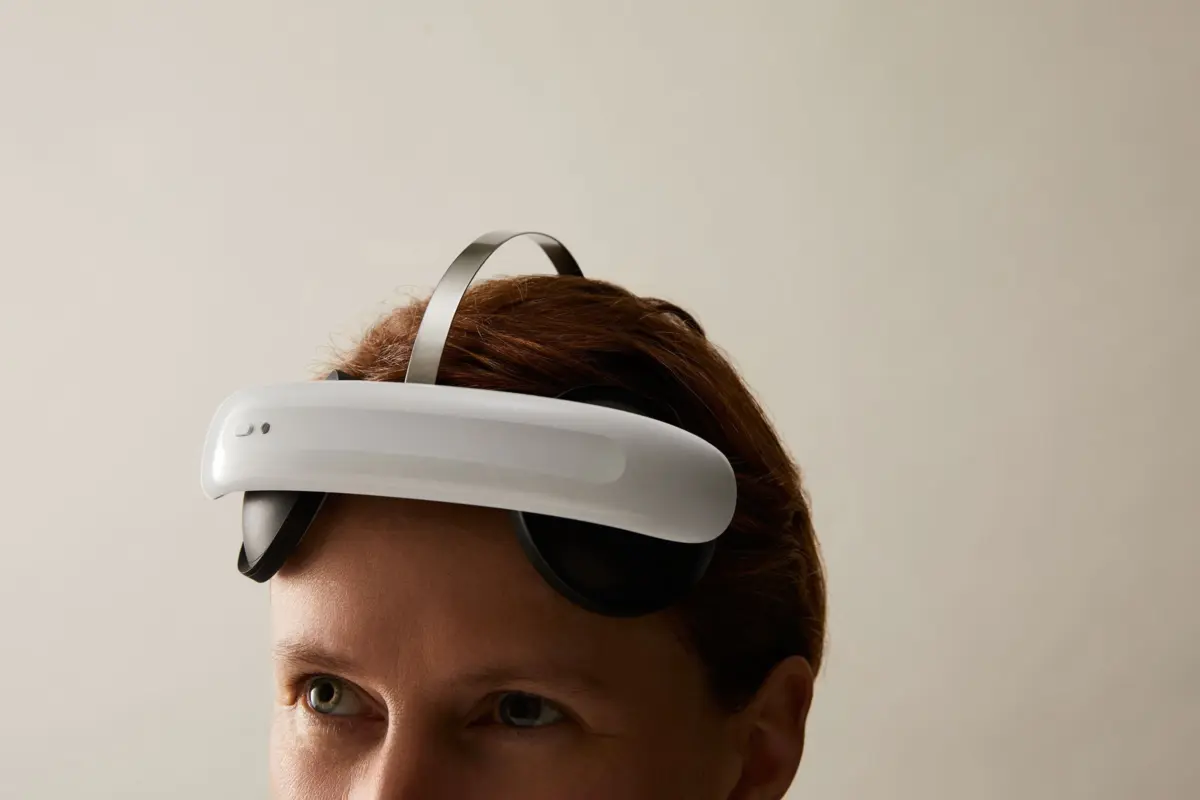
A groundbreaking wearable device designed to treat major depressive disorder from the comfort of a patient’s living room has officially launched in the United States by prescription. Developed by Swedish medical technology firm Flow Neuroscience, the futuristic-looking headset uses low-intensity electrical currents to stimulate specific areas of the brain associated with mood regulation.
Positioned as an alternative—or a complementary addition—to traditional pharmaceutical interventions, the device arrives at a critical juncture in American healthcare. With approximately one in six US adults currently prescribed antidepressant medication, the medical community and patients alike are actively seeking novel therapies that mitigate the systemic side effects and chemical dependency often associated with traditional psychotropic drugs.
However, despite earning Food and Drug Administration (FDA) clearance, the device faces significant hurdles on its path to mass adoption. Chief among them is its steep, four-figure price tag, which currently lacks widespread insurance reimbursement. While the technology has already gained traction across Europe and the United Kingdom, its financial accessibility in the US market remains a primary point of discussion for healthcare providers, venture capitalists, and patients navigating chronic mental health conditions.
Detailed Chronology: From European Rollout to US Prescription Approval
The journey of Flow Neuroscience’s depression-treatment headset highlights the shifting landscape of neurotechnology, moving treatments historically confined to sterile clinical environments directly into the hands of consumers.
2019: European Market Entry and Initial Validation
Long before its arrival in North America, the Flow headset secured regulatory approval in Europe in 2019. Built upon the principles of transcranial direct current stimulation (tDCS), the device was engineered to offer a non-pharmacological route for individuals struggling with clinical depression. Over the subsequent five years, adoption scaled steadily across the European continent. According to company data, more than 65,000 European patients have utilized the device. Additionally, the United Kingdom’s state-funded National Health Service (NHS) initiated pilot programs to evaluate the headset’s viability within public healthcare settings.
December: FDA Clearance Opens the US Market
A major milestone arrived when the US Food and Drug Administration granted regulatory clearance for the medical device. This clearance categorized the headset as a prescription-only therapeutic wearable, establishing a formal pathway for licensed US clinicians—ranging from primary care physicians to psychiatrists—to prescribe the device during in-person consultations or via telehealth platforms.
Present Day: The US Commercial Launch
With regulatory hurdles cleared, Flow Neuroscience has officially launched its commercial operations in the United States. The rollout introduces a new paradigm for American patients: a medical-grade neurostimulation device that can be ordered online, shipped directly to a patient’s doorstep, and operated via a companion smartphone application. Yet, the commercial transition brings fresh economic challenges, particularly regarding out-of-pocket costs and insurance coverage models that are traditionally tailored to pills and clinical visits rather than consumer-facing hardware.
Supporting Context & Metrics: Science, Efficacy, and Economics
To understand the potential disruption represented by the Flow headset, it is necessary to examine the underlying neuroscience, clinical trial data, and comparative costs of existing depression therapies.
The Neuroscience of tDCS
The Flow headset targets the left frontal lobe, a region of the brain heavily involved in executive function, emotional processing, and mood regulation. Neuroscientific research has consistently shown that individuals suffering from major depressive disorder frequently exhibit reduced neural activity and weaker neural connections in this specific area.
Worn on the forehead for 30 minutes a day, the device delivers low-intensity electrical stimulation (tDCS) through specialized pads. This mild electrical current is designed to gently depolarize neuronal membranes, increasing the likelihood that neurons will fire and gradually helping to restore healthy neural connectivity and activity in the targeted region.
Clinical Trial Insights
The clinical validity of the device was underscored by a randomized controlled trial involving 174 participants diagnosed with major depressive disorder. The results demonstrated clear statistical efficacy:
- Remission Rate: 45 percent of participants who used the active Flow device experienced complete remission of their depressive symptoms at the 10-week mark.
- Control Group: In comparison, only 22 percent of participants in the control group—who received a "sham" or placebo version of the device—achieved symptom remission.
- Flexibility: Significantly, the trial included both participants who were concurrently taking antidepressants and those who were not, indicating that the device can safely function as an adjunct therapy under medical supervision.
Safety Profiles and Side Effects
Comparing the side effect profiles of neurostimulation versus pharmaceuticals reveals stark contrasts. Users of the Flow headset reported relatively mild, localized side effects, primarily consisting of minor skin irritation under the electrodes, occasional tension headaches, and temporary difficulty concentrating.
By contrast, traditional oral antidepressants frequently induce a wider systemic toll, including nausea, significant weight gain, drowsiness, severe dry mouth, and sexual dysfunction. While these pharmaceutical side effects often subside after the first few weeks of treatment, they remain a primary reason why many patients discontinue their medication prematurely.
.jpg)
The Financial Equation
Despite its clinical promise, the financial barrier to entry for the Flow device is substantial:
- Initial Cost: Patients must pay $2,200 to cover the device and the first 10 weeks of treatment.
- Ongoing Maintenance: Continued access and support cost $325 per month thereafter.
- The Insurance Gap: Standard oral antidepressants are heavily subsidized by health insurance, often costing patients only a few dollars per month. Because insurance coding and reimbursement pathways for at-home neurostimulation wearables are still in their infancy, patients must shoulder the upfront cost out of pocket while the company actively negotiates with insurance providers for future coverage.
Official Statements and Industry Perspectives
The introduction of at-home neuromodulation devices into the US market has sparked intense debate among clinicians, technology investors, and corporate leaders regarding the future trajectory of mental health therapeutics.
Clinical Design and Patient Autonomy
Daniel Månsson, CEO and co-founder of Flow Neuroscience—who worked as a clinical psychologist before launching the company—emphasized that the primary design philosophy behind the headset was practicality and patient empowerment.
"In order to have a real impact on the problem, you need to create something that has the effect on the brain needed, but that can be used in a home environment in a safe and effective way," Månsson stated.
Traditional clinical alternatives, such as Transcranial Magnetic Stimulation (TMS), require patients to visit a specialized medical facility five days a week over several weeks, accumulating costs that can reach up to $15,000 without insurance. By condensing this clinical concept into an at-home wearable, Flow aims to bypass geographical and scheduling barriers that often prevent patients from seeking advanced care.
The Venture Capital Bet
Billionaire venture capitalist Vinod Khosla, an early investor in Flow Neuroscience, views the shift toward non-chemical brain interventions as an inevitable evolution in modern medicine. Khosla argues that the psychological fatigue associated with long-term pharmaceutical reliance makes patients eager for alternative modalities.
"My bet is, if you ask any person who’s on depression drugs, they’d prefer not to be on them," Khosla noted. "They’d like a nondrug, nonchemical treatment for it."
A Broader Wave of Neurotech Innovation
Flow is far from alone in attempting to bridge consumer hardware with advanced neuroscience. The FDA clearance of its device coincides with a surging wave of consumer and clinical brain-computer interfaces (BCIs) and neuro-wearables designed to diagnose, monitor, or stimulate neural tissue:
- Cognixion: This California-based startup has modified hardware like the Apple Vision Pro to engineer communication systems for paralyzed individuals, bypassing the need for speech or motor control.
- Muse: Known for its consumer headbands, Muse utilizes electroencephalography (EEG) sensors to provide real-time feedback designed to deepen meditation practices.
- Elemind: This firm has developed wearable technology engineered to influence brainwaves and help users fall asleep significantly faster.
Together, these companies signal a broader paradigm shift where neurology is increasingly digitized, personalized, and brought out of the laboratory into everyday life.
Future Outlook
The commercial debut of Flow Neuroscience’s prescription headset in the United States marks a critical proving ground for at-home psychiatric care. While the convergence of neurobiology, hardware design, and smartphone integration offers a compelling vision for the future of mental health treatment, significant challenges remain.
In the near term, the high out-of-pocket cost will likely restrict the device to affluent patients or those willing to invest heavily in alternative care. For the technology to achieve widespread systemic impact, securing broad insurance reimbursement and establishing long-term clinical data regarding sustained remission will be paramount.
If these economic hurdles can be cleared, the Flow headset and its technological contemporaries may fundamentally redefine how society approaches psychiatric disorders—transforming mental healthcare from a chemical trial-and-error process into a precise, measurable, and highly personalized electronic science.