Executive Overview
As the United States hurtles toward a fully interconnected, high-speed digital future, a quiet yet catastrophic human toll is mounting thousands of feet above the ground. Driven by sweeping federal mandates to modernize telecommunications and expand rural broadband access, commercial television and radio stations are racing against strict deadlines to overhaul their broadcast infrastructure. However, this relentless push—known widely as the post-auction "repack"—has collided with a sobering reality: a severe shortage of skilled labor, inadequate regulatory oversight, and an inherently perilous work environment.
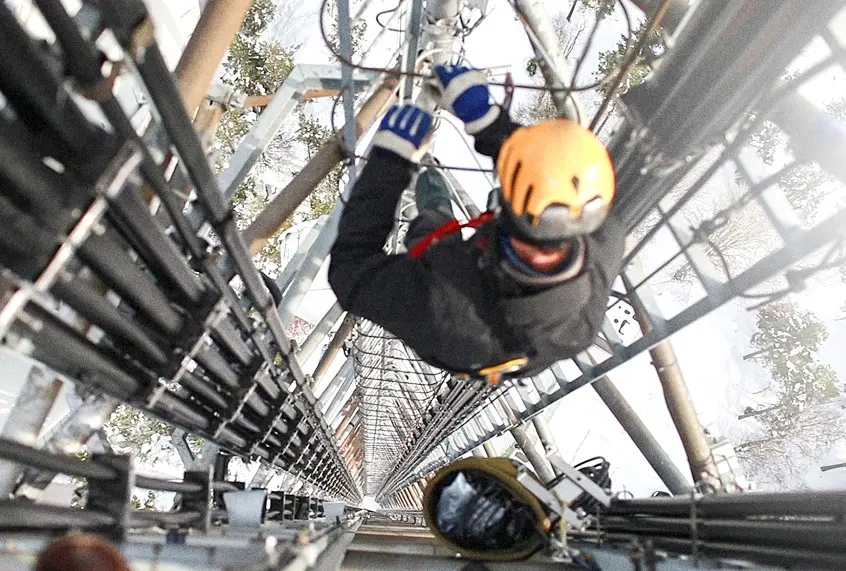
Communication tower climbers, often hailed as the unseen backbone of the modern digital age, are facing an unprecedented spike in fatal accidents. Scaling structures that soar up to 2,000 feet into the air—taller than New York City’s One World Trade Center—these workers routinely brave extreme weather, dizzying heights, and complex structural hazards. Despite the well-documented dangers, industry insiders, labor advocates, and safety experts warn that Washington lawmakers are prioritizing economic expediency over human life by refusing to extend project deadlines. With regulatory bodies like the Occupational Safety and Health Administration (OSHA) lacking specific, dedicated safety standards for the industry, the race to upgrade America’s airwaves has become a high-stakes gamble with workers’ lives.
Detailed Chronology: Recent Tragedies and the Push for Modernization
The inherent dangers of the telecommunications overhaul are starkly illustrated by a grim timeline of recent accidents that have devastated families and communities across the nation.
In September, a routine antenna replacement project in Miami Gardens, Florida, turned fatal. Three young workers—23-year-old Brachton Barber of Longwood, Florida; 35-year-old Benito Rodriguez of Tampa, Florida; and 31-year-old Marcus Goffena of Sidney, Ohio—lost their lives while working on a communications tower for WSVN-Channel 7. The tragedy sent shockwaves through the industry, underscoring the lethal risks associated with hurried or complex high-altitude operations.
Just months later, in April, disaster struck in Fordland, Missouri. A massive, 1,980-foot broadcast tower utilized by Ozarks Public Television catastrophically collapsed, claiming the life of 56-year-old Stephen Lemay of Blaine, Washington. Lemay, remembered by loved ones as a dedicated family man, was killed when the towering structure failed—a stark reminder that aging infrastructure combined with heavy modifications creates a recipe for structural disaster.
These incidents are part of a broader, systemic crisis tied directly to federal policy. Under a mandate issued by the Federal Communications Commission (FCC), nearly 1,000 television stations are legally required to transition to new broadcast channels to clear airwaves for emerging wireless technologies. The FCC set a hard deadline of July 2020 for the completion of this massive nationwide repack. While commercial broadcasters and lawmakers view this transition as an absolute economic necessity, the compressed timeframe has forced stations to rush tower modifications, directly fueling the surge in workplace fatalities.
Supporting Context & Metrics: The Perils of Tower Climbing
To understand the gravity of the situation, one must examine the staggering statistics and physical dangers defining the tower-climbing profession.
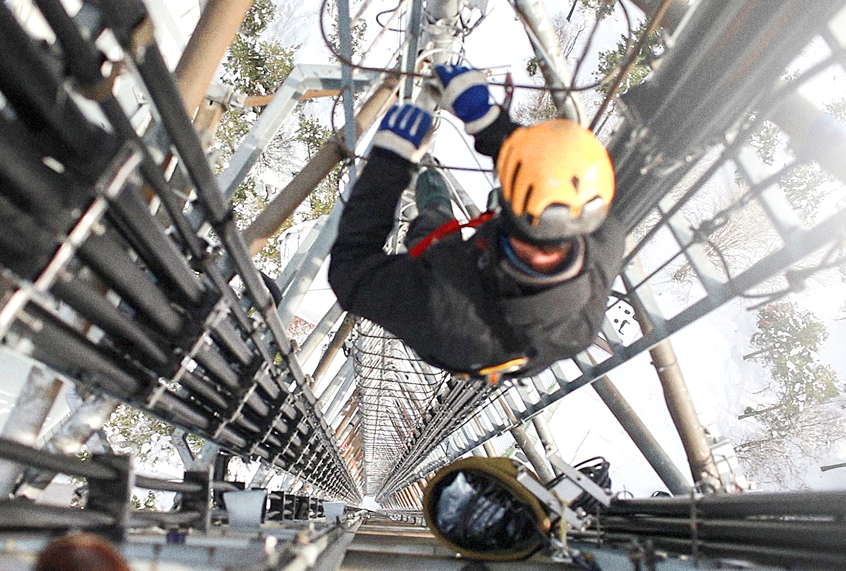
According to data historically cited by labor officials, communication tower workers face a risk of fatal injury approximately 25 to 30 times higher than that of the average American worker. Climbing anywhere from 100 to 2,000 feet into the air, technicians are exposed to a lethal combination of environmental and mechanical hazards:
- Falls from Height: The leading cause of mortality in the industry, where a single equipment failure or momentary lapse in harness security can prove fatal.
- Structural Collapses: As demonstrated by the Fordland, Missouri tragedy, aging towers burdened with newly mounted, heavier antennas are increasingly vulnerable to catastrophic failure.
- Electrical and RF Hazards: Workers must navigate live radio frequency (RF) radiation and high-voltage electrical systems while suspended hundreds of feet in the air.
- Adverse Weather: High winds, ice, and sudden storms routinely complicate operations that leave zero margin for error.
Compounding these physical dangers is a profound systemic void in federal regulation. OSHA does not currently possess safety standards specifically tailored to the unique hazards of communication tower construction and maintenance. While the agency began exploring dedicated rules during the Obama administration—prompted by a horrific spike in 2013 that saw 13 tower workers killed (more than the previous two years combined)—comprehensive federal standards remain elusive.
Thomas Fuller, an occupational health expert at Illinois State University, noted during OSHA proceedings that tower climbing operates within a largely unregulated framework characterized by minimal oversight and weak enforcement. Furthermore, Fuller highlighted a pervasive culture of fear within the workforce: workers and contracting companies frequently conceal structural deficiencies or safety violations out of fear of losing lucrative contracts, knowing there is no dedicated federal agency equipped to handle structural safety complaints with the requisite urgency.
Official Statements: Industry Warnings Versus Political Pressures
The friction between operational safety and political expediency has created a bitter ideological battleground involving industry leaders, engineers, and members of Congress.
Jim Tracy, chairman of the National Association of Tower Erectors (NATE), issued an urgent plea to Capitol Hill, demanding that policymakers pump the brakes on the aggressive post-auction timetable. Delivering blunt testimony, Tracy stated:
"There is one inescapable fact. There are not, at present, enough qualified workers to perform all the tower work we will be required to complete."
Echoing these concerns from an operational standpoint, Bill Hayes, director of engineering for Iowa Public Television, offered a scathing critique of the rush:

"You can be gambling at best with the reliability of your station’s service, and at worst you’re gambling with people’s lives."
Conversely, political pressure to maintain the strict July 2020 deadline remains intense. In a coordinated display of economic urgency, a bipartisan coalition of 56 members of Congress—including prominent figures like Rep. Steve Scalise (R-La.) and Rep. Darrell Issa (R-Calif.)—pushed back against proposed schedule adjustments. In a formal letter to then-FCC Chairman Ajit Pai, the lawmakers insisted that the repack must stay on track to accelerate rural broadband deployment.
"Ultimately, it’s a matter of economic necessity in today’s globally-connected world," the lawmakers wrote.
This legislative stance is heavily reinforced by powerful corporate interests. Commercial television and radio stations poured nearly $29 million into federal lobbying efforts in 2017 alone, ensuring that the economic momentum behind the wireless expansion faces minimal legislative resistance, regardless of the human cost on the ground—and in the clouds.
Future Outlook: A Critical Crossroads for Worker Safety
As the telecommunications landscape continues its aggressive evolution toward 5G and ubiquitous wireless connectivity, the structural demands placed on America’s broadcast towers will only intensify. Towers that were originally engineered decades ago are now groaning under the weight of multiple legacy and modern antenna arrays.
Without a fundamental shift in regulatory policy, the outlook for tower climbers remains perilous. Experts argue that safeguarding this vital workforce requires three critical interventions:
- Enactment of Specialized OSHA Standards: Federal regulators must finalize and vigorously enforce comprehensive safety rules explicitly designed for communication tower erection and maintenance.
- Flexible Timelines: Regulatory agencies and Congress must prioritize human life over arbitrary corporate deadlines, allowing sufficient time for complex structural modifications to be executed safely by certified professionals.
- Whistleblower Protections and Oversight: Establishing independent reporting channels for structural deficiencies will empower workers to flag dangerous conditions without fear of economic retaliation or job loss.
Until policymakers bridge the gap between commercial expansion and basic worker protection, the invisible architects of America’s digital network will continue to bear the heaviest burden—risking their lives on the vertical frontier to keep the nation connected.