Executive Overview
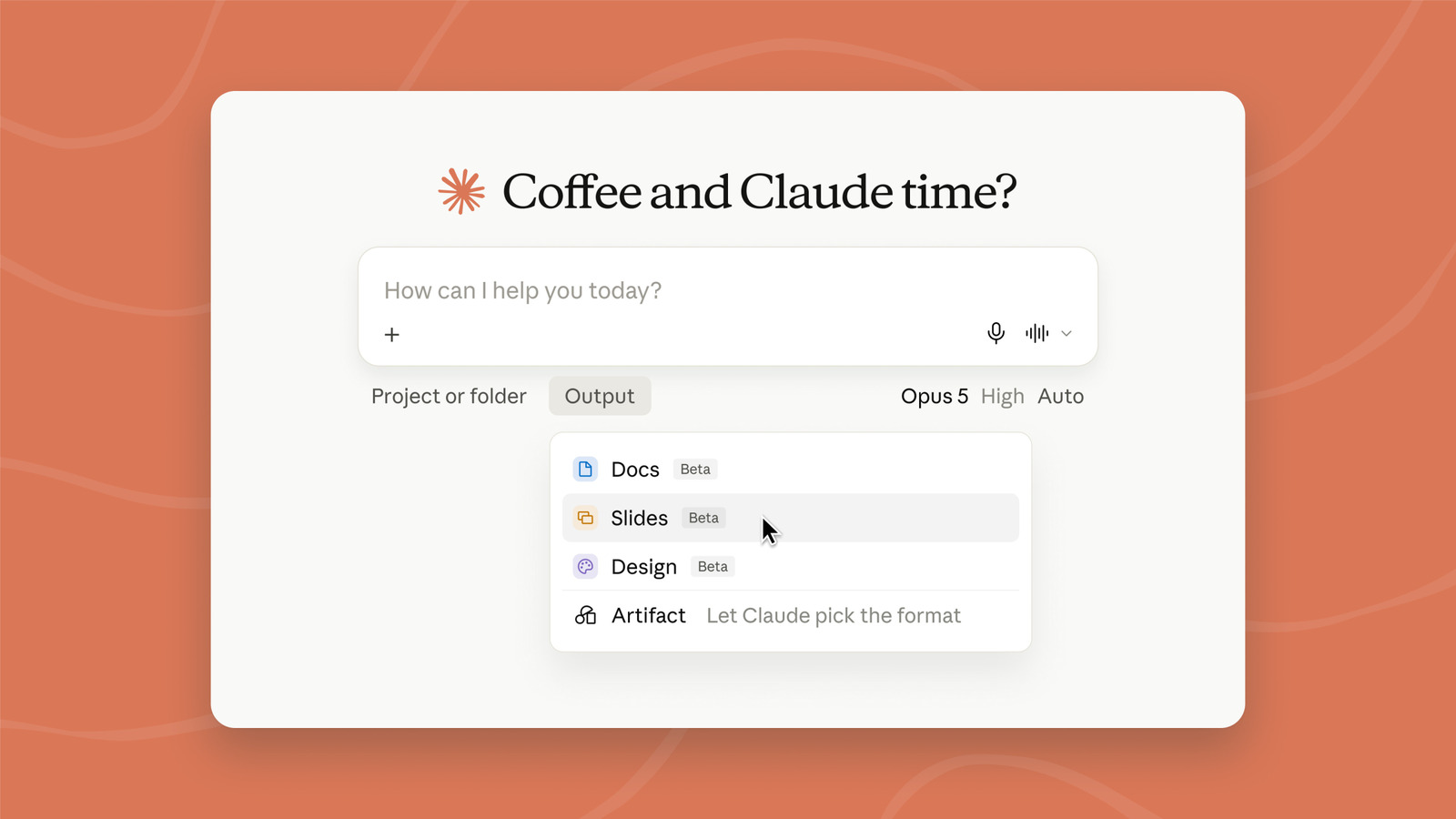
In a major strategic leap toward seamless human-AI collaboration, Anthropic has announced a sweeping overhaul of its flagship artificial intelligence ecosystem, centered around the chatbot Claude. Designed to eliminate the workflow fragmentation that has long hampered productivity tools, the centerpiece of this update is Claude Docs—a powerful new capability that allows the AI to generate, refine, and export fully editable documents directly within an active conversation.
Alongside the introduction of native presentation and slide-generation tools, Anthropic is executing a massive structural reorganization dubbed the "One Claude" initiative. This initiative officially merges Claude Cowork, Artifacts, and Claude Design into a single, unified interface.
For months, users leveraging Anthropic’s ecosystem for complex knowledge work faced a disjointed experience, forced to toggle between distinct modes—such as switching to specialized design interfaces for visual work or jumping into separate workspaces for multi-step agentic tasks. By integrating these capabilities into a single conversational thread, Claude can now autonomously assess the requirements of a user’s prompt, pull the necessary context, leverage external connectors, and seamlessly execute multi-disciplinary tasks.
Rolling out immediately to Pro and Max subscribers across web, desktop, and mobile platforms—with Team and Free tiers slated to receive the update in the coming weeks—this release marks a foundational shift in how humans interact with generative AI for enterprise, creative, and administrative workflows.
Detailed Chronology: The Evolution Toward "One Claude"
The journey toward a unified, agentic workspace has been iterative, reflecting Anthropic’s deliberate strategy to build safe, highly capable foundational models before layering complex UI/UX orchestration on top of them.
1. The Rise of Artifacts and Specialized Workspaces
Anthropic’s first major step toward moving beyond standard text-based chat was the introduction of Artifacts. Launched to give users a dedicated sidebar for saving, referencing, and viewing self-contained pieces of content—such as code snippets, HTML websites, diagrams, and text documents—Artifacts allowed users to inspect AI-generated outputs without losing the flow of conversation.
However, as Claude’s underlying architecture grew more capable, Anthropic expanded horizontally rather than vertically. The company introduced Claude Design to handle visual tasks and creative layouts, followed shortly by Claude Cowork, a specialized version of its coding and reasoning AI tailored for regular knowledge workers. Cowork introduced "agentic AI" workflows, empowering Claude to independently read internal work documents, execute multi-step operations, and generate comprehensive deliverables like spreadsheets, slide decks, and reports.
2. The UX Friction Point
While these specialized tools expanded Claude’s utility, they inadvertently introduced operational friction. According to user feedback gathered by Anthropic, customers frequently found themselves confused about where to initiate a specific task. A project started in a standard chat thread could not easily transition into a Cowork agentic workflow or a Design canvas without losing contextual continuity. Users were forced to manually copy-paste data, switch tabs, and manage disparate file versions across siloed features.
3. The "One Claude" Consolidation
Recognizing that the true promise of artificial intelligence lies in frictionless assistance, Anthropic engineers and product designers went back to the drawing board. The result is the current ecosystem consolidation. By dissolving the artificial barriers between chat, Cowork, Artifacts, and Design, Anthropic has transformed Claude from a multi-tool suite into a unified cognitive partner.
Now, when a user enters a prompt, Claude acts as an intelligent router and executor. It dynamically determines whether a request requires a simple text response, a multi-step agentic deep dive, a visual presentation, or a formal document, delivering all outputs directly within the primary chat stream.
Core Features and Capabilities of the New Claude Update
The latest software update introduces several groundbreaking additions designed to streamline office productivity, creative design, and complex data processing.
1. Claude Docs: Real-Time Document Creation and Editing
Gone are the days of asking an AI for a block of text, copying it, pasting it into a word processor, and formatting it manually. With Claude Docs, users can simply instruct Claude to draft a comprehensive, well-structured document—such as a project brief, a one-page executive summary, or a technical specification—directly inside the chat window.
- Collaborative Sharing: While documents begin as private, isolated assets within the user’s thread, they can be easily shared with colleagues for real-time collaboration.
- In-Chat and External Editing: Users can edit documents iteratively through conversational prompts ("make the second paragraph more concise," "add a bulleted list of metrics here"), or choose to export the files seamlessly into standard productivity suites like Google Docs or Microsoft Word.
2. Native Slide and Presentation Generation
Previously, generating presentation decks required navigating away to specialized design tools. Under the new update, presentation creation is fully native to the chat interface.
- Users can request a complete pitch deck, a quarterly review presentation, or a status update slide show using natural language.
- Claude generates the slides on the fly, dropping them cleanly into the chat stream.
- Presentations can be edited directly within the interface or downloaded instantly as Microsoft PowerPoint (.pptx) files or high-resolution PDFs.
3. Cowork, Artifacts, and Design Under One Roof
The unification of Cowork and Artifacts solves major operational bottlenecks for enterprise users.
- Agentic Task Execution: Cowork mode—which enables Claude to read corporate documentation, analyze large datasets, and execute multi-step logic—is now fully accessible from any standard conversation.
- Contextual Continuity: Because the agentic capabilities of Cowork share the same memory, connectors, and contextual framework as the main chat window, users no longer suffer from context loss when switching between conversational queries and heavy data processing tasks.
- Unified Access: Artifacts remain the backbone for persistent storage, allowing users to pin documents, code blocks, and visual elements to the sidebar for easy retrieval and long-term project management.
Supporting Context & Metrics: The Shift Toward Agentic Workflows
To understand the significance of Anthropic’s latest update, one must look at the broader macroeconomic and technological landscape surrounding enterprise artificial intelligence.
| Metric / Trend | Industry Context | Anthropic’s Positioning |
|---|---|---|
| Primary AI Bottleneck | Fragmented software ecosystems requiring constant context switching. | "One Claude" merges chat, design, and agentic tools into one interface. |
| Enterprise Adoption Driver | Demand for automated multi-step workflows (Agentic AI). | Cowork mode brings advanced file-reading and multi-step execution to everyday users. |
| Platform Accessibility | High friction between consumer chat apps and professional document suites. | Direct export and integration with Google Docs, Microsoft Word, and PowerPoint. |
As businesses race to integrate generative AI into their daily routines, studies show that knowledge workers waste a significant portion of their day navigating between disparate software applications, copying data between LLM interfaces and local word processors. By collapsing these steps into a single, conversational dashboard, Anthropic is positioning Claude not merely as a conversational chatbot, but as an all-encompassing digital workspace.
Furthermore, the integration of agentic capabilities into consumer and professional tiers reflects a broader industry shift. Artificial intelligence is no longer evaluated solely on its ability to generate natural language tokens, but on its capacity to take action—to read local directories, process complex corporate files, draft executive-ready presentations, and deliver finalized artifacts without manual human intervention at every intermediate step.
Official Statements and Industry Impact
Anthropic’s leadership team has framed the "One Claude" release as a philosophical turning point in how humans and machines collaborate.
"We built Design as a specialized destination for visual work and Cowork as a separate environment for heavy, multi-step tasks," an Anthropic spokesperson noted during the product rollout. "However, our telemetry and user feedback made it clear: people often get confused about where to execute a task, especially when progress made in one interface failed to carry over to another. By unifying these capabilities, Claude can now intelligently deduce what a task requires, bringing Cowork, Design, and Docs directly into whatever conversation you are already having."
Industry analysts have responded positively to the update, noting that it directly addresses the fatigue users experience from "feature bloat" in modern software suites. Rather than forcing users to learn multiple disparate interfaces within the same platform, Anthropic has chosen to make Claude’s backend intelligence sophisticated enough to route tasks dynamically behind the scenes.
Future Outlook: What Lies Ahead for Claude and Enterprise AI
As Anthropic rolls out these updates to Pro and Max subscribers over the coming weeks—with Team and Free tier availability following shortly—the competitive landscape among foundational model providers is bound to intensify.
1. The Battle for the Enterprise Desktop
With native document editing, slide generation, and multi-step file processing, Anthropic is encroaching upon territory traditionally dominated by Microsoft Office and Google Workspace. While Claude does not yet replace these office suites entirely, its ability to generate finished, exportable Word, PowerPoint, and Google-compatible files positions it as the premier cognitive co-pilot preceding formal document finalization.
2. Deepening Ecosystem Connectors
Looking forward, industry watchers anticipate that Anthropic will expand Claude’s external connectors even further. By allowing Claude to securely hook into cloud storage providers, project management platforms (such as Jira and Asana), and customer relationship management (CRM) tools, the agentic capabilities unlocked by the Cowork merger will only grow more potent.
3. The Democratization of Agentic AI
Perhaps the most enduring legacy of the "One Claude" update will be the mainstreaming of agentic workflows. By making complex, multi-step AI execution as simple as typing a natural language prompt in a chat box, Anthropic is lowering the technical barrier to entry. Tasks that once required specialized prompting, custom scripting, or tedious manual data aggregation are now accessible to any knowledge worker, setting a new benchmark for what users should expect from an artificial intelligence assistant.