In the expansive landscape of Stephen King adaptations, few works carry the singular psychological and political weight of The Dead Zone. First published in 1979, the novel introduced readers to Johnny Smith, an ordinary schoolteacher whose life is irrevocably altered after a catastrophic car crash leaves him in a six-year coma. Awakening with the harrowing ability to perceive fragments of the past and future simply through physical touch, Johnny finds himself caught at the crossroads of personal tragedy and apocalyptic prophecy.
While David Cronenberg’s celebrated 1983 feature film adaptation remains a masterclass in cinematic compression, a less-discussed yet deeply compelling television iteration quietly shaped the landscape of early-2000s sci-fi television. Developed by the father-son duo Michael and Shawn Piller—veterans of the Star Trek franchise—The Dead Zone television series ran for six seasons on the USA Network from 2002 to 2007. Despite commanding a loyal audience and mastering a sophisticated blend of the case-of-the-week procedural and serialized psychological thriller, the series was ultimately canceled amid shifting network priorities, leaving its overarching narrative trapped on a staggering cliffhanger.
Now, decades after its initial broadcast, The Dead Zone is experiencing an unexpected cultural resurgence. The complete series has been made available to stream entirely for free on YouTube, opening the door for a new generation of viewers to discover what makes this adaptation a masterclass in narrative adaptation. By cleverly fusing episodic crime-solving with a high-stakes, politically charged battle against destiny, the series elevates itself far above standard genre fare. This deep dive explores the mechanics of the show, its faithful yet inventive expansion of King’s lore, its unforgettable performances, and why its arrival on a free-to-watch platform is one of the most exciting streaming developments for classic television enthusiasts.
Detailed Chronology: From Page to Screen and Beyond
To understand the triumph of the television adaptation, one must first examine the trajectory of the source material and its earlier cinematic interpretations. Stephen King wrote The Dead Zone during a period of intense personal and political reflection in America, capturing the underlying paranoia and moral ambiguities of the late 1970s.
The Genesis of a Masterpiece (1979–1983)
1979: Stephen King publishes The Dead Zone through Viking Press. The novel becomes an instant bestseller, praised for departing from traditional supernatural horror in favor of a grounded, melancholic thriller that explores clairvoyance as a curse rather than a gift.
1983: Paramount Pictures releases the cinematic adaptation directed by David Cronenberg and starring Christopher Walken as Johnny Smith. Cronenberg’s film is lauded for its taut pacing, atmospheric dread, and Walken’s haunting, fragile portrayal of a man displaced by time and trauma. However, the two-hour runtime forces the narrative to condense King’s sprawling plot, leaving many supporting characters and subplots on the cutting-room floor.
The Television Era on USA Network (2002–2007)
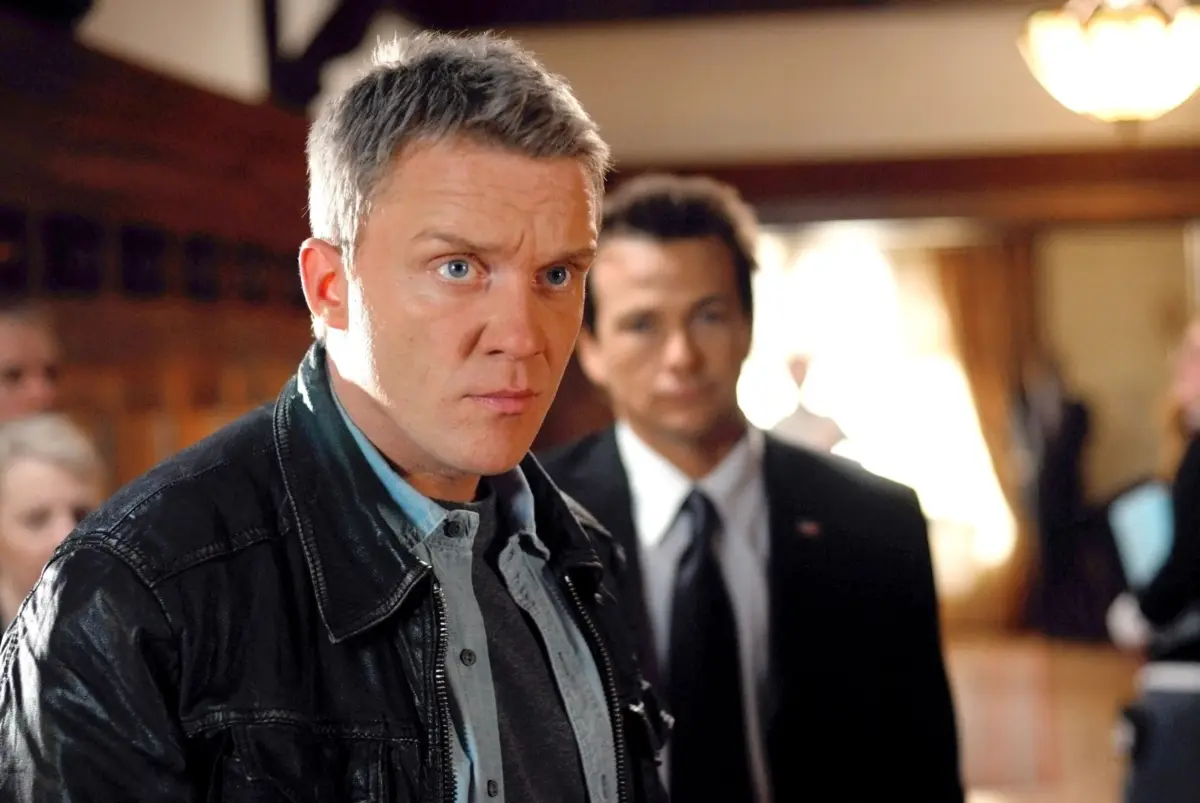
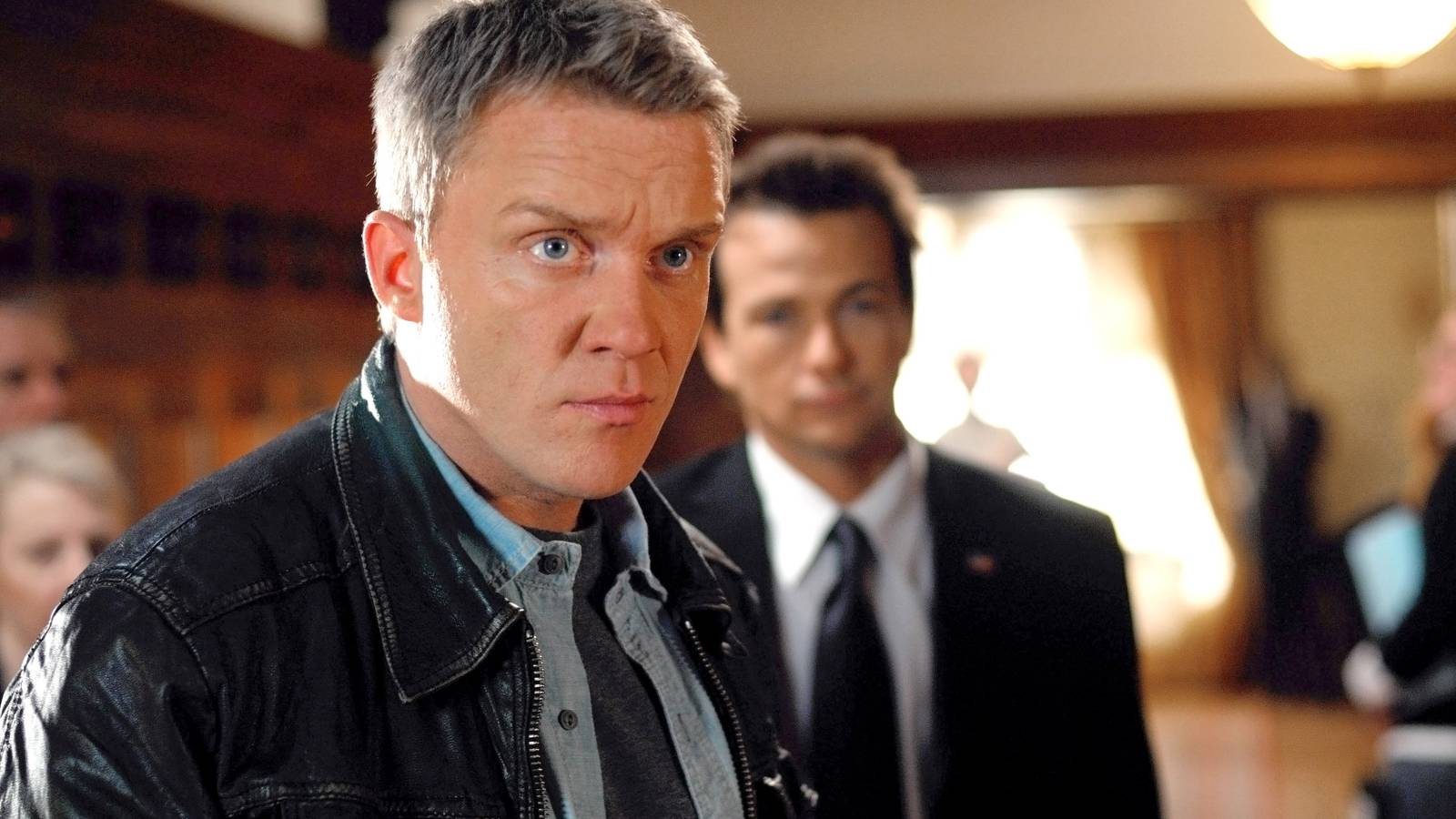
June 16, 2002: Seeking to carve out a distinct identity in the burgeoning cable television landscape, the USA Network premieres The Dead Zone series. Starring Anthony Michael Hall as Johnny Smith and produced by Lionsgate Television and the Piller duo, the pilot breaks basic cable viewership records for the network, drawing over 6.4 million viewers.
2003–2006 (Seasons 2–5): The series successfully establishes a hybrid storytelling model. While individual episodes feature Johnny using his visions to solve local crimes—assisting the local sheriff in unearthing missing persons, stopping serial killers, and preventing local tragedies—a serialized backbone tracks his escalating obsession with Greg Stillson. Played brilliantly by Sean Patrick Flanery, Stillson evolves from a charismatic populist congressional candidate into a terrifying harbinger of nuclear annihilation.
Summer 2007 (Season 6): Facing declining ratings and rising production costs, USA Network opts not to renew the series for a seventh season. The sixth-season finale, which airs on September 16, 2007, concludes with a massive cliffhanger that abruptly halts the cat-and-mouse game between Johnny and Stillson, leaving fans without a formal resolution.
The Digital Renaissance (Present Day)
September 2026: In a move that delights cult television fans and Stephen King enthusiasts alike, the entire six-season catalog of The Dead Zone lands on YouTube for free ad-supported streaming. This quiet drop triggers a wave of online rediscovery, positioning the long-forgotten procedural as a prime candidate for contemporary binge-watching.
Supporting Context & Metrics: Breaking Down the Series’ Longevity
Why has The Dead Zone endured when so many cable procedurals from the early 2000s faded into obscurity? The answer lies in its meticulous structural balance and the creative risks taken by its showrunners.
The Case-of-the-Week Meets Serialized Prophecy
Procedurals often suffer from narrative fatigue, relying on formulaic beats that fail to challenge the viewer. The Dead Zone sidestepped this trap by integrating Johnny’s psychic afflictions into the moral fabric of every investigation. When Johnny touches a person or an object, he experiences visions—often sensory-overloaded bursts of sights, sounds, and emotions. These visions are never straightforward; they are riddles wrapped in subjective trauma.
This mechanism allowed the writers to craft compelling, self-contained mysteries while simultaneously advancing the overarching mythology of the "Armageddon vision"—the chilling future where Congressman Greg Stillson triggers a global nuclear holocaust. The duality of Johnny saving a child in the present while knowing that the politician he shakes hands with tomorrow might destroy the world creates an electric undercurrent of tension across all 80 episodes.
Key Production Metrics & Reception
Total Run: 6 Seasons, 80 Episodes.
Premiere Milestone: The pilot episode became the highest-rated original series premiere in the history of basic cable at the time of its airing in 2002.
Critical Acclaim: Anthony Michael Hall received widespread critical praise for his transition from 1980s Brat Pack comedy icon to a deeply empathetic, world-weary dramatic lead. His performance grounded the show’s more fantastical sci-fi elements in genuine emotional reality.
Official Statements and Creative Insights
The unique alchemy of The Dead Zone television series was largely driven by the vision of executive producers Michael and Shawn Piller, who sought to honor King’s themes while adapting them for a multi-year television arc.
In archival interviews discussing the development of the series, Michael Piller emphasized the importance of grounding Johnny Smith’s abilities in human cost rather than supernatural spectacle:
"We didn’t want Johnny to feel like a superhero with a cool cape. Every time he touches someone and gets a vision, it takes a physical and psychological toll on his body. The ‘dead zone’ in his brain isn’t just a medical anomaly; it’s a wound that never heals. That vulnerability is what makes the audience care about him week after week."
Shawn Piller further elaborated on the decision to expand characters who received minimal screen time in the original novel, particularly the relationship between Johnny and local law enforcement:
"In the book, Sheriff Bannerman is a functional narrative device. In our show, we wanted an evolving dynamic. Chris Bruno’s Sheriff Bannerman starts out skeptical, even resentful of a psychic interfering with police work, but that friction slowly melts into a profound, begrudging brotherhood. Combined with John L. Adams’s Bruce Lewis—who acts as Johnny’s therapist, anchor, and voice of reason—we built an ensemble that could carry the emotional weight of a six-year run."
Regarding the central antagonist, Sean Patrick Flanery discussed the nuanced approach taken toward Greg Stillson, avoiding a cartoonish villain portrayal in favor of a complex study in populist allure:
"Stillson isn’t a monster wearing a mask from day one. He’s charismatic, charming, and genuinely believes he’s doing right by the common man. That’s what makes him so dangerous. If he were just a mustache-twirling bad guy, Johnny’s moral dilemma wouldn’t be nearly as agonizing. You almost understand why people vote for him—until you catch a glimpse of the fire waiting at the end of his road."
Future Outlook: Reclaiming a Lost Gem in the Streaming Age
As television curation shifts increasingly toward fragmented subscription models, the sudden availability of The Dead Zone on YouTube represents a democratization of cult classic media. For modern audiences accustomed to fast-paced, high-concept streaming dramas, the series offers a rewarding bridge between episodic comfort viewing and deep serialized storytelling.
While the series famously ended on an unresolved cliffhanger due to its 2007 cancellation, the journey itself remains an extraordinary television achievement. It successfully took a self-contained 400-page novel and a two-hour film, stretching them into an 80-episode odyssey that explored free will, moral culpability, and the burden of foresight.
With its home now accessible to anyone with an internet connection, The Dead Zone is poised to transition from a forgotten relic of basic cable into a rediscovered treasure of 2000s speculative fiction. Whether you are a die-hard Stephen King completionist or a fan of intelligent, character-driven sci-fi procedurals, stepping back into Castle Rock and witnessing Johnny Smith’s battle against time is well worth the journey.