Executive Overview
In an era defined by hyper-realistic synthetic media, deepfakes, and generative artificial intelligence, the line between factual documentation and digital fabrication has dissolved to an alarming degree. Discerning real photographs and videos from AI-generated fabrications has transformed from a minor digital literacy hurdle into a profound societal crisis. As bad actors weaponize neural networks to flood the internet with synthetic falsehoods, trust in visual media is eroding at an unprecedented pace.
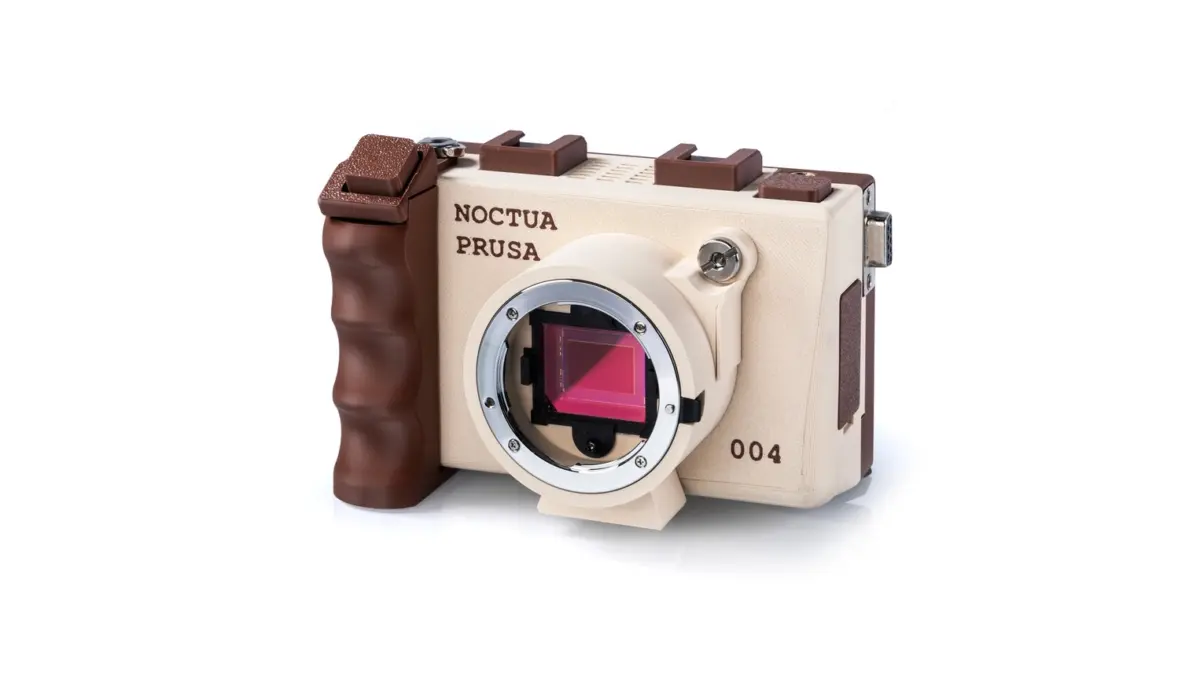
Enter the CAIM1, an upcoming hardware device engineered to fight back at the absolute point of origin: the camera sensor itself. Developed by privacy and cryptographic hardware startup Caim, the CAIM1 positions itself as the world’s first camera designed to mathematically attest to the human origin of recorded moments the exact millisecond the record button is pressed. By combining rigorous hardware-level encryption with a decentralized, immutable verification ledger, the device offers physical, openly verifiable proof that captured footage is authentic.
Yet, beyond its cryptographic ambitions, the CAIM1 has captured the tech world’s attention for a surprisingly analog reason: its thermal management system. Pushing high-end processors to their absolute thermal limits while simultaneously handling 4K video recording at 60 frames per second and real-time cryptographic proof generation inside a compact, mostly enclosed chassis requires serious cooling. To solve this engineering bottleneck, Caim turned to an unexpected partner—Noctua, the Austrian engineering firm universally revered by PC enthusiasts for manufacturing the quietest, highest-performing cooling fans in the gaming hardware ecosystem.
This convergence of high-stakes cryptographic verification, cutting-edge camera engineering, and enthusiast-grade PC cooling hardware highlights an evolving technological landscape. As artificial intelligence threatens to consume our shared perception of reality, the tools required to safeguard truth are pulling from unexpected corners of the hardware industry.
Detailed Chronology: Anatomy of a Cryptographic Camera
The genesis of the CAIM1 camera represents a convergence of rising geopolitical and social anxiety over deepfakes and the maturation of secure hardware enclaves. While software-based watermarking and post-capture metadata tracking have existed in various forms for years, they remain inherently vulnerable to tampering, stripping, and adversarial AI manipulation. Caim recognized that if humanity is to preserve a verifiable record of physical reality, the trust layer must be built directly into the silicon and hardware architecture before the data ever touches editable storage.
Phase 1: Architectural Foundations and the Threat of Synthetic Media
Long before the partnership with Noctua became public knowledge on social media channels, Caim set out to solve a core hardware paradox: capturing and processing high-bitrate video while simultaneously computing cryptographic signatures demands significant computational overhead. This heavy workload generates intense thermal energy.
In traditional digital cinema and mirrorless cameras, manufacturers manage heat through passive aluminum heatsinks, magnesium alloy chassis dissipation, or, in high-end cinema rigs, active cooling fans. However, active cooling in cameras has historically been plagued by mechanical vibration, audible acoustic noise that interferes with onboard audio microphones, and high electrical draw that drains batteries rapidly.
To achieve uncompromised cryptographic security, Caim partnered with security hardware innovators Tropic Square to integrate the TROPIC01 secure element. From the precise moment a user hits the record button, all data sessions are locked behind an auditable, hardware-encrypted pipeline. This ensures that the captured session belongs exclusively to the operator and cannot be intercepted or spoofed downstream.
Phase 2: The Thermal Bottleneck and the Noctua Partnership
As prototyping advanced toward the CAIM1’s target specification of 4K capture at 60 frames per second alongside instantaneous cryptographic proof generation, engineers hit a wall. Confining these high-performance processors inside a rugged, mostly enclosed portable shell meant that passive cooling was no longer mathematically viable. The hardware required active airflow to prevent thermal throttling or catastrophic system failure.
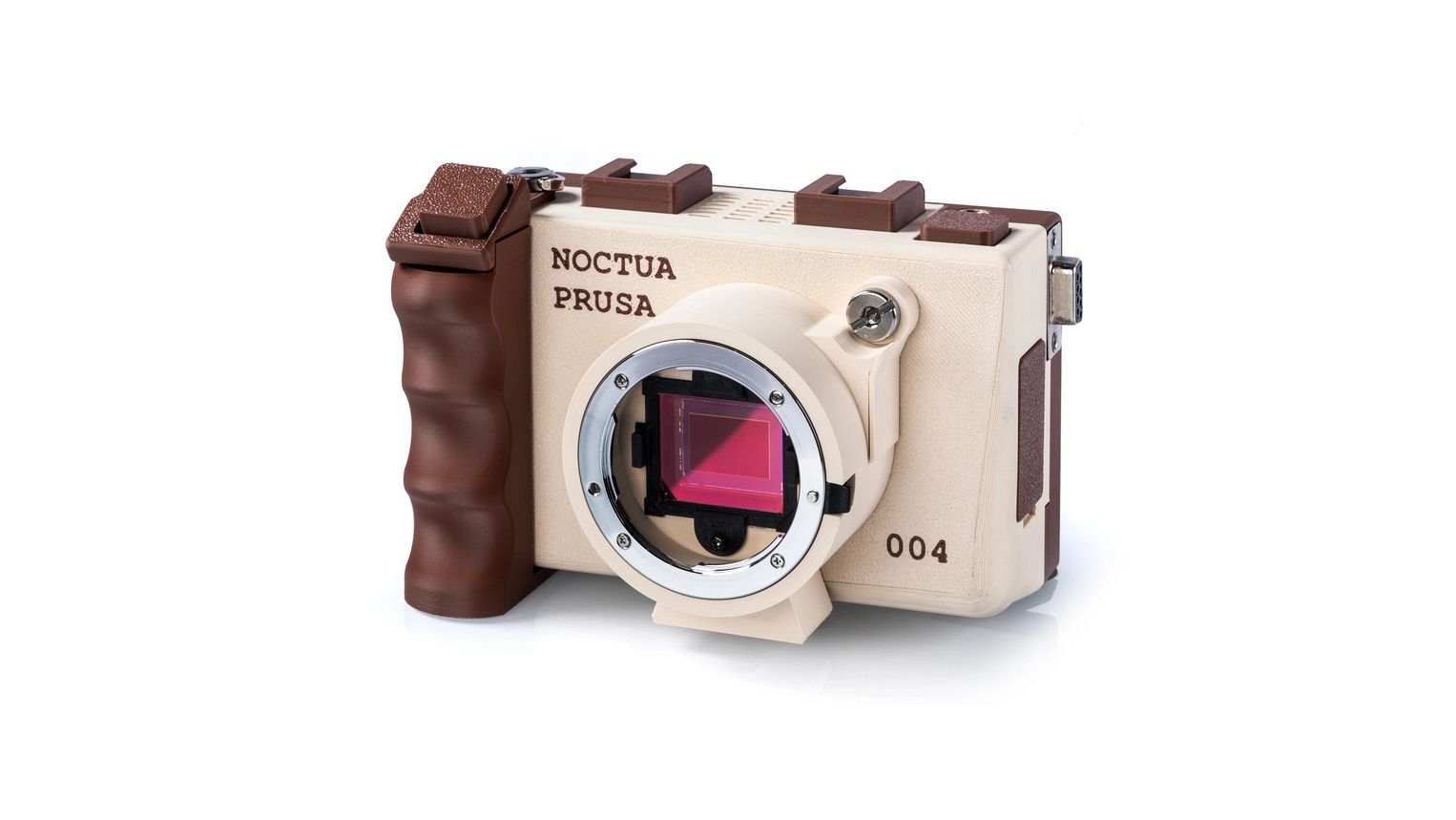
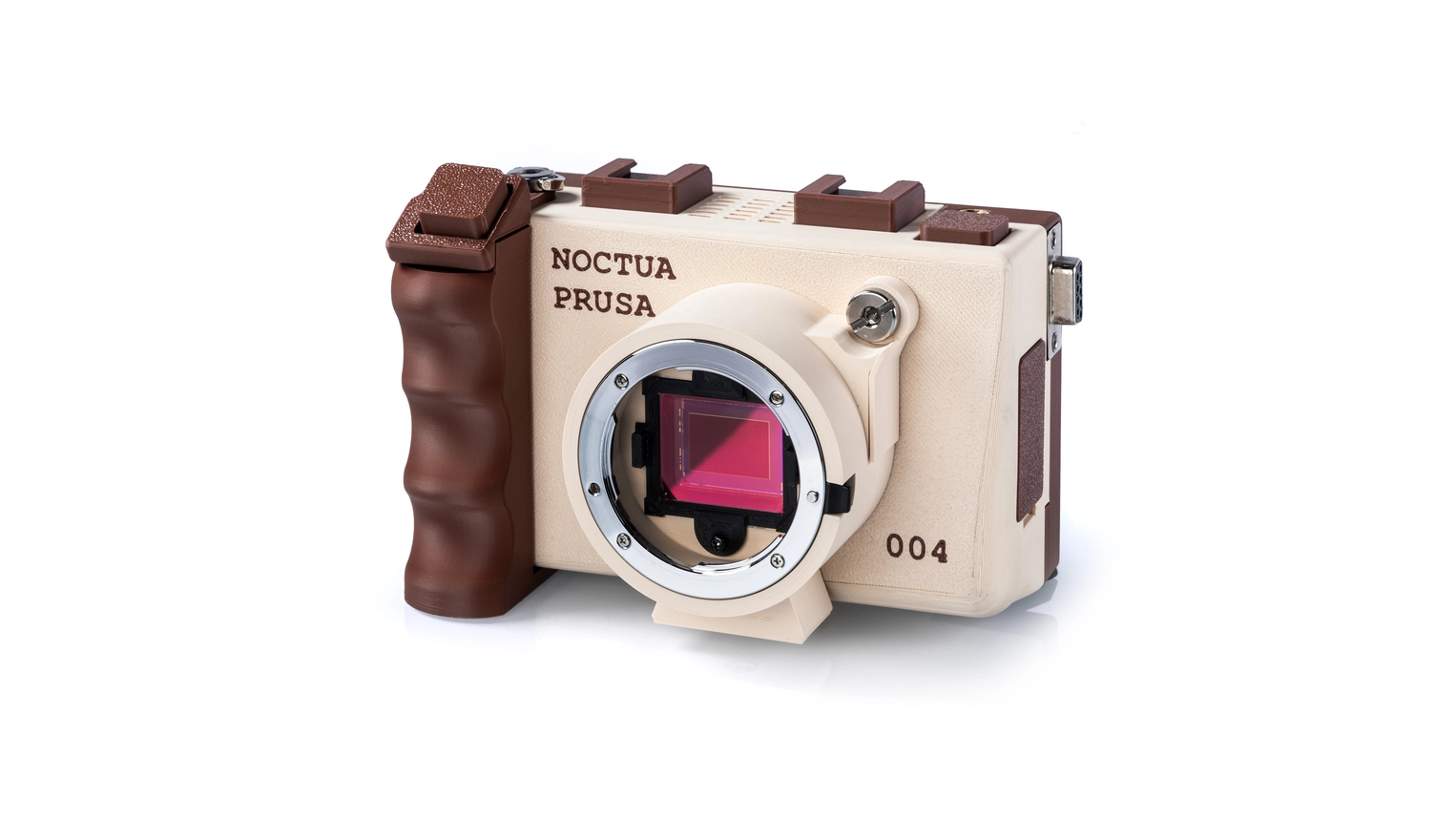
The breakthrough came when Caim’s hardware team looked outside traditional photography supply chains and into the realm of PC enthusiast hardware. The public revelation materialized on Noctua’s official X (formerly Twitter) account, where the company showcased the interior of the CAIM1 chassis. The focal point of the reveal was a miniature, unmistakably brown-and-beige fan sitting comfortably inside the camera’s tightly packed interior.
The optical sensor housing sat separately, stripped away for diagnostic clarity, highlighting the camera’s "Bring Your Own Lens" (BYOL) modular design philosophy. Rather than locking users into a proprietary optical ecosystem, the CAIM1 relies on standard lens mounts, shifting its entire value proposition away from glass and onto the uncompromising integrity of its internal processing and cryptographic pipeline.
Supporting Context & Metrics: Engineering the Silent Guardian
Selecting the correct fan for a specialized, security-focused camera is a delicate balancing act. In a desktop gaming PC, a slightly noisy fan can be masked by game audio or headset chatter. In a professional recording device, any mechanical vibration can introduce micro-jitters to the image sensor, while audible acoustic noise ruins audio tracks.
The Engineering Breakdown of the NF-A4x10 5V PWM
Noctua published an extensive technical breakdown detailing why they selected the NF-A4x10 5V PWM micro-fan for the CAIM1 architecture. The fan represents a masterclass in miniaturized fluid dynamics and motor engineering, boasting several critical specifications:
- Compact Form Factor: Designed specifically for space-constrained environments where standard cooling solutions cannot fit.
- Optimized Aerodynamics: Utilizes advanced blade geometry to balance high static pressure with respectable volumetric airflow, forcing air through dense internal heatsink fins.
- Precise PWM Speed Control: Allows the system firmware to dynamically scale fan RPM based on real-time thermal loads, running silently during low-intensity standby and ramping up only during heavy 4K cryptographic encoding.
- Acoustic and Vibration Suppression: Incorporates advanced bearing systems and specialized motor drive electronics to eliminate high-pitched tonal whining and physical vibrations.
Overcoming Electrical Hurdles
One of the most profound insights shared by Noctua engineers involved the choice of voltage rating. Designing for a portable, battery-conscious device meant avoiding unnecessary power conversion stages.
"Using a conventional 12 V fan would have required an additional step-up converter," Noctua noted in its technical documentation. "This would of course take up more room and chew through more of the battery life, plus create more electrical switching noise and ripple."
By utilizing a native 5V PWM variant, Caim’s engineers saved precious internal volume, preserved valuable battery capacity, and eliminated electrical noise that could otherwise corrupt sensitive analog-to-digital conversions or interfere with the camera’s onboard cryptographic processors.
The Broader Trend: Noctua Outside the PC Case
The integration of Noctua cooling solutions into non-traditional hardware markets is part of a broader industry trend. For years, PC enthusiasts have modded Noctua fans into home audio amplifiers, 3D printers, network routers, and custom game consoles. More recently, manufacturers have begun officially partnering with the brand, such as seen in specialized gaming mice like the Pulsar Feinmann F01 Noctua Edition. The CAIM1 camera, however, represents one of the most mission-critical implementations of enthusiast-grade cooling in a professional security device to date.
Official Statements & Technical Architecture
The architecture underpinning the CAIM1 is designed to withstand rigorous scrutiny from digital forensic experts, journalists, and legal investigators. Caim’s foundational design philosophy rests on three pillars: absolute capture integrity, hardware-locked security, and decentralized public verification.
The Hardware-Encrypted Pipeline
According to official project disclosures, the integration of Tropic Square’s TROPIC01 secure element creates an unbroken chain of custody. When asked about how the device ensures authenticity, Caim representatives emphasized that software watermarks can be scrubbed or forged by modern neural networks. Physical hardware, however, cannot be easily duplicated without leaving forensic evidence.
"We’ve partnered with leading security hardware innovators Tropic Square to integrate TROPIC01," Caim stated in technical briefs. "From the moment you hit record, your sessions are locked behind an auditable hardware-encrypted pipeline, ensuring that what you capture belongs exclusively to you."
Decentralized Verification Infrastructure
Capturing secure footage is only half the battle; the proof must also be accessible, immutable, and independent of any single corporate entity. The CAIM1 addresses this by anchoring its cryptographic proofs onto a decentralized, immutable infrastructure. When a video file is generated, an accompanying cryptographic proof is published to an open ledger. Anyone—from a newsroom editor to a court of law—can independently query the ledger to verify that the footage was captured by a genuine CAIM1 device at the precise geographic location and timestamp claimed, entirely free from post-processing manipulation.
Future Outlook: Can Hardware Save Visual Truth?
As we look toward the horizon of generative media, the battle between synthetic fabrication and authentic documentation will define the next decade of digital interaction. Tools like OpenAI’s Sora, advanced diffusion models, and real-time neural rendering engines mean that seeing is no longer believing.
Initiatives like the Coalition for Content Provenance and Authenticity (C2PA) are attempting to establish software standards for digital provenance, but software-only standards suffer from the "trust anchor" problem: if a bad actor gains access to a private signing key, the entire system collapses. Hardware-enforced chains of custody, pioneered by devices like the CAIM1, offer a much more resilient defense line.
However, significant hurdles remain. A "Bring Your Own Lens" camera targeted at cryptographic verification occupies a niche market. For these anti-AI measures to truly stem the tide of misinformation, the technology must eventually scale down to consumer smartphones, professional broadcast cameras, and body-worn police equipment.
Furthermore, bad actors will inevitably attempt physical and electronic attacks against hardware-encrypted pipelines, testing the limits of secure elements like the TROPIC01 and the thermal endurance managed by micro-fans like Noctua’s NF-A4x10.
Ultimately, the CAIM1 serves as a fascinating proof-of-concept for how diverse engineering disciplines must collaborate to preserve reality. By uniting high-end cryptography, secure silicon design, modular camera architecture, and—yes—world-class PC cooling fans, innovators are proving that the fight for truth is not just a software problem. It is a mechanical, physical battle being fought down to the very silicon inside our devices.