Executive Overview
Forty years after its theatrical debut, The Transformers: The Movie (1986) remains the uncontested pinnacle of the sprawling, decades-old Transformers franchise. Despite the financial dominance of subsequent live-action iterations directed by filmmakers like Michael Bay, and the heartfelt modern animated nods found in projects like Bumblebee and Transformers One, the original animated feature stands completely unmatched.
As the film returns to North American cinemas for a special 40th-anniversary screening courtesy of Fathom Events, it offers both lifelong devotees and uninitiated modern audiences a chance to re-examine a high-water mark of 1980s animation. Far from a mere feature-length commercial designed to cycle inventory on toy store shelves, the 1986 film is a masterclass in pacing, tone-setting, and world-building. Driven by an all-star voice cast, a synthesizer-heavy rock score that defined a generation, and an unapologetically high-stakes narrative, The Transformers: The Movie continues to outshine its modern counterparts by prioritizing raw emotional resonance, kinetic choreography, and artistic ambition over glossy, generic CGI.
Detailed Chronology and Narrative Breakdown
Like many landmark cinematic stories of its era, The Transformers: The Movie relies on a classic three-act structure. However, its narrative pacing varies wildly, moving from airtight, pitch-perfect kinetic action to sprawling, campy cosmic odysseys, before culminating in an abrupt yet triumphant finale.
Act I: The Setup and the Fall of Autobot City
The first 25 minutes of the film represent a near-flawless execution of cinematic pacing. Opening against the grim, atmospheric backdrop of the Decepticon-occupied planet Cybertron, the narrative quickly shifts to the outskirts of Autobot City on Earth. Introducing audience-surrogate Daniel Witwicky and the brash, hot-headed young Autobot Hot Rod, the film wastes zero time establishing high-stakes danger.
What follows is an unrelenting masterclass in action choreography:
- A coordinated, devastating Decepticon sneak attack.
- Hot Rod recognizing the deception and intercepting the threat.
- The Constructicons merging into the towering, destructive force known as Devastator.
- Optimus Prime and the Dinobots swooping in at the eleventh hour to turn the tide.
This sequence delivers zero dull moments. It effortlessly integrates character-building beats, such as the veteran Kup dispensing battlefield wisdom, and Blaster asserting an undeniable commanding presence. The centerpiece of this act remains what many consider the single most badass action sequence in franchise history. Uttering the iconic line, "Megatron must be stopped, no matter the cost," Optimus Prime single-handedly dismantles half of the Decepticon army before engaging his arch-rival in a brutal, hand-to-hand death match.
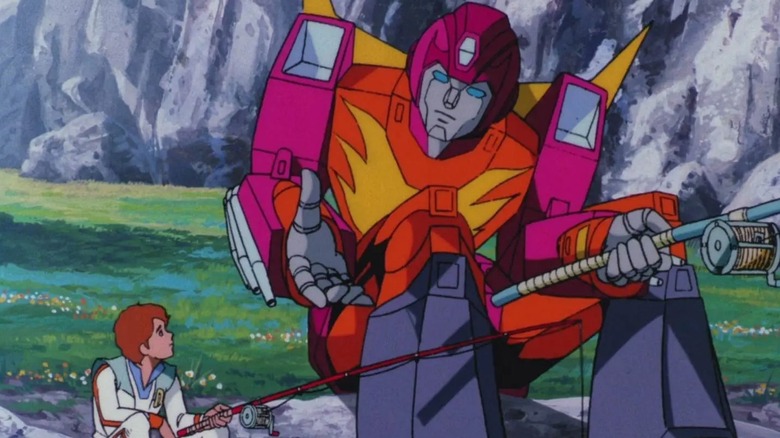
The act concludes with the tragic, controversial death of Optimus Prime—a narrative choice so traumatic that it sent shockwaves through generations of young viewers, prompting decades of fan lamentation and corporate apologies.
Act II: The Interstellar Odyssey and Mid-Movie Camp
Following the catastrophic events at Autobot City, the narrative splinters. The surviving Autobots are forced to flee Earth. One faction—featuring Hot Rod, Kup, and the Dinobots—journeys into uncharted space, while Ultra Magnus, Arcee, Springer, and Daniel head in another direction, relentlessly pursued by the newly reincarnated Galvatron.
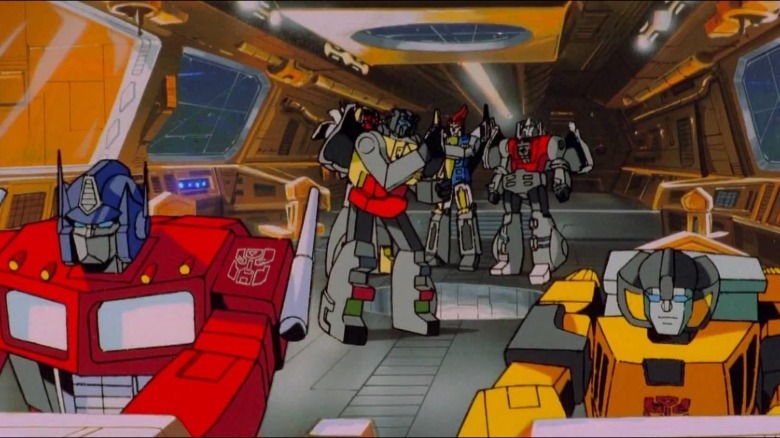
While this middle act serves a vital narrative purpose—highlighting Hot Rod’s gradual maturation and Ultra Magnus’s crushing insecurity as he struggles to carry the burden of the Matrix of Leadership—it suffers from structural bloat. The introduction of the Junkions on the planet Junk introduces a heavy dose of 1980s-inspired comedic camp. Though iconic for their television-commercial-quoting speech patterns and the inspired casting of Eric Idle as Wreck-Gar, these moments disrupt the film’s momentum. Similarly, encounters with giant robotic sea-squids and the alien tribunal known as the Quintessons feel tonally disjointed, pulling focus from the core ideological struggle between the Autobots and Decepticons.
Act III: The Wrath of Unicron and the Birth of a New Leader
The final act converges on Cybertron as the planet-eating titan Unicron reveals his true, gargantuan form. Forced to reckon with total annihilation, the surviving Autobots and Decepticons briefly align to protect their home world.
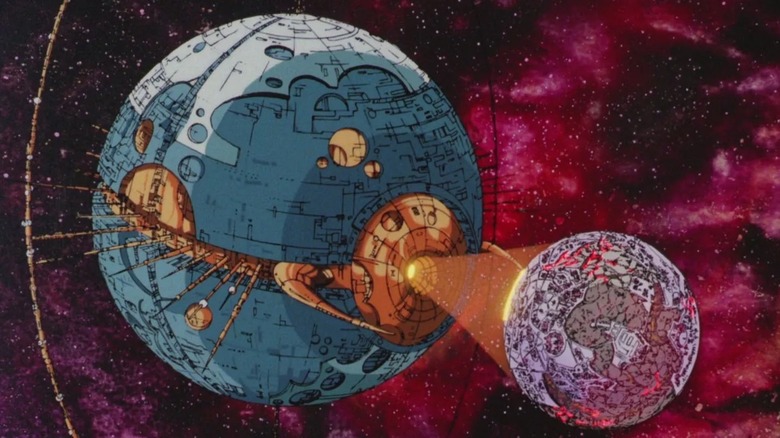
Though the grand finale successfully delivers emotional catharsis, it suffers from noticeable compression. Fans are left wishing for extended sequences showcasing the sheer savagery of the Dinobots or more meaningful cameos from classic characters who were unceremoniously eliminated in the film’s opening act. Most notably, the final confrontation between the newly minted Rodimus Prime and Galvatron is frustratingly brief. After spending the entire film building toward Hot Rod’s ascension, his final duel concludes in a mere couple of hits. It is a pacing sacrifice made strictly to keep the runtime at a brisk, digestible 1,25 minutes—a testament to the commercial pressures governing 1980s studio animation.
Supporting Context, Voice Cast, and Musical Legacy
What elevates The Transformers: The Movie from a simple Saturday-morning cartoon spin-off into an enduring cult classic is its uncompromising production values, spearheaded by an legendary voice ensemble and an unforgettable soundtrack.
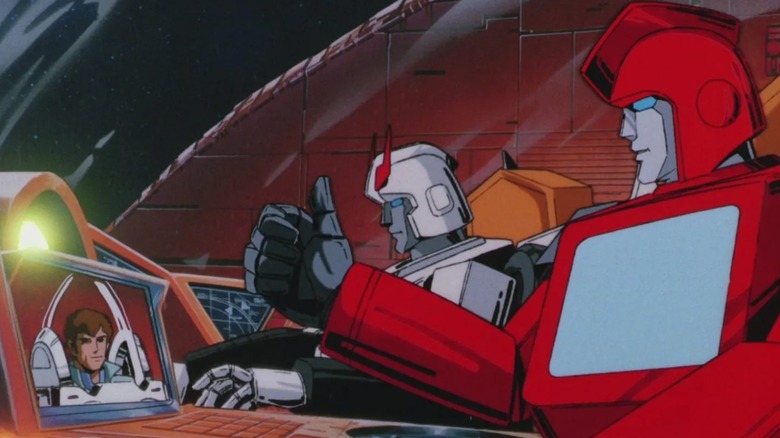
The Voice Cast: A Convergence of Legends
While retaining core Generation 1 voice actors like Peter Cullen (Optimus Prime) and Frank Welker (Megatron, Soundwave) was essential, the production team elevated the project by recruiting Hollywood royalty:
- Orson Welles as Unicron: In what would tragically be his final cinematic performance—recording his lines just five days before his passing—Welles brought an otherworldly, Shakespearean gravitas to the planet-eating menace. His booming, theatrical delivery immortalized Unicron as one of the most terrifying villains in sci-fi history.
- Leonard Nimoy as Galvatron: Fresh off his iconic runs in the Star Trek universe, Nimoy injected Megatron’s resurrected form with a razor-sharp, unhinged intensity that made him infinitely more dangerous.
- Robert Stack as Ultra Magnus: The esteemed actor brought a weary, noble dignity to the role, brilliantly portraying a soldier crushed by the immense responsibility of leadership.
- Judd Nelson as Hot Rod: Fresh from the set of The Breakfast Club, Nelson imbued the youthful protagonist with an authentic, relatable human energy, charting his painful evolution from a reckless adolescent into a reluctant commander.
The Soundtrack: Synthesizers and Heavy Metal
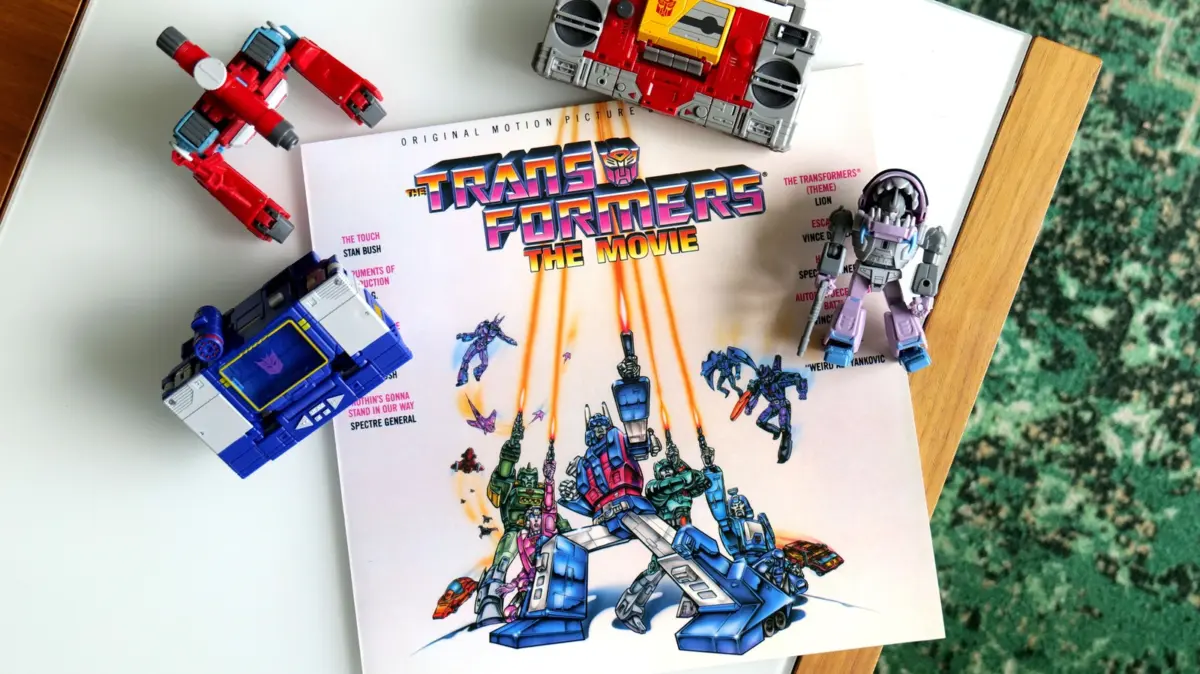
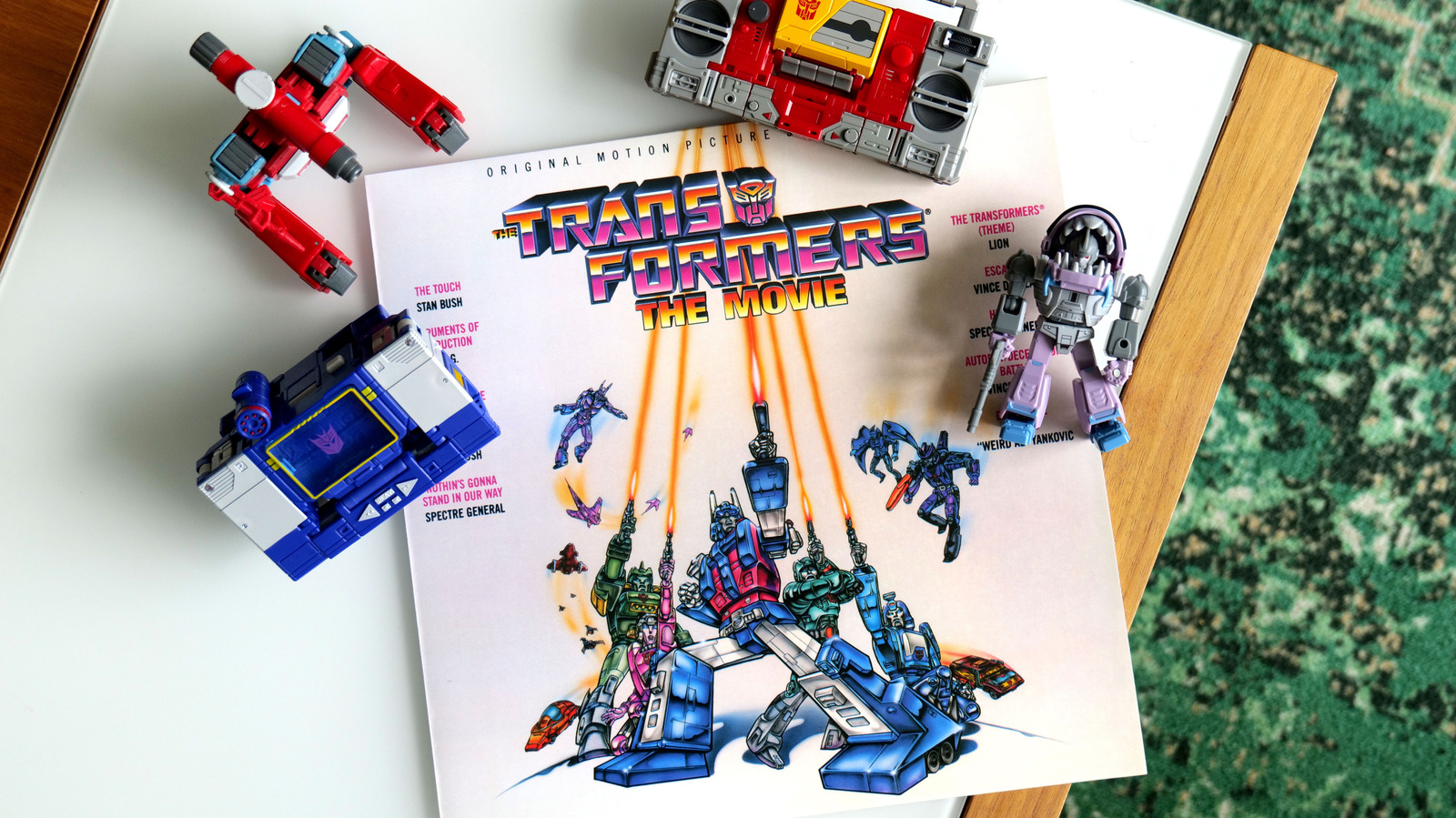
Vince DiCola’s musical score broke entirely from the orchestral brass and string arrangements of the television series, leaning instead into aggressive synthesizer arrangements and driving rock rhythms. Tracks like NRG’s "Instruments of Destruction" and "Weird Al" Yankovic’s comedic "Dare to be Stupid" balance high-octane tension with clever levity.
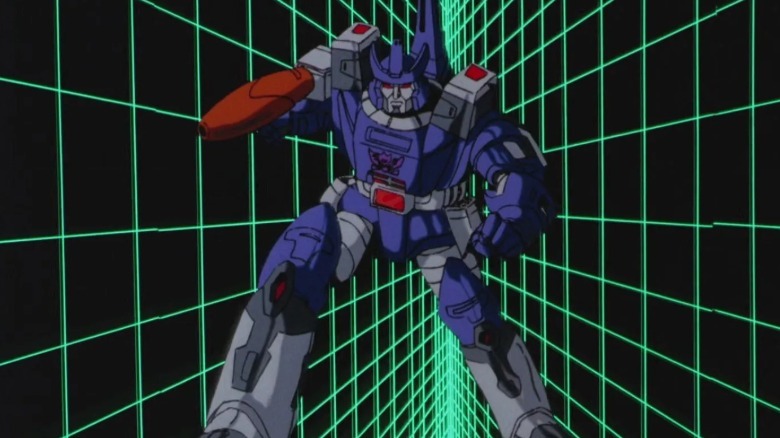
However, it is Stan Bush’s iconic anthems—"Dare" and "The Touch"—that define the soul of the film. These soaring, inspirational power ballads capture the emotional weight of the heroes’ struggle, transforming standard animated action beats into transcendent cinematic moments.
Official Statements and Industry Impact
The legacy of The Transformers: The Movie is inextricably linked to its commercial genesis. Conceived primarily to clear out existing toy inventory and introduce a new wave of merchandise for the upcoming television season, the film’s aggressive culling of legacy characters remains a defining moment in animation history.
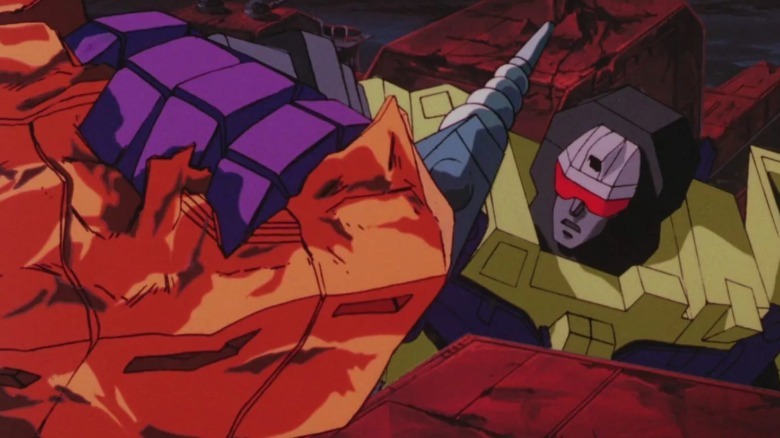
Speaking on the cultural impact of the film’s brutal narrative choices, pop-culture historians and Hasbro representatives have repeatedly acknowledged the unprecedented nature of Prime’s execution. In retrospective interviews surrounding franchise milestones, executives noted that killing off the undisputed hero of a children’s franchise just two years after its inception was a high-risk gamble that fundamentally altered fan expectations.
Furthermore, the recent passing of legendary voice actor Peter Cullen has cast a poignant shadow over the franchise. Reflecting on Cullen’s career, industry tributes frequently recall the foundational advice given to the actor by his brother, Larry Cullen, which birthed the definitive voice of Optimus Prime:
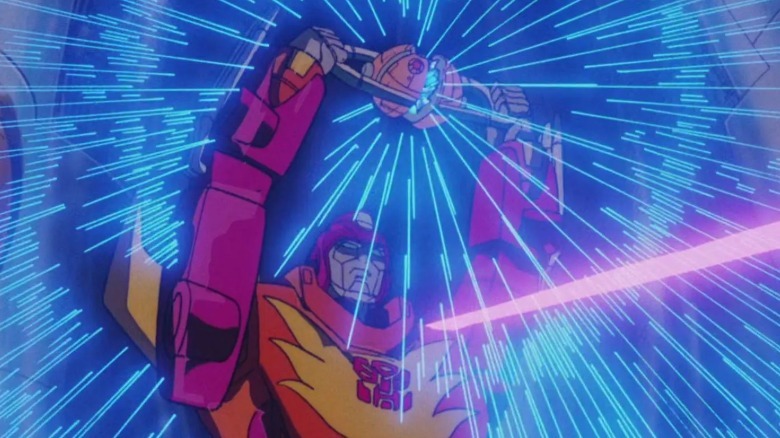
"If you’re going to be a hero, be a real hero… be strong enough to be gentle."
This philosophy became the emotional bedrock not only of Cullen’s decades-long performance, but of the very ethos that separates the 1986 classic from its louder, more cynical modern cinematic descendants.
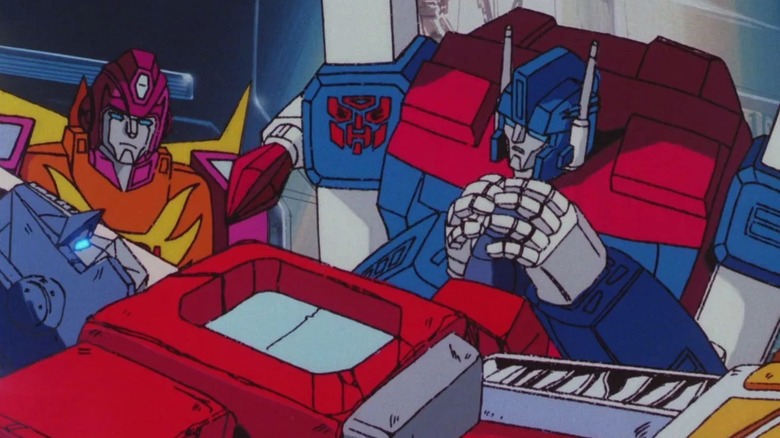
Future Outlook: The 40th Anniversary Re-Release and Optimus Prime: Awakening
As The Transformers: The Movie storms back into theaters for its milestone anniversary, it brings with it an unprecedented bonus for long-time fans: a 12-minute animated short titled Optimus Prime: Awakening.
Early reports from theatrical screenings indicate that the short is deeply polarizing, dividing fans into starkly opposing camps. Devoted followers have praised it as a heartfelt love letter to Peter Cullen’s enduring legacy and the indomitable spirit of the Autobot leader. Conversely, critics and purists have debated its narrative choices, with some viewing its dramatic tone as a tragic departure from classic continuity. This intense polarization proves that, even after four decades, the emotional stakes tied to these characters remain as volatile and potent as ever.
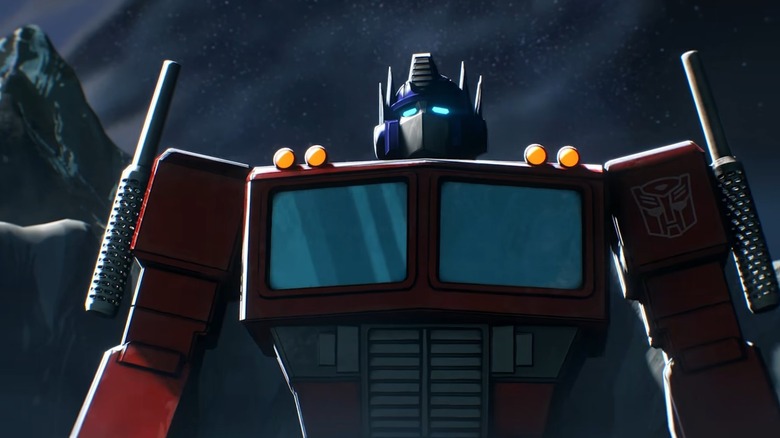
Looking forward, the enduring appeal of the 1986 film serves as a vital lesson for contemporary Hollywood. While modern blockbusters frequently rely on dizzying, hyper-detailed computer-generated effects, The Transformers: The Movie proves that true cinematic longevity stems from bold storytelling, unforgettable character arcs, practical aesthetic choices, and genuine heart. As a new generation of fans experiences the neon-drenched skies of Cybertron and the blistering guitar solos of Stan Bush on the big screen, The Transformers: The Movie firmly retains its crown as the undisputed king of mechanical combat.