Executive Overview
In the fast-paced, high-stakes ecosystem of B2B software and recurring revenue enterprises, founders frequently mistake operational mistakes for strategic regrets. Mistakes are the inevitable collateral damage of building a business—miscalculated product roadmaps, botched marketing campaigns, or missed quarterly targets that demand immediate firefighting before management dusts itself off and moves forward.
Regrets, however, are an entirely different beast. They represent the quiet compromises, the calculated omissions, and the roads not taken. These are the moments when a founder inherently knew the right path, recognized that the execution barrier was low, and understood the massive downstream upside—yet chose inaction.
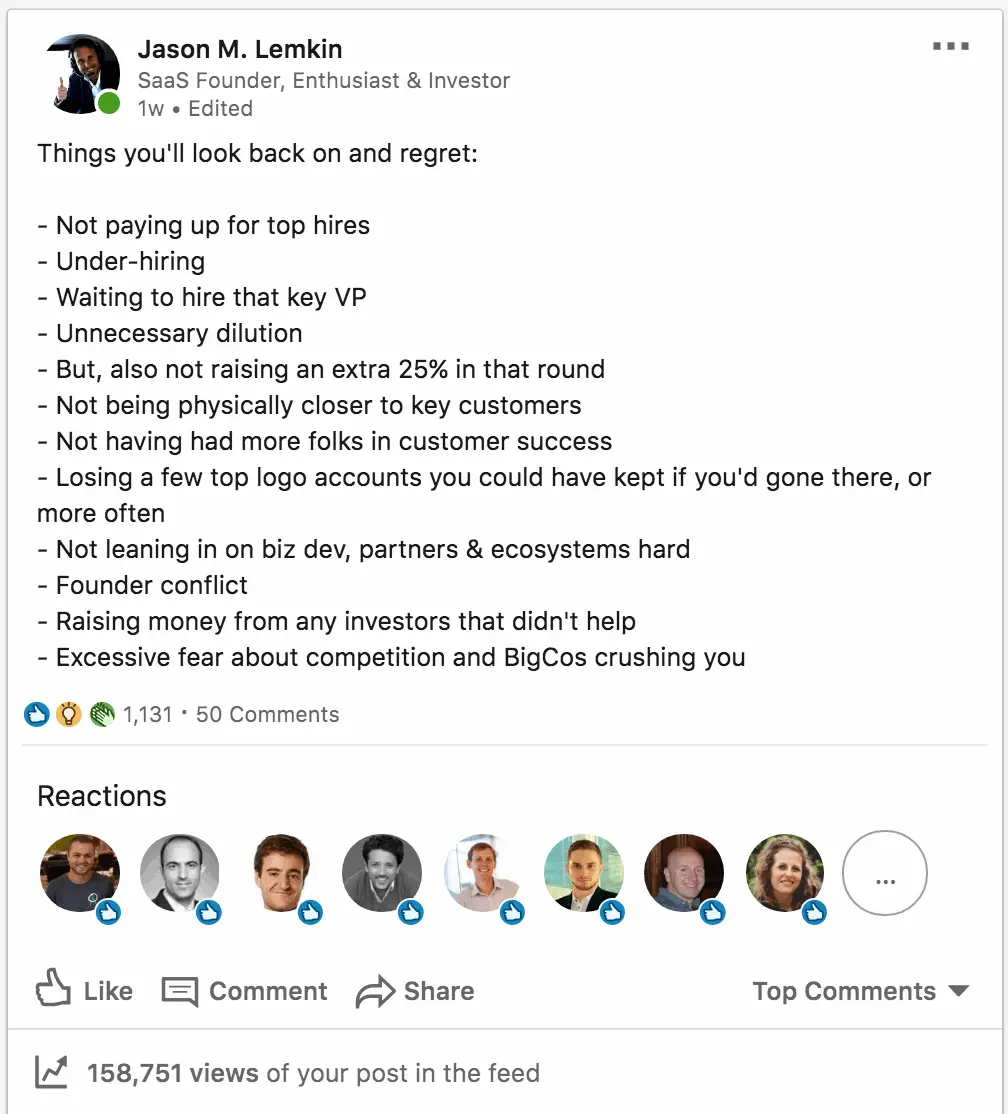
In recurring revenue models, these omissions compound exponentially. A missed executive hire, an under-funded capital raise, or a neglected enterprise client today can manifest as millions of dollars in lost Annual Recurring Revenue (ARR) three to five years down the line. To unpack this phenomenon, veteran SaaS investor and SaaStr founder Jason Lemkin synthesized a masterclass on the dozen most pervasive regrets that plague B2B founders long after they have achieved commercial success. By examining these pitfalls, leaders can inject vital momentum into their operations today, hedging against the silent killers of enterprise growth.
Detailed Chronology: The Lifecycle of Strategic Oversight
The trajectory of a B2B startup unfolds in distinct phases, each harboring unique opportunities for strategic regret. Understanding how these oversights manifest chronologically illuminates why early-stage decisions cast such long shadows over mature enterprises.
Phase I: Foundation and Talent Acquisition (Milestones 1–3)
During the nascent stages of a startup, frugality is often worn as a badge of honor. Founders bootstrap, wear multiple hats, and attempt to stretch capital as far as humanly possible. Unfortunately, this mindset frequently bleeds into catastrophic talent management.
1. Under-Hiring and Refusing to Pay for Top-Tier Talent
The single most pervasive financial delusion in early-stage B2B is the belief that hiring junior individual contributors saves money. While a junior content marketer commands a fraction of the direct compensation package required by a seasoned Vice President of Demand Generation, the math breaks down upon closer inspection. A world-class VP of Demand Gen who generates $1 million in net-new pipeline within their first year is empirically more cost-effective than a junior hire who produces zero attributable pipeline. Founders must stop penny-pinching on foundational leadership roles. Premium talent pays for itself through immediate, accretive pipeline generation and operational autonomy.
2. Waiting Too Long to Hire Key Executives
Closely linked to under-hiring is the fatal delay in bringing core VPs on board. While timing is undeniably delicate, hiring a top-tier executive slightly early yields infinitely better outcomes than bringing them on late. Waiting to hire a Vice President of Engineering to save a few dollars inevitably leads to mounting technical debt that cripples product velocity. Delaying a VP of Customer Success allows flagship accounts to quietly slip away to competitors. As a rule of thumb, high-growth B2B startups should aim to secure their core executive suite by the time they hit $1 million in ARR.
Phase II: Capital Structure and Market Proximity (Milestones 4–6)
As a company transitions from initial traction to scaling, the friction points shift outward toward financing structures and customer engagement models.
3. Unnecessary Dilution vs. Under-Raising
Founders often find themselves trapped in a paradox of venture capital. On one hand, the proliferation of private capital sources tempts founders to raise rounds they fundamentally do not need, resulting in egregious, unnecessary equity dilution. Conversely, founders frequently make the opposite mistake during legitimate fundraising cycles: raising too little capital because they assume subsequent rounds will be easier and priced higher. Market data demonstrates that roughly two-thirds of high-growth B2B companies ultimately require 25% more capital than their initial projections dictate. Securing that buffer—even if it sits untouched in a secondary reserve account—provides the vital runway needed to weather unexpected macroeconomic squalls.
4. The Cost of Remote Isolation from Key Customers
In an era dominated by remote work and video conferencing, first-time founders frequently commit the cardinal sin of staying behind their screens. Competitors who willingly board flights to meet prospects in person consistently win deals. More critically, failing to conduct in-person Quarterly Business Reviews (QBRs) with existing enterprise clients breeds vulnerability. For foundational "whale" accounts yielding high Annual Contract Values (ACVs), geographic proximity is a strategic imperative. Placing a dedicated general manager or customer success executive directly in key hubs like London, New York, or Seoul ensures deep integration, minimizes churn, and maximizes expansion revenue.
Phase III: Ecosystem Expansion and Operational Defense (Milestones 7–12)
In the mature scaling phase, the battleground shifts from basic product-market fit to ecosystem dominance, talent retention, and competitive positioning.
5. Neglecting Customer Success and Account Defense
Startups routinely overstaff sales development while starving Customer Success (CS). For B2B vendors enjoying net-negative churn, the initial sale is merely the opening chapter of a decade-long commercial relationship. Founders universally regret failing to scale their CS teams early enough. Establishing a metric of at least one dedicated CS professional per $500,000 in ARR guarantees retention. Furthermore, failing to fiercely protect flagship enterprise logos—such as Google, Salesforce, or Shopify—triggers a triple blow: the immediate loss of revenue, the loss of brand prestige, and the forfeiture of a decade’s worth of downstream referrals tied to those marquee names.

6. Ignoring Business Development and Platform Ecosystems
Building native integrations for major platforms like Salesforce, Slack, or Shopify can feel like a grueling, unrewarding exercise during the early months when zero leads materialize. However, market winners play the long game. The moment a startup achieves even marginal traction on a major ecosystem platform, management must hire a dedicated head of business development. Failing to lean into partner channels early allows nimbler competitors to box you out of critical integrations, permanently capping your addressable market.
7. Tolerating Founder Conflict and Misaligned Investors
Internal toxicity is an existential threat to early-stage ventures. While minor friction among co-founders is normal, keeping a toxic or disengaged founder on board for even a month longer than necessary inflicts compounding damage on team morale and corporate momentum. Similarly, accepting capital from passive investors who add zero strategic value is a misuse of precious cap table real estate. Every fractional percentage of equity surrendered must purchase tangible operational leverage, network access, or mentorship.
Supporting Context & Metrics: The Compounding Cost of Inaction
To contextualize these strategic missteps, industry benchmarks and venture capital observations underscore how minor oversights metastasize into existential threats over a 3-to-5-year horizon.
| Strategic Domain | Common Misstep | 3–5 Year Downstream Impact | Corrective Action |
|---|---|---|---|
| Talent Acquisition | Hiring junior individual contributors instead of seasoned VPs. | Stagnant pipeline generation and unmanaged technical debt. | Budget for premium leadership; expect immediate ROI from accretive hires. |
| Capital Management | Under-raising by 25% during venture rounds. | Premature cash crunches requiring emergency down-rounds or fire sales. | Secure a dedicated operational buffer to extend runway by 3 to 9 months. |
| Customer Success | Under-staffing CS relative to sales headcount. | Silent churn of whale accounts and loss of expansion revenue. | Maintain a baseline ratio of at least one CS professional per $500k in ARR. |
| Ecosystem Strategy | Delaying dedicated business development hires for platform apps. | Permanent exclusion from dominant enterprise software marketplaces. | Hire a dedicated partner lead upon achieving initial platform traction. |
The math of recurring revenue is unforgiving. A single missed enterprise renewal or an unaddressed structural inefficiency does not merely subtract from today’s balance sheet; it erodes the foundational compound interest of the business.
Official Insights & Industry Perspectives
The empirical foundations of these lessons are drawn from decades of observing venture-backed startups navigate the treacherous waters of the B2B SaaS landscape. Seasoned investors and operational leaders emphasize that execution velocity and structural discipline separate market leaders from cautionary tales.
Industry consensus highlights that excessive anxiety over well-funded competitors is frequently misplaced. While enterprise buyers naturally gravitate toward established brand names for risk mitigation, agile startups possess a potent strategic weapon: velocity.
"If you can push out 100 high-value features and integrations a year while a legacy competitor sluggishly deploys 20, you will carve out defensible market share over time," industry observers note.
Agility, paired with relentless customer proximity and uncompromising talent standards, allows agile challengers to outmaneuver bureaucratic incumbents. Conversely, founders who paralyze themselves by obsessing over competitor press releases rather than shipping product velocity inevitably fall behind.
Future Outlook: Translating Regret into Execution
As the B2B landscape evolves—increasingly supercharged by artificial intelligence and hyper-specialized vertical software—the velocity of business demands absolute operational clarity. The margin for strategic error is shrinking, yet the potential upside for disciplined enterprises has never been higher.
Founders must use this diagnostic framework as an active operational audit rather than a passive retrospective. Stepping away from the administrative echo chamber of the office and engaging directly with frontline realities—whether that means boarding a flight to visit a critical partner, executing a long-overdue executive hire, or locking in a capital buffer—can fundamentally alter a company’s trajectory.
By confronting these 12 pervasive regrets head-on, modern B2B leaders can dismantle the self-imposed barriers holding their enterprises back. Acting decisively today ensures that tomorrow’s reflection is defined not by the agonizing weight of inaction, but by the undeniable momentum of a category-defining enterprise.