Executive Overview
For decades, psychological research has attempted to quantify the invisible toll of catastrophic events. When historic tragedies strike—whether the systematic horrors of the European Holocaust or the catastrophic collapse of the World Trade Center towers on September 11, 2001—the immediate physical devastation is rigorously documented. Yet, the emotional fallout often drifts into a quiet, shadowy interior space: the family home.
In this piece, a cognitive neuroscientist bridges the gap between empirical research and deeply personal history. By examining a recent study tracking the children of 9/11 first responders who suffer from Post-Traumatic Stress Disorder (PTSD), the author uncovers a universal behavioral dynamic among trauma survivors: the instinctual, protective silence of parents. Drawing a direct parallel to a childhood spent in the shadow of Holocaust survival, the article explores why parents withhold their histories, how children internalize these gaps, and what happens when the unspoken finally finds a voice.
Detailed Chronology: From Childhood Fragments to Scientific Discovery
The Architecture of Childhood Silence
The human mind often records trauma not through clear, linear narratives, but through fragments, sudden pauses, and deliberate omissions. For the author, an understanding of generational grief began in early childhood during weekend visits to grandparents’ apartments.
In these crowded rooms, while a dozen cousins turned dining room tables into imaginary transit buses, adult conversations flowed seamlessly around current events. Yet, certain boundaries were absolute. When a five-year-old child innocently asked, "Do you have cousins?" the response was stark and chillingly brief. The father looked back with a heavy, impenetrable gaze and replied: "I had cousins." No further questions were permitted. The subject was closed.
As the years passed, these jagged pieces of family history accumulated like hidden shrapnel. Before the age of eight, another fragment emerged. An older sister sat carefully scorching the edges of a blank notebook, preparing pages destined to record the mass extermination of human life for a class on the Holocaust. Driven by a child’s natural curiosity, the author borrowed a library book on the subject, only to have the mother intercept it with urgent demands for its immediate return.
"You should not read it," the mother warned. "You need to be older to deal with this."
Insisting on an emotional resilience they believed they possessed, the child retreated to a hidden corner to read and weep in solitude. The grief was real, yet it was processed entirely in isolation. The bridge between the parents’ terrifying history and the children’s burgeoning worldview had been intentionally burned, replaced by an agreement of mutual silence.
The Laboratory of Intergenerational Trauma
Decades later, these childhood memories resurfaced inside a cognitive neuroscience laboratory. The research team was designing a study to investigate the transmission of trauma across generations, focusing specifically on the aftermath of the September 11 terrorist attacks.
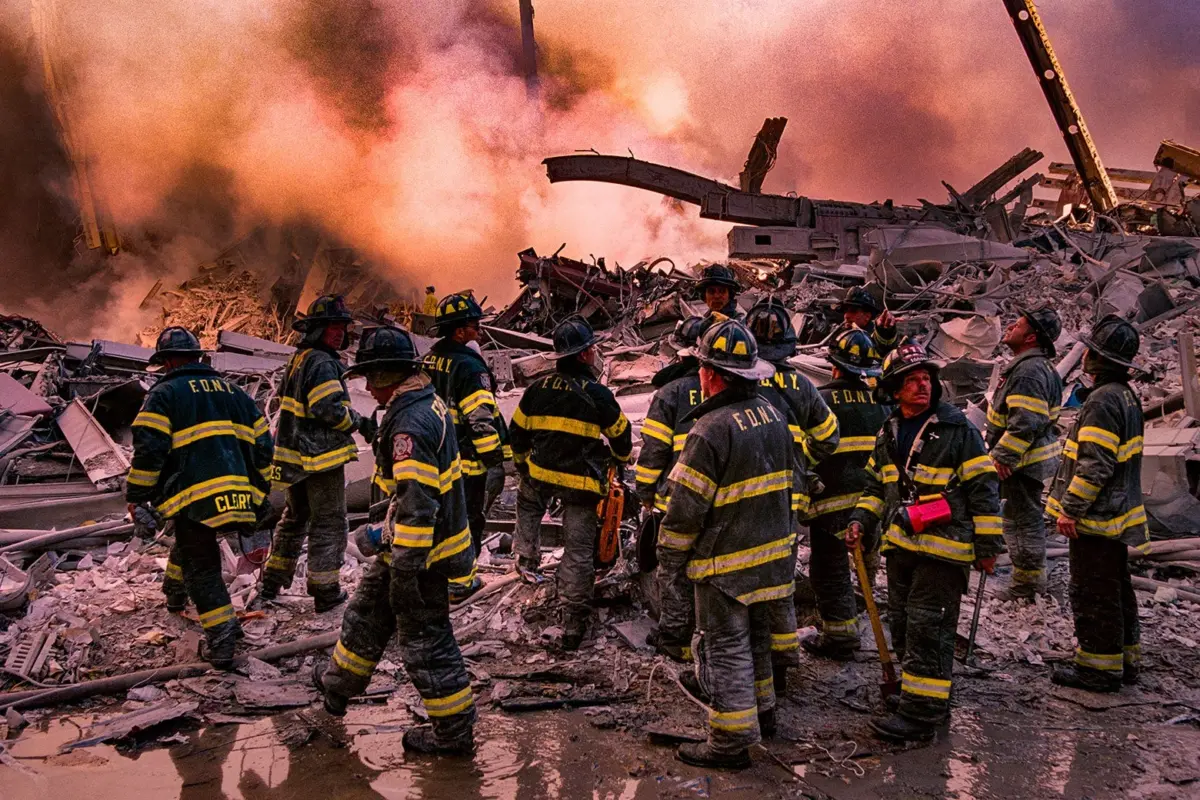
In the wake of 9/11, thousands of first responders spent weeks and months wading through the smoldering debris of the World Trade Center, breathing toxic air, recovering human remains, and witnessing unimaginable devastation. Years later, clinical evaluations revealed that nearly 20 percent of these workers continued to struggle with chronic PTSD.
The central question guiding the neuroscientists was simple yet profound: What happens to children who grow up inside a household governed by chronic, untreated parental trauma?
To answer this, researchers reached out to these aging parents two decades after the attacks, asking for permission to connect with their now-adult children. They planned to assess both generations across emotional, social, and everyday domains of functioning.
However, the team encountered an immediate, unexpected roadblock. While many parents were willing to participate themselves, they fiercely resisted involving their adult children. Some offered no rationale; others insisted their children had nothing to do with 9/11 and that the topic was entirely irrelevant to them. A vocal minority was explicit: they wanted to shield their adult offspring from memories of the attacks.
This hesitation cast a sudden, revealing light on the author’s own childhood. Were those earlier generations of survivors—and the parents of 9/11 responders—truly trying to protect their young from human atrocity? Or was the psychological cost of confronting their own trauma simply too high to bear?
Supporting Context & Metrics: The Science of Silence
To contextualize these findings, the study’s framework draws on an extensive body of psychological literature regarding trauma transmission.
- The Protective Impulse: Decades of clinical literature—particularly concerning Holocaust survivors and combat veterans—indicate that parents universally avoid sharing traumatic narratives to protect their children from fear, emotional burdens, and the premature loss of innocence.
- The Adult Miscalculation: A recurring behavioral pattern is that parents continue to view their children as vulnerable dependents long after they have reached adulthood, denying them the agency to process difficult historical truths.
- The Leakage of Trauma: Despite absolute verbal silence, children consistently sense the emotional weight of unspoken histories. Psychological studies show that unresolved parental trauma "leaks" into everyday interactions through sudden anger, emotional withdrawal, or unpredictable hyper-vigilance.
- The 9/11 Reality: In the recent 9/11 study, the children had not lived in a vacuum; most grew up in New York City and were acutely aware of the historical reality. What paralyzed the parents was not the fear of sharing historical facts, but the terror of revealing their own vulnerability, helplessness, and loss of control.
When a parent recounts trauma, they are forced to strip away the armor they rely on to project strength and security to their families. Admitting fear to an offspring shatters the illusion of invulnerability.
Official Statements & Study Insights
The remote, online nature of the study was designed to keep parent and child evaluations strictly independent, requiring no direct collaboration between family members. Yet, the mere prospect of their children engaging with a survey concerning their 9/11 service sparked deep-seated anxieties.
The breakthrough came near the conclusion of the research project, embodied in an unexpected email from a participating father.
"Our family had never spoken about what 9/11 meant to us," the father wrote, extending his gratitude to the research team. "But the study created an opportunity to do so."
The father admitted that he and his family had spent hours together reflecting on that era, acknowledging for the first time that he had no idea how profoundly his children had been impacted by both the historical event and his own silent struggle. The space to speak, he noted, had provided an unprecedented sense of emotional relief.
Key Takeaways from the Research:
- Coherence Over Concealment: When children understand the root causes of a parent’s emotional withdrawal or irritability, they replace internal self-blame with empathy.
- Breaking the Intergenerational Loop: Unspoken trauma hardens into institutionalized family silence. True resilience is not merely the capacity to endure suffering, but the eventual willingness to give that pain language.
- The Power of Retrospective Insight: Understanding a family’s history is rarely a singular event; it arrives in fragments over a lifetime, requiring later generations to revisit the silence and ask the difficult questions.
Future Outlook
The implications of intergenerational trauma research extend far beyond academic journals and clinical offices. As society encounters new waves of collective trauma—ranging from modern global conflicts to pandemics and domestic crises—the burden of how we communicate these events to future generations remains a pressing challenge.
Future psychological initiatives must focus on normalizing familial dialogues around mental health and historical grief. By providing structured, supportive frameworks for families to unpack shared histories without fear of psychological destabilization, clinical psychology can help dismantle generational silences before they take root.
Ultimately, the author’s journey—from a quiet apartment where a father said "I had cousins" to the analytical rigour of a neuroscience laboratory—suggests a universal path forward. Resilience is forged not in the absolute absence of pain, but in our growing capacity, over time, to listen closely, to ask again, and to lovingly make space for the words that were once too difficult to say.