Executive Overview
For the better part of a decade, the narrative surrounding the electric vehicle (EV) revolution has been trapped in a spiral of escalating luxury and compounding costs. As legacy automakers and ambitious startups alike chased technological supremacy—outfitting vehicles with massive battery packs, sprawling hyperscreens, and autonomous driving suites—the average transaction price for a new vehicle in the United States steadily climbed past the grim threshold of $50,000. For millions of everyday consumers, the promise of electrification has felt less like an accessible green transition and more like an exclusive club reserved for the affluent.
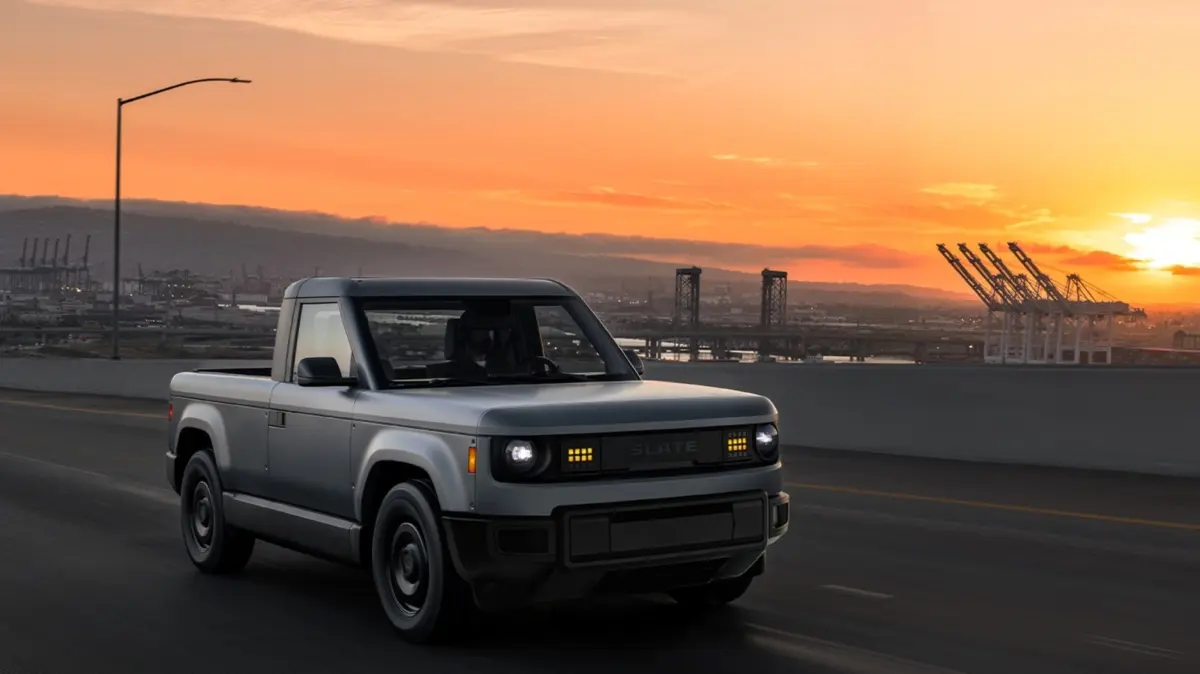
Enter Slate Auto. Operating out of Michigan, the burgeoning startup is executing a radical contrarian strategy: stripping the modern electric vehicle down to its bare essentials to achieve a base price tag of just $24,950. Affectionately dubbed the "Blank Slate," this minimalist vehicle is offered in both truck and SUV body styles. It deliberately eschews high-tech creature comforts, luxury finishes, and complex infotainment systems in favor of radical affordability, modular customization, and straightforward utility.
Yet, this calculated paring-down introduces a profound question that will ultimately define the vehicle’s market viability: Could trading driving range and luxury for rock-bottom costs still represent a fundamentally good deal for the modern American driver?
This comprehensive deep-dive explores Slate Auto’s disruptive entry into the automotive landscape, analyzing its performance metrics, battery economics, charging infrastructure integrations, and the broader socioeconomic bet the company is making on the future of personal mobility.
Detailed Chronology
The genesis of Slate Auto did not happen in a vacuum; it is the direct byproduct of a rapidly maturing EV sector that has left a massive, underserved gap at the lower end of the market.
- The Market Void (2020–2023): As automakers navigated global supply chain disruptions, semiconductor shortages, and soaring lithium-ion battery raw material costs, profit margins became the overriding priority. Affordable compact cars and utility vehicles were systematically phased out in favor of high-margin, long-range electric SUVs and full-sized pickup trucks. By 2024, the average cost of a new EV hovered prohibitively high, locking out budget-conscious buyers and commercial fleet operators seeking sustainable alternatives.
- Conception and Prototype Development (Mid-2023): Recognizing that the greatest barrier to mass EV adoption was no longer charging anxiety, but sheer sticker shock, the engineering team at Slate Auto began formulating a back-to-basics blueprint. Eschewing the conventional wisdom that "bigger is better," the startup focused on eliminating non-essential components—such as power windows, complex digital displays, and high-end audio systems—that inflate both initial manufacturing costs and vehicle weight.
- Unveiling the Blank Slate (2024–2025): Slate Auto officially pulled the covers off its Warsaw, Indiana-manufactured vehicle line, capturing industry-wide attention with its $24,950 base price point. The company introduced an online configuration suite, allowing prospective buyers to experiment with vinyl-wrap exterior colorways and a catalog of over 200 modular accessories.
- Current Phase and Preorder Campaign (Present): Slate Auto has officially opened its order books, requiring a refundable $300 deposit to secure a spot in the early delivery queue. With manufacturing lines spooling up in Warsaw, Indiana, the company remains on track to begin initial customer shipments later this year, setting the stage for what could be a watershed moment in affordable American EV manufacturing.
Supporting Context & Metrics
To understand whether the Blank Slate is a viable daily driver or merely a glorified neighborhood electric vehicle, one must rigorously examine its performance specifications, battery architecture, and the engineering trade-offs inherent in its low-cost design.
Powertrain and Performance Metrics
Skeptics might reasonably assume that Slate’s hyper-focused cost-cutting measures extended to the vehicle’s mechanical heart, resulting in an underpowered, sluggish experience. However, the specifications tell a surprisingly resilient story:
- Motor Configuration: A 135 kW rear-mounted electric motor.
- Horsepower: 181 hp.
- Torque: 195 lb-ft.
- Towing Capacity: 2,000 pounds.
- Acceleration (0–60 mph): Approximately 8 seconds.
To contextualize these numbers, the Blank Slate’s output and capability place it in direct competition with internal combustion and hybrid light-duty workhorses like the Ford Maverick. While an 8-second sprint to 60 mph will not set any land-speed records at a local drag strip, it is more than adequate for merging onto interstate highways, hauling landscaping supplies, or navigating suburban gridlock.
The Battery Economics: Range vs. Cost
The single most expensive component in any electric vehicle is the battery pack. To hit the sub-$25,000 price point, Slate Auto had to make deliberate compromises regarding energy capacity.
The Blank Slate utilizes a 63 kWh battery pack, yielding an estimated operational range of 205 miles on a single charge. In an era where premium EV trucks routinely boast battery capacities ranging from 100 kWh to over 200 kWh—delivering ranges between 280 and 450 miles—a 205-mile ceiling may appear modest, if not restrictive, to long-haul enthusiasts.
However, Slate Auto’s engineers argue that this limitation is an intentional feature rather than an accidental bug. According to comprehensive data from Consumer Affairs, the average American motorist travels a mere 37 miles per day. By right-sizing the battery pack to 63 kWh, Slate achieves two critical engineering victories:
- Mass Reduction: A smaller battery weighs significantly less, which cascades into reduced wear-and-tear on suspension components, improved energy efficiency, and lower structural manufacturing requirements.
- Cost Mitigation: By utilizing fewer raw materials (such as cobalt, nickel, and lithium), the company dramatically lowers production overhead, passing those savings directly to the consumer.
The Blank Slate is purposefully engineered to cover daily home-to-office commutes, weekend grocery runs, and regional rural driving without requiring excessive, oversized battery cells that sit dormant and unused 95% of the time.
Charging Infrastructure and Real-World Usability
A smaller battery pack also transforms the ownership charging experience, particularly when paired with accessible infrastructure:
- Level 3 DC Fast Charging: When connected to a compatible public supercharger, the Slate can replenish its battery from 10% to 80% in approximately 30 minutes.
- Level 2 Home and Workplace Charging: Using a standard 240V Level 2 charger—the kind commonly found at commercial workplaces or installed via a four-pronged appliance outlet at home—the vehicle can achieve a 100% state of charge in roughly 5 hours.
- Level 1 Standard Wall Outlets: For drivers relying on a basic 120V household outlet overnight, the vehicle can recover between 20 and 50 miles of range during a standard evening sleep cycle.
Furthermore, recognizing that many budget-conscious buyers may not have pre-existing home charging setups, Slate Auto has forged a strategic partnership with national home-charging installation firm Treehouse. This collaboration ensures that customers can seamlessly integrate Level 2 charging hardware into their residences without navigating the fragmented contractor market alone.
Official Statements and Design Philosophy
Slate Auto’s corporate philosophy represents a sharp rejection of the "tech-first, cost-second" ethos that has dominated Silicon Valley and Detroit automotive boardrooms alike.
According to official design and product statements published on the company’s corporate portal, Slate’s mission is anchored in "practical, everyday driving that balances range with affordability, efficiency, and capability." The company posits that the modern automotive market has suffered from severe feature creep, forcing consumers to pay thousands of dollars for automated driving assists, massive panoramic glass roofs, and complex infotainment systems they may neither want nor use.
In an official briefing regarding the vehicle’s interior and utility design, representatives emphasized the "Blank Slate" moniker’s literal meaning:
"We are giving drivers the canvas, but refusing to charge them for paint they don’t need. By stripping away extraneous luxury and focusing on core structural integrity, safety, and everyday utility, we are returning the automobile to its truest purpose: reliable, affordable transportation that empowers the owner rather than anchoring them with debt."
This ethos extends directly to the vehicle’s aesthetic and functional customization. Eschewing traditional factory packages, Slate relies on a vibrant palette of vinyl-wrap exteriors and a robust ecosystem of over 200 aftermarket-style modular accessories. Whether a buyer wants a utilitarian work truck equipped with heavy-duty bed racks or a minimalist lifestyle SUV outfitted for weekend camping, the vehicle is designed to be personalized by the owner, rather than prescribed by the factory floor.
Future Outlook: Can the Minimalist EV Disruption Hold?
As Slate Auto prepares to roll its first customer vehicles off the assembly line in Warsaw, Indiana, the broader automotive industry will be watching with a mixture of intrigue and apprehension. The startup’s success—or failure—will serve as a bellwether for a critical question: Is there a large enough demographic of consumers willing to trade technological excess for unvarnished financial sanity?
Market Tailwinds
- Affordability Crunch: With persistent inflation, elevated interest rates, and high living costs squeezing household budgets, demand for sub-$30,000 new vehicles is at an all-time high.
- Commercial and Fleet Opportunities: Small businesses, municipal agencies, and delivery fleets operating within defined geographic radiuses represent an immediate, high-volume market for low-cost, utilitarian EVs that do not require complex fleet management software for basic tasks.
- The DIY Movement: Younger, digitally native consumers who are accustomed to modular, customizable tech products (such as customizable PC builds or modular furniture) may find Slate’s à la carte accessory model deeply appealing.
Potential Headwinds
- The Range Anxiety Barrier: Despite statistical averages proving that 205 miles is more than sufficient for daily driving, cultural resistance to lower-range EVs remains potent. Consumers accustomed to 400-mile gasoline tanks or long-range luxury EVs may struggle to adapt their driving habits.
- Legacy Competitor Response: If the Blank Slate proves that a profitable market exists below the $25,000 threshold, legacy automotive giants with vast economies of scale may pivot to flood the segment with competing economy models, testing Slate’s agility as a startup.
Conclusion
For prospective buyers evaluating the Blank Slate, the decision ultimately boils down to a fundamental philosophical audit of their automotive needs.
If your lifestyle demands cross-country road trips without interruption, or if you view your vehicle as a rolling entertainment lounge replete with automated driving suites and surround-sound audio, Slate Auto’s stripped-down approach will likely leave you wanting.
However, if you are an urban commuter, a suburban homeowner, a small business owner, or simply a pragmatic driver seeking an honest, American-made, highly customizable electric vehicle that will not hold your financial future hostage, the $24,950 Blank Slate may well be the most compelling deal in modern automotive history. With preorders open and production imminent, the barebones revolution is officially underway.