Executive Overview
In the fast-paced world of software development, presentation often matters just as much as code. Whether pitching an open-source library on GitHub, documenting a service in a sprawling README, or building a portfolio, developers have long relied on standard badges, plain text links, and generic banners to showcase their work. Recognizing this creative stagnation, developer Anthony Max set out to build a solution that bridges the gap between functionality and aesthetic branding.
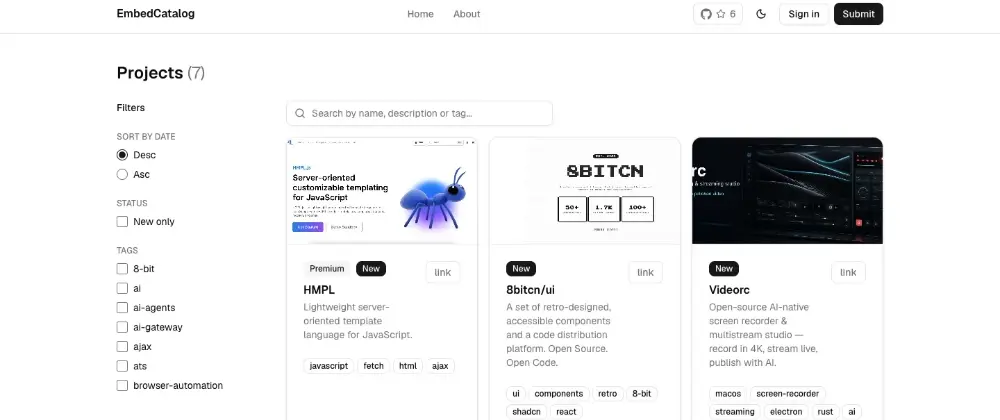
Enter EmbedCatalog—a freshly updated, open-source platform designed to help creators generate dynamic, visually striking embeds for their software projects. Developed over the course of just a few intensive weeks, EmbedCatalog allows users to design custom visual widgets that can be seamlessly embedded into applications, websites, and Markdown documentation files. By moving away from homogenous, default graphics, Max’s platform empowers open-source maintainers and commercial developers alike to give their projects a distinct, professional identity.

This article explores the inception of EmbedCatalog, its core technical and design features, its open-source philosophy, and what the future holds for this growing developer utility.
Detailed Chronology: From Concept to Launch
The genesis of EmbedCatalog was born out of a common developer frustration: the desire to make personal and open-source projects stand out in a crowded ecosystem. While building various tools, Anthony Max found himself dissatisfied with the standard options available for visual project identification. Most developers defaulted to generic status badges or reused boilerplate layout designs, making it difficult for unique tools to capture a reader’s attention.

Max envisioned a centralized hub where developers could bypass the monotony of standard badges and craft relatively unique visual summaries of their software. Rather than opting for a commercialized, venture-backed product launch cycle, Max took an iterative, indie-hacker approach.
- The Ideation Phase: Max conceptualized a repository-style platform centered around practical, highly customizable visual project cards. The core philosophy was simple: every project deserves a custom visual signature rather than a copy-pasted template.
- Rapid Prototyping: Working solo, Max designed and coded the initial framework of the platform within a matter of weeks, focusing on core utilities like user authentication, profile management, and a streamlined embed editor.
- The New Version Release: Recently, Max officially introduced the latest iteration of EmbedCatalog (
embedcatalog.com), featuring robust user registration, login capabilities, and a dedicated workspace for building and refining project embeds. - Open-Source Community Integration: Alongside the platform’s public release, Max published the source code to GitHub, inviting developers worldwide to inspect, contribute to, and adopt the platform.
Supporting Context & Metrics: The Mechanics of Modern Project Branding
To understand the utility of EmbedCatalog, one must look at how developers communicate the value of their projects. Markdown files—the backbone of documentation on platforms like GitHub, GitLab, and Bitbucket—rely heavily on visual anchors to convey project health, licensing, build status, and download metrics. However, traditional Markdown badges (such as Shields.io badges) are strictly utilitarian. They provide data, but they lack narrative branding.

EmbedCatalog solves this by introducing dynamic, theme-aware embeds that function as rich visual previews.
Key Features of the Platform:
- The Embed Editor: A dedicated interface allowing users to construct tailored visual graphics specifically formatted for technical documentation and web integration.
- Markdown Compatibility: Generated embeds can be effortlessly dropped into standard Markdown files (
README.md), instantly transforming standard project documentation into an engaging visual showcase. - Theme Adaptability: Support for multiple themes (such as dark mode variants) ensures that project cards integrate smoothly into whatever UI environment a developer or consumer is using.
- Broad Project Eligibility: While initially conceptualized for open-source utilities, the platform is equally optimized for commercial software, internal enterprise tools, indie projects, and developer-focused services.
By combining the structural utility of a project directory with the creative freedom of a graphic design wrapper, EmbedCatalog fills a unique niche in the modern developer toolchain.

Official Statements and Philosophy
In his public release announcement, Anthony Max emphasized that EmbedCatalog is driven by long-term passion rather than short-term commercial monetization or hyper-growth metrics.
Describing his development philosophy, Max likened his approach to that of an ant working steadily toward a larger goal: "Essentially, we are not focused on creating an audience on the platform, although this is also important. The idea is to work on a project periodically, like an ant working…"

This organic, sustainable approach to software engineering has resonated within the indie hacker and open-source communities. Instead of rushing to monetize or over-engineer the platform with unnecessary enterprise bloat, Max has kept the core offering lean, highly focused, and entirely transparent.
By making the project fully open-source under the GitHub organization embedcatalog, Max has opened the door for community contributions, allowing other developers to shape the roadmap, suggest new embed templates, and refine the platform’s underlying codebase.

Future Outlook: Where Does EmbedCatalog Go From Here?
As software development continues to decentralize and individual creators launch more micro-SaaS products, developer tools, and open-source libraries than ever before, presentation is becoming a key differentiator. Projects that look polished and professional from the moment a user lands on their GitHub repository naturally garner higher engagement, more stars, and greater community trust.
EmbedCatalog is uniquely positioned to capitalize on this trend. Looking ahead, the roadmap for the platform includes expanding the library of available embed templates, introducing deeper integration options for external developer platforms, and refining the user editor experience based on community feedback.
For developers looking to elevate their project documentation, try out custom widgets, or support an independent open-source creator, EmbedCatalog offers a refreshing alternative to standard README formatting.
To explore the platform, visit embedcatalog.com, or check out the source code and support the project via its official GitHub repository by dropping a star.