Executive Overview
Scaling a Software-as-a-Service (SaaS) enterprise from $1 million to $10 million in Annual Recurring Revenue (ARR) is widely recognized as one of the most treacherous phases of company building. Often described as the "scale-up valley of death," this transitional window demands a fundamental reinvention of operational architecture, team structures, go-to-market strategies, and executive leadership.
Retrospective insights from seasoned founders and venture leaders reveal a recurring pattern of missteps. While founders frequently possess the grit required to achieve product-market fit and cross the initial $1M ARR threshold, the mechanics of scaling past this milestone require entirely different playbooks. Hesitation in delegating operational fixes, under-investing in balance sheet reserves, lagging specialized hires, and failing to institutionalize brand and customer marketing routinely create severe bottlenecks.
This comprehensive report examines ten foundational strategic shifts necessary to accelerate growth from $1M to $10M ARR efficiently and sustainably, mitigating common pitfalls and reducing enterprise stress.
Detailed Chronology of the Scale-Up Journey
1. Transitioning from Operational Firefighting to Senior Recruitment
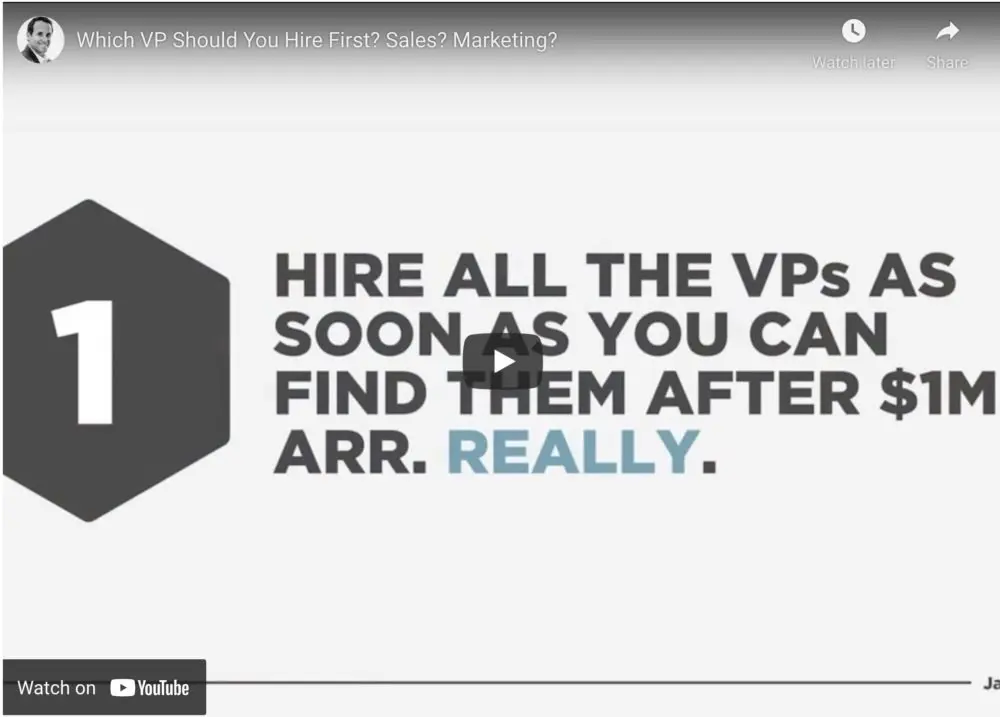
A trap common among early-stage CEOs is the compulsion to personally fix operational breakdowns rather than recruiting senior executives to own them. Between $1M and $3M ARR, founders can feasibly manage sales pipelines, draft drip marketing campaigns, or oversee product iterations. However, treating these responsibilities as part-time duties creates a dangerous time sink.
When a CEO acts as an perpetual backfill for critical functional gaps, two failures occur:
- First, the organization lacks dedicated strategic leadership to mature the department.
- Second, the constant cycle of patching symptoms delays the inevitable search for a permanent Vice President.
The Lesson: Time spent tinkering with day-to-day functional repairs is time stolen from recruiting world-class owners. By $1M ARR, sales, marketing, and product are full-time executive functions. Hire functional owners early to avoid compounding operational debt.
2. Formalizing Partnerships with a Dedicated Head of Biz Dev
Strategic partnerships can act as hyper-growth levers, yet founders frequently mismanage them by relying on a fragmented, committee-style approach. When cash is restricted, executive teams often split partner management duties among the CEO, VP of Sales, and VP of Product.
While this ensures high-level visibility, it breeds strategic inertia. Partnerships become reactive rather than proactive. Maintaining major partnerships requires mapping complex stakeholder maps, traveling to face-to-face meetings, and actively fighting for mindshare within partner ecosystems.
- The Directive: Once a company secures a handful of crucial ecosystem partners, a dedicated, full-time Head of Business Development is mandatory. Maintaining an enterprise partnership is a full-time endeavor that cannot be successfully managed as a secondary duty by overloaded executives.
3. Institutionalizing High-Frequency Customer Travel and Engagement
Founders often scale back on in-person enterprise engagement due to the pressures of internal firefighting. This is a strategic error. Direct interactions with top-tier accounts yield compounding dividends.
Data from enduring SaaS enterprises indicates a striking correlation: customer retention spikes dramatically among accounts visited personally by the chief executive. Furthermore, these relationships often endure for over a decade.
- The Strategy: CEOs should commit to traveling to visit key customers, prospects, and partners at least twice per quarter, supplemented by a minimum of six customer Zoom sessions per week. This remains one of the highest-ROI, lowest-capital investments an early-stage company can execute.
4. Calibrating the Balance Sheet: The $1-to-$2 ARR Capital Rule
Attaining cash-flow positivity early—such as around $4M ARR—is a celebrated milestone that offers independence from volatile venture capital markets. However, premature frugality introduces a hidden operational tax.
If a company reaches $4M ARR with a lean balance sheet of $1.5M, leadership inevitably grows risk-averse. Approaching $8M to $10M ARR with inadequate cash reserves (defined as maintaining less than $1 of cash for every $2 of ARR) causes executives to hesitate when scaling investments.
- The Reality: When cash is tight, leadership shies away from hiring twenty simultaneous sales reps, expanding into international markets, or deploying high-impact acquisition campaigns. Maintaining a healthy capital buffer—frequently by thoughtfully introducing strategic debt or secondary equity as initial scale approaches—ensures the enterprise can aggressively lean into growth opportunities without financial anxiety.
5. Evolving the Engineering Organization: From CTO-Led to VPE-Led
In the early days, a technical co-founder or Chief Technology Officer (CTO) is essential for shipping the initial product. However, as the engineering team expands beyond eight or nine developers, strains inevitably emerge. CTOs often experience burnout, struggle with large-scale team management, or grow disinterested in addressing infrastructural technical debt.
More importantly, targeting true enterprise customers demands specialized engineering leadership.
- The Transition: Scaling past $5M ARR requires hiring an experienced Vice President of Engineering (VPE). Enterprise buyers demand rigorous security, predictable release management, compliance frameworks, and robust data protection. A seasoned VPE lends immediate credibility to enterprise procurement teams and drives the structural changes necessary to serve high-value corporate clients.
6. Building an Outbound Engine as an Additive Growth Layer
Many modern SaaS companies rely heavily on inbound product-led growth, delaying the creation of a dedicated outbound team. However, outbound sales efforts consistently deliver value, even when inbound leads are plentiful.
- The Execution: An early outbound motion should target premier accounts within the company’s ideal customer profile. Landing prestigious enterprise logos early anchors brand credibility. Even if an outbound team initially operates at a break-even cost during Year 1, the long-term lifetime value (LTV) of these large enterprise accounts far outweighs acquisition expenses, acting as a powerful growth multiplier.
7. Initiating Customer Conferences and Community Gatherings Early
Founders often delay hosting user conferences, assuming their product is too simple or their customer base too small to justify an event. This hesitation is misplaced.
Customers who deeply integrate software into their daily workflows are eager to connect with peers, share best practices, and interact with company leadership.
- The Implementation: Events do not need to mirror massive industry trade shows immediately. Simple milestones—such as intimate customer dinners, half-day regional meetups, and eventually annual summits—foster intense brand loyalty and provide invaluable product feedback. Start early, even with a cohort of twenty local users.
8. Specializing the Sales Force: Openers, Closers, and Market Segments
The era of the "full-stack" sales representative handling everything from cold prospecting to contract negotiation is obsolete. Sales professionals excel at specific, discrete motions: outbound prospecting, inbound qualification, small-market velocity, or complex enterprise navigation.
- The Mandate: Specialization must occur early—often by the third sales hire. By dividing labor so that specialized setters (openers) qualify leads and feed calendars, enterprise closers can execute four high-value discovery and closing appointments per day instead of two. This specialization dramatically scales rep productivity, efficiency, and revenue generation per lead.
9. Elevating Customer Marketing Beyond Success Teams
While Customer Success (CS) is critical for onboarding and retention, CS professionals are operators, not marketers. Many organizations treat marketing as a pre-acquisition expenditure, abandoning structured campaigns post-sale.
- The Framework: In a recurring revenue model, customer marketing is just as vital as prospect acquisition. Enterprises must establish dedicated customer marketing budgets and teams tasked specifically with driving renewals, competitive displacement within existing accounts, and strategic expansion. Allocating 5% to 10% of post-sale revenue streams to targeted customer marketing unlocks substantial hidden revenue.
10. Investing Aggressively in Brand as the $10M ARR Threshold Approaches
In the formative stages of a startup, brand identity is virtually nonexistent; early adopters take risks on unproven technology based on raw innovation. However, as a market matures and the company approaches $10M ARR, the buyer demographic shifts from early innovators to risk-averse pragmatists.
Pragmatic buyers look for market leaders; they want to be told which vendor is the safe, established choice.
- The Long-Term Play: Transitioning from a niche "mini-brand" to an established category leader requires intentional investment. Enterprises must secure prominent positioning at major industry events—not merely for lead generation, but for community validation—publish helpful, non-promotional thought leadership, and recruit executive marketing leadership (such as a VP of Corporate Marketing or CMO). Protecting this brand equity ensures pricing power and resilience against new market entrants for decades.
Supporting Context & Metrics
| Strategic Focus Area | Common Mistake | Recommended Action | Optimal Timing / Milestone |
|---|---|---|---|
| Executive Recruitment | Founder acts as operational backfill | Hire dedicated VPs to own core functions | $1M – $3M ARR |
| Partnerships | Fragmented, reactive committee management | Appoint a full-time Head of Biz Dev | Upon securing 2+ critical partners |
| Customer Engagement | Relying solely on digital communication | Conduct bi-quarterly site visits & 6+ weekly Zooms | Continuous from $1M ARR onwards |
| Balance Sheet Health | Operating with under-funded cash reserves | Maintain $ge $1$ in cash for every $$2$ in ARR | Approach to Initial Scale ($4M+ ARR) |
| Engineering Leadership | Sticking with CTO-led dev teams too long | Transition to an enterprise-grade VPE | Team size $ge 10$ developers / Enterprise push |
| Outbound Sales | Relying exclusively on inbound lead flow | Build an additive outbound prospecting motion | Concurrent with inbound optimization |
| Community Building | Delaying user conferences until scale | Launch intimate dinners and regional meetups | As early as 20 active customers |
| Sales Specialization | Employing generalist "full-stack" reps | Separate openers, closers, and market segments | As early as sales rep #3 |
| Customer Marketing | Leaving post-sale marketing entirely to CS | Dedicate 5%–10% of recurring revenue to post-sale campaigns | Post-$5M ARR |
| Brand Investment | Ignoring brand development as "premature" | Invest in corporate marketing, PR, and category authority | Approach to $10M ARR |
Official Statements and Industry Insights
Reflecting on the structural friction points of scaling, industry veterans emphasize that operational discipline must match product innovation.
"The #1 mistake founders make in partnerships and business development? They don’t hire anyone full-time to manage the partnership. As CEO, you are great at forging that relationship. But maintaining it? That’s a full-time job."
— Jason Lemkin, Founder of SaaStr
Reinforcing the necessity of financial runway during critical growth phases, industry commentary highlights the danger of capital starvation:
"To really invest in your team, product, etc., you need at least $1 on the balance sheet for each $2 in ARR. At $20M ARR, you need $10M in the bank to make the hires, burn the tokens, and truly get to the next level. Below that, you hesitate."
— Jason Lemkin
These insights underscore a central thesis: scaling to $10M ARR is not merely about closing more deals; it is about building an institutional framework capable of absorbing complexity without fracturing operational momentum.
Future Outlook
As the SaaS landscape becomes increasingly competitive, the margins for error between $1M and $10M ARR continue to narrow. Founders who cling to early-stage habits—such as micro-managing departmental workflows, under-capitalizing balance sheets, or treating brand building as an afterthought—will find themselves outpaced by disciplined competitors.
Looking forward, the companies that successfully navigate this valley of death will be those that embrace professionalization early. By installing specialized sales machinery, recruiting enterprise-grade engineering leadership, prioritizing authentic customer relationships through physical presence, and investing proactively in brand equity, emerging SaaS leaders can build resilient, high-margin enterprises poised for enduring scale.