Executive Overview
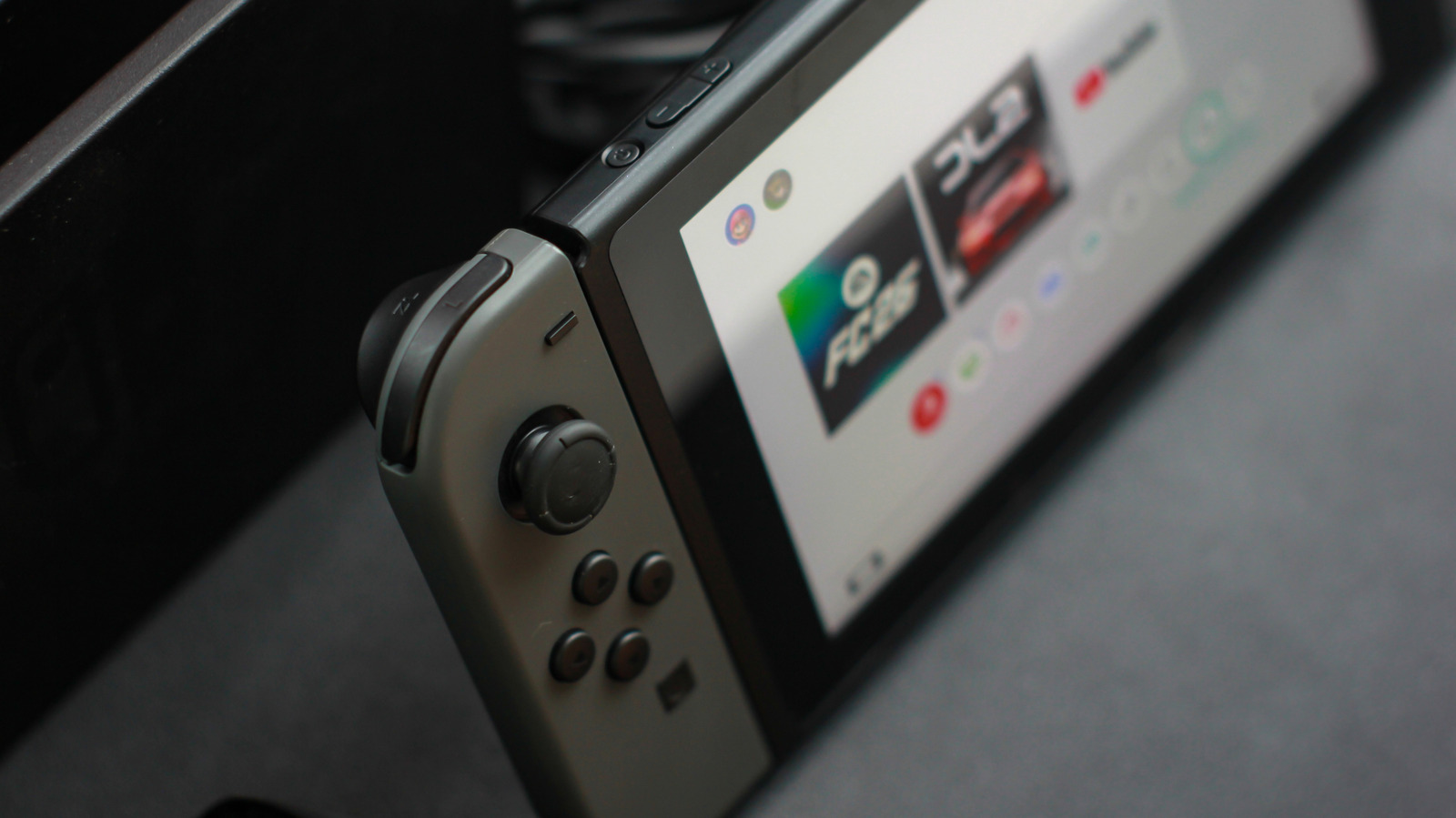
Nine years after shaking up the video game landscape with its unique hybrid design, the original Nintendo Switch remains a ubiquitous fixture in living rooms and backpacks alike. Yet, as the industry marches deep into 2026, the hardware calculus has shifted dramatically. With Nintendo’s flagship successor—the Switch 2—firmly established at a $499.99 price point following its launch late last year, and broader macroeconomic pressures driving up component and console costs across the board, consumers face a complex purchasing puzzle.
Buying a brand-new, standard Nintendo Switch at $339.99 or a Switch OLED at $399.99 is increasingly difficult to justify when compared directly to the feature set and future-proofing of the Switch 2. However, the retail market tells only half the story. The pre-owned and used hardware markets have completely altered the value proposition. With pre-owned standard Switch consoles trading for around $200 and OLED models hovering near $250 at major retailers like GameStop, the original hardware ecosystem suddenly presents a compelling bargain.
This deep dive investigates whether the pioneering hybrid console still merits your hard-earned cash in 2026, balancing the temptation of rock-bottom used prices against software division, modern hardware improvements, and the inevitable march of obsolescence.
Detailed Chronology: A Nine-Year Hardware Evolution
To understand the current standing of the original Nintendo Switch, it is vital to trace the hardware’s historical trajectory and how it contrasts with the current generation.
2017–2018: The Genesis of Hybrid Gaming
When Nintendo launched the Switch in March 2017, it arrived as an ingenious answer to the ailing fortunes of the Wii U. Combining home console power with portable convenience through detachable Joy-Con controllers, it quickly captured the global imagination. However, first-generation units (distinguished by the XAW serial number prefix) suffered from modest battery life—typically yielding between 2.5 and 6.5 hours of play—and early concerns regarding durability.
2019: The Silent Revision and Lite Expansion
Recognizing the need for hardware refinement, Nintendo quietly rolled out a crucial revision in late 2019 (marked by the XKW serial prefix). This updated standard model utilized a more efficient processor, dramatically extending battery life to a respectable 4.5 to 9 hours. Simultaneously, Nintendo introduced the Nintendo Switch Lite—a dedicated, portable-only variant designed for budget-conscious solo gamers, albeit lacking video-out capabilities for television docking.
2021: The OLED Peak
The release of the Nintendo Switch OLED in October 2021 brought a gorgeous 7-inch vibrant display, an upgraded kickstand, and enhanced audio output. While it captured the hearts of handheld enthusiasts, it retained the core processing architecture of its 2017 predecessor, highlighting an internal hardware bottleneck that grew more pronounced as years passed.
2025–2026: The Arrival of the Switch 2 and Market Realignment
By September 2025, Nintendo officially introduced the Switch 2 at a retail price of $499.99, immediately altering the market tiers. This launch coincided with broader consumer electronics inflation; notably, Microsoft’s aggressive pricing adjustments in August 2025 pushed certain Xbox models up by $150 due to soaring component costs. Amidst this inflationary wave, the aging original Switch line faced mandatory price adjustments, landing at $339.99 for the base model and $399.99 for the OLED edition, setting the stage for the modern debate between new-gen investment and legacy savings.
Supporting Context & Metrics: New vs. Used Economics
When evaluating a purchase in 2026, consumers must weigh raw performance metrics against cost efficiency. The financial gap between a new purchase and a used acquisition is wider—and more consequential—than ever before.
The Problem with Buying Brand New
At $399.99 for a brand-new Switch OLED or $339.99 for the standard model, retail units are fighting a losing battle against the Switch 2. For just $100 more than an OLED model, buyers can secure a Switch 2, which offers next-generation processing power, backward compatibility, and an expanding library of exclusive titles.
Furthermore, if a buyer intends to keep their console docked to a television 100% of the time, paying a premium for the OLED’s gorgeous screen makes little financial sense. You are essentially paying top-tier prices for legacy performance.
The Used Market Equation
Conversely, the secondary market completely upends this calculus:
- Pre-owned Switch Lite: ~$170 (Ideal for strict handheld enthusiasts, though lacking TV output).
- Pre-owned Standard Switch: ~$200 (A massive savings compared to a $500 next-gen console).
- Pre-owned Switch OLED: ~$250 (Offering premium screen quality at half the price of a brand-new Switch 2).
When comparing a $200 pre-owned standard console to a $500 next-generation machine, the original Switch transforms from an outdated device into a budget-friendly powerhouse.
Software Longevity and the eShop Horizon
Skeptics often worry that buying an older console means immediate irrelevance. However, Nintendo has publicly committed to supporting legacy services. Nintendo eShop operations, online multiplayer, and digital account management will continue for the "foreseeable future." Additionally, digital purchases are forward-compatible; games bought digitally on an original Switch can be downloaded and played on a Switch 2 down the line if you choose to upgrade later.
Official Statements and Industry Insights
The longevity of the original hardware is further bolstered by Nintendo’s forward-thinking software updates and hardware design choices, even as third-party developers pivot entirely to modern architectures.
Bridging the Gap: Handheld Mode Boost
Nintendo’s ongoing software engineering has actively sought to protect the value of legacy libraries. A notable system update introduced Handheld Mode Boost, a feature allowing supported original Switch games to run as if they were in TV mode while playing on a Switch 2 on the go. This results in crisper resolutions and cleaner rendering than what was historically possible on a first-generation handheld screen. Furthermore, select titles continue to receive targeted performance patches or paid upgrade packs to extend their visual fidelity.
The Hardware Divide: Exclusives and Game-Key Cards
Despite these efforts, the software landscape is splitting. Major first-party titles—such as Splatoon Raiders, Fire Emblem: Fortune’s Weave (released September 17), and the anticipated January 2027 release of Metroid Ravenous—are strictly exclusive to the Switch 2. Major third-party publishers are increasingly treating the original Switch as hardware belonging to a bygone era.
Interestingly, physical media collectors face an intriguing quirk in 2026. Certain Switch 2 physical releases utilize game-key cards—cartridges that do not contain complete game data and require a mandatory digital download before play. In contrast, traditional original Switch cartridges contain the full game data on the chip, preserving a tangible, plug-and-play charm that modern formats are slowly abandoning.
Hardware Maintenance and Repair Realities
For those diving into the pre-owned market, a certain amount of technical due diligence is required. Hardware experts at iFixit currently rate the original Nintendo Switch at a modest 4/10 for repairability. This score reflects the challenges posed by glued-in lithium-ion batteries, soldered USB-C ports, and a general lack of official replacement parts and documentation.
Nintendo estimates that a standard Switch battery will maintain roughly 80 percent of its original capacity after approximately 800 charge cycles. Consequently, buyers purchasing used hardware should carefully inspect:
- Serial Numbers: Look for prefixes beginning with XKW rather than the older XAW to ensure you are getting the revised, high-battery-life model.
- Physical Integrity: Thoroughly test the Joy-Con connection rails, analog stick responsiveness (checking for drift), the USB-C charging port, and the integrity of the touchscreen.
- Docking Hardware: Verify that the dock successfully outputs video signals to a television without handshake issues.
Future Outlook
As the video game industry steams through 2026, the original Nintendo Switch occupies a fascinating, paradoxical space.
Buying a brand-new unit at retail prices is difficult to endorse when the superior Switch 2 commands a more future-proof position for just a bit more investment. However, for budget-conscious gamers, families, and collectors willing to navigate the pre-owned marketplace, the original Switch is arguably one of the best value propositions in modern gaming history.
With nearly a decade of blockbuster masterpieces, sprawling indie gems, and a robust second-hand pricing structure centered around the $200 mark, the hybrid pioneer is far from obsolete. It has gracefully transitioned from a cutting-edge market disruptor into the ultimate budget-friendly gaming companion—provided you shop smart, check your serial numbers, and know what you are paying for.