Executive Overview
Snow-capped peaks, lush green meadows, cattle adorned with resonant brass bells, and rustic wooden alpine huts: over the past few years, hiking scenery has dominated our digital feeds, holding social media algorithms entirely in a chokehold. It often feels as though everyone in your immediate circle—and perhaps even your best friend’s dog—has transformed overnight into professional alpinists. These weekend warriors scale rugged terrain in high-tech Gore-Tex gear, conquering dizzying altitudes before cracking open a refreshing local soda at the summit.
Yet, beneath the aesthetic appeal of these curated social media snapshots lies a deeper cultural shift. Modern society is experiencing a collective yearning to disconnect from hyper-digitized environments and reconnect with the physical world. Hiking has transitioned from a niche hobby for seasoned outdoor enthusiasts into a mainstream movement of self-discovery, mental resilience, and community building.
This renaissance has not gone unnoticed by the commercial landscape. Major outdoor brands are increasingly shifting their marketing paradigms away from purely technical performance metrics toward holistic personal empowerment. By merging physical endurance challenges with mental health coaching and community-driven workshops, initiatives like the adidas TERREX "Design Your Life" Hiking Days illustrate how outdoor brands are transforming passive consumers into active participants in their own personal growth.
This comprehensive report examines the cultural drivers behind the modern hiking boom, the psychological and physiological benefits of alpine immersion, and the evolving intersection of commercial partnerships and outdoor empowerment for women.
Detailed Chronology: The Evolution of the Modern Hiking Trend
To understand how hiking became the defining recreational activity of the 2020s, it is necessary to examine the socio-cultural timeline that propelled outdoor recreation into the mainstream.
Phase 1: The Pandemic Shift and the Rise of the Micro-Adventure (2020–2021)
The global health crises of the early 2020s fundamentally altered how populations interacted with local environments. With international travel restricted and urban spaces locked down, individuals sought safe, socially distanced avenues for physical activity and mental relief. This period marked the democratization of the local landscape. People began exploring green spaces directly outside their front doors—discovering mystical rock formations, hidden waterfalls, and fairy-tale forests within their own regions. The concept of the "micro-adventure" was born, proving that profound travel experiences did not require long-haul flights.
Phase 2: The Digital Aesthetic of the Great Outdoors (2022–2023)
As restrictions eased, the pent-up demand for experiential travel merged seamlessly with digital culture. Hiking evolved into a premier aesthetic category on platforms like Instagram and TikTok. High-performance outdoor apparel transitioned from functional utility wear into everyday streetwear, a trend often categorized as "Gorpcore." The mountain became a runway, and the summit selfie became a modern status symbol. However, while the initial surge was driven largely by visual culture, it successfully lowered the barrier to entry, enticing individuals who had never previously considered themselves athletic to test their endurance outdoors.
Phase 3: The Holistic Movement and Brand Integration (2024–Present)
By 2024, the hiking phenomenon matured past mere aesthetics into a profound lifestyle movement. Outdoor enthusiasts began seeking deeper value from their excursions. Recognizing this shift, forward-thinking brands moved beyond traditional product sponsorship. They began curating immersive experiences that intertwined physical trekking with mental coaching, environmental stewardship, and female empowerment. A prime example of this evolution is the collaboration between digital lifestyle platforms and brands like adidas TERREX, culminating in targeted initiatives such as the Malerweg workshop series designed to foster personal and professional growth among women in the wild.
Supporting Context & Metrics: Why We Fall in Love with the Trail
The mass migration from urban asphalt to mountain trails is supported by a robust mix of accessibility, psychological renewal, and physiological benefits.
1. Universal Accessibility and Inclusivity
Unlike sports requiring expensive club memberships, specialized infrastructure, or continuous equipment upgrades, hiking remains remarkably democratic. In its most basic form, it requires little more than two reliable legs and a sense of curiosity. Whether an individual is a complete novice taking their first steps on a gentle forest path or an elite mountaineer tackling technical ridges, the trails accommodate all skill levels. Furthermore, the ability to engage in single-day excursions means that outdoor recreation no longer demands extensive vacation time; it fits seamlessly into the modern work-life balance.
2. A Tapestry of Natural History
The landscapes that frame modern hiking routes carry profound historical and cultural weight. In regions like Germany’s Elbe Sandstone Mountains (Elbsandsteingebirge) and the famed Malerweg (Painter’s Way), the dramatic geography of jagged sandstone peaks and deep gorges inspired the great masters of German Romanticism. Painters such as Caspar David Friedrich captured the sublime beauty of these exact vistas, translating the emotional impact of nature onto canvas. Today, hikers walk these same historical paths, experiencing a direct continuity between artistic heritage and modern recreational therapy.
3. The Physiological Transformation
From a fitness perspective, hiking offers a comprehensive full-body workout. It engages major muscle groups—particularly the glutes, quadriceps, and core stability muscles—while significantly improving cardiovascular endurance. Unlike gym workouts confined to artificial lighting and repetitive mechanical equipment, hiking forces the body to adapt to dynamic, uneven terrain. This constant micro-adjustment builds functional strength, spatial awareness, and physical resilience.
Official Statements and Psychological Insights: The Mind-Body Connection
The true power of hiking extends far beyond physical conditioning; it serves as a profound catalyst for mental clarity and psychological resilience.
The Mental Reset and Digital Detox
In a professional landscape dominated by constant connectivity, screen fatigue, and information overload, the trail offers a sanctuary of silence. Removing oneself from digital notifications forces the brain out of a state of chronic partial attention. As experts note, the sensory input of the natural world—the crunch of gravel underfoot, the smell of pine needles, and the visual expanse of sweeping valleys—activates the parasympathetic nervous system, lowering cortisol levels and mitigating anxiety.
Overcoming Internal Resistance
The psychological arc of a challenging hike mirrors the hurdles of everyday life. As hikers navigate steep ascents, thinning air, and physical fatigue, they confront internal dialogues of doubt and hesitation.
- The Struggle: The burning sensation in the lungs and the heavy weight in the legs force individuals to stay entirely present. There is no room for distraction when every step requires conscious intention.
- The Breakthrough: Reaching the summit delivers an irreplaceable endorphin rush. Pausing to unpack a lightweight camp mat for a well-deserved trailside lunch while gazing out over panoramic vistas fosters an intense sense of personal pride.
This physical overcoming directly influences cognitive patterns. The mental fortitude required to push through exhaustion on a mountain trail translates seamlessly into the boardroom, personal relationships, and life-planning decisions. Step by step, hikers make active choices about their trajectory, reinforcing the belief in their own agency and resilience.
Future Outlook: Empowering the Next Generation of Explorers
As the outdoor industry continues to evolve, the focus is shifting heavily toward community-led empowerment, particularly for women in outdoor sports. Initiatives that combine physical endurance with mentorship are setting a new standard for corporate responsibility and brand engagement.
Case Study: The adidas TERREX "Design Your Life" Initiative
Demonstrating the synergy between athletic performance and personal development, outdoor pioneer adidas TERREX launched specialized programs designed to foster community among female outdoor enthusiasts.
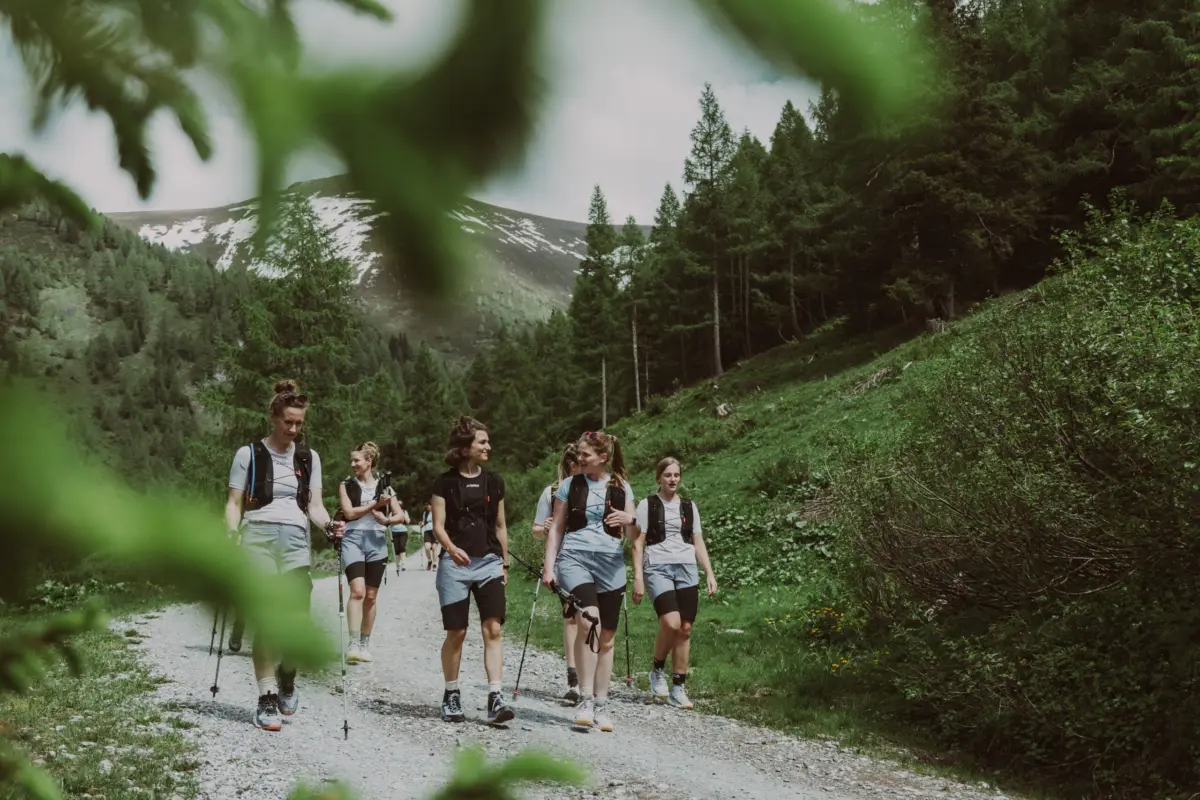
- The Experience: Designed as an exclusive weekend workshop set against the dramatic backdrop of the Malerweg in the Elbsandsteingebirge, these events merge expert-led coaching with high-level trail hiking.
- The Core Philosophy: The curriculum moves beyond physical skill acquisition. It encourages participants to examine their life choices, confront personal growth objectives, and build supportive networks with like-minded women.
- Comprehensive Support: By covering accommodations at landmark mountain retreats (such as the Berghotel Bastei), holistic nutrition, professional mountain guides, and equipping participants with premium outdoor gear, these initiatives eliminate logistical barriers to entry. They signal a broader industry trend: empowering women not just to conquer physical trails, but to navigate life’s broader transitions with confidence, trisch-footed stability, and unwavering support.
Conclusion
The modern hiking boom is far more than a passing social media trend. It is a necessary counter-movement to an increasingly digital and fast-paced existence. By returning to the basic act of walking through nature, humanity rediscovers its physical capabilities, heals mental fatigue, and builds communities grounded in shared endurance. As brands continue to invest in holistic outdoor experiences, the trail will remain a vital laboratory for personal transformation—proving that the highest peaks we conquer are ultimately within ourselves.