Executive Overview
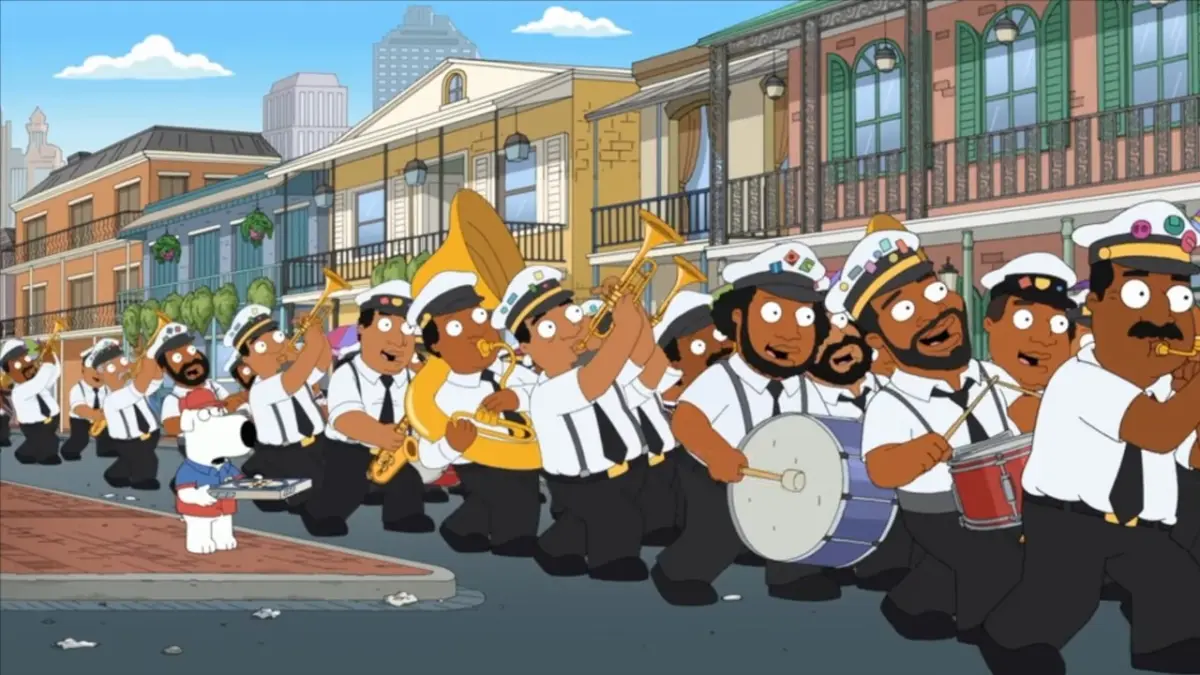
In the fast-moving ecosystem of internet culture, viral trends often emerge from unexpected, hyper-specific pieces of media. The latest phenomenon capturing the collective imagination of TikTok and Instagram Reels is no exception. Originating from a seemingly innocuous cutaway gag in Family Guy Season 15, episode 18, "The Peter Principal"—which originally aired on April 30, 2017—the musical sequence featuring a New Orleans second line marching band brazenly singing, "We’re All Just Blocking the Street" has experienced a massive resurgence.
Nearly a decade after its initial television broadcast, the clip has been retrofitted into a versatile, highly relatable meme format. Users across platforms are leveraging the audio and visual macro to articulate universal frustrations with everyday bottlenecks: slow-moving crowds, congested tourist traps, chaotic school hallways, and even domestic pets tripping their owners. This comprehensive report explores the trajectory of the "We’re All Just Blocking the Street" trend, detailing its television roots, its sudden explosion across social media algorithms, its cultural resonance, and the mechanics driving its ongoing virality.
Detailed Chronology: From 2017 Television Broadcast to 2026 Viral Phenomenon
To understand how a fleeting cartoon joke metamorphosed into a dominant internet meme, one must trace its journey through distinct phases of production, dormancy, and sudden digital revitalization.
The Genesis: Season 15 of Family Guy (April 2017)
On April 30, 2017, Fox broadcasted Family Guy Season 15, Episode 18, titled "The Peter Principal." Directed by John Holmquist and written by Artie Johann, the episode featured a classic narrative structure anchored by Peter Griffin’s workplace antics. However, as is customary for Seth MacFarlane’s animated sitcom, the episode relied on surreal cutaway gags to inject rapid-fire absurdity into the runtime.
In this particular sequence, Brian Griffin—the family’s erudite, cynical anthropomorphic dog—is tasked with a mundane errand: delivering a pizza. As he attempts to cross a bustling street, his path is abruptly halted by a traditional New Orleans second line marching band. Rather than politely clearing the thoroughfare, the musicians joyfully belt out a catchy, swinging tune explicitly celebrating their obstruction of traffic, leaving a visibly flustered Brian stranded. While amusing to viewers at the time, the scene remained a standard piece of syndicated television history for years, tucked away in the vast catalog of Family Guy’s mid-era episodes.
The Dormant Years and Initial Resurgence (Mid-2026)
For nearly a decade, the clip sat quietly in the public consciousness, occasionally referenced by die-hard fans of the show. However, the modern attention economy operates on rediscovery. The turning point arrived in mid-2026, when digital archivists and meme curators began scrubbing older television episodes for untapped audio goldmines.
On July 17, 2026, TikTok user @chaoscriterion uploaded a clean screen recording of the scene. The post struck a chord with the platform’s algorithm, quietly accumulating over 98,000 likes over a two-month period. More importantly, it provided a pristine, standalone audio track that other creators could easily sample. By isolating the marching band’s declaration of civil obstruction, @chaoscriterion inadvertently handed the internet a blank canvas for everyday grievances.
The Exponential Explosion (September 2026)
By September 2026, the trend transitioned from a niche audio reuse to a full-scale cultural wave. Creators across TikTok and Instagram Reels began pairing the audio with real-world video footage, applying the lyrics to situations defined by mass inconvenience.
The tipping point occurred on September 15, 2026, when TikToker @littledillthetenorboy published a brilliantly meta video marrying the Family Guy audio to footage of an actual, real-life marching band causing similar transit disruptions. The video resonated deeply with the marching band and performing arts communities, rocketing past one million views in just six days.
Following this viral catalyst, the floodgates opened. On September 17, an Instagram user operating under the handle @repostbate applied the audio to the universal nightmare of educational transit, captioning the post: "How people walk in the hallways when you only have 59 seconds to get to class." The relatable hyperbole struck a chord with students worldwide, pulling in over 38,000 likes in four days.
Just two days later, on September 19, TikToker @karoline.io localized the meme to the trials of urban living, using the audio to capture "How it feels living in a tourist town." This iteration struck a massive nerve, surging past 2 million views in less than 48 hours and cementing the audio as the go-to anthem for territorial annoyance.
Supporting Context & Metrics: The Anatomy of a Meme
The success of "We’re All Just Blocking the Street" is not an isolated accident; it is the result of specific psychological and algorithmic mechanics that govern contemporary social media platforms like TikTok and Instagram Reels.
Algorithmic Versatility and Lip-Dub Mechanics
The audio format succeeds because it functions on multiple layers of engagement:
- The Lip-Dub Format: Creators use the upbeat, theatrical cadence of the song to showcase theatrical resignation, lip-syncing the lyrics while looking directly into the camera with deadpan expressions.
- The Image Macro and POV Format: Creators utilize the clip as a foundational visual setup, overlaying text onto the video to contextualize absurd everyday delays.
- Cross-Fandom Integration: The audio quickly broke out of general comedy content and permeated specific subcultures. On September 20, 2026, TikToker @v1trealis applied the audio to an animation based on the popular Roblox horror game Doors, proving the meme’s adaptability across gaming communities and digital art spaces.
Quantitative Breakdown of Viral Posts
| Creator / User | Platform | Content / Caption Theme | Engagement Metrics |
|---|---|---|---|
| @chaoscriterion | TikTok | Original scene repost / audio source | 98,000+ likes (over 2 months) |
| @littledillthetenorboy | TikTok | Real marching band footage set to audio | 1.0M+ views in 6 days |
| @repostbate | High school hallway gridlock | 38,000+ likes in 4 days | |
| @karoline.io | TikTok | Living in a heavy tourist destination | 2.0M+ views in 2 days |
| @v1trealis | TikTok | Roblox Doors animation crossover | 168,000+ views in 1 day |
Beyond human scenarios, the trend expanded into the animal kingdom. Content creators utilized the audio to highlight domestic disruptions—ranging from large dogs blocking narrow hallways to cats deliberately darting between their owners’ legs while carrying food bowls. Videos by creators like @fluffybelleh and @kopikat demonstrated the meme’s broad applicability, showing that whether dealing with tourists, teenagers, or household pets, the sentiment remains universally understood.
Official Perspectives and Industry Impact
While major media conglomerates rarely issue formal press releases regarding the organic spread of decade-old television clips, the phenomenon highlights a broader shift in how television networks and streaming platforms view older intellectual property.
Media analysts note that viral meme renaissances serve as powerful, zero-cost marketing engines for legacy content. When a clip like "We’re All Just Blocking the Street" trends across TikTok and Instagram, it introduces younger demographics—who may have never watched a full episode of Family Guy on traditional cable—to the broader ecosystem of the show. Streaming platforms frequently see surges in watch-time for specific seasons when a cutaway gag goes viral, proving that modern meme culture acts as a vital bridge for content longevity in the streaming era.
Furthermore, creators who pioneered the audio usage have commented on the unpredictable nature of viral algorithms. What starts as a casual late-night media rewatch can quickly snowball into a multi-million-view cultural reference point, demonstrating the democratizing power of user-generated content curation.
Future Outlook: The Longevity of Absurdist Musical Memes
As the initial wave of September 2026 peak interest begins to stabilize, industry observers are left wondering how long "We’re All Just Blocking the Street" will maintain its cultural footprint.
Historically, audio trends on TikTok follow a predictable life cycle: rapid saturation, peak creative variation, and eventual transition into a nostalgic archive piece. However, musical numbers from animated sitcoms possess a unique durability. Because the song features a catchy, Broadway-style orchestration paired with an instantly recognizable animated visual, it holds permanent real estate in the pantheon of relatable situational comedy.
Future iterations of the meme are likely to adapt to seasonal shifts—such as holiday shopping gridlocks, airport terminal congestion during peak travel holidays, and winter weather transit delays. As long as human beings are forced to share tight physical spaces with one another, Brian Griffin’s helpless frustration will remain a mirror for our own daily inconveniences. The marching band will keep playing, the crowd will keep standing shoulder-to-shoulder, and the internet will keep singing along to the absurdity of blocking the street.