Executive Overview
In an era defined by ubiquitous mobile technology, remote work flexibility, and an increasingly fragile electrical grid, reliable off-grid power has transitioned from a niche camping accessory to an essential household utility. As extreme weather events, seasonal storms, and rolling blackouts challenge municipal power infrastructures across the globe, consumers are actively seeking high-capacity, highly portable energy storage solutions.
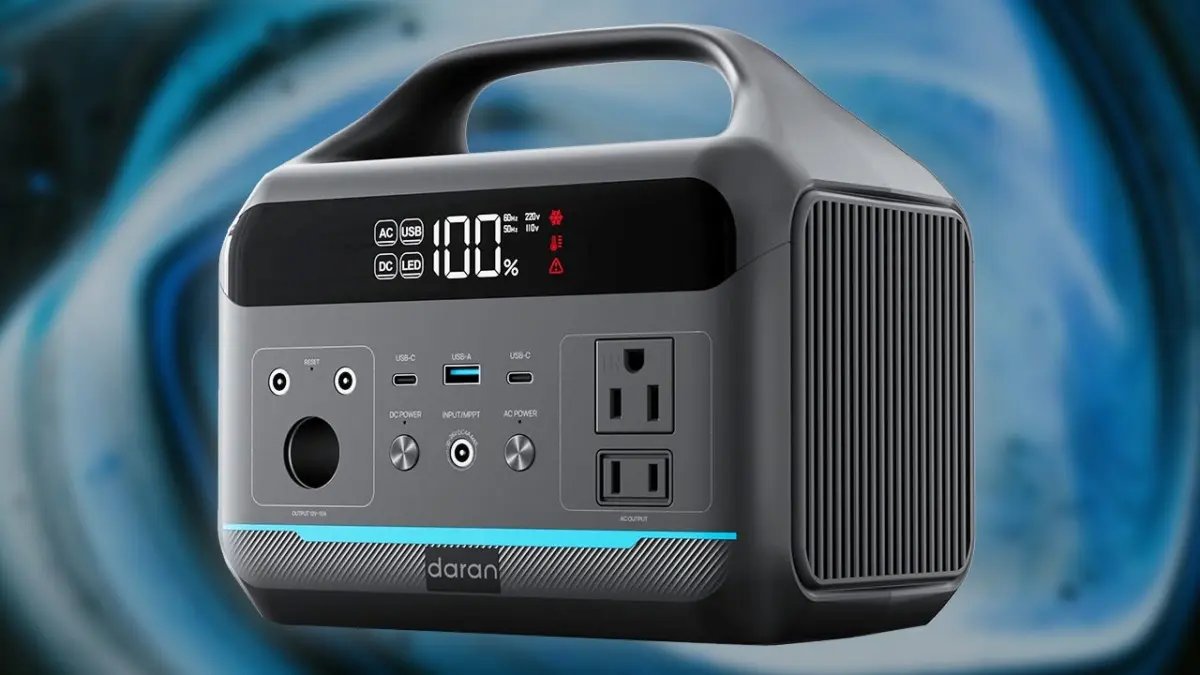
Enter the Daran 288Wh (90,000mAh) 600W LiFePO4 Portable Power Station, a compact powerhouse designed to bridge the functional gap between pocket-sized smartphone power banks and bulky, multi-thousand-dollar home backup generators. Ahead of the upcoming retail sales frenzy—specifically the competitive Prime Day window—this device has emerged as an industry bellwether due to a steep promotional discount dropping its price to just $129.99 with free shipping. Remarkably, this deal requires no active subscription or Amazon Prime membership, democratizing access to emergency readiness gear.
Weighing in at a remarkably feather-light 8.9 pounds, the Daran unit challenges traditional power-to-weight paradigms. It delivers substantial energy reserves housed within a footprint small enough to store in a vehicle trunk, a closet shelf, or an emergency go-bag. More importantly, under the hood, the device utilizes Lithium Iron Phosphate (LiFePO4) battery chemistry. This technical choice separates modern, long-lasting power stations from budget alternatives reliant on traditional, degradation-prone lithium-ion cells.
This comprehensive report examines the structural specifications, market positioning, technological chemistry, safety implications, and broader consumer trends surrounding the Daran 288Wh 600W Power Station. Through rigorous metric analysis and contextual evaluation, we explore why this specific hardware release marks a pivotal shift in consumer energy independence.
Detailed Chronology: The Rise of Sub-300Wh Power Stations
Phase One: The Lithium-Ion Infancy and Pocket Power Banks
To understand the significance of the Daran 288Wh station, one must look back at the trajectory of consumer energy storage. For the past decade, portable power was bifurcated into two distinct categories:
- Low-capacity power banks (ranging from 5,000mAh to 20,000mAh) designed exclusively for charging handheld smartphones and small tablets via USB interfaces.
- Industrial-scale gas generators or massive lead-acid battery stations, which weighed upwards of 40 to 100 pounds, emitted toxic fumes, required regular mechanical maintenance, and proved prohibitively expensive for casual users.
During the mid-2010s, lithium-ion (specifically Nickel Manganese Cobalt, or NMC) cells enabled the creation of early portable power generators. However, these units suffered from rapid thermal degradation, limited charge-discharge life cycles (often degrading noticeably after 300 to 500 cycles), and volatile chemical profiles that made consumers wary of indoor operation.
Phase Two: The LiFePO4 Revolution
The landscape shifted dramatically toward the end of the decade with the maturation and commercialization of Lithium Iron Phosphate (LiFePO4) chemistry. Originally reserved for heavy-duty industrial applications, electric vehicles, and solar energy arrays, LiFePO4 technology gradually trickled down to mid-tier consumer electronics.
Engineers realized that while LiFePO4 cells offered slightly lower energy densities by volume than their NMC counterparts, their thermal stability, structural longevity, and resistance to chemical breakdown were vastly superior. Manufacturers began scaling down these chemistry systems into portable power stations, giving birth to the 200Wh-to-500Wh product class.
Phase Three: The Democratization of Off-Grid Power
By mid-2024, competitive pressures among energy hardware manufacturers reached a fever pitch. Brands realized that consumers did not merely want raw power; they wanted accessibility, lightweight ergonomics, and aggressive pricing strategies timed around major retail shopping milestones.
The introduction of promotional price drops—such as the current $129.99 coupon-activated promotion for the Daran 288Wh unit—represents the apex of this market maturation. By slashing profit margins ahead of peak retail seasons, manufacturers are successfully converting hesitant consumers into prepared emergency-ready households, setting a new baseline expectation for consumer-grade power stations.
Supporting Context & Metrics: Technical Specifications and Performance Analysis
To evaluate the true value proposition of the Daran 288Wh 600W Power Station, we must analyze its underlying hardware architecture, port configurations, and performance metrics across various real-world usage scenarios.
Battery Capacity and Energy Density
The Daran power station features a rated capacity of 288 Watt-hours (Wh), which equates to roughly 90,000 milliamp-hours (mAh) at a standard 3.2V nominal cell voltage.
- Smartphone Charging: A standard flagship smartphone (such as an iPhone 15 or Samsung Galaxy S24) houses a battery of approximately 4,000mAh to 5,000mAh. Mathematically, the Daran unit can completely recharge an average smartphone between 18 to 22 times from 0% to 100%.
- Laptop Power: Modern professional laptops typically feature batteries rated between 50Wh and 90Wh. The Daran station can fully recharge a standard USB-C laptop roughly 3 to 5 times, ensuring that remote workers, digital nomads, and students can maintain productivity across multiple days without touching a wall outlet.
- Aviation Restrictions Context: Consumers often inquire whether mid-sized power stations can be packed into commercial airline baggage. Federal Aviation Administration (FAA) and international airline regulations strictly prohibit lithium-based power banks or power stations exceeding 100Wh (and practically capped around 27,000mAh for carry-on approval) inside aircraft cabins or cargo holds. At 288Wh, the Daran station firmly exceeds these aviation thresholds and must be transported via ground travel, underscoring its design intent as a terrestrial, home-backup, and vehicular overlanding device rather than a pocket travel companion.
Ergonomics and Physical Footprint
Despite housing an impressive 90,000mAh energy reserve, the unit maintains an astonishingly lightweight profile:
- Weight: 8.9 pounds (under 4 kilograms).
- Comparative Scale: Traditional power stations in the 300Wh to 500Wh bracket frequently tip the scales between 12 and 18 pounds. By engineering an aerodynamic, high-density structural casing, Daran has produced a device that can be easily lifted and transported by children, seniors, or emergency responders with a single hand, without inducing physical strain.
Comprehensive Port Ecosystem
Versatility is a core metric when assessing emergency preparedness hardware. The Daran station integrates a total of six distinct output ports, accommodating both legacy electronic accessories and high-draw modern appliances:
| Port Type | Quantity | Specifications & Capabilities | Ideal Use Cases |
|---|---|---|---|
| AC Outlets (120V) | 2 | 600W sustained output / 1200W peak surge | Small kitchen appliances, CPAP medical machines, LED lamps, drone battery chargers, laptops. |
| USB-C Ports | 2 | 100W Power Delivery (PD) / 30W | Fast-charging modern laptops, tablets, high-end smartphones, handheld gaming consoles (Steam Deck, Nintendo Switch). |
| USB-A Port | 1 | 18W Quick Charge | Legacy smartphones, digital cameras, e-readers, wireless earbuds. |
| DC5521 Ports | 2 | 120W total combined output | 12V routers, LED light strips, specialized field networking equipment. |
| 12V DC Port | 1 | Standard automotive cigarette lighter socket | Car refrigerators, portable air compressors, emergency automotive gear. |
The inclusion of a 600W sustained inverter (with a 1200W surge capacity) is particularly noteworthy for a device of this size. While it cannot power high-draw resistance heating elements like hair dryers, heavy-duty space heaters, or traditional coffee makers (which routinely demand 1,500W+), it effortlessly handles sensitive medical equipment such as CPAP machines for overnight sleep apnea therapy, as well as essential communication hubs during a regional internet or power outage.

The Chemistry Advantage: Why LiFePO4 Matters
A critical differentiator highlighted in technical evaluations of budget-conscious power stations is the integration of Lithium Iron Phosphate ($LiFePO_4$) cells instead of traditional Lithium Cobalt Oxide ($LiCoO_2$) or Nickel Manganese Cobalt ($NMC$) chemistries.
1. Superior Cycle Life
Traditional lithium-ion batteries found in standard consumer power banks and older generation power stations typically experience noticeable degradation after 300 to 500 charge-discharge cycles. Once this threshold is crossed, the maximum holding capacity of the battery drops precipitously, often falling below 80% of its original rating.
Conversely, LiFePO4 cells are renowned for exceptional longevity. High-quality LiFePO4 power stations routinely sustain 2,000 to 3,000 complete charge cycles while retaining over 80% of their initial capacity. For a user who charges and discharges the unit twice a week, a LiFePO4 battery can deliver reliable, decade-long operational performance, whereas an NMC-based alternative might require replacement within two to three years.
2. Enhanced Thermal and Chemical Stability
Safety remains paramount when storing hundreds of watt-hours of electrical energy inside a residential home, garage, or vehicle. NMC batteries possess a relatively low thermal runaway threshold (around 150°C to 200°C), meaning that physical puncture, severe overcharging, or internal short-circuiting can trigger exothermic reactions culminating in smoke, fire, or explosive venting.
LiFePO4 chemistry boasts a significantly higher thermal stability threshold, with structural breakdown temperatures exceeding 270°C to 300°C. The olivine crystal structure of the iron-phosphate cathode is exceptionally robust, refusing to release oxygen during thermal abuse events. This inherent chemical stability makes LiFePO4 intrinsically non-flammable under standard misuse conditions, offering profound peace of mind to families utilizing the device during natural disasters.
3. Slower Calendar Aging
In addition to cycle aging, batteries degrade simply due to the passage of time (calendar aging), especially when stored at high states of charge in warm ambient environments. LiFePO4 cells exhibit minimal calendar aging characteristics, maintaining their structural integrity and voltage plateaus across extended periods of non-use—an essential trait for emergency backup gear that may sit dormant in a closet for months before being called into action.
Official Statements and Industry Perspective
Industry experts and commerce analysts have closely monitored the aggressive pricing trajectories adopted by portable power manufacturers heading into major retail events like Prime Day.
According to Eric Song, Commerce Manager specializing in consumer technology and gaming hardware:
"The modern consumer is no longer willing to compromise between price, safety, and performance. When evaluating sub-300Wh power stations, the market used to be flooded with fragile lithium-ion units that degraded quickly. The widespread adoption of LiFePO4 cells at sub-$150 price points—such as the promotional $129.99 pricing on the Daran 600W station—fundamentally shifts consumer expectations. It transforms emergency preparedness from a luxury investment into an accessible, household-standard commodity."
Energy infrastructure analysts point out that the democratization of decentralized energy storage reflects a broader cultural adaptation to environmental uncertainty. As electrical grids face mounting stress from electrification trends and volatile weather patterns, micro-storage devices act as personal shock absorbers for household electronics.
Furthermore, consumer advocacy groups have praised manufacturers for eliminating artificial barriers to entry. By offering promotional discounts that do not require paid membership tiers (such as Amazon Prime subscriptions), brands enable budget-conscious renters, students, and low-income families to secure vital emergency power equipment during times of financial tightening.
Future Outlook: The Next Generation of Portable Energy
Looking toward the horizon, the portable power station industry is poised for rapid, multi-directional technological evolution. Several key trends will define the market over the next three to five years:
1. Solid-State Battery Integration
While LiFePO4 currently represents the gold standard for consumer safety and longevity, research and development laboratories are actively working on solid-state electrolyte architectures. Solid-state batteries promise even higher energy densities, eliminating liquid organic solvents entirely and further shrinking the physical footprint and weight of power stations while doubling or tripling storage capacities.
2. Solar-First Ecosystems
As renewable energy generation becomes ubiquitous, future portable power stations are expected to feature advanced, hyper-efficient Maximum Power Point Tracking (MPPT) solar controllers as standard configurations. The ability to seamlessly pair a lightweight 8.9-pound power station with collapsible, high-output solar panels transforms devices like the Daran 600W unit from temporary battery backups into indefinite, self-sustaining off-grid energy systems.
3. Smart Grid and IoT Integration
Next-generation power stations increasingly incorporate Bluetooth and Wi-Fi connectivity, allowing users to monitor energy draw, adjust charging speeds, manage thermal thresholds, and update firmware remotely via dedicated mobile applications. In emergency scenarios, remote diagnostic capabilities ensure that users can instantly verify the operational readiness of their backup equipment without manual inspection.
Conclusion
The Daran 288Wh 600W LiFePO4 Portable Power Station encapsulates the current zenith of consumer power engineering. By successfully combining an ultra-lightweight 8.9-pound chassis, a robust 90,000mAh capacity, a versatile six-port charging ecosystem, and safe, long-lasting LiFePO4 battery chemistry, it addresses the core demands of modern mobile users and emergency-conscious households alike.
Available at a promotional price point of $129.99 with free shipping via coupon code NWSY6J2R—and notably accessible without requiring an Amazon Prime membership—this hardware release exemplifies how advanced energy storage is rapidly becoming an affordable, indispensable utility for everyday life. As consumer reliance on mobile technology deepens and grid reliability fluctuates, devices of this caliber will undoubtedly form the frontline defense of personal energy resilience for years to come.