Executive Overview
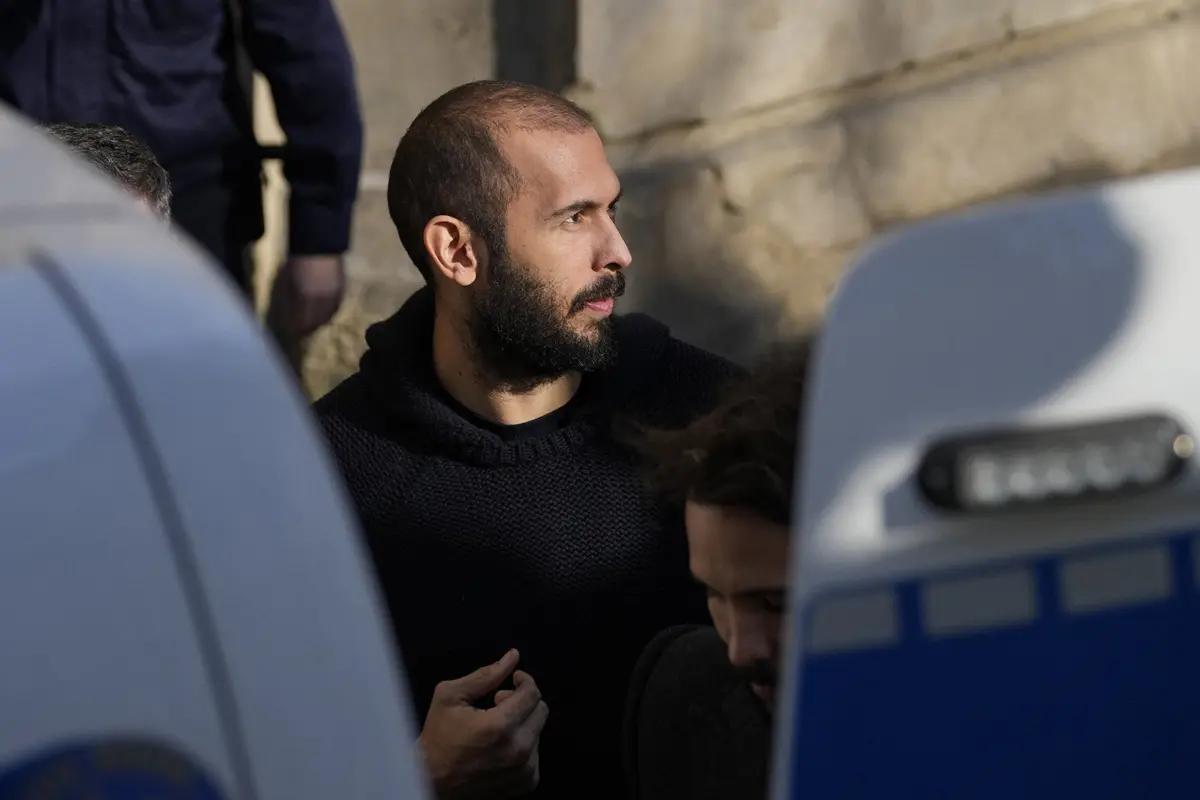
The transition of controversial influencer Andrew Tate, his brother Tristan, and their two alleged accomplices—Georgiana Naghel and Luana Radu—from a high-security Romanian detention facility to house arrest in late March marked a significant legal pivot point. Arrested initially on December 29 on grave suspicions of organized crime, human trafficking, and the formation of an organized criminal group, the siblings scored a temporary procedural victory. Their trial is slated to commence in late April, bringing intense global scrutiny back to the judicial system of their adopted home country, Romania.
However, an exhaustive review of court documents, freedom of information requests, and confidential briefings with prosecutors paints a deeply incriminating portrait. Far from keeping a low profile while awaiting trial, the Tates and their associates have allegedly engaged in a systematic campaign of witness intimidation, evasion plotting, and institutional subversion. Legal experts and sources within the Romanian prosecutor’s office warn that this aggressive posturing is backfiring immensely. Rather than strengthening their defense, the accused are actively alienating the judiciary, inviting supplementary criminal probes, and solidifying a narrative of public endangerment that could severely compromise their legal standing when the trial finally begins.
Detailed Chronology of Events and Escalations
The timeline of the Tate brothers’ detention reads like a masterclass in self-sabotage, characterized by persistent attempts to subvert the judicial process both from within their cells and through proxy networks outside.
The Detention Period and Initial Judicial Pushback (December 2022 – February 2023)
Following their late-December sweep, the Tates were held in the central arrest building of the Bucharest Police Department. Court documents reveal that almost immediately, the defendants began testing the boundaries of their confinement.
By early 2023, intelligence gathered from jailhouse wiretaps indicated that Andrew Tate was actively plotting an escape. The primary strategy revolved around securing medical clearance to travel to Dubai under the pretext of treating a purported lung tumor. Because the United Arab Emirates does not maintain an extradition treaty with Romania, a successful flight to Dubai would have effectively shielded the brothers from prosecution. However, Romanian authorities meticulously scrutinized the medical claims. While a Tate representative initially floated the tumor narrative to the British press, Andrew himself later walked back the statement on social media, admitting the lung spot was merely "scarring from an old battle." Romanian authorities promptly denied the travel request.
The February 21 Court Summary and Witness Intimidation
The true depth of the authorities’ frustration became glaringly apparent on February 21, when a Bucharest judge issued a blistering summary refusing to release the defendants. The court cited profound new risks:
- The accused posed a clear, ongoing danger to public order.
- Concrete preparations had been made to evade justice by fleeing the country.
- Active measures were underway to influence witnesses and coerce victims.
Central to this ruling was the weaponization of the Tates’ massive online following. Prosecutors documented instances where the influencers’ supporters flooded at least one alleged victim with abusive, threatening messages designed to force a retraction of her initial testimony.
Simultaneously, a U.S.-based law firm representing the brothers dispatched a menacing cease-and-desist letter to a key witness residing in Palm Beach, Florida, demanding she withdraw her statements or face aggressive defamation litigation. While the Tates’ legal team subsequently scrambled to distance their Romanian counsel from the letter, Romanian prosecutors treat the correspondence as a foundational brick in an overarching conspiracy of witness tampering.
The March Shift to House Arrest and Surveillance
Despite the damning February assessment, a subsequent appeals court panel—reportedly comprising judges relatively new to the intricate case files—ruled on March 31 to relax the conditions of detention, transitioning the four suspects to house arrest.
The ruling sent ripples of anxiety through official circles. The Tates were relocated to a heavily fortified, upscale residential compound in a northern suburb of Bucharest. Far from being granted freedom, however, the compound has been subjected to continuous, round-the-clock physical and electronic surveillance by Romanian law enforcement, fully aware that the defendants remain flight risks.
Supporting Context, Subversive Plots, and Institutional Compromise
The web of alleged misconduct extends far beyond basic witness tampering, incorporating high-tech breaches and audacious political maneuvering.
The Inside Threat: Luana Radu and Police Database Breaches
Among the four co-defendants, former police officer Luana Radu stands accused of orchestrating a significant digital breach. Court files obtained via freedom of information requests show that between April and December 2022—while preliminary investigations were already quietly underway—Radu allegedly accessed classified databases belonging to the Romanian Ministry of Internal Affairs.
Presiding judges noted in court records that such deep-level access would have been virtually impossible without the active assistance of external accomplices within law enforcement. Prosecutors suspect Radu leveraged this illicit intelligence to track investigative milestones, monitor surveillance operations, and give the criminal ring an unfair tactical advantage. Furthermore, local police units near the Tate compound uncovered historical complaints of violence and abuse filed by various women against the brothers prior to the current blitz—complaints that mysteriously languished without resolution, intensifying suspicions of institutional interference orchestrated by Radu.
Courting the Fringe: The Political Outreach Plot
In what prosecutors view as a desperate bid to leverage political influence, wiretapped conversations reveal that Andrew Tate instructed an assistant to approach two prominent Romanian right-wing politicians: George Simion and Diana Șoșoacă. Both figures are notorious for xenophobic rhetoric, anti-Western stances, provocative positions on gender, and the dissemination of pro-Russian talking points. (Șoșoacă was notably added to Ukraine’s official sanctions list in late March due to perceived threats to national security).
The wiretaps indicate Tate’s proposed bargain was stark: "If you take the side of the guys, when they get out of prison they will make sure you are rewarded for telling the truth."
Had this alliance materialized, it could have provided the Tates with a powerful public relations shield and parliamentary allies willing to challenge the integrity of the judiciary. Ultimately, however, both Simion and Șoșoacă publicly declined invitations to champion the brothers’ cause when queried by local media outlets.
Official Statements and Legal Perspectives
The legal community in Bucharest has watched the unfolding PR and procedural circus with a mixture of professional astonishment and quiet satisfaction at the defendants’ self-inflicted wounds.
Defense Rationalizations vs. Prosecution Realities
The defense has consistently pushed back against the narrative of evasion and intimidation. Eugen Vidineac, lead defense counsel for the Tates, firmly rejected flight speculations in statements to local media: "They have a home and children in Romania, they are under criminal investigation, there is no reason to run away."
Meanwhile, campaign spokesperson Mateea Petrescu characterized the leaked wiretaps as severely out of context, telling investigators that Andrew Tate’s musings about Dubai were strictly contingent upon receiving lawful permission to travel for medical diagnostics. Regarding the controversial U.S. cease-and-desist letter sent to the Florida witness, Petrescu maintained it was merely "a LEGAL action in the USA," dismissing ongoing suspicions as obsolete now that the appeals court has permitted house arrest.
The Verdict of the Legal Establishment
Independent legal experts argue that the defense’s aggressive maneuvers have fundamentally poisoned the well for their clients. Mihai Marcu, a criminal defense attorney in Bucharest and law lecturer at Alexandru Ioan Cuza University of Iași, highlighted the profound hostility visible in court filings:
"Any subsequent statements they may give will be viewed with a certain amount of skepticism by the judicial bodies… If the notification [the cease-and-desist order] concerned a withdrawal of the criminal complaint, it could lead to a widening of the criminal investigation scope under the aspect of a new crime — that of influencing statements."
A seasoned veteran of the Romanian justice system, speaking anonymously due to the sensitivity of the pending trial, offered a blunt psychological assessment of Andrew Tate’s behavior behind bars:
"I think Andrew Tate is not the most intelligent guy, but he probably can’t help himself. His entire brand is built on relentless controversy and a pathological need for public attention. He simply does not understand how the traditional European judiciary operates; treating a criminal investigation like a social media engagement campaign is the fastest way to guarantee a maximum sentence."
Future Outlook: The Road to Trial
As April draws to a close and the formal trial date approaches, the legal landscape surrounding Andrew and Tristan Tate is more volatile than ever.
- Expansion of Charges: Prosecutors are actively weighing whether to formally add charges of witness tampering, obstruction of justice, and unauthorized access to state databases to the existing indictment. If added, these counts carry substantial mandatory prison sentences under Romanian law, effectively independent of the outcome of the primary human trafficking charges.
- Erosion of Credibility: The documented attempts to flee, bribe political figures, and intimidate victims have shattered any pretense of cooperation. The panel of judges presiding over the upcoming trial will inherit a case file heavily annotated with judicial warnings regarding the defendants’ dangerous disregard for public order.
- The Global Spotlight: With international human rights organizations, tech platforms, and legal watchdogs monitoring every procedural development, Romanian authorities face immense pressure to demonstrate that their justice system cannot be swayed, intimidated, or subverted by high-net-worth influencers wielding digital armies.
For the Tates, the transition to house arrest was celebrated by their supporters as a sign of collapsing state momentum. In reality, it may well represent a brief, false sense of security before a relentless judicial storm breaks upon them in the courtroom.