Executive Overview
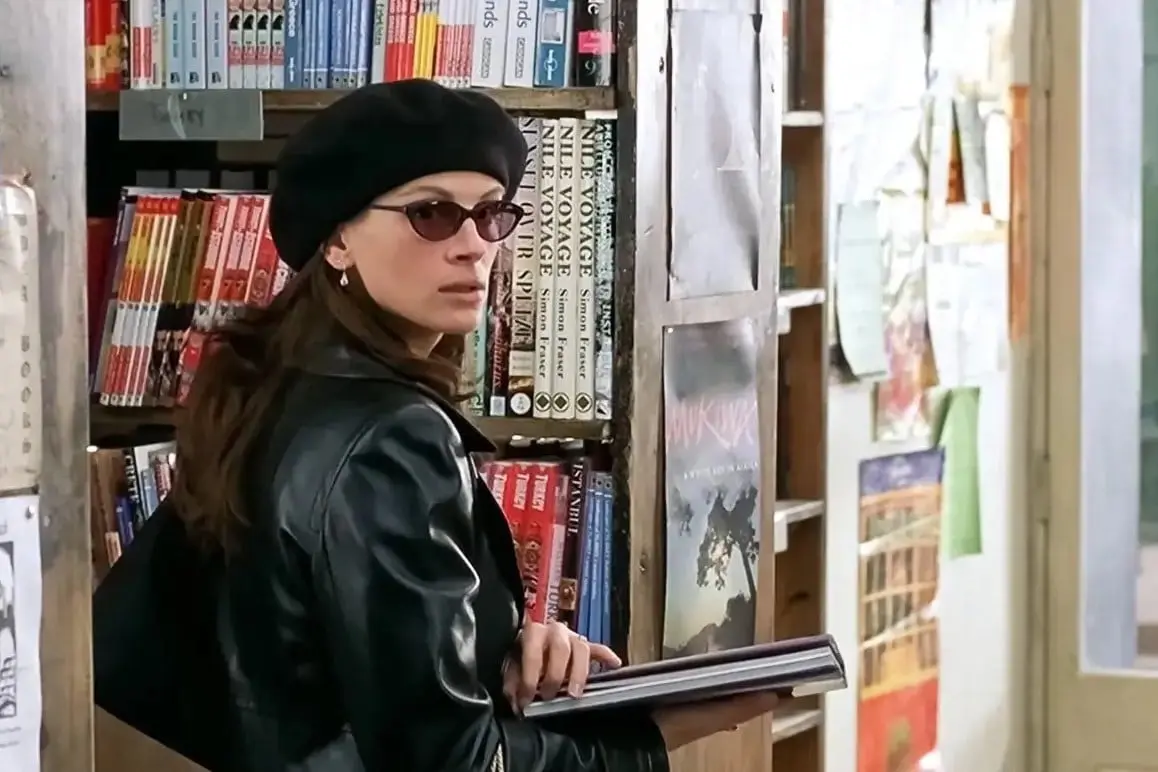
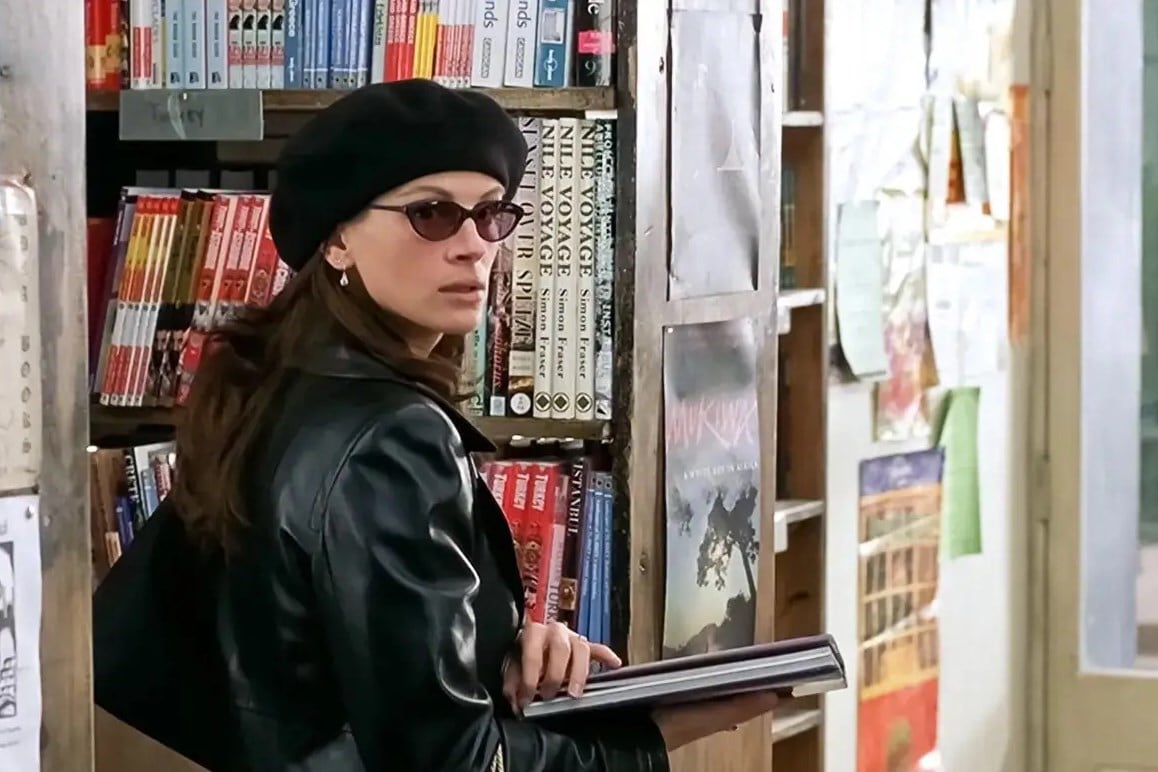
Picture the scene: you are wandering the narrow, dimly lit aisles of an independent bookstore. The soundscape is a gentle wash of Norah Jones or the melancholic lilt of The Cranberries echoing softly overhead. You stand on your tiptoes, stretching to reach a high shelf, only for your fingers to graze against those of a striking, enigmatic stranger simultaneously reaching for the exact same niche paperback. You lock eyes. A palpable spark dances in the air, a physical jolt flutters in your stomach, and the rest is cinematic history.
Except, of course, it isn’t. Because this is real life, not a nostalgic, millennial-bait romantic comedy from the early aughts.
From the whimsical streets of Notting Hill to the digital epistolary charm of You’ve Got Mail, the fantasy of meeting a soulmate in a bookstore is one of the most enduring, highly romanticized tropes in modern culture—even if it rarely survives first contact with reality. Literature has long been viewed as fertile ground for romance and intellectual discourse. It is precisely why high-profile modern pairings, such as Dua Lipa and Callum Turner, capture our collective imagination after bonding over shared reading lists. It is also why the cultural archetype of the "performative man" walking about town brandishing a well-thumbed copy of bell hooks’s All About Love sparks endless viral discourse across TikTok and X (formerly Twitter).
The dream of connecting with a kindred spirit over the written word is a powerful cultural fantasy. It is an aspiration that brand strategist Emily Segal knows intimately, and one that served as the primary creative blueprint for Readme—a new dating application pitched unapologetically as a platform "for people whose love language is language."
Launched this September, Readme arrives in a crowded, increasingly fatigued digital marketplace, carving out territory within a growing sea of niche, wellness-oriented dating apps. Developed by the minds behind Co-Star, the astronomical pop-culture juggernaut, Readme was founded by Segal, Co-Star’s Head of Brand, alongside Banu Guler, the company’s CEO. For bibliophiles, literary snobs, and romantics alike, the app’s foundational premise—using literature as a gateway to enduring romance—is undeniably captivating. Yet, operating against a backdrop of severe dating app exhaustion, one must ask: is matching over prose truly enough to make modern singles want to pick up their phones and swipe once more?
Detailed Chronology: From Astrology Giants to Literary Matchmaking
To understand how Readme came to fruition, one must trace its roots back to the explosive success of Co-Star, an app that weaponized generative charting and existential poetry to captivate millions of digitally native users.
From the very inception of Co-Star, users and investors alike badgered CEO Banu Guler and her executive team to spin their algorithm into a romantic matchmaking service. Guler, however, remained consistently hesitant. She maintained that astrology—while a compelling lens for self-reflection—was merely one isolated tool for evaluating human compatibility. A dating app, she argued, required a deeper, more comprehensive foundation of shared emotional and intellectual resonance.
As Guler and Segal engaged in prolonged, wide-ranging philosophical discussions about what an ideal, non-transactional dating ecosystem could look like, a clearer picture began to emerge. They reflected on the tangible, intimate artifacts of modern romance: the carefully chosen novels you gift a partner, the evocative lines of poetry sent via text message on a rainy Tuesday morning, or the profoundly revealing experience of scanning a new lover’s bookshelves the morning after staying over for the first time.
These quiet, tactile moments, Segal realized, represented the polar opposite of the hyper-transactional, disposable hookup culture that modern daters have grown to despise.
Alongside her work as a high-profile trend forecaster and strategist, Segal is also an accomplished author, having published the 2020 novel Mercury Retrograde, a book that explored the intersections of contemporary culture, art, and technology through the lens of astrology. It was precisely through this literary endeavor that Segal first crossed paths with Guler, planting the seeds for their eventual business partnership. When the two finally decided to build a dating app, they chose to pivot away from planetary alignments and ground the experience entirely in the written word.
Readme officially launched in September, positioning itself not as an algorithmic meat-market, but as a deliberate, slow-paced sanctuary for language lovers. Rather than relying on superficial headshots and snappy bios, the application requires users to endure an introspective, multi-part linguistic onboarding process. It is a deliberate deceleration designed to filter out the impatient and reward the intellectually curious.
Supporting Context & Metrics: Navigating Dating App Fatigue
To say Readme has its work cut out for it would be an understatement of monumental proportions. The contemporary dating app landscape is a hyper-consolidated monopoly ruled by behemoths like Tinder, Hinge, and Bumble—platforms that have successfully commodified human romance into a gamified, dopamine-fueled loop of endless swiping.
Behind this corporate sheen, however, lies an unprecedented wave of cultural exhaustion. The romance industry is facing a mental health crisis of its own making. According to a landmark 2024 joint survey conducted by Forbes Health and OnePoll, an astounding 79 per cent of Gen Z dating app users reported feeling deeply mentally and emotionally exhausted by their experiences on mainstream platforms. Burnout has become the baseline emotional state for modern singlehood. Users are tired of dead-end text threads, superficial prompts, and the crushing dehumanization of the digital meat-market.
Emily Segal points out that what is desperately missing from the contemporary market is an ecosystem capable of providing "a broader, deeper picture" of an individual’s interior life. Readme is engineered to fill that exact void.
Interestingly, while the app’s methodology feels distinctly modern—blending psychometric profiling with literary aesthetics—it has deep historical precedents. Segal notes that Readme draws spiritual inspiration from early internet predecessors like Nerve.com’s pioneering dating service in the early 2000s, which paired users based on elaborate, essayistic profiles and granular questions about their cultural tastes. It also echoes the legendary classified dating ads found in The New York Review of Books, which have successfully fostered intellectual and romantic matches through prose since 1968.
The Mechanics of the Match: How Readme Works
Despite its bookish branding, Readme does not operate on the simplistic premise of matching users based strictly on shared reading lists or favorite authors.
When a user downloads the app, they are subjected to a rigorous, 25-part interactive quiz. This questionnaire weaves together a volatile mix of explicitly literary inquiries—such as "How do you feel about your own writing?"—alongside deeply personal, probing psychological questions like "Which of these things are you surprisingly bad at?"
The vast majority of the quiz, however, requires users to evaluate pairs of evocative quotes, selecting the snippet that most profoundly resonates with their internal worldview. A user might be asked to choose between Margaret Atwood’s poignant observation, “Can a heart leap? Can a person be dizzy with relief?” and art critic Peter Schjeldahl’s punchy, muscular prose: “The tone of his through-line may be treble-register, slight, and reedy, but if you stood in its way it would flatten you.”
Once the quiz is completed, the app’s proprietary system translates these literary preferences, mapping the user across three distinct psychological axes:
- How they relate to desire.
- How they communicate that desire.
- How they make structural and emotional sense of it.
Based on these axes, the app assigns each user one of twelve distinct literary archetypes. For instance, one archetype—aptly titled "Utopia in our Lifetime"—designates an individual who feels fundamentally "outside of the social pact," whose communication is driven by the "impossible hope" that they will one day make absolute sense to another person, and who heavily "relies on structures and systems to make sense of the world."
While the app does not restrict users from viewing or filtering matches based solely on these archetypes, once a match is successfully established, both parties are presented with a detailed breakdown of each other’s archetype. This includes a psychological description, bulleted behavioral insights, and an estimated algorithmic similarity percentage.
Official Statements & Philosophy
The driving philosophy behind Readme is a conscious rejection of performative digital consumption. In an era where platforms like Goodreads and Letterboxd have transformed cultural consumption into a competitive sport—where users curate public taste profiles to signal intellectual superiority—Readme aims to strip away the performance.
"We tried to go a little deeper… It’s more about what you can learn about yourself through how you relate to writing, rather than trying to signal taste in this performative way, which you have opportunities to do all over the internet."
— Emily Segal, Co-Founder of Readme and Head of Brand at Co-Star
Segal expands on this ethos, noting that the app’s archetypal framework serves a deeply practical emotional function for early-stage daters. "We think these archetypes can tell you something interesting and important about the way you relate to other people, the way you can fall in love, or how you might be in a relationship," Segal explains. Drawing a direct parallel to her previous work, she adds: "There’s no astrology on the app, but it’s the equivalent of your horoscope."
While the platform does suggest book titles and authors based on user data, Segal is quick to clarify that Readme is intentionally not a literary social network. It is not trying to be a dating-centric Letterboxd.
"We wanted to avoid the whole performative ‘These are my top 10 books’ thing," Segal reiterates. Instead, the focus remains firmly locked on introspection. The platform asks users to examine their own vulnerabilities through the mirror of great writing, bypassing the ego-driven curation that plagues standard social media landscapes.
Future Outlook: Can Language Save Modern Dating?
As Readme navigates its infancy, its long-term viability remains an open question in the volatile tech ecosystem. Niche dating applications face a notoriously difficult paradox: while they successfully attract highly engaged, passionate early adopters, their hyper-specific parameters often limit their total addressable market, making critical mass difficult to achieve outside major metropolitan hubs like New York, London, and Los Angeles.
Furthermore, the app demands a level of intellectual and emotional labor that casual daters—those accustomed to the frictionless, mindless dopamine hit of swiping through photographic thumbnails while watching television—may find overly taxing. Readme asks its users to read, think, feel, and articulate. In a digital culture increasingly dominated by short-form video and declining attention spans, asking people to dissect Margaret Atwood quotes before sending a message is a bold, high-risk gambit.
Yet, even for the most hardened dating app cynics, Readme possesses an undeniable, irresistible charm. There are, after all, countless interests around which to build a community—film, fine art, fashion, music. But the bet that Segal and the Readme team are making is that there is something uniquely potent, intimate, and profoundly revealing about the written word. Language is the fundamental operating system of human consciousness; to share an appreciation for how sentences are constructed is, in many ways, to share a worldview.
Even if a user fails to find their happily-ever-after or secure a walk down the aisle through the platform, the worst-case scenario is far from tragic. Participants walk away from the onboarding process with a revitalized reading list, a handful of brilliant new authors on their radar, and a deeper, more articulated understanding of their own romantic psychology—outcomes that vastly outperform the typical dating app experience of ghosting, burnout, and emotional fatigue.
"Books, poetry, writing, and language are just part of the human spirit and are super romantic," Segal concludes, summing up the core thesis of her creation. "It’s definitely not the only thing you connect on—it’s just where we’re starting."
As the digital dating landscape continues to fracture under the weight of algorithmic exhaustion, starting with a good book might just be the radical pivot the industry desperately needs.