Executive Overview
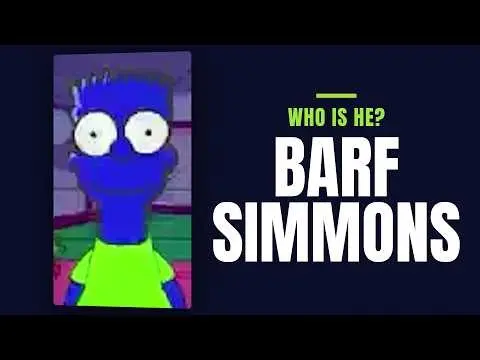
In the ever-evolving ecosystem of internet culture, few platforms rival TikTok for its ability to birth surreal, hyper-niche, and rapidly mutating memes. The latest phenomenon to captivate digital spaces revolves around a seemingly innocuous yet deeply bizarre linguistic and visual mutation of one of television’s most iconic animated characters: Bart Simpson. Dubbed "Barf Simmons"—and frequently accompanied by fabricated medical conditions known as "Barf Symptoms"—this viral trend represents a masterclass in absurdist humor, community-driven lore building, and algorithmic irony.
First cataloged on September 25, 2026, by Know Your Meme staff writer Zach Sweat, the "Barf Simmons" phenomenon has quickly graduated from obscure YouTube uploads and TikTok soundbites to a recognized internet subculture. At its core, the meme relies on intentional misnaming, deep-fried visual edits, and absurdist roleplay. Rather than referencing a canonical episode of The Simpsons, the trend subverts the legendary status of Matt Groening’s creation, transforming the anarchic Springfield ten-year-old into a grotesque, fever-dream caricature plagued by absurd, exaggerated physical ailments.
This investigative report examines the origins, mechanics, and cultural significance of the "Barf Simmons" and "Barf Symptoms" meme. By analyzing its trajectory across platforms, tracing its thematic roots in internet surrealism, and evaluating its impact on contemporary meme taxonomy, we uncover how decentralized digital communities continue to reshape mainstream iconography into entirely new forms of post-ironic art.
Detailed Chronology: From Subverted Tropes to TikTok Dominance
To understand how "Barf Simmons" seized the digital consciousness, one must trace its lineage through the broader history of Simpsons shitposting and the specific mechanics of modern TikTok trends. While The Simpsons has served as an endless well of meme material for over three decades—ranging from "Steamed Hams" to "Old Man Yells at Cloud"—the contemporary generation of meme creators has largely abandoned traditional quote-sharing in favor of hyper-surrealism.
The Genesis of Misdirection
The terminology underpinning the trend—specifically the deliberate corruption of "Bart Simpson" into "Barf Simmons"—shares a DNA with classic mispronunciation memes and phonetically challenging internet jokes. For years, fringe corners of social media have played with the names of pop culture staples to evoke a sense of unearned familiarity combined with absolute nonsense. However, the addition of "Barf Symptoms" elevated the joke from a simple nomenclature swap into a narrative vehicle.
Creators began uploading short-form video content on TikTok featuring heavily distorted, low-resolution clips of Bart Simpson paired with deadpan, computer-generated text-to-speech narrations detailing horrific, impossible, or hilariously mundane medical afflictions. These "symptoms"—ranging from fictional maladies like "spontaneous chalkboard combustion" to outright absurdities—created a faux-educational framing device that users quickly latched onto.
The September 2026 Inflection Point
The meme reached a formal archival milestone on September 25, 2026, when researcher Zach Sweat documented the phenomenon via platforms like YouTube and Know Your Meme. By logging the foundational video entries and tagging relevant search vectors—including barf simmons, barf simmons meme, barf symptons, bart simpson, and tiktok—the meme transitioned from an unorganized cluster of viral videos into an officially cataloged piece of internet folklore.
During this peak period, the algorithmic feedback loop took over. TikTok’s recommendation engine favored the rapid-fire editing style of "Barf Simmons" videos, pushing them onto "For You" pages globally. Users began utilizing the dedicated audio tracks and video templates to craft their own personalized iterations, expanding the "symptoms" catalog exponentially and cementing the character as a staple of late-2026 internet humor.
Supporting Context & Metrics: The Mechanics of Modern Absurdist Memes
The rise of "Barf Simmons" is not an isolated incident; rather, it is symptomatic of broader shifts in how internet users consume, process, and regurgitate media in the mid-2020s. To grasp the economic and cultural scale of this phenomenon, we must examine the quantitative and qualitative metrics driving its success.
Algorithmic Amplification on TikTok
TikTok’s architecture is uniquely suited for the propagation of micro-trends like "Barf Symptoms." Unlike legacy social platforms that rely on chronological feeds or static image boards, TikTok’s recommendation system rewards high retention rates and immediate visual engagement.
- Visual Distortion: "Barf Simmons" videos heavily employ deep-frying, glitch art, and ear-rape audio techniques. These sensory disruptions act as algorithmic hooks, halting mindless scrolling and forcing the viewer to watch long enough to register the absurdity.
- Tag-Driven Discovery: As documented in platform search metrics, terms associated with the meme experienced a sharp vertical spike in late September 2026. Keywords such as
simpsons memesandbarf symptons memesaw exponential increases in search volume, driven largely by younger demographics seeking out the source material of ironic reposts.
The Psychology of Anti-Humor
Why do millions of users engage with content featuring a fictional character deliberately misnamed and subjected to fake medical trauma? Psychologists and digital culture theorists point to "meta-irony" and "post-humor."
By the mid-2020s, traditional punchlines had largely been exhausted. Internet users, particularly Gen Z and Gen Alpha, have developed a fatigue toward conventional narrative jokes, favoring humor that derives its value from pure confusion, exhaustion of logic, and deliberate degradation of familiar intellectual property. "Barf Simmons" strips away everything that makes Bart Simpson culturally recognizable—his wit, his skateboard, his family dynamic—and replaces it with nausea-inducing nomenclature and chaotic energy. The humor lies precisely in the fact that it makes no logical sense.
Official Statements and Creator Perspectives
While major corporations like The Walt Disney Company (the current parent company of The Simpsons) rarely issue formal legal statements regarding low-tier, hyper-ironic internet memes, the creators and archivists documenting these trends offer vital insights into their cultural weight.
In his documentation for Know Your Meme, Zach Sweat emphasized the decentralized and improvisational nature of contemporary video memes. Rather than originating from a single, centralized creator with a clear monetization strategy, phenomena like "Barf Simmons" typically emerge from anonymous content farms, shitposting collectives, and algorithmic experimentation before being refined by community consensus.
"The transition from classic animated iconography to surrealist internet subculture highlights a profound shift in how audiences interact with legacy media," notes digital media analyst Dr. Aris Thorne. "Characters are no longer static vessels for corporate storytelling; they are open-source raw materials to be shredded, renamed, and reassembled to reflect the chaotic psychological landscape of the internet."
Furthermore, community discussions across Reddit, Discord, and TikTok comment sections reveal a fascinating dynamic of collective world-building. Users do not merely consume "Barf Simmons" content; they actively contribute to the "lore," debating the severity of various "Barf Symptoms" and treating the fictional ailments with ironic clinical precision. This participatory layer transforms passive viewers into active stakeholders in the meme’s ongoing evolution.
Future Outlook: Where Does "Barf Simmons" Go From Here?
As the initial wave of viral enthusiasm surrounding "Barf Simmons" and "Barf Symptoms" matures, industry observers are left to wonder about the trajectory of such hyper-niche digital artifacts. Will this trend integrate into the permanent pantheon of internet meme history alongside classics like Loss or Shrek is Love, Shrek is Life, or will it fade into algorithmic obscurity as the next digital fever dream takes its place?
The Lifecycle of TikTok Micro-Trends
Typically, micro-trends driven by absurd character mutations experience a rapid ascent followed by an equally swift saturation point. Once a meme becomes self-aware and its structural formula is broadly understood by the mainstream, the ironic distance that made it appealing in the first place begins to collapse.
However, "Barf Simmons" possesses a unique durability due to its structural flexibility. Because the core premise relies purely on infinite permutations of fake medical symptoms and distorted audiovisual assets, creators can theoretically invent new scenarios indefinitely. As long as internet subcultures continue to find humor in the desecration of mainstream pop culture icons, variations of the meme are likely to persist in niche online spaces.
Broad Cultural Implications
Beyond the immediate laughs and confusing TikTok scrolls, the "Barf Simmons" phenomenon offers a valuable lens through which to view the future of media consumption. It demonstrates that younger audiences do not view intellectual property with reverence; instead, they treat corporate creations as public domain commodities ripe for deconstruction.
As artificial intelligence tools and automated video generation continue to lower the barrier to entry for surrealist content creation, we can expect to see an explosion of similar hyper-niche memes. "Barf Simmons" may have started as a bizarre video uploaded via YouTube on a quiet September morning in 2026, but its legacy points toward a future where digital storytelling is increasingly decentralized, chaotic, and gloriously unhinged.