Executive Overview
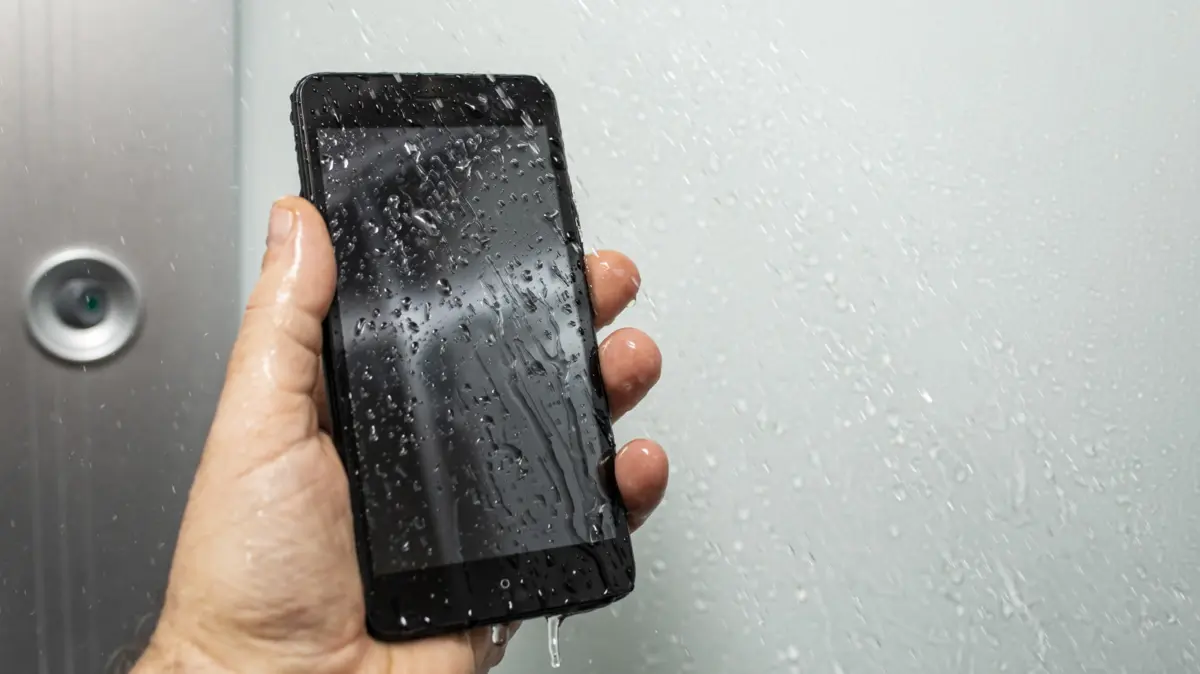
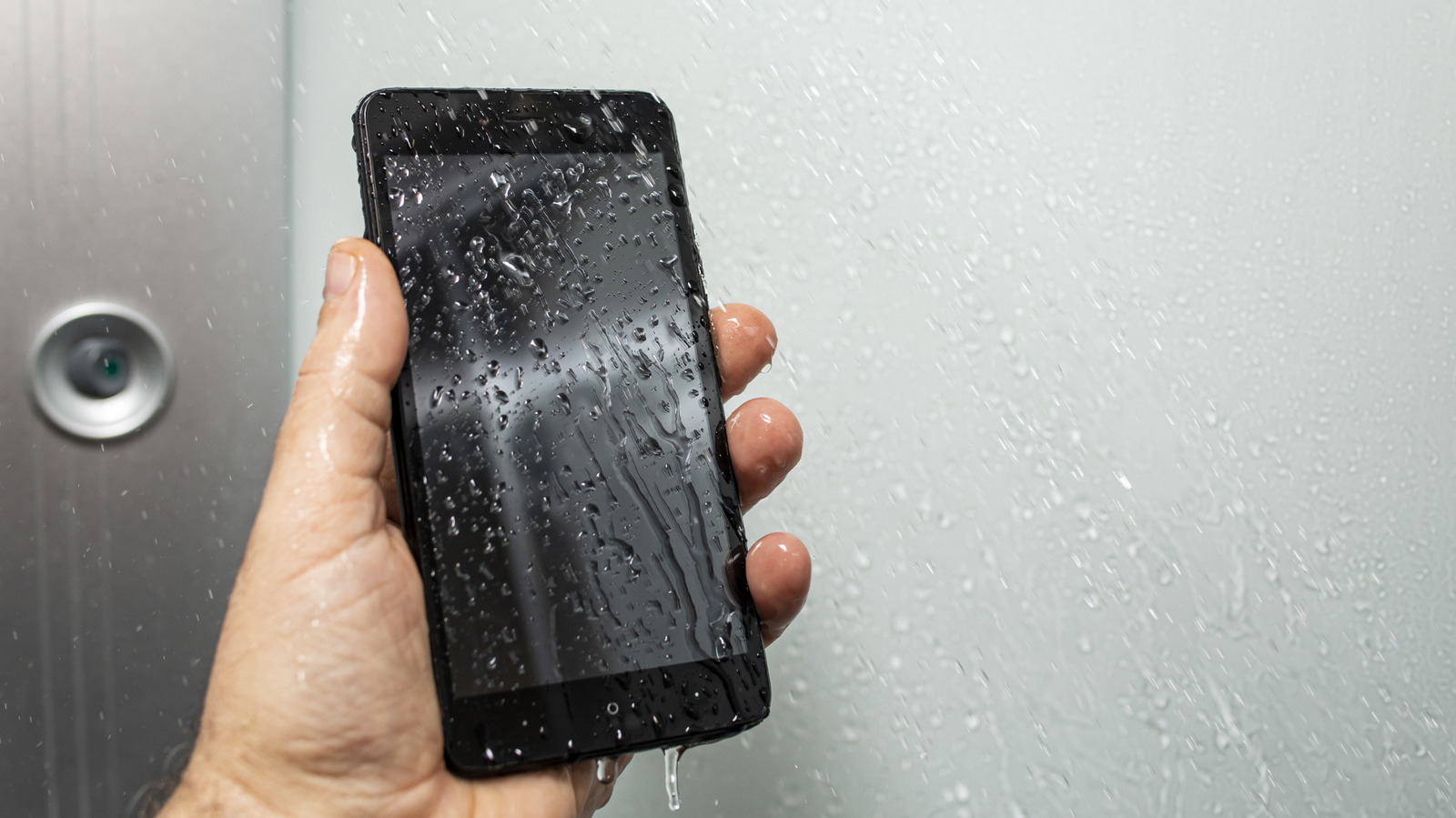
For millions of smartphone users, the morning routine involves multitasking: catching up on the latest podcasts, streaming news briefings, or listening to a favorite playlist while stepping into a hot shower. Bolstered by marketing campaigns highlighting "IP67" and "IP68" ingress protection ratings, consumers have grown increasingly confident that their expensive pocket computers are essentially impervious to liquid damage. Yet, a silent and misunderstood threat routinely bypasses these high-tech safeguards: hot steam and ambient bathroom humidity.
While manufacturers like Apple, Samsung, and Google design their flagships to survive accidental pool dunks or spilled coffee, shower environments present an entirely different class of hazard. Steam behaves differently than liquid water. It carries thermal energy, expands into micro-spaces, and cycles through condensation states that relentlessly degrade internal adhesives and rubber gaskets. Furthermore, the elevated ambient temperatures of a steamy bathroom routinely exceed a smartphone’s safe operating thresholds, threatening long-term battery integrity and system-on-chip performance.
This deep-dive investigation explores the physics of steam-induced electronic failure, examines the stark limitations of IP ratings, details the official stances of major tech giants, and provides actionable guidelines to protect your investment from premature destruction.
The Physics of Failure: Why Steam is More Dangerous Than Liquid Water
To understand why a hot shower can easily brick a thousand-dollar smartphone, one must first deconstruct the true meaning of industry standards. Most modern handsets boast an IP67 or IP68 rating. In this classification system, the first digit signifies dust resistance, while the second numerical digit represents liquid ingress protection. An IP68 rating generally guarantees that a device can withstand fresh water immersion up to a specified depth—usually 1.5 meters—for up to 30 minutes.
However, consumers routinely misinterpret "water-resistant" as "waterproof." More critically, they fail to recognize that immersion testing is performed in stationary, room-temperature water.
Steam introduces variables that standard liquid immersion tests do not account for:
- Thermal Expansion: As hot water cascades from a showerhead, it vaporizes into microscopic droplets and steam. This warm, moisture-laden air envelops the smartphone. The elevated heat causes the phone’s chassis, internal components, and exterior glass panels to expand at varying rates, microscopic gaps.
- Vapor Penetration: Steam molecules are significantly finer than liquid water droplets under standard pressure. Driven by thermal currents, water vapor effortlessly breaches the microscopic tolerances around physical buttons, speaker grilles, microphone ports, and the USB-C or Lightning charging ports.
- The Condensation Cycle: Once inside the device—or when a warm phone encounters cooler ambient bathroom air—the vapor condenses back into liquid water. This trapped condensation settles directly onto logic boards, display connectors, and battery management systems.
Water is a relentless solvent and a conductive agent. When paired with the electricity coursing through a powered-on smartphone, trapped condensation accelerates localized corrosion, triggers short circuits, and degrades delicate ribbon cables.
Detailed Chronology: The Silent Degradation of Device Integrity
Damage caused by bathroom steam is rarely instantaneous or catastrophic on day one. Instead, it is a cumulative, degenerative process that slowly strips away a phone’s structural defenses over weeks and months.
Phase One: The Undermining of Adhesives
Modern smartphones rely heavily on advanced, pressure-sensitive adhesives (PSAs) and microscopic rubber gaskets to seal their chassis against the elements. When exposed to repeated cycles of high heat and dense humidity—such as daily 15-minute steaming sessions in a closed bathroom—these adhesives begin to soften and lose their tackiness. Over time, the seals warp, shrink, or detach completely, creating microscopic pathways for moisture.
Phase Two: Internal Condensation and Oxidation
As the structural seals fail, every trip to the bathroom introduces fresh water vapor into the device interior. When the user exits the bathroom and the phone cools down, this vapor condenses onto the coldest internal components, notably the shield plates covering the processor and the battery terminals. Because bathrooms lack the ventilation to clear heavy steam instantly, this internal moisture remains trapped for hours, slowly initiating galvanic corrosion on exposed solder joints.
Phase Three: Manifestation of Failures
Weeks or months after the initial exposure, the user begins to experience ghost symptoms. The touchscreen may register phantom inputs, the charging port may throw erroneous "liquid detected" warnings, or the camera lenses may fog up from the inside. By the time these symptoms appear, the internal corrosion is often too advanced for a simple fix, rendering the device economically unrepairable.
Supporting Context & Metrics: Operating Limits and Warranty Realities
To contextualize the risks, it is vital to examine what smartphones are physically engineered to endure. Industry testing standards outline strict operational parameters that many users unknowingly violate daily.
Thermal Thresholds
The vast majority of smartphones feature a recommended operating temperature range between 32°F and 95°F (0°C to 35°C). When left idle or unpowered, storage temperatures can stretch slightly further, but sustained exposure to ambient heat above 95°F accelerates chemical aging within lithium-ion batteries.
A closed bathroom during a hot shower routinely exceeds 105°F to 115°F in ambient temperature, with local humidity spiking to near 100%. When a phone is brought into this environment, internal sensors register the thermal stress. If temperatures climb too high, the device will initiate an emergency thermal shutdown to protect the processor. However, even short of a shutdown, the continuous heat exposure permanently diminishes the battery’s maximum capacity and degrades its overall lifespan.
The Myth of Warranty Coverage
Perhaps the most painful realization for consumers is the financial fallout of steam damage. A common misconception is that an IP68-rated device comes with a warranty guarantee against liquid ingress.
A review of standard manufacturer warranties reveals a uniform clause: liquid damage is explicitly excluded from coverage. Apple, Samsung, Google, and Motorola all include internal liquid contact indicators (LCIs) inside their hardware. When a technician opens a device for repair and finds a triggered LCI—or signs of mineral deposits left behind by evaporated shower steam—the warranty is immediately voided, leaving the consumer entirely responsible for the cost of replacement or repair.
Official Statements from Tech Giants
Manufacturers have grown increasingly vocal in warning users against bringing devices into high-humidity environments, directly contradicting the informal advice found across social media and lifestyle vlogs.
- Apple Support Guidelines: Apple explicitly states in its official documentation that users should avoid exposing iPhones to "dramatic changes in temperature or humidity" and specifically warns against taking devices into saunas or steam rooms. The company emphasizes that liquid damage is not covered under the AppleCare+ accidental damage policy if it stems from deliberate exposure to high-pressure water or excessive steam.
- Google Pixel Support: Google’s hardware care guidelines mirror Apple’s stance, advising users to keep Pixel phones away from excessively humid spaces like bathrooms during hot showers or saunas. Google notes that while devices feature water resistance for accidental spills, prolonged exposure to vaporized moisture compromises internal gaskets.
- Samsung Electronics: Samsung’s literature warns that water-resistance features are not permanent and can diminish over time due to normal wear and tear, drops, and exposure to chemical agents found in soaps, shampoos, and conditioners—all of which frequently become airborne inside a shower room via steam.
Future Outlook: Engineering for Real-World Habits
As mobile technology evolves, manufacturers face a persistent design challenge: bridging the gap between how engineers intend devices to be used and how consumers actually use them.
Material Science Innovations
Engineers are actively researching advanced nanomaterials and hydrophobic coatings applied at the molecular level to individual components on the logic board. While current IP ratings protect the exterior chassis, future flagships may feature conformal coatings on internal chips that repel moisture even if the outer seals are breached by steam or wear. However, these manufacturing processes add significant cost, meaning full steam-resistance remains a distant prospect for budget and mid-range devices.
Smart Sensors and Proactive Warnings
Next-generation operating systems are beginning to incorporate advanced environmental sensors capable of detecting high humidity and elevated temperatures in real time. Future smartphones may issue software warnings—or temporarily disable certain non-essential systems—when they detect that they have been brought into a sauna or steamy bathroom, actively protecting themselves from user error.
Conclusion: Best Practices for Device Longevity
Smartphones represent a substantial financial investment, often costing well over a thousand dollars and serving as the central hub for our personal and professional lives. Subjecting these complex pieces of engineering to the punishing environment of a steamy shower is an unnecessary gamble with exceptionally poor odds.
To ensure your device lasts through its intended upgrade cycle, keep the following golden rules in mind:
- Leave it Outside: Keep your phone entirely out of the bathroom during showers, saunas, and steam sessions. Store it securely in an adjacent room.
- Embrace Audio Alternatives: Invest in a dedicated, expendable portable Bluetooth speaker with an IPX7 or IPX8 rating for your shower entertainment. Modern Bluetooth signals easily pass through standard interior doors and drywall without dropping connection.
- Dry Immediately, Never Heat: If your phone does experience accidental liquid exposure, wipe it down immediately with a clean, lint-free cloth. Keep charging ports facing downward to encourage drainage, avoid inserting any foreign objects or cotton swabs, and never use a hairdryer, microwave, or rice bowl to dry the device.
By respecting the precise boundaries of water-resistance technology, you can save yourself hundreds of dollars in unexpected repair costs and ensure your device remains healthy, functional, and fully protected for years to come.