Executive Overview
The traditional parameters of the professional and academic day have fundamentally fractured. Gone are the days when the rhythm of modern life could be neatly categorized into a predictable, binary routine: waking up, enduring a rigid commute to a singular corporate desk or university library, staring at a screen for eight uninterrupted hours, and reversing the journey home. Today, that blueprint has been replaced by a fluid, multi-faceted ecosystem of hybrid living. Recent labor statistics indicate that hybrid working is now the established normal for over a quarter—specifically 28 per cent—of the British workforce, a structural shift that shows no signs of reversing.
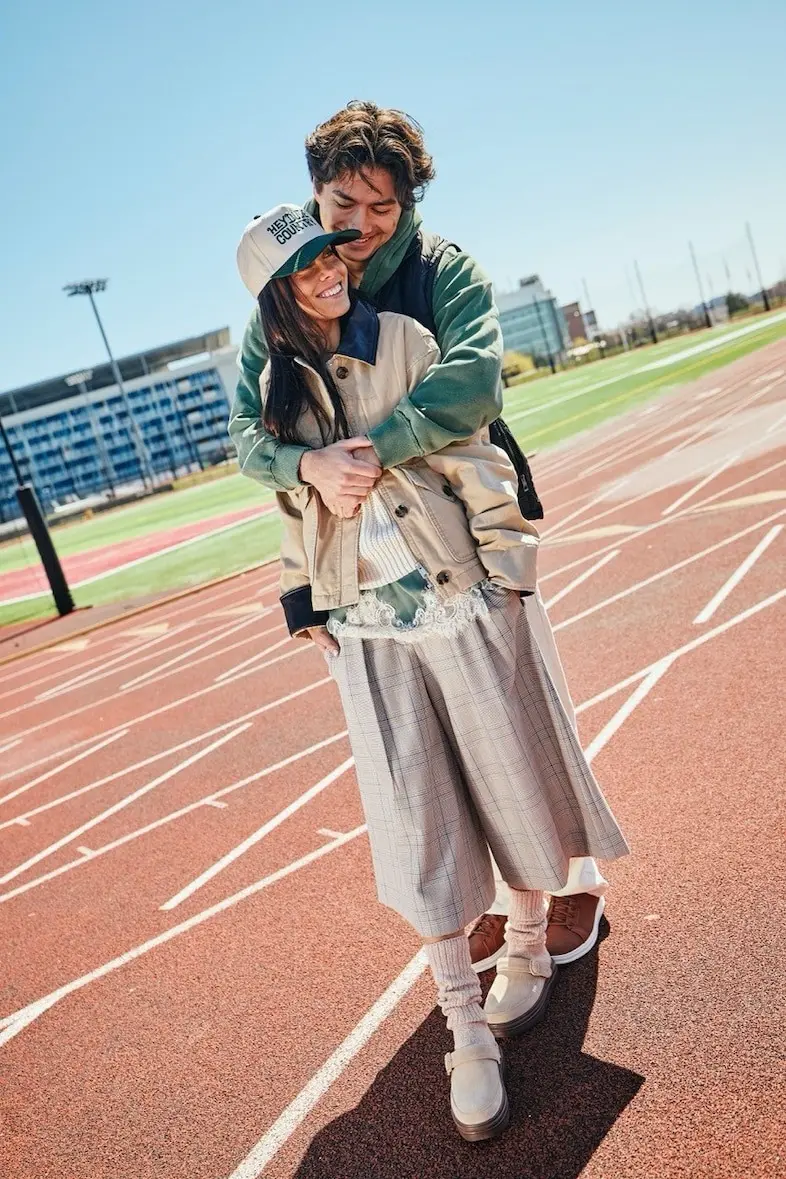
This transformation in where and how we work has inevitably triggered a parallel evolution in how we dress, move, and navigate our urban environments. Footwear and apparel designed for the static conditions of a 20th-century office are increasingly misaligned with the realities of the 21st-century daily grind. Into this cultural space stepped casual footwear brand HEYDUDE. Earlier this autumn, on September 10, the brand launched an immersive, one-day-only pop-up experience at London’s iconic 180 The Strand: The Comfort Class Lounge.
Designed explicitly to honor and interrogate the “new commute,” the pop-up served as a holistic co-working sanctuary where attendees could work, network, rest, and recalibrate between tasks. More than just a marketing activation, the event acted as a physical manifestation of a broader lifestyle shift. By showcasing footwear lines like the Paul Pro Classic for men and the Austin Lift Clog for women, HEYDUDE positioned its products at the intersection of ergonomics, urban mobility, and contemporary style. This report provides an exhaustive, journalistic examination of the Comfort Class Lounge, the macroeconomic and cultural shifts driving modern hybrid lifestyles, and what the future holds for the intersection of fashion, ergonomics, and the modern workday.
Detailed Chronology: Anatomy of the Comfort Class Lounge
The execution of the Comfort Class Lounge at 180 The Strand was meticulously designed to mirror the fragmented yet interconnected nature of the contemporary working day. The event’s timeline reflected a deliberate move away from the traditional, high-stress corporate environment toward a philosophy centered on friction-free productivity and wellness.
Morning Phase: Arrival and the Reimagined Commute
Ditching the anxiety of the traditional rush-hour Tube commute—famously characterized by averted eye contact and the claustrophobic crush of Canary Wharf-bound commuters—invitees arrived at 180 The Strand throughout the morning of September 10. Rather than stepping straight into sterile boardrooms, attendees were greeted by an environment engineered for physical ease.
The space was curated to support the realities of the modern "micro-commute," which frequently incorporates alternative modes of transit, early-morning fitness clubs, or a leisurely walk. Upon entry, guests were invited to drop off their gear, settle into ergonomic soft seating, and transition seamlessly from transit mode to work mode without the traditional psychological friction of entering an office.
Midday Phase: Collaborative Co-Working and Breakout Sessions
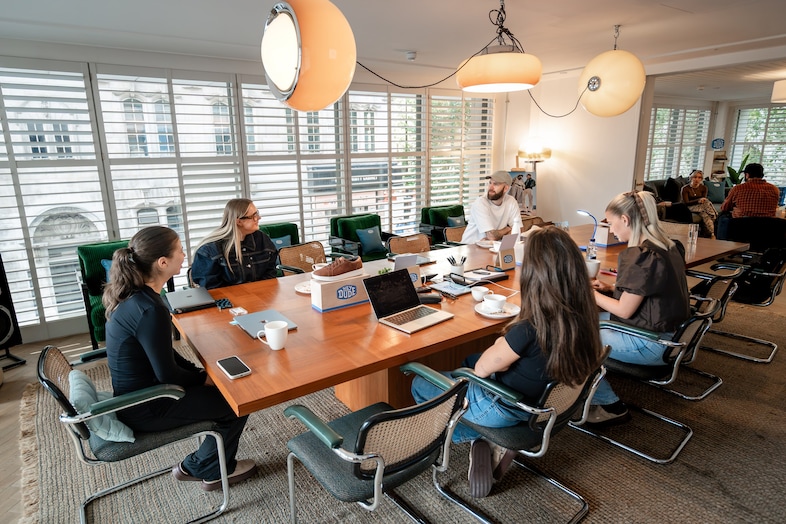
By midday, the Comfort Class Lounge was functioning at full capacity as a dynamic co-working hub. Eschewing assigned desks and rigid cubicles, the layout featured open-plan collaborative areas, quiet zones for focused digital work, and communal dining spaces.
Rather than treating the workday as a continuous block of unbroken labor, the lounge’s programming acknowledged the fluid rhythms of the hybrid worker. Attendees utilized the space to take impromptu strategy meetings, catch up on correspondence, and interface directly with members of the HEYDUDE brand team. Interspersed throughout the day were dedicated windows for rest, nourishment, and peer-to-peer networking, illustrating a workspace model that prioritizes mental and physical well-being.
Afternoon Phase: Immersive Product Integration and Showcase
As the afternoon progressed, the focus shifted toward the physical manifestations of the brand’s design philosophy. Guests were given exclusive, tactile access to HEYDUDE’s latest autumn collection. Particular attention was paid to the structural engineering of key pieces:
- The Paul Pro Classic (£79.99): Positioned as the ultimate travel and weekend-casual companion, offering a pillowy foundation designed to alleviate the foot fatigue associated with multi-destination days.
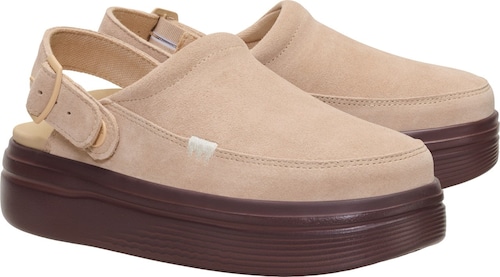
- The Austin Lift Clog (£79.99): A lightweight, suede platform silhouette featuring a fully backless design, convertible buckle heel strap, and enhanced cushioning, tailored for those navigating a demanding social and professional calendar.
By embedding these products directly into the lounge environment—allowing attendees to walk, lounge, and work in the footwear—HEYDUDE successfully bridged the gap between theoretical comfort and lived experience. The event concluded in the late afternoon with an informal networking mixer, effectively mirroring the modern professional’s transition from work mode back into social life without the need for an intervening outfit change.
Supporting Context & Metrics: The Anatomy of the New Commute
To fully comprehend the strategic significance of HEYDUDE’s activation, one must examine the macroeconomic and cultural data underpinning the modern lifestyle shift. The "new commute" is not merely a post-pandemic anomaly; it is a permanent structural reordering of time, space, and personal mobility.
The Rise of the Hybrid Workforce
According to current labor market data, hybrid working arrangements now account for more than 28% of all working adults in the United Kingdom. This figure represents millions of professionals who divide their time between domestic workspaces, corporate headquarters, regional hubs, and third-space environments such as independent cafes and co-working cooperatives.
[Traditional Routine]  Home ──> Single Corporate Office ──> Home
[Modern Hybrid Ecosystem] Home ──> Café Co-working ──> Midday Gym ──> Client Meeting ──> Ceramics Class ──> Home
This statistical reality has shattered the traditional home-to-office-to-home pipeline. In its place has emerged an intricate, multi-node daily itinerary. A typical hybrid worker’s Tuesday may now comprise:
- An early-morning run club or gym session.
- A remote work shift executed from a neighborhood coffee shop.
- An afternoon transit to a central corporate office for collaborative workshops.
- An evening stop at a continuing education or creative workshop (such as a ceramics class) before returning home.
Academic Parallels: The Modern Student Lifestyle
This lifestyle evolution is by no means restricted to the corporate sector. Contemporary university students are experiencing a parallel shift. The days of spending twelve consecutive hours locked inside a university library have largely been superseded by a more balanced, holistic approach to academia. Today’s student body navigates a matrix that equally values mental health initiatives, wellness routines, extracurricular social activities, and rigorous academic pursuits.
The Footwear Imperative
This multi-destination reality introduces a distinct logistical challenge: footwear. Historically, shoes were designed for singular destinations. A stiff leather oxford was engineered for the carpeted corporate floor; a running trainer was built strictly for the track or treadmill.
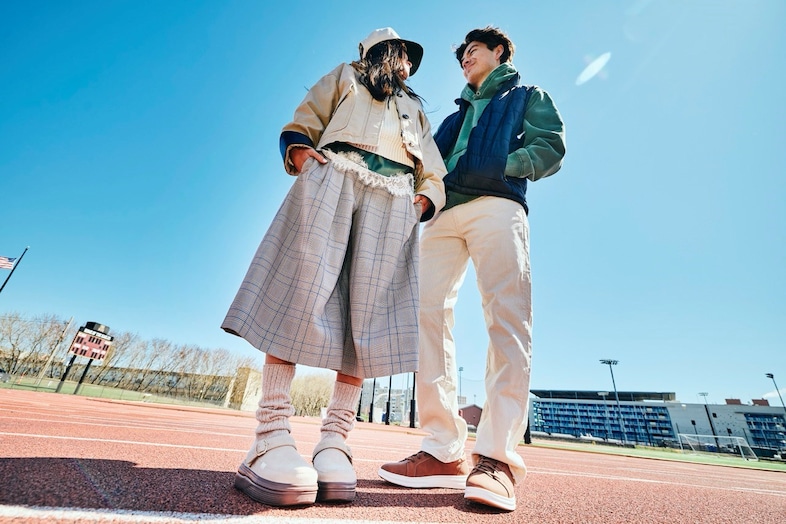
In a hybrid world, carrying multiple pairs of shoes in a backpack is entirely impractical. Modern consumers demand versatile, high-performance casual footwear that can effortlessly bridge the gap between active transit, professional environments, and casual social settings. HEYDUDE’s design philosophy directly addresses this demand by prioritizing ultra-lightweight construction, flexible materials, and all-day ergonomic support.
Official Statements & Brand Vision
The conceptual framework driving the Comfort Class Lounge and the accompanying autumn collection was articulated by representatives from HEYDUDE during the London activation.
"The times are a-changin’. The weekday commute is no longer just about sweating on the Tube, eyes glued to your phone… The old home-to-office-to-home routine has been replaced by a series of interconnected moments that make up the working day."
── The HEYDUDE Brand Team
This corporate narrative emphasizes adaptability over rigid formality. By acknowledging that modern consumers refuse to be constrained by traditional dress codes or inflexible schedules, HEYDUDE has positioned its product line as an essential tool for navigating contemporary urban life.
Furthermore, the brand’s focus on tactile comfort—exemplified by the suede construction of the Austin Lift Clog and the bootie-like sophistication of the Paul Pro Classic—reflects an industry-wide pivot toward holistic wellness. Fashion is no longer viewed strictly through the lens of aesthetic performance at the expense of physical comfort; rather, comfort has been elevated to a core pillar of modern luxury and practicality.
Future Outlook: Where Work, Life, and Style Collide
As we look toward the future of urban living, the trends catalyzed by hybrid work culture will only accelerate. Several key trajectories are poised to shape the intersection of lifestyle, fashion, and professional environments over the coming decade:
1. The Blurring of "Third Spaces"
The physical boundaries separating offices, residential spaces, and hospitality venues will continue to dissolve. Co-working hubs, hotel lobbies, and hybrid cafes will increasingly integrate wellness infrastructure, childcare facilities, and creative studios. Footwear and apparel brands must design products that transition fluidly across these micro-environments without signaling a mismatch in formality.
2. Ergonomics as a Baseline Consumer Expectation
Comfort can no longer be marketed as a niche feature reserved for athletic wear or orthopedic products. Consumers navigating multi-destination days demand that casual, professional, and lifestyle footwear deliver certified, all-day ergonomic support. Brands that fail to integrate lightweight construction, cushioned foundations, and adaptive sizing will find themselves obsolete in an increasingly mobile market.
3. Sustainable Versatility and Capsule Wardrobes
With consumers placing greater emphasis on conscious consumption and decluttering their personal spaces, the demand for versatile wardrobe staples will intensify. Items that can serve multiple functions—such as the Paul Pro Classic functioning simultaneously as a travel shoe, a casual office option, and a weekend walker—reduce the need for overconsumption. The future belongs to adaptive, multi-use design.
Summary
Events like HEYDUDE’s Comfort Class Lounge at 180 The Strand offer a clear glimpse into this future. By curating a physical space that honors the multifaceted reality of the modern commuter, the brand has demonstrated that the future of style is inextricably linked to the realities of human comfort and mobility. As the 28% hybrid working statistic continues to climb and the daily routine grows increasingly complex, the demand for intelligent, adaptable footwear will remain paramount.