Executive Overview
Welcoming a new kitten into a household is an experience defined by excitement, anticipation, and an abundance of cuteness. However, beneath the playful leaps and soft purrs lies a critical window of biological and psychological development that will profoundly shape the cat’s entire life. According to feline behavioral science, the experiences a kitten undergoes during its first few weeks of life—long before it ever sets paw in its permanent home—are the primary determinants of its adult temperament, confidence, and ability to coexist peacefully with humans and other animals.
Prospective pet parents often focus entirely on the physical preparations for a new arrival: purchasing scratching posts, selecting premium nutrition, and choosing the right litter box. Yet, an investigative look into feline behavioral research reveals that asking targeted questions about a kitten’s early upbringing from breeders, rescues, or shelters is vastly more important. A robust start to life safeguards against chronic stress, fear-based aggression, and behavioral relinquishment later on.
This comprehensive report explores the delicate window of feline socialization, the environmental factors that dictate behavioral health, the compelling case for adopting bonded pairs, and the ongoing responsibilities pet parents hold once the kitten crosses their threshold. By grounding our understanding in peer-reviewed scientific literature and expert veterinary behavioral insights, we can decode what it truly takes to raise a well-adjusted, confident, and contented feline companion.
Detailed Chronology: The Critical Windows of Feline Development
To understand why early-life experiences carry such monumental weight, one must examine the neurological milestones of a developing kitten. Feline behavioral development does not happen by chance; it follows a strict biological timeline.
The Sensitive Period for Socialization (2 to 7–9 Weeks)
Between the ages of two and approximately seven to nine weeks, a kitten’s brain undergoes a period of rapid, intensive development. During this narrow window, known as the sensitive period for socialization, the kitten’s neural pathways are exceptionally plastic. They are actively learning how to categorize the world around them—determining what is safe, who is a friend, and what constitutes a threat.
Scientific literature emphasizes that exposure to a wide, positive range of sights, sounds, smells, and touches during this exact epoch yields lifelong dividends. Kittens that receive structured, gentle socialization within this window grow up to be notably friendlier, more confident, and less reactive adult cats. Conversely, kittens raised in isolation or subjected to chronic stress during these formative weeks often develop entrenched fears, defensive aggression, and an inability to cope with the routine stimuli of a modern household.
Because ethical guidelines dictate that kittens should remain with their mothers and littermates until they are at least eight weeks old—with many behaviorists advocating for an even later transition—the heavy lifting of this crucial socialization period falls upon the breeder, foster caregiver, or shelter staff.
The Lifelong Impact of Early Human Contact
Research underscores that the relationships a kitten forms during its first few weeks leave an indelible mark. Seminal studies by animal behaviorists such as Rachel Casey, John Bradshaw, and Dennis Turner highlight the long-term benefits of early human interaction.
Kittens that are regularly handled, played with, and exposed to diverse human visitors during the sensitive period exhibit distinct behavioral advantages later in life. For example, research demonstrates that well-socialized kittens spend significantly more time in close proximity to humans when they reach one year of age. Furthermore, they display a vastly accelerated ability to learn to trust new people as they mature (Casey and Bradshaw, 2008; Turner, 2021).
This is not merely a matter of personality; it is a foundational matter of trust. A cat that learns early on that human hands bring safety, food, and affection is infinitely less likely to resort to scratching, biting, or hiding out of sheer terror when faced with veterinary exams, grooming, or household visitors.
Supporting Context & Metrics: Environment, Genetics, and the Multiples Advantage
Socialization is only one piece of the developmental puzzle. A holistic evaluation of a kitten’s early life requires examining its physical environment, genetic lineage, and the profound dynamics of social grouping.
The Domestic Environment vs. Isolation
Where a kitten is raised matters just as much as who handles it. Raising litters in a dynamic, bustling household environment exposes them to normal, everyday domestic sounds—the hum of a refrigerator, the whir of a vacuum cleaner, the chime of a doorbell, and the cycles of a washing machine.
Unfortunately, some commercially bred kittens are raised in sterile, isolated environments such as backyard sheds, outdoor hutches, or commercial breeding barns, completely shielded from standard household stimuli. When these kittens are finally introduced to a real home at eight or nine weeks of age, everyday sounds can register as terrifying threats.
Even animal shelters and rescue organizations, which often operate under resource-constrained conditions, recognize this reality. Progressive shelters increasingly rely on foster home networks to raise litters in domestic settings. When kittens must be raised within a shelter facility, specialized behavioral protocols ensure they are systematically desensitized to auditory and tactile household experiences before adoption day.
Maternal Influence and Genetics
Genetics and maternal behavior play starring roles in shaping a kitten’s temperament. When evaluating a potential kitten, prospective owners should make every effort to meet the mother.
A mother cat’s demeanor serves as a behavioral blueprint for her litter. If the mother is calm, approachable, and friendly toward human handlers, her kittens are far more likely to mirror those positive traits. Conversely, a fearful or feral mother will often communicate distress cues to her kittens, teaching them through observation to view humans with suspicion.
For pedigree kittens, meeting the sire (father) is often possible and highly recommended to gauge his temperament and health as well. For shelter rescues, meeting the father is rarely feasible, but observing the mother and the broader litter dynamics remains an invaluable diagnostic tool.
Moreover, physical health and psychological health are inextricably linked. Stress compromises immune function in cats just as it does in humans. Ensuring that a litter is raised in a relaxed, low-stress environment directly protects them from stress-related illnesses, setting the stage for robust vitality.
The Power of Two: Why Kittens Thrive in Pairs
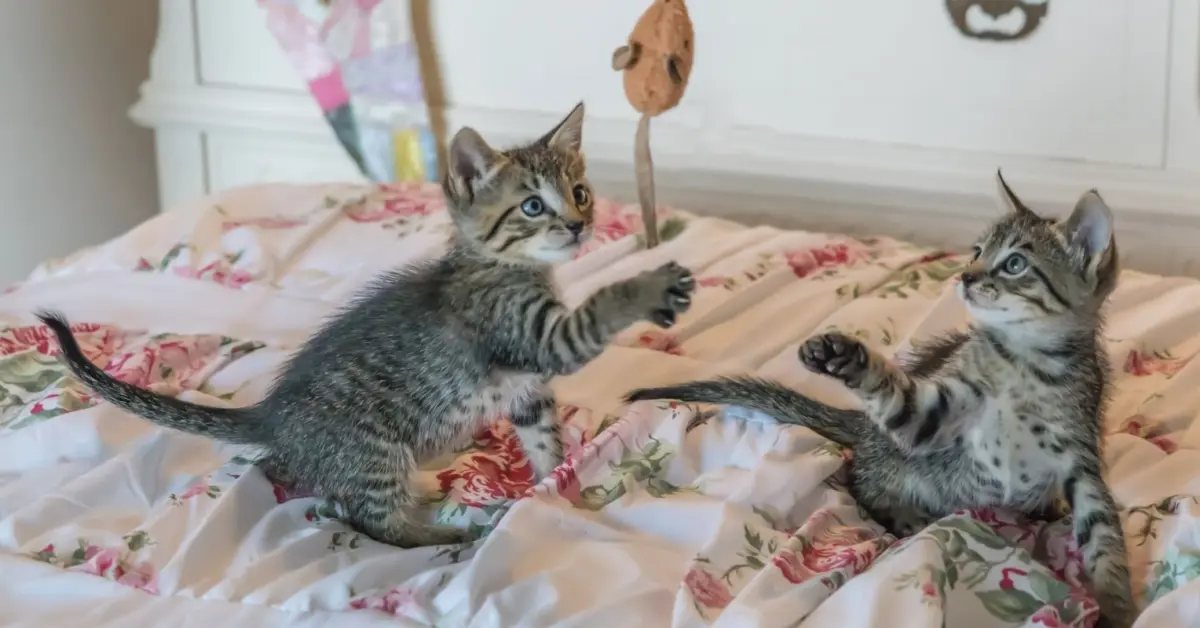
A common refrain among feline welfare advocates is the wisdom of adopting kittens in pairs. While many first-time owners set out to adopt a single cat, behavioral science strongly champions the "kitten or two" philosophy.
Kitten play reaches its developmental zenith during the first few months of life, peaking right around 14 weeks of age. During this time, bonded pairs spend hours chasing, wrestling, and stalking one another. This play is far from frivolous; it is a vital training ground. Through rough-and-tumble play with littermates, kittens refine their motor control, master predatory pouncing mechanics, and learn critical social boundaries—such as realizing when a bite is too hard, a lesson known as "inhibited bite."
Furthermore, adopting a bonded pair of kittens circumvents the complex behavioral hurdles often associated with introducing an unrelated adult cat into a household years down the line. Two young cats keep each other company, expend excess energy together, and provide mutual emotional security as they navigate a changing human world.
Official Statements and Expert Guidance
As the body of feline veterinary science expands, animal welfare organizations, behavioral specialists, and researchers are increasingly aligned on best practices for integrating and raising young cats.
Dr. Zazie Todd, an animal psychologist and author of Purr: The Science of Making Your Cat Happy, emphasizes that the responsibilities of pet guardianship begin the moment an owner decides to bring an animal home. Dr. Todd stresses that autonomy and choice are paramount to feline psychological health:
"Always give your kitten a choice of whether or not to interact with people and objects. Kittens are so tiny and cute that people often subject them to handling whether or not they like it; but pay attention to their body language for signs that they might be uncomfortable and don’t force handling on them."
This philosophy challenges the archaic notion that pets must submit blindly to human affection. By respecting a kitten’s subtle behavioral cues—such as a twitching tail, flattened ears, or attempts to wriggle away—owners build a foundation of mutual respect that prevents defensive aggression.
Veterinary behaviorists also advocate for proactive, positive-reinforcement-based habituation. Rather than waiting until an adult cat needs medical grooming or nail trims, owners should introduce these concepts during kittenhood, breaking tasks down into manageable, stress-free micro-sessions.
"Never force your kitten to do things because that risks making them fearful," notes behavioral literature. "Bad experiences in early life can have a long-lasting effect, so work hard to make things relaxed, pleasant, and fun." For instance, teaching a kitten to accept dental care should never involve pinning the animal down to force a brush into its mouth. Instead, the process must be scaffolded: first exploring the toothbrush, then tasting appealing pet-safe toothpaste, then experiencing gentle lip handling—each step rewarded with treats and affection.
Future Outlook: Education, Kitten Kindergartens, and Lifelong Well-Being
As we look toward the future of pet ownership, the cultural paradigm surrounding cat care is undergoing a profound evolution. For decades, cats were unfairly stereotyped as aloof, self-sufficient creatures that required minimal human guidance. Today, contemporary science recognizes cats as sensitive, highly intelligent animals whose behavioral needs require active understanding and support.
One of the most encouraging trends in modern animal welfare is the emergence of "kitten kindergarten" classes. Modeled after the long-established puppy socialization classes, kitten kindergartens provide structured, safe environments where young cats can meet new people, encounter novel objects, and interact with other animals under the guidance of professional trainers. While these classes are still growing in availability and can sometimes be challenging to locate depending on geographic region, their rising popularity signals a major shift in how society approaches feline preventive care.
For owners unable to access a formal kitten kindergarten, the onus falls on self-education through reliable, science-based resources. Understanding feline ethology—the study of animal behavior in natural conditions—empowers owners to interpret their cat’s vocalizations, scent markings, and postural shifts accurately.
By investing time upfront to ask the right questions of breeders or shelter workers, choosing socially confident kittens (preferably in bonded pairs), respecting the animal’s physical autonomy, and utilizing positive reinforcement for handling, human-feline relationships are revolutionized. The result is not merely a pet that coexists in a home, but a confident, secure, and joyful companion destined for a long, healthy life enriched by mutual trust and understanding.
References
- Casey, R. A., & Bradshaw, J. W. S. (2008). The effects of additional socialisation for kittens in a rescue centre on their behaviour and suitability as a pet. Applied Animal Behaviour Science, 114(1-2), 196-205.
- Todd, Z. (2022). Purr: The Science of Making Your Cat Happy. Greystone Books.
- Turner, D. C. (2021). The mechanics of social interactions between cats and their owners. Frontiers in Veterinary Science, 8, 650143.